
You’ll be grasping phrasebooks in most of Europe, but in three countries you won’t need them. English is also the only major or official language in Europe, with the exception of the UK, Ireland and Malta, making it a relatively frictionless travel experience for English speakers. From the highlands of Scotland with their mists, to the wild Atlantic coast of Ireland to the old ports of Malta under the tropical sun of the Mediterranean, they offer entirely different experiences.
Why These Three Countries Stand Out
It’s not just about avoiding language barriers — though that helps. It’s the whole infrastructure. Signage, menus, transport apps, locals at the pub — everything just works without translation. The Netherlands and Scandinavia have high English proficiency too, sure, but English isn’t their language. In the UK, Ireland, and Malta it is.
That distinction matters more than people realize. When you’re navigating a rural bus in County Kerry or asking directions off a backstreet in Valletta, you’re not hoping someone speaks English. They do. Fully. Natively.
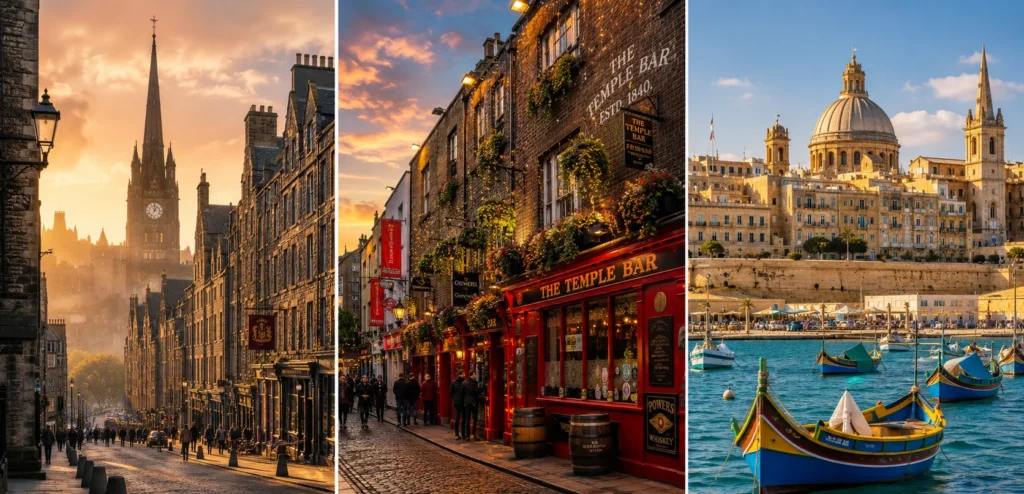
United Kingdom — Big, Varied, Worth More Than One Trip
England alone could keep you busy for a month. London obviously — the British Museum, the Thames, Borough Market on a Saturday morning when it’s actually alive. But outside London is where it gets interesting. The Cotswolds look almost fake, like someone designed a village for a film set. The Lake District is proper hiking country. Bath has Roman ruins you can walk right up to.
Scotland though — that’s a different trip entirely. Edinburgh during the Fringe Festival in August is genuinely chaotic in the best way. The Highlands feel remote even when they’re not. Skye on a clear day is one of those places people photograph and you think it’s edited — it isn’t.
Wales gets overlooked. Snowdonia, coastal paths, castles everywhere. Northern Ireland has the Giant’s Causeway (stranger in person than in photos) and Belfast’s Titanic Quarter, which is better than it sounds.
Quick UK Facts
| Detail | Info |
| Currency | British Pound (£) |
| Budget/day | £50–80 (budget) / £100–200 (mid-range) |
| Best time | May–September; shoulder seasons April & October |
| Getting around | National Rail, London Underground, budget airlines |
| Drive side | Left |
Sample 10–14 Day UK Itinerary:
- London — 4 days
- Train to Edinburgh — 3 days
- Scottish Highlands — 2–3 days
- Fly or ferry onward to Ireland
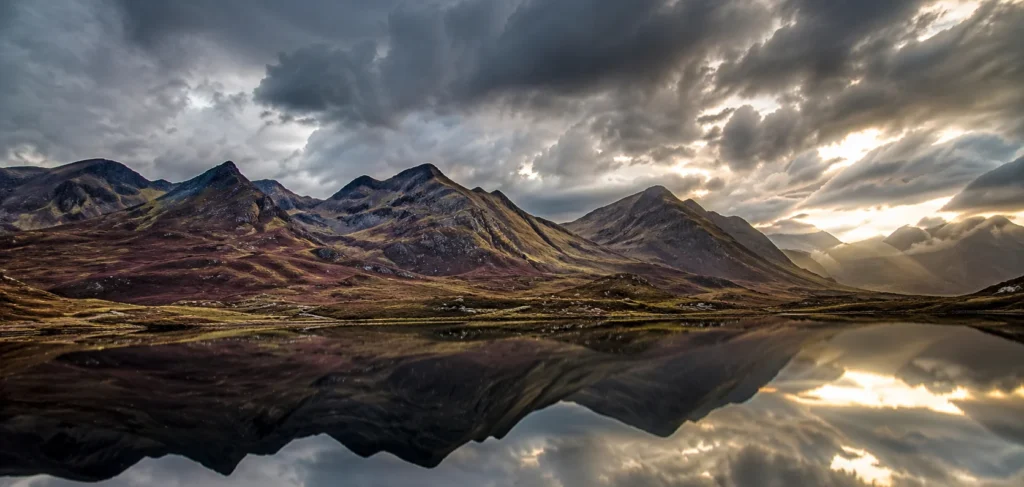
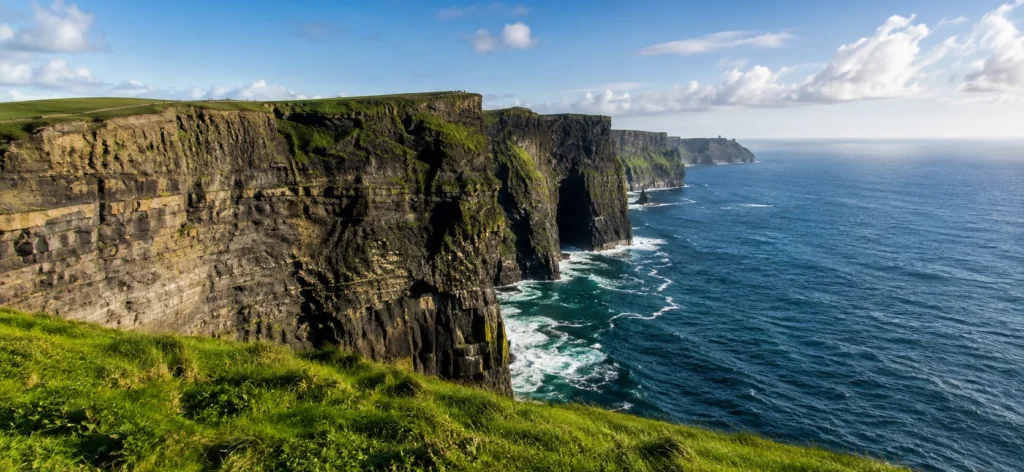
Ireland — Slower, Warmer, Worth Every Rain Cloud
Ireland’s craic isn’t a marketing slogan — it’s real. Sit in a pub in Galway on a Wednesday night when there’s a traditional music session going and nobody’s performing for tourists, they’re just playing. That’s the thing about Ireland; its best moments aren’t staged.
Obviously, Dublin is the first place to go — the Book of Kells, the Guinness Storehouse (book in advance, don’t go to the end of the queue) and Trinity College. But honestly? Fairs quick getaway from Dublin. The Wild Atlantic Way is one of the great road trips of Europe. Each one unique, each one a better one if you’re not in a hurry: Cliffs of Moher, Ring of Kerry, Dingle Peninsula.
Newgrange is older than the pyramids and most people haven’t heard of it. That’s Ireland in a sentence.
Quick Ireland Facts
| Detail | Info |
| Currency | Euro (€) |
| Budget/day | €60–100 (budget) / €120–250 (mid-range) |
| Best time | May–September; April & September less crowded |
| Getting around | Car rental recommended outside Dublin |
| Drive side | Left |
Sample 7–10 Day Ireland Itinerary:
- Dublin — 3 days
- West to Galway & Cliffs of Moher — 3 days
- Kerry or Dingle Peninsula — 2–3 days
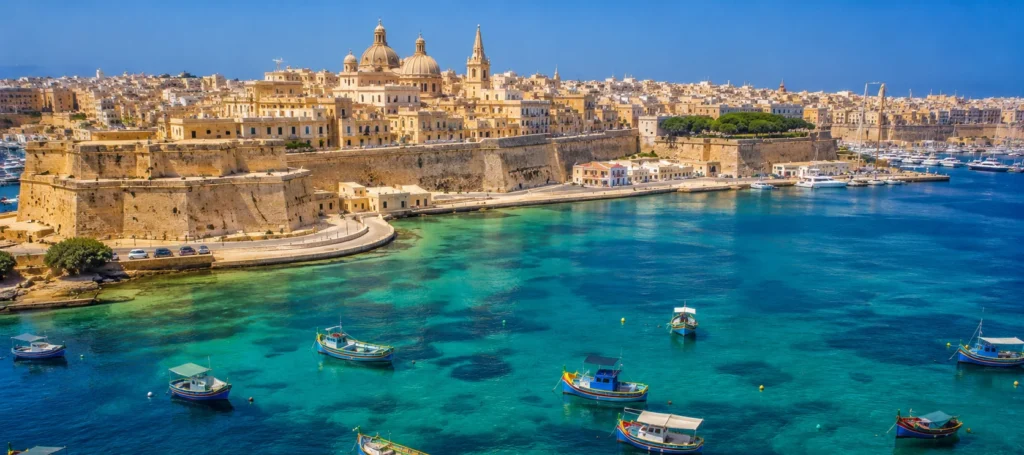
Malta — Small Island, Seriously Deep History
People underestimate Malta. It is small – spans the whole island in less than an hour driving – but it’s packed with history and no bigger country can claim that. They have left their mark, the Phoenicians, the Romans, the Arabs, the Knights of St. John, Napoleon and the British. The streets of Valletta are like flipping through an architecture playbook, but where the pages are baroque architecture and harbor views.
Here are megalithic temples older than Stonehenge. But, that hasn’t quite sunk in for most travellers and that’s why Malta is rewarding the curious.
Valletta itself became a UNESCO World Capital of Culture in 2018 — St. John’s Co-Cathedral alone is worth the flight. The gilded interior hits differently when you realize it was built by warrior monks with serious money and serious taste.
Then there’s Gozo. Quieter, greener, slower. From the mainland it takes 25 minutes to reach the ferry. It is also world-class diving, with crystal-clear Mediterranean waters and visibility that makes it feel like you are swimming in glass, and shipwrecks to explore around both islands. It’s busy during the summer months in Comino’s Blue Lagoon, but go in the morning in May and it’s hilarious how blue it really is.
Quick Malta Facts
| Detail | Info |
| Currency | Euro (€) |
| Budget/day | €50–90 (budget) / €100–180 (mid-range) |
| Best time | April–June or September–October |
| Getting around | Buses, ferries, Bolt taxis — very compact |
| Drive side | Left |
Sample 5–7 Day Malta Itinerary:
- Valletta & mainland highlights — 3 days
- Ferry to Gozo — 2 days
- Comino day trip for the Blue Lagoon
Comparing All Three — Which One’s Right for You?
Honest answer? Depends entirely on what you’re after. They’re not interchangeable.
| UK | Ireland | Malta | |
| Best for | Scale, cities, variety | Nature, warmth, road trips | History, beaches, short breaks |
| Cost | Highest | Mid-range | Most affordable |
| Ideal trip length | 10–14 days | 7–10 days | 5–7 days |
| Climate | Mild, unpredictable | Mild, definitely rainy | Hot Mediterranean summers |
| English fluency | Native | Native | Official + native |
Malta works brilliantly as a short break — long weekend from anywhere in Europe, easy flight, pack a lot in. Ireland is a road trip destination, full stop. The UK needs multiple visits; trying to do all four nations in one trip is a mistake most people make once.
Practical Tips Before You Go
Here are some things to be aware of before making a reservation:
- Visa & Entry: UK — post Brexit, different entry rules apply to EU. Ireland and Malta are both in the EU/Schengen. Verify conditions of your passport on gov.uk or your home state’s foreign affairs website.
- Getting there: London Heathrow, Dublin Airport and Malta International are all easily connected. Many budget airlines (such as Ryanair and EasyJet) operate low-cost flights between Europe.
- Book trains early: UK’s National Rail charges up in price quick. Book 6-8 weeks in advance to get the best price.
- Shoulder seasons save money: April, May, September, October — fewer crowds, lower accommodation rates, still genuinely enjoyable weather.
- All three drive on the left — worth knowing if you’re renting.
- Tap water: Safe in UK and Ireland. Malta’s is technically safe but locals and most visitors stick to bottled.
Wrapping Up
Three countries, one language, completely different experiences. The UK gives you scale and variety that takes multiple trips to scratch properly. Ireland slows you down in the best possible way — something about the landscape and the people just does that. Malta surprises almost everyone who goes; they expected a beach holiday and came back talking about temples and baroque cathedrals.
Any of them make an easy first step into European travel for English speakers. And honestly, once you’ve done one, you’ll want the other two.