
On 13 February 2024, United Airlines flight UA770 from San Francisco to Chicago O’Hare diverted to Denver International Airport after the crew detected a possible fuel leak roughly 180 nautical miles west of the city. The Boeing 737-900ER landed safely on Runway 16R with all 165 passengers and 6 crew accounted for. Nobody was hurt and the flight resumed to Chicago later that evening on a replacement aircraft.
Key takeaways for travellers
- A fuel leak diversion is one of the most well-rehearsed procedures in commercial aviation. The system did exactly what it’s designed to do.
- Emergency vehicles waiting on the runway are standard precaution, not a sign things are about to go wrong.
- If you’re on a diverted flight, the single most useful thing you can do is keep your phone charged and your boarding pass screenshotted.
- Crew announcements during diversions tend to be calm because the situation is, in fact, under control.
- Denver is one of the most common diversion airports in the US for a reason. Long runways, full fire and rescue cover and a major United hub for re-accommodation.
Flight details at a glance
- Date: 13 February 2024
- Route: San Francisco (SFO) to Chicago O’Hare (ORD)
- Aircraft: Boeing 737-900ER, registration N68891
- Souls on board: 165 passengers, 6 crew
- Outcome: Safe diversion to Denver (DEN), no injuries
What Actually Happened on UA770 That Morning
I’ve been on hundreds of flights and I’ll be honest, the first time I heard about UA770 my reaction was the same as most travellers. Fuel leak. Two words that make your stomach drop a little. Then I read the timeline properly and the story turned out to be reassuringly boring, in the way modern aviation tends to be when systems work.
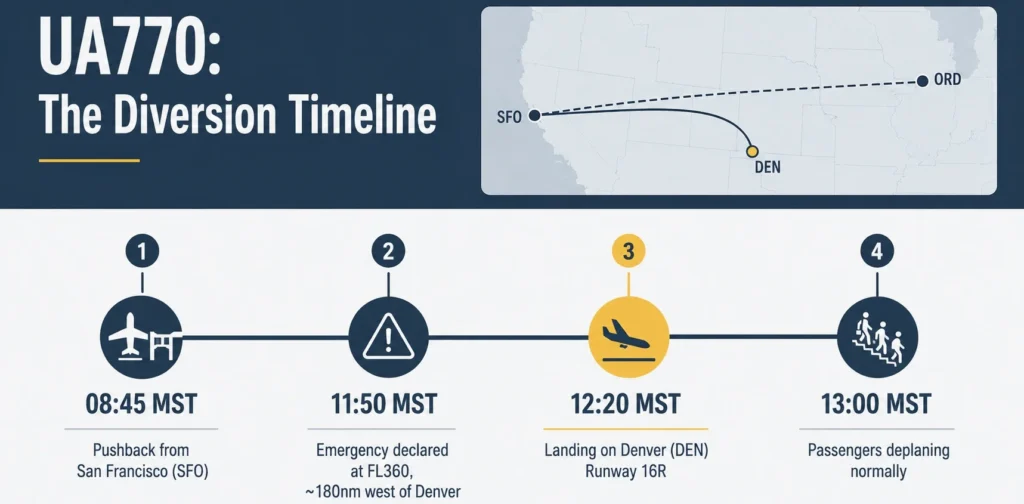
UA770 pushed back from San Francisco at around 08:45 Mountain Time, climbed out and was cruising at Flight Level 360, about 36,000 feet, over the Rocky Mountains. Roughly 180 nautical miles west of Denver, the cockpit picked up an indication consistent with a possible fuel leak. The crew also saw a fuel imbalance alert, which is exactly the kind of thing the 737’s monitoring is meant to surface early.
What the crew did next is the part I find genuinely interesting. They didn’t panic-dive toward the nearest piece of flat land. They followed the checklist. They shut off the fuel cross-feed, which is the line that lets the two wing tanks share fuel. That isolates the suspected leak and keeps the good fuel on the good side. Then, with the source not yet confirmed and the possibility that fuel quantity could be affected, the captain made the call to declare an emergency with ATC and divert to Denver International.
The 737-900ER got priority handling, descended on a direct routing and landed on Runway 16R at around 12:20 to 12:30 local. Aircraft Rescue and Firefighting were positioned along the runway, which is what you see in every passenger’s phone video from that morning. The plane taxied to the gate under its own power. That detail matters, by the way. If the leak had been severe the aircraft would have been towed in. Taxiing in means the systems were stable.
A more technical breakdown of the incident appears on the Aviation Herald, which is the source most pilots and dispatchers actually read for this kind of thing and the FAA Aviation Safety information page gives you the official channel for incident investigations like this one.
Why a Fuel Leak Diversion is More Routine Than it Sounds
The phrase “fuel leak” sounds dramatic because we mentally picture a gushing pipe. The reality on a modern jet is usually something much smaller. A weeping seal. A line fitting that’s loosened over thousands of pressurisation cycles. A component on the engine that’s leaking measurable amounts but not catastrophic ones. The 737 family has multiple independent fuel tanks and a system that’s designed to keep flying safely even when one tank is compromised.
What changed over the last twenty years is the monitoring. Older aircraft would only show you a leak once the imbalance got severe. Newer 737-900ERs flag it early enough that the crew can isolate the problem before it becomes a problem. That’s why UA770 diverted to Denver and not, say, to a remote field in Wyoming. The crew had time to choose the best option and the best option was a major airport 180 miles away with United maintenance on the ground.
Denver gets picked for diversions constantly. The runways are long enough for a fully fuelled widebody, the airport has full ARFF cover and there’s a hub presence that means United can put you on a replacement aircraft within hours rather than days. If you ever wondered why some airports keep popping up in diversion stories, that’s why. The Reddit thread on r/aviation has good pilot-side context on diversion airport selection if you want to fall down that rabbit hole.
What the Cabin Actually Felt Like
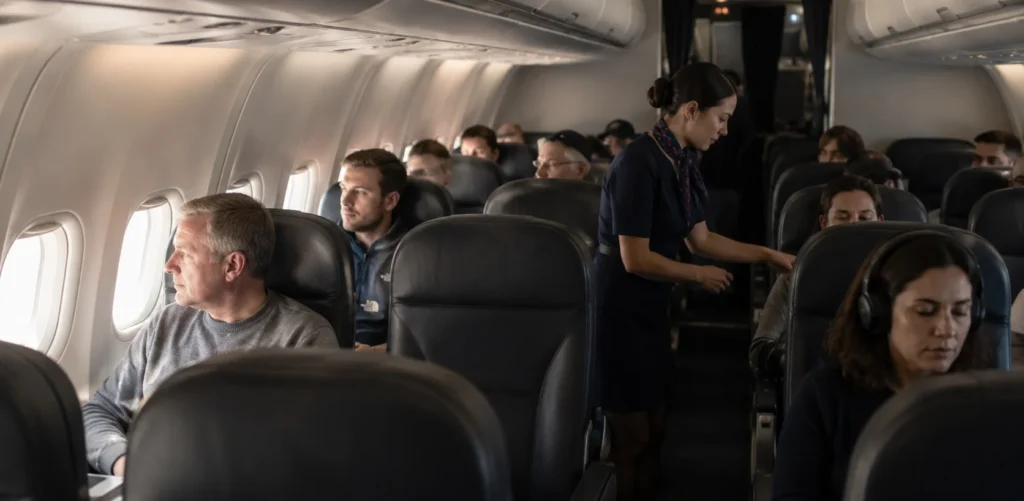
The passenger reports from UA770 line up with what I’ve heard from people on other diversions. The pilot came on the PA, calm voice, stated plainly that the aircraft had a possible fuel leak and would be making an unscheduled stop in Denver. Cabin crew started preparing the cabin for landing. No raised voices, no theatrics. Most passengers later said the atmosphere stayed calm.
The moment that did get to people was looking out the window on rollout and seeing the row of fire trucks flanking the runway. That’s normal. Standard procedure for any declared emergency is to have ARFF on standby, lights on, ready to go. It looks alarming because we associate that imagery with disaster movies. In practice, those crews stand by for declared emergencies dozens of times a week across the US and the overwhelming majority of those landings are completely uneventful, exactly like UA770’s was. The Wikipedia entry on emergency landings covers the categories well if you want the background.
What to Actually do if You’re Ever on a Diverted Flight
I’ve never been on a diversion as dramatic as UA770, but I’ve sat through three smaller ones and the same handful of habits has helped every time.
Keep your phone charged before takeoff. The moment a diversion is announced, every passenger on board reaches for their phone at the same time. Cell signal at altitude is non-existent and gate signal in a diversion airport gets congested fast. Charge to full before you board and you’re not the one hunting for an outlet in a terminal at 2am.
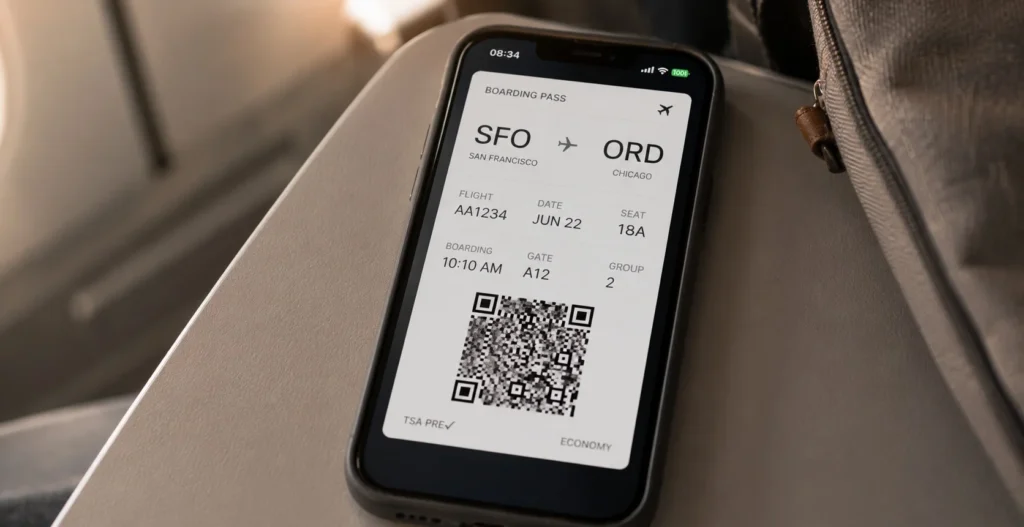
Screenshot your boarding pass and your itinerary. Airline apps go through brief outages during high-stress reroutes when thousands of passengers refresh at once. A screenshot doesn’t need signal.
Listen to the announcements rather than the people around you. The crew has the real information. The man two rows ahead with confident opinions does not.
Don’t rush the gate agent at the diversion airport. They already know your flight diverted. The faster they can rebook the planeload, the faster you move. Pile-ups at the desk slow everyone down, including you.
If meal vouchers are offered, take them. United handed them out at Denver that day. Small thing, but a sit-down meal during a 5 to 6 hour rebooking window does a lot for your mood.
The Department of Transportation passenger protections page is worth bookmarking for the wider picture of what airlines owe you during long delays and re-accommodations.
The Other UA770 Diversion That Didn’t Make Headlines
There’s a smaller story worth knowing because it shows how often this flight number deals with unscheduled stops. On 2 July 2023, the same UA770 SFO to ORD route diverted to Denver for a passenger medical emergency. A passenger had a severe episode, the crew requested priority handling, paramedics met the aircraft and after roughly a 90-minute ground delay the flight continued to Chicago.
Medical diversions happen every day across the US system. They rarely make the news because nothing mechanical went wrong. But they’re the most common reason a flight you’re on will end up somewhere it wasn’t supposed to. If you’ve never seen one happen, the routine looks similar to the UA770 fuel leak diversion: calm announcement, priority handling, emergency vehicles on the ground, deplaning of the affected passenger, then back in the air. Different cause, same well-rehearsed response.
What UA770 Tells us About Flying
What I keep coming back to with UA770 is how unremarkable it was, in the best possible sense. A potential fuel system anomaly at 36,000 feet over the Rockies in February got detected early, isolated by the crew, communicated to ATC, handled with a priority approach into a major airport with full emergency cover and resolved without injury. Passengers were in Chicago that same evening on a replacement aircraft.
The reason this all worked is the layers. The monitoring caught the imbalance early. The crew had a checklist for it. The dispatch and ATC system had Denver ready as an alternate. The maintenance base was waiting. None of it relied on heroics. It relied on a lot of people doing the boring, well-rehearsed thing.
Next time you board a flight and hear something that makes you nervous, remember UA770. The systems are designed for this. The crew is trained for this. The whole industry is built around the assumption that things will occasionally go wrong and that the response to them being wrong is what keeps everyone safe.
That’s the takeaway I’d give any traveller. Pay attention to the safety briefing. Charge your phone. Trust the crew. And if you ever look out the window and see fire trucks flanking the runway as you land, breathe out. It usually means everything is going exactly the way it’s supposed to.