
The short answer: visit in spring (March–May) or autumn (October–November). April is the perfect time, the orange blossoms are in bloom, the temperatures are just about right (22-25°C) and the city isn’t quite asplendid as it is now, so it’s worth it. If you prefer an exchange of flowers for some breathing space, then late October affords you the same clear Shirazi light but with a lot less people.
Shiraz and Its Seasons — What You’re Actually Working With
At approximately 1,500 metres above sea level, Shiraz is situated in the Iranian plateau, doing something interesting to the climate: softening. Though you may not experience the intense heat of the desert as in Yazd, summertime can still reach a sweltering 37°C and wintertime can be much colder than anticipated at night.
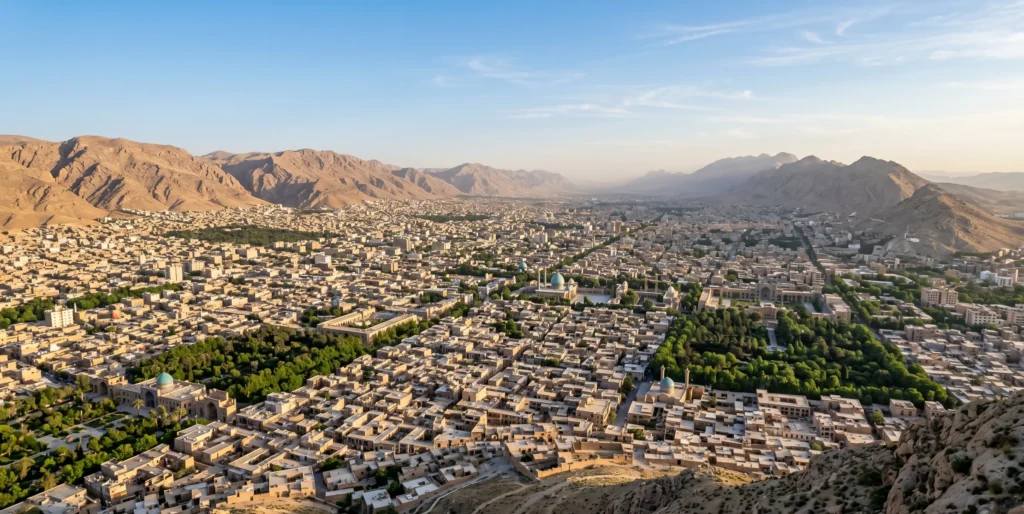
The city has four reasonably distinct seasons. Two of them are genuinely great for travel. One is survivable with the right strategy. One is mainly for people who really hate crowds and really love low prices.
According to Wikipedia’s climate section on Shiraz, the city receives most of its precipitation between December and March, with summers being almost completely dry. That dry summer heat is a different beast from humid heat — exhausting in its own way, but at least you’re not sticky.
Spring (March–May): When Shiraz Actually Smells Different
There’s a reason almost every travel forum thread about Shiraz — including this one on r/travel — steers people toward spring. It’s not just that the weather is good. The city physically transforms.
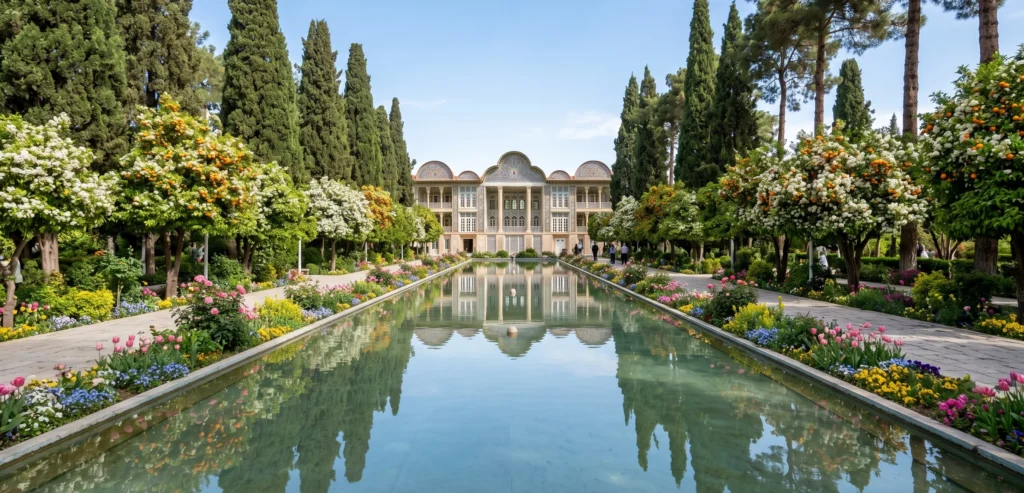
The Bahar Narenj — orange blossom season — hits its peak somewhere around late March into April. The scent coming off those trees in the old neighbourhoods is genuinely disorienting the first time you walk into it. Not a “nice garden” smell. More like the whole street is a perfume shop.
March itself is complicated. Nowruz, the Persian New Year, falls around March 20th and it is the single busiest domestic travel period in Iran. Iranians travel for Nowruz the way Westerners travel for Christmas — except the whole country moves at once. Prices spike, sites get crowded, and booking anything last-minute becomes a headache.
April and May, though? That’s the window.
- Daytime highs: 22–30°C
- Long sunny days, very little rain
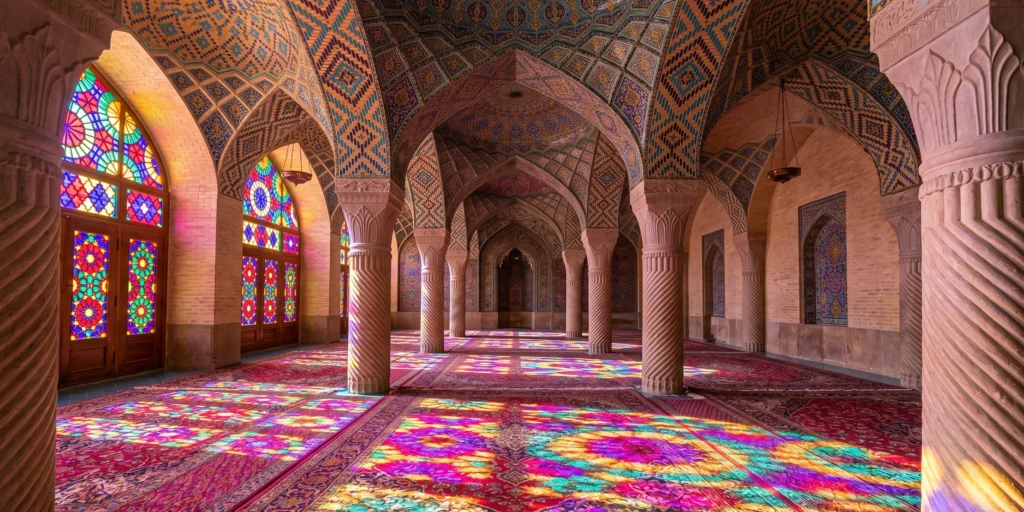
- Eram Garden and Nasir ol-Molk Mosque at their most photogenic
- The Shiraz Art Festival typically falls in this period
One thing worth knowing: even outside Nowruz, spring is peak season. Budget for it.
Autumn (October–November): The Quieter Argument
October in Shiraz doesn’t get talked about enough. The summer heat has finally broken — October averages around 25°C, November drops to around 21°C — the light goes golden in that particular way it does at lower sun angles, and the tourist numbers are nowhere near spring levels.
If you’ve been to a major historical site at peak season and then again in the shoulder months, you know what a difference that makes. Standing inside the Nasir ol-Molk Mosque without fifteen people in your frame is a different experience.
Travelers on Quora who’ve visited both seasons often mention autumn as their preference precisely because of this — the trade-off being that the gardens aren’t blooming and the days are getting shorter.
Practical notes for autumn:
- Evenings get cold faster than you’d expect — a light jacket isn’t optional past mid-October.
- Flights and accommodation notably cheaper than spring.
- Persepolis day trips are very manageable in this temperature range.
Summer (June–August): Hot, Cheap and Honestly Fine If You Plan Right
37°C is the average. Some days in July and August push past 40°C. That’s the reality, and there’s no dressing it up.
But here’s the thing people who’ve actually done it say — including a few threads on r/iran — Shiraz’s low humidity changes the calculation somewhat. It’s fierce, not sticky. Shade and water actually help. A fan works. You’re not walking through a warm wet towel the way you might be in a coastal city.
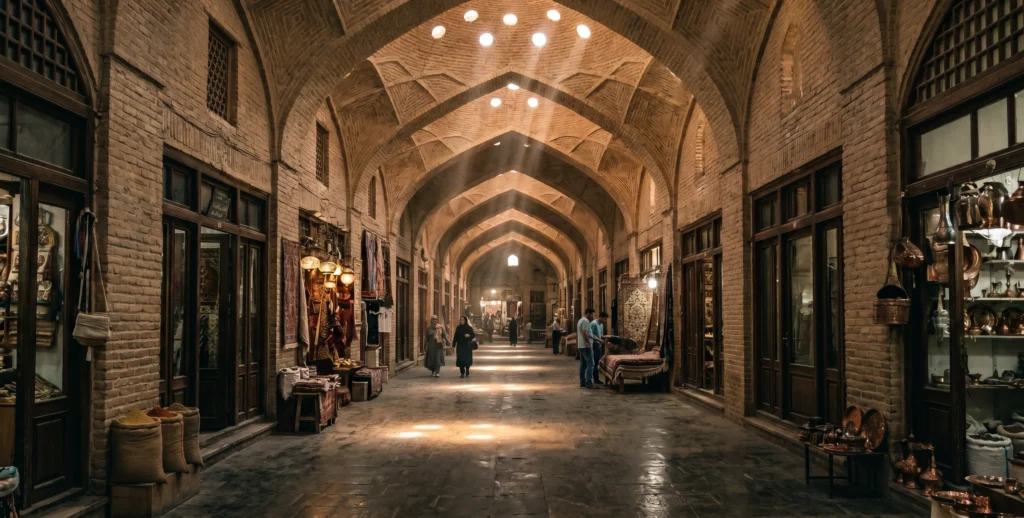
The strategy basically writes itself: you’re out by 7am, back inside by noon, napping or eating somewhere cool until 4pm, then back out until late evening. Shiraz’s old bazaar and teahouses are built for exactly this rhythm — thick walls, internal courtyards, designed around the idea that midday is not for moving around.
What you get in exchange for the heat:
- Lowest prices of the year, full stop.
- Popular sites almost to yourself.
- Guesthouses and boutique hotels with real availability.
- A version of the city that moves at a slower pace.
Not the right choice for everyone. But if your budget is tight and heat doesn’t break you, it’s not the disaster people assume.
Winter (December–February): Cold Nights, Low Rates and a Different Kind of Shiraz
Winter surprises people. Daytime temperatures sit around 12–14°C which is genuinely pleasant for walking around — light jacket weather, not heavy coat weather. The problem is nights, which can drop to near 0°C in January. Anyone expecting a mild Middle Eastern winter gets a rude correction around sunset.
This is also when Shiraz gets most of its annual rainfall, though “most” is relative — it’s still not a particularly wet city by global standards. You’ll have grey days and some rain, but not week-long downpours.
The gardens are dormant. That’s the real loss. The whole Bahar Narenj experience, Eram Garden in bloom, the visual identity of Shiraz in its prime — none of that is available. What you do get is Persepolis and the old city with almost no one else around, which has its own appeal.
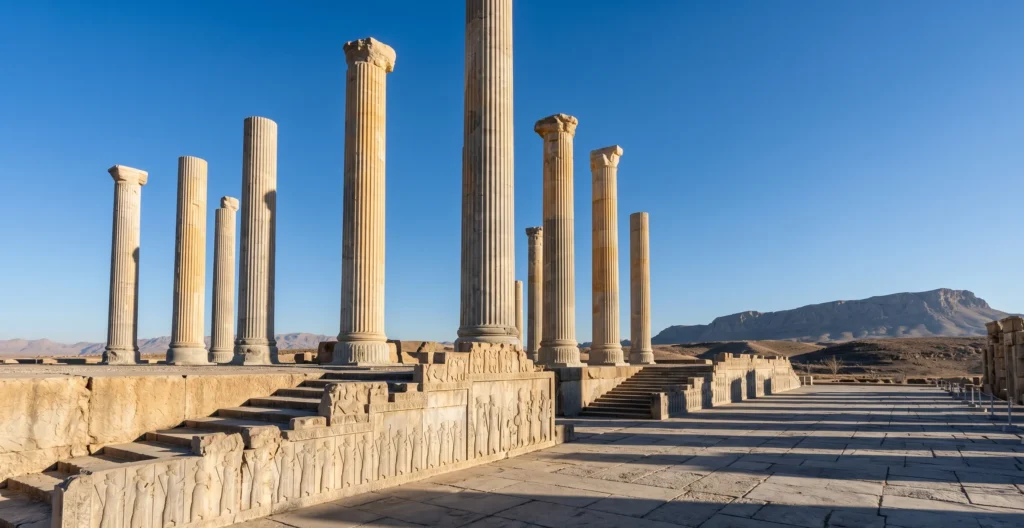
According to Iran’s cultural heritage documentation, Persepolis sees its lowest visitor numbers in winter — worth factoring in if the archaeology matters more to you than the gardens.
Month-by-Month Snapshot
| Month | Avg Temp | Rain | Crowds | Vibe |
| March | 18°C | Low | Very High | Nowruz chaos — festive but packed |
| April | 23°C | Very Low | High | Peak season sweet spot |
| May | 28°C | Minimal | Moderate | Still excellent, warming up |
| June | 33°C | None | Low | Heat building, prices dropping |
| July | 37°C | None | Very Low | Full summer mode |
| August | 37°C | None | Very Low | Hottest month |
| September | 32°C | None | Low | Transitional — still warm |
| October | 25°C | Low | Moderate | Autumn sweet spot |
| November | 19°C | Low | Low | Quiet, crisp, underrated |
| December | 14°C | Moderate | Very Low | Off-season begins |
| January | 10°C | Moderate | Very Low | Coldest month, cold nights |
| February | 12°C | Moderate | Low | Late winter, spring approaching |
Festivals and Events Worth Timing Your Trip Around
Shiraz has a cultural calendar that actually affects how the city feels on the ground — not just background noise but the kind of events that change what’s open, how crowded things are, and honestly what the whole atmosphere is doing.
Nowruz (Persian New Year) — around March 20th
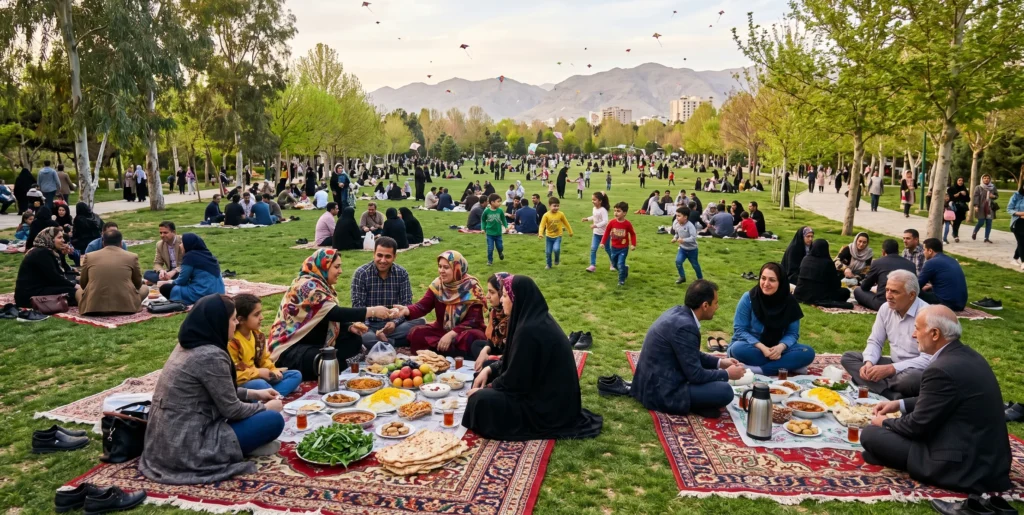
This is the big one. Nowruz is a 13-day celebration and it’s been going for thousands of years — older than Islam, older than most things people call ancient. Shiraz goes full colour. Streets get decorated, families picnic in every available green space, and Eram Garden becomes genuinely difficult to move through on weekends.
The trade-off is real though. Domestic tourism peaks hard. Hotels book out weeks in advance. If you’re visiting during Nowruz, plan everything early or accept that you’re winging it in a very busy city.
Sizdah Bedar — April 2nd (13th day of Nowruz)
Represents “disposal of 13” (you spend the 13th day outside so as not to attract bad luck into the new year). Families are everywhere in the parks, gardens and open spaces. It’s very hectic, really one of those days you’re not a tourist, but you’re just a part of the city.
Shiraz Art Festival — typically April/May
The timing varies slightly from year to year, but is usually late spring. The city’s cultural facilities host programming in the theatre, music and visual arts over several weeks. It is worth checking the cultural calendar information closer to the travel date through Iran’s scheduling, as far as the present time.
Yalda Night — December 21st
A celebration of the winter solstice. Families meet, they stay up late, they read poetry, Hafez’s, whose tomb is in Shiraz, which has a special resonance here. Not a public display but that which you may be invited into, if you’re well connected in your area, or that which you’ll sense in the precincts of the bazaars a few days before.
Packing by Season — Practical, Not Generic
Spring (March–May)
- Light layers — mornings can still be cool in March.
- Comfortable walking shoes, you’ll cover ground.
- A light scarf or shawl (required for women at religious sites, useful for everyone against sun).
- Sunscreen — the UV index climbs fast at this altitude.
Autumn (October–November)
- A proper jacket for evenings, especially November.
- Same layering logic as spring but skewed warmer during the day.
- Rain isn’t likely but a packable layer doesn’t hurt.
Summer (June–August)
- Loose, breathable fabrics — linen if you have it.
- Serious sun protection: hat, sunscreen, sunglasses.
- Reusable water bottle, filled constantly.
- Plan around the heat: light clothes for morning, somewhere cool for midday.
Winter (December–February)
- Actual warm layers — a proper coat for nights.
- Something waterproof for the occasional rainy day.
- Don’t underestimate the cold after sunset.
Budget and Crowds — The Honest Breakdown
Peak season pricing in Shiraz isn’t London or Paris levels, but the difference between visiting in April versus August is noticeable enough to matter for a longer trip.
A rough picture:
- Spring (especially Nowruz): Highest prices, book everything in advance, some popular guesthouses fill up a month out.
- Autumn: Moderate pricing, good availability, the best value-to-experience ratio if the budget matters.
- Summer: Cheapest flights and accommodation, real deals available, but factor in the energy cost of the heat.
- Winter: Low prices, good availability, but you’re trading the gardens and some warmth for the savings.
One thing travelers discussing Iran on Reddit consistently flag — Shiraz’s boutique guesthouses in the old city book out faster than the numbers might suggest, because there aren’t that many of them. Wherever you’re travelling, that category of accommodation needs advance booking.
The Final Verdict
No single “best time” fits everyone, which is why that framing is a little reductive — but if you want a straight answer, here it is.
April is the month. Temperatures are ideal, the orange blossoms are either peaking or just past peak, the gardens are fully alive, and you’re past the Nowruz rush. It’s not cheap and it’s not empty, but it’s Shiraz at its most itself. If you can only go once and weather and atmosphere matter to you, April is the answer.
October is the intelligent alternative. Slightly cooler, noticeably quieter, meaningfully cheaper. You lose the blooms but gain breathing room. For anyone who’s been to popular historical sites during peak season and found it exhausting — Persepolis with five other people versus Persepolis with two hundred — October makes a strong case.
Summer and winter are situational. If budget is the primary constraint, summer delivers the lowest prices but demands physical adaptation. Winter works for architecture and archaeology focused trips where gardens aren’t the point — Hafez’s tomb, Nasir ol-Molk, the bazaar, Persepolis — none of those need spring to be worth the trip.
Quick Reference — Season Comparison
| Spring | Autumn | Summer | Winter | |
| Weather | Mild, 18–30°C | Crisp, 19–27°C | Hot, 33–40°C | Cool, 10–14°C |
| Crowds | High–Very High | Low–Moderate | Very Low | Very Low |
| Cost | High | Moderate | Low | Low |
| Gardens | ✅ Peak bloom | Fading | Dry | Dormant |
| Best for | First-timers, atmosphere | Value travellers | Budget, solitude | Architecture, poetry |
Shiraz rewards the traveller who shows up with some curiosity and reasonable timing. The city has Hafez and Sa’di buried within it, one of the most important archaeological sites on earth forty minutes away, and a food culture that doesn’t get nearly enough attention internationally. Any season gets you those things. The question is just what version of the city you want around them.
For current visa and entry requirements for visiting Iran, checking Iran’s official government travel guidance or your own country’s foreign affairs portal before booking is worth doing — regulations shift and travel advisories update independently of anything a blog post can track in real time.