
I was not initially landing in Guatemala with some great master plan. I had a rude itinerary, a decent camera and the type of nervous excitement that only occurs when you desire to see a country in your own manner. The events that occurred during the following fortnight were a blow to all my suppositions about Central America.
First Impressions
Guatemala City strikes you right at once. There’s no easing into it. On my descent out of the airport the city stretched out in all directions over the valley with that specific churning of Latin American urbanity, congested, loud, color-saturated in a manner unquite faithfully reflected in the photos. The air was thick. The energy was real.
My initial 24 hours were spent in acclimatization, which was, in fact, wandering slightly awkwardly, trying to understand the system of buses and money exchange rates. The natives walked briskly and I was stumbling like I still had a half of the Atlantic to cross. But that disorientation? It’s part of the deal. You can’t rush into a place. It must first of all sink into your bones.
What to expect on arrival:
- The transfer in and out of the airport will take 45 minutes to an hour during traffic.
- The city is 4,900 feet above sea level- you can feel it when you are not accustomed to altitude.
- It is easy to get money by withdrawing it in an ATM, but store your copies elsewhere.
- SIM cards in the country are affordable and ideal in data.
The Hand of God Moment
My second day was spent in visiting the sculpture of the Hand of God, a large concrete hand that comes out of the hillock in the fog. It has become so much of an iconic location and, to be quite honest, I was cynical. Many iconic places are usually not as spectacular as they sound.
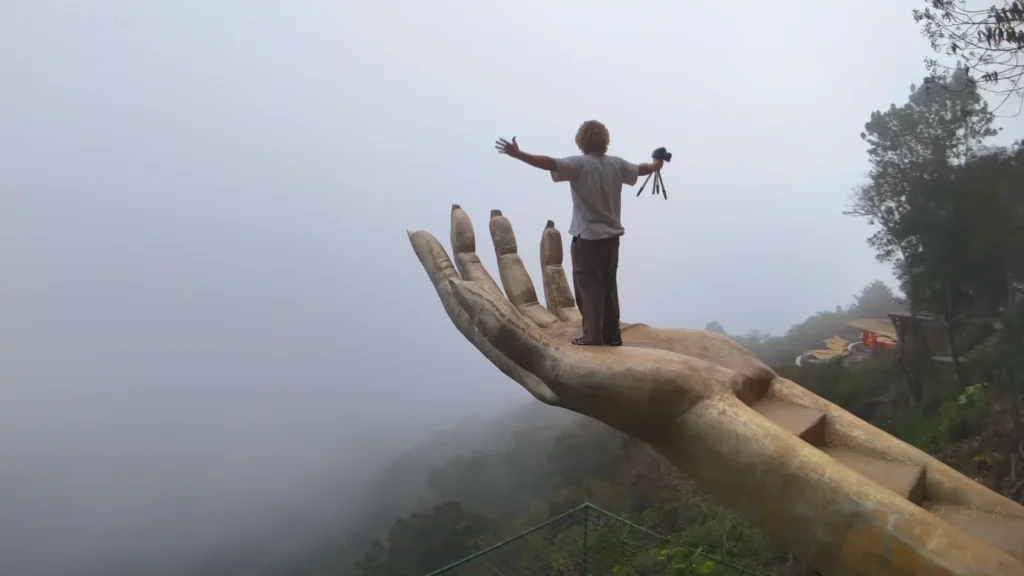
I was wrong. It was like that standing there in the fog, as the hand rose up as though it was someone trying to pull the whole mountain out of the ground. It was not the sculpture as such–but it was the instant. There was a German couple and a Mexican City woman, me. We all just stood there. Nobody was taking selfies. Nobody was rushing. The fog rendered the entire affair a dream even in the process.
It was at that point that I knew Guatemala was not going to be the thing that I expected and that was what made it worth the visit.
Lake Atitlán The Heart of the Highlands
Why This Lake Matters
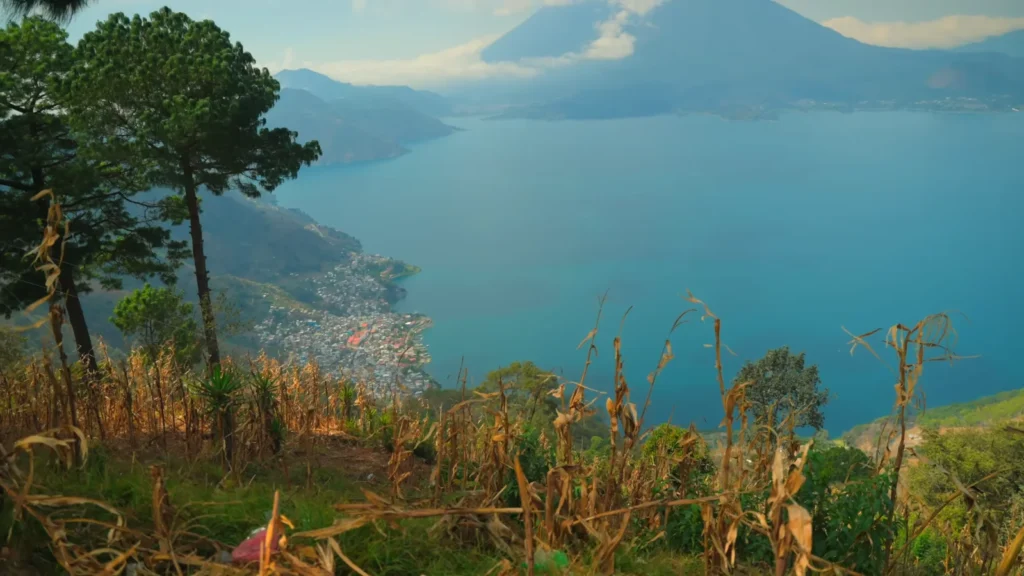
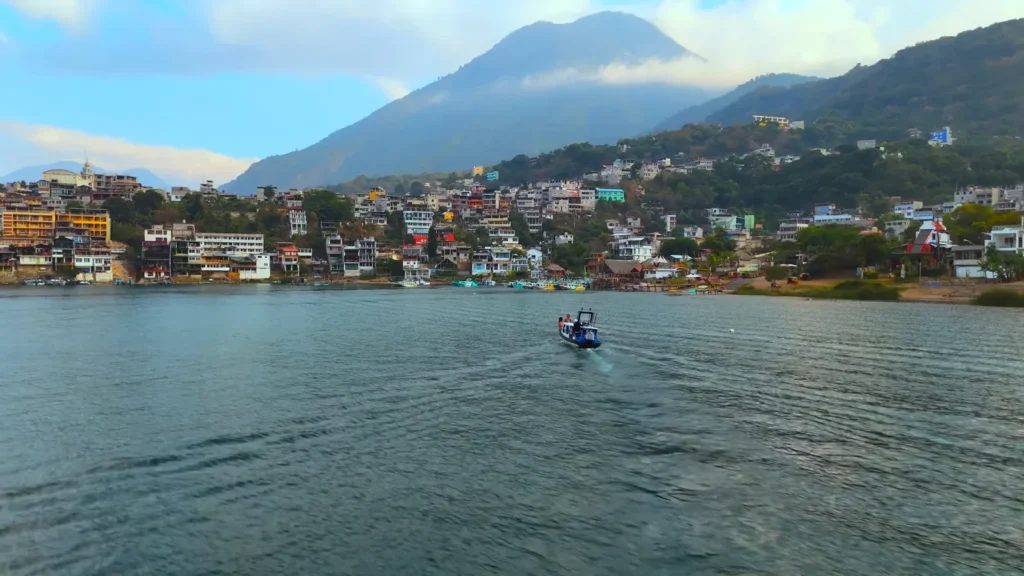
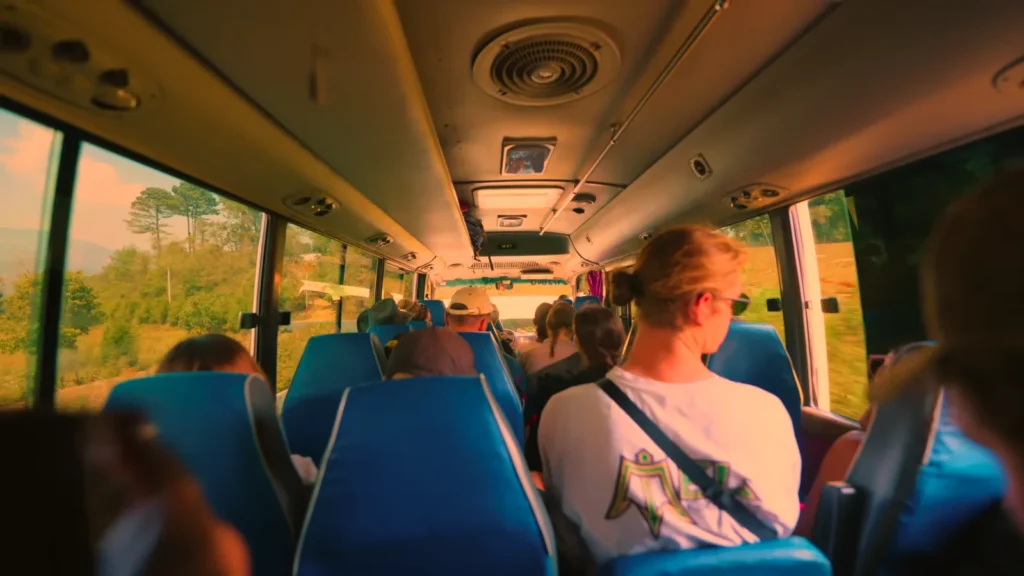
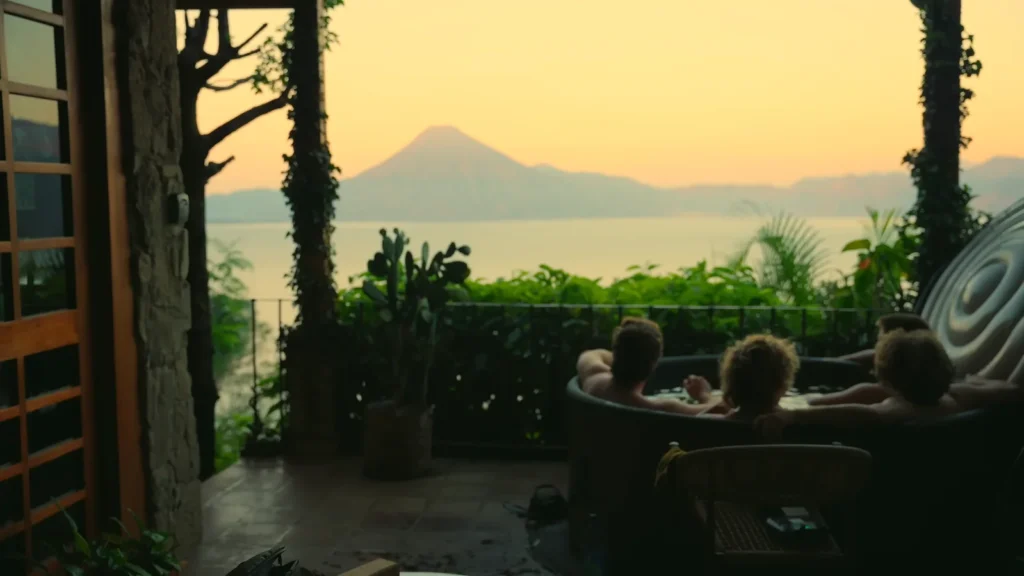
Atitlain lake is 5,000 feet above the sea level and is surrounded by three volcanoes. I arrived there on a hot bus ride which felt to be three hours long but was six. When I eventually looked at it I knew why people use weeks here rather than days.
The lake itself is too blue impossible, not the blue of the tourist board, but a real and alive blue that varies with the light and with the weather. It is enclosed by villages making their way down the slopes, and connected by boat routes and trails. The native communities of the Mayan have been here centuries and that communities influence everything the markets, the textiles, the beat of life.
Lake Atitlán by the numbers:
| Statistic | Details |
| Elevation | 5,125 feet above sea level |
| Depth | 1,115 feet (deepest lake in Central America) |
| Length | 50 km across |
| Surrounding volcanoes | 3 major peaks: San Pedro, Tolimán, Atitlán |
| Villages around lake | 12+ communities with distinct cultures |
Lake Atitlan Preservation Foundation suggests that the lake has been experiencing severe environmental problems in the last few decades such as water level changes and pollution. Still in standing there and watching fishermen in wooden boats, and families doing a wash on the shore, it was holy in some way.
The Villages
I was able to stay in Santiago and Panajallel as two opposite vibes. It is Santiago, a place where not yet the tourists have colonized, it has narrow streets, real people carrying out their business, real markets where you are literally the only foreigner. The coffee is a strong one and the prices are not exaggerated, the weavers continue to weave textiles in the old fashioned manner.
Panajachel is the opposite. It is the place that travelers meet. Nicer restaurants, more convenient logistics, working WiFi. I needed both. You need both. It does make a difference in the contrast.
So the things that struck me about the lake were:
- The water is actually cold, even though it’s tropical.
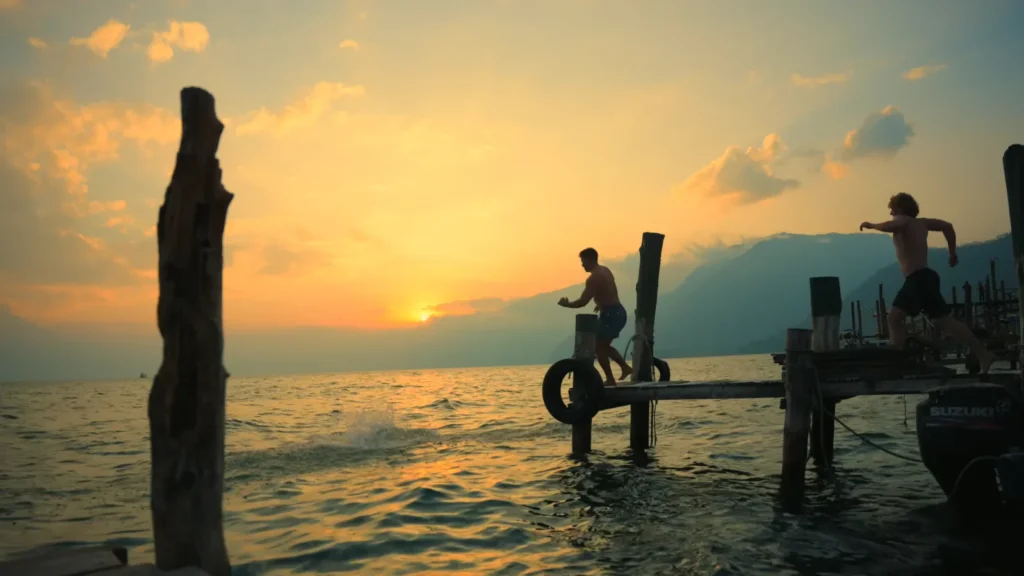
- Sunsets happen fast—like, you look away for two minutes and it’s dark.
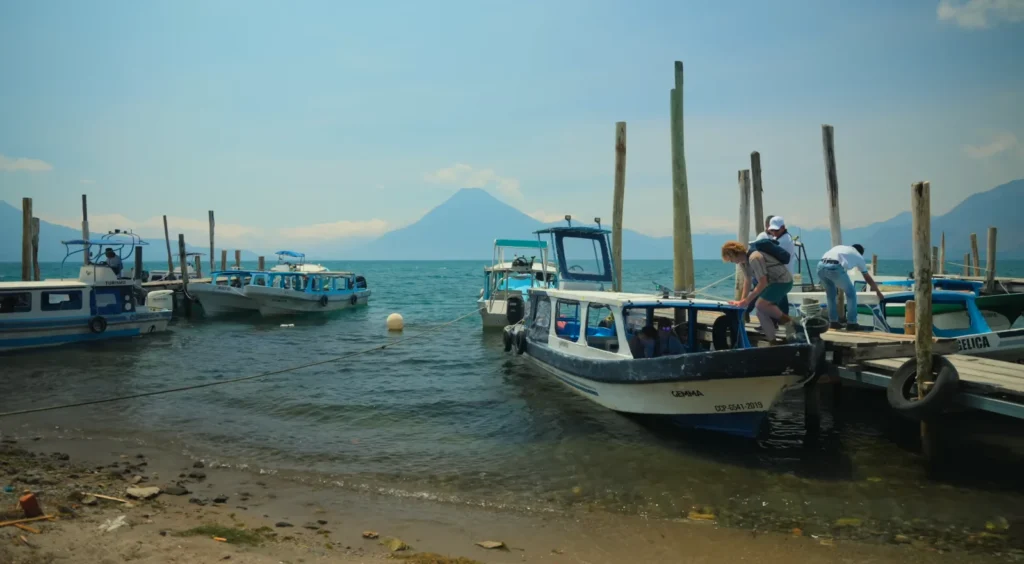
- Boat rides between villages are cheap and chaotic in the best way.
- The tourist restaurants are honestly not bad if you know which ones to pick.
- Every village has its own character; don’t skip around—go deep into one or two.
The Volcanoes from Across the Water
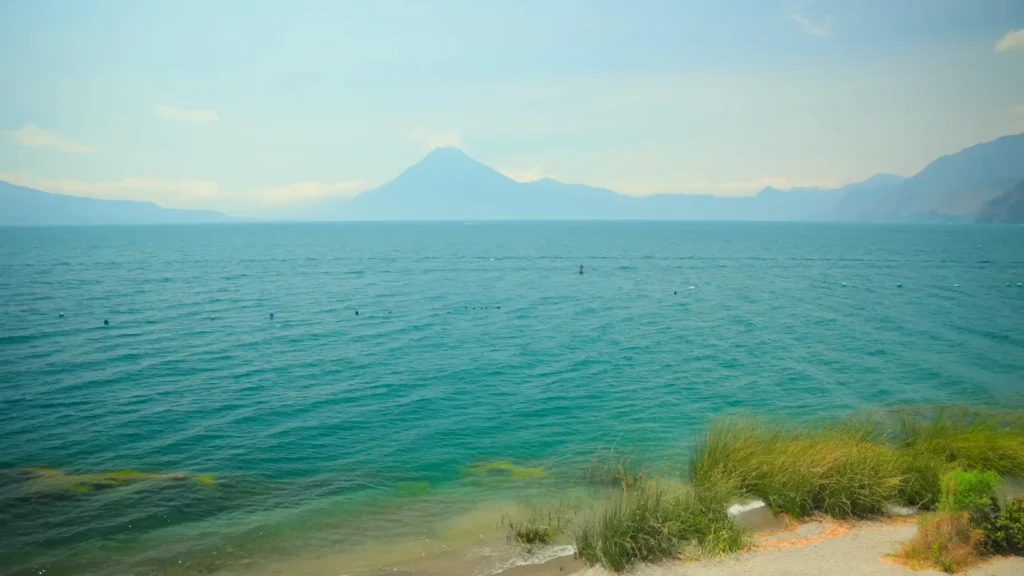
I didn’t climb the volcanoes that ring the lake (that’s a different section), but seeing them from the water changed my relationship with the landscape. They’re not distant scenery—they’re present, looming, part of the daily geography. Locals talk about them like they talk about the weather. “Tolimán’s clear today” means something. It means good luck, good visibility.
Acatenango—The Hike That Changes Your Perspective
Why I Went
I almost didn’t do this hike. It was harsh in the pictures, steep and high and no shade. but I continued to read about it, continued to hear by other visitors that it was the thing to do. Therefore, one Tuesday morning, a bit to the hangover and certainly not ready, I employed a guide known as Miguel and signed a time frame of 12 hours which I expected to be a torturous experience.
It was suffering. It was also transcendent. It is possible that these two are true simultaneously.
The Climb
The initial three hours are leg-destroys. You are climbing one volcanic slope to the top straight through a thick vegetation and each of the steps is higher than the previous one. My calves were screaming. My lungs were feeling like they were digging through mud because of the altitude. One of the Belgian boys in the expedition had vomited at about two hours. It was that kind of hike.
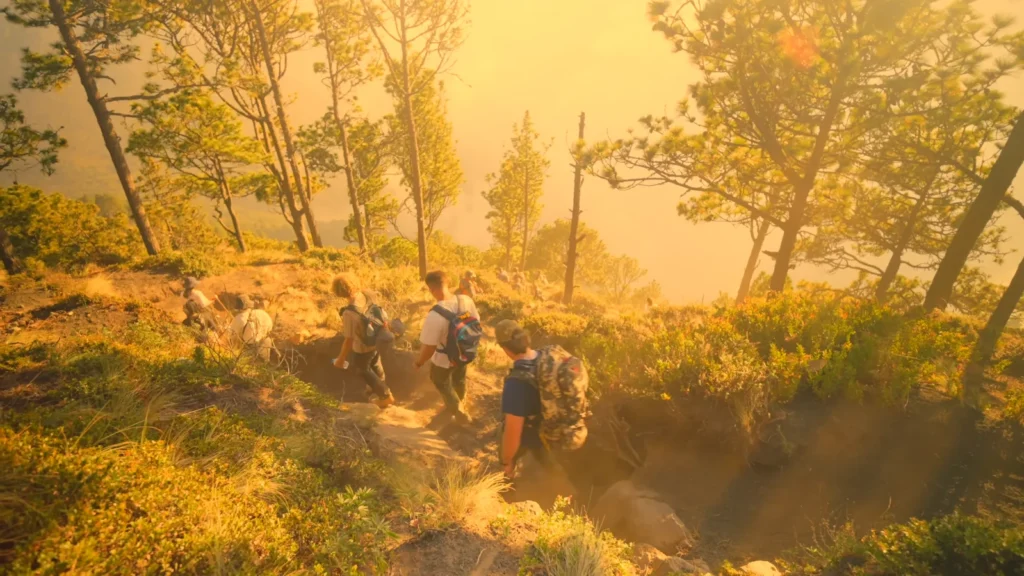
Miguel kept a steady pace, didn’t talk much, just kept moving. That kind of focus is rare. No performance, no Instagram energy. Just “we’re doing this thing, let’s do it right.”
Around hour four, something shifts. Your body stops complaining as loudly. The landscape opens up. You can see across three different valleys. The air gets thinner and cleaner. You realize you’re actually up here, actually doing this.
We reached the camp at Meseta around 4 PM. Elevation: 11,000 feet. The temperature was dropping. Miguel had us set up tents, eat some beans and rice, and then wait.
Watching the Sunset and the Night
The sunset from Acatenango isn’t some gentle evening glow. It’s violent and complete. The entire sky goes orange, then red, then purple, and you’re standing at 11,000 feet watching it all happen around you like you’re at the edge of the world.
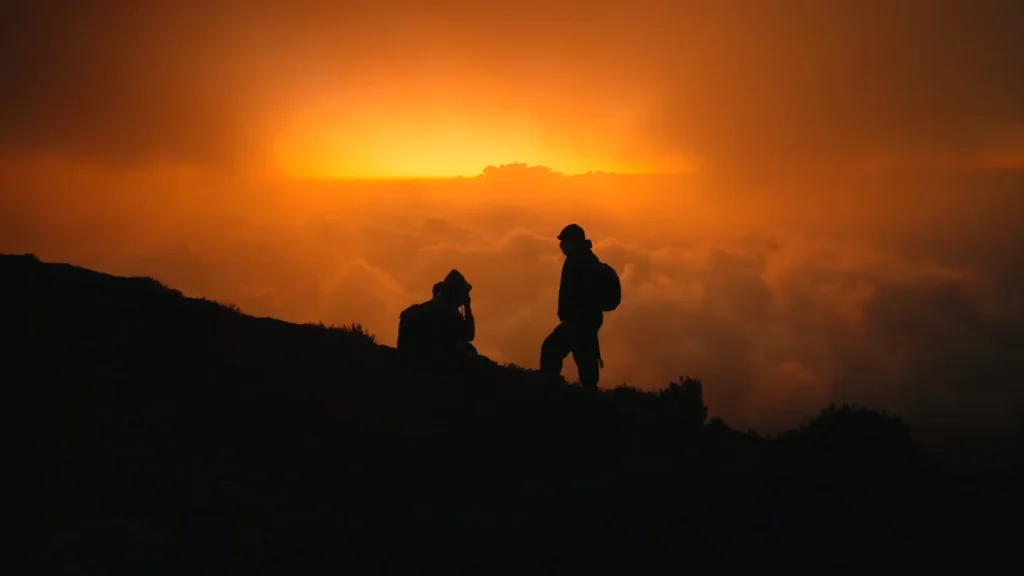
Then it gets dark. Like, actually dark. Stars everywhere. No light pollution, no phone signal, nothing but the sound of wind and volcanic rock.
Around midnight, Miguel woke us up. “Fuego,” he said. That’s all.
I crawled out of my tent and looked down the slope toward Fuego volcano, and I stopped breathing. The entire mountainside was flowing with lava. Not metaphorically—actual rivers of orange light running down the black slope. Lava bombs shooting up and falling back down. It was active. It was violent. It was happening right there.
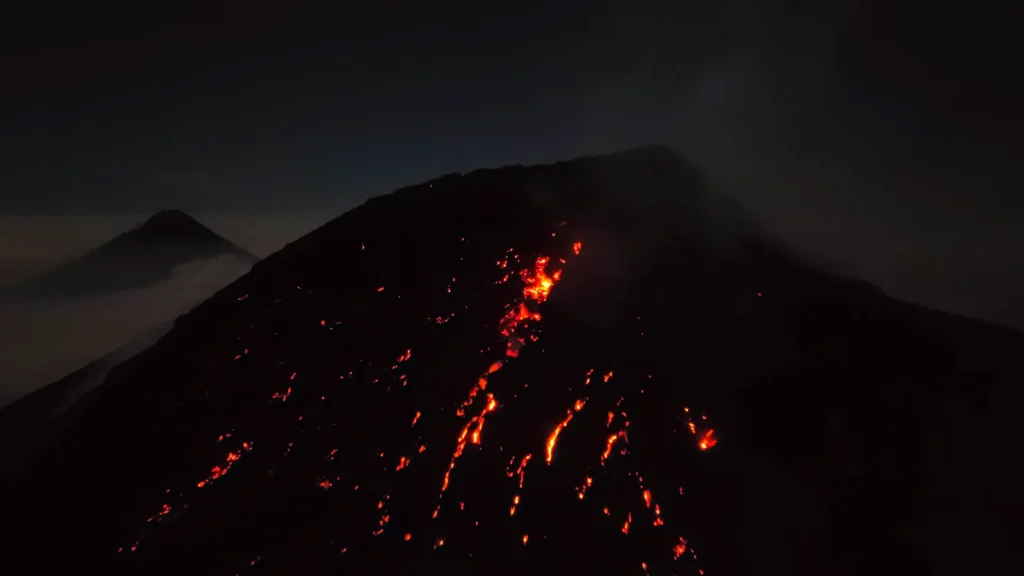
We just lingered an hour or so. Nobody talked. When you are watching the earth literally create itself, you have nothing to say.
Semuc Champey- Turquoise Pools and Underground Rivers
Getting There (The Real Story)
I had to have water after Acatenango. Actual water, not merely the consumption of water, but the walking in it. It was at that point that I was informed about Semuc Champey by everyone. “You have to go,” they said. “It’s unreal.”
What they also failed to add is that it requires a ride in a minibus along roads that most likely should not be made and a trek through the jungle, as well as a lot of trust in the choices made by the van driver. On Wednesday, I at 7 AM left Lanquin with two Australian girls and a male Costa Rican who did not talk much English.
This trip took two hours and seemed to have gone wrong at least four times. We went through villages, in which children were walking to school with bare feet and through farmlands, where people were already at work in hot weather and finally, on a dirt road that was increasingly becoming less like a road and more of a hint.
Then we hiked. Thirty minutes of straight down into the jungle, with the sweat streaming out of my shirt, and everything biting me that I could not make out, and then–
There it was. Semuc Champey.
What Semuc Champey Really Is
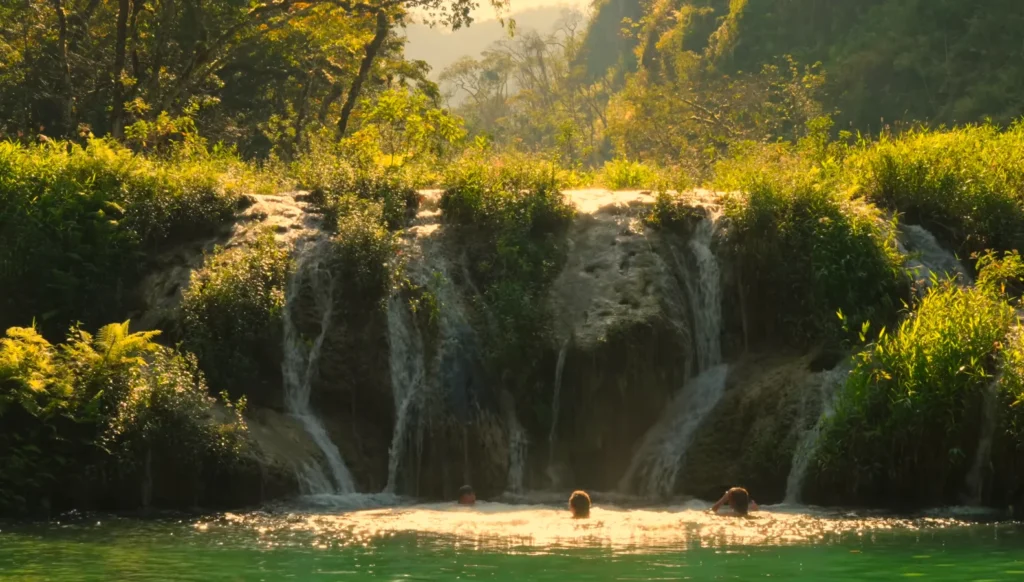
Semuc Champey is a natural bridge- limestone rock formations which form a chain of falling turquoise pools piled one above the other. The water source is the Cahabon river that vanishes underground at the bottom and appears on the other side. Its geology is like a faker until you are there.
It is the colour that gets you first. No Instagram-filtered blue. Real, earthly-pure turquoise. Rocks may be viewed at the bottom of 15 feet pools. It is really cold, but you do not mind when you are in it.
The geology (because it matters):
The Guatemalan Institute of Volcanology states that Semuc Champey developed during thousands of years when the Cahabon River cut through limestone forming the structure of the natural bridges. Even today, the terraces are due to the continual accretion of the travertine deposits (calcium carbonate) and are not a dead formation, rather a living one.
The river itself does not disappear but it runs underground through the caves about 300 meters after which it reappears downstream. You can cave-tube the underground part (and I am still not sure whether you are a brave man or a stupid one).
The Cave Tubing Experience
I did it. And I’m still processing it.
You enter the cave system by the entrance and are given a tube and a headlamp and then the guide (a local boy called Carlos who was approximately 16) instructs you to get into the black river with him.
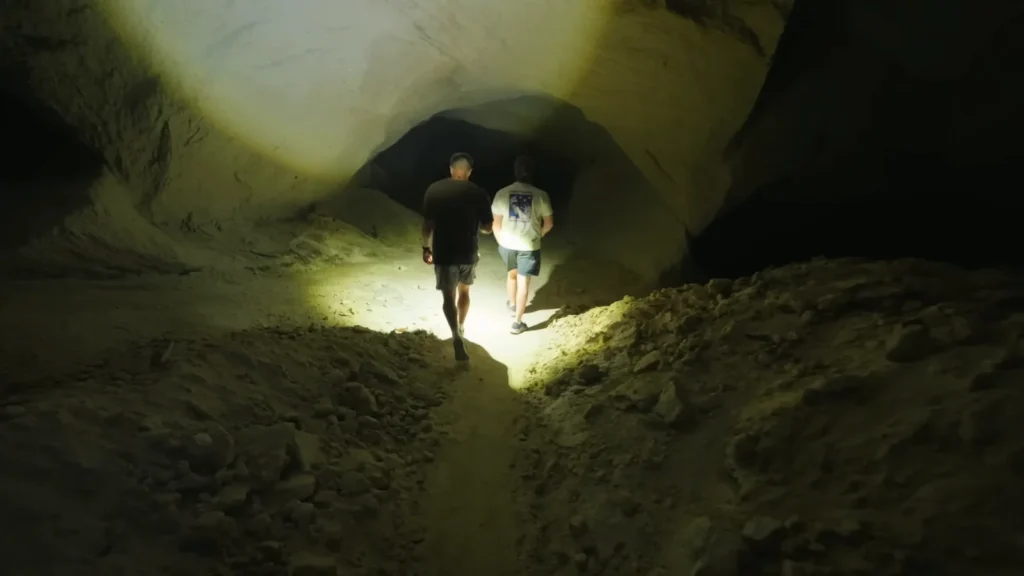
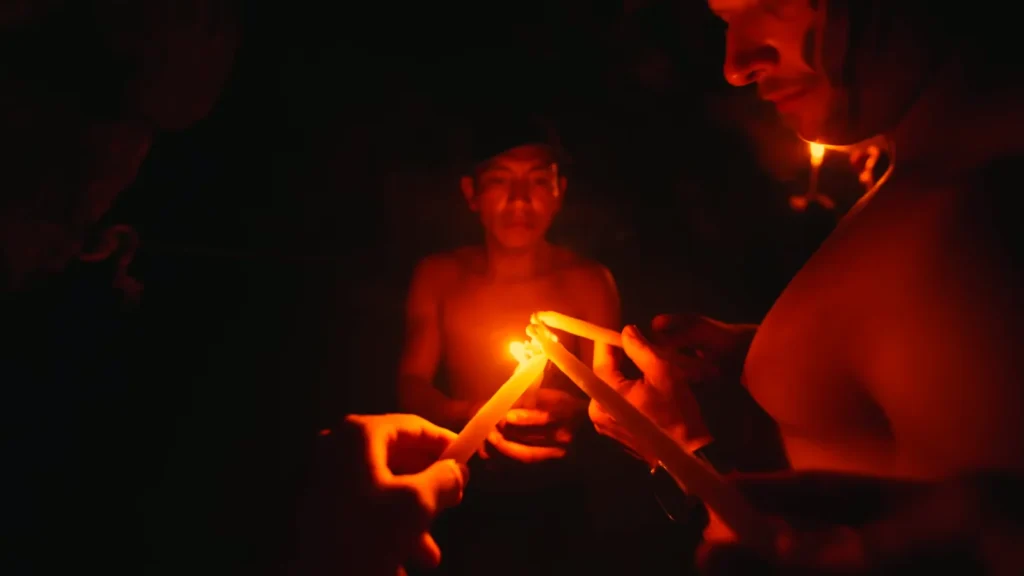
The first 20 minutes are the complete confusion. Your search light is piercing total darkness and you are riding a tube on an underground river, every now and again bumping along limestone walls. There’s no sky. No reference points. Just righteousness and water and the sound of it striking stone.
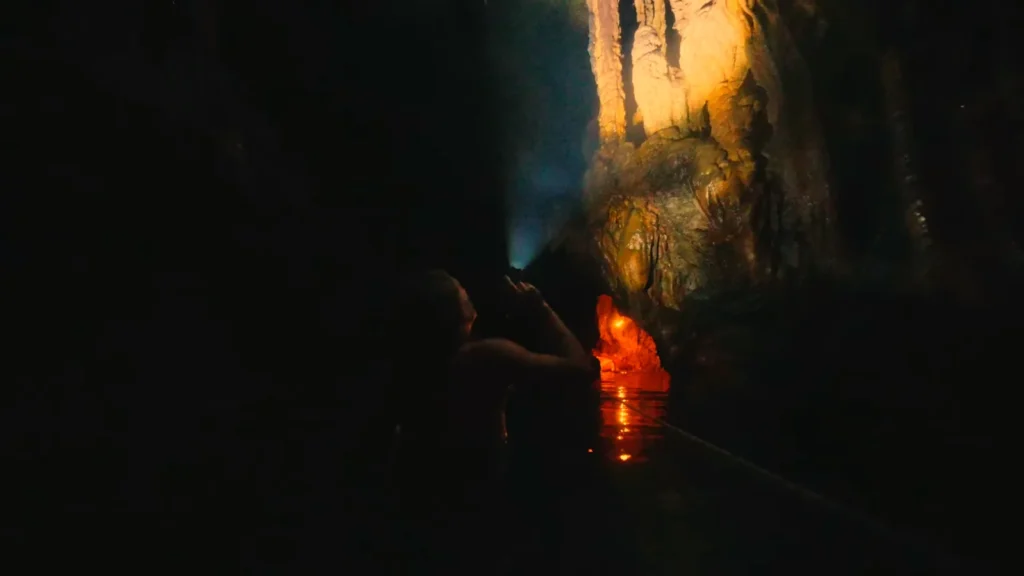
Then your eyes adjust. You begin to notice the structures. Stalactites that have been suspended above your head are making an attempt to trap you, like the cave. Structures that required thousands of years to be formed and you are riding over them on a piece of an old truck tire inner tube.
Carlos indicated the places where the locals took shelter in the event of conflict. Where jaguars claim to nest in dry season. You can get information in a casual manner as you literally walk underground and leave your life in the hands of a teenager.
The entire affair lasts approximately an hour. The jungle looks impossible green when you come back to daylight. You are wet, and you are shivering a little due to cold and adrenaline and really uncertain if it happened at all.
Why You Actually Need to Go Here
This isn’t a manufactured attraction. There are no gift shops claiming to sell “authentic” goods. There are no tour buses with 50 people. It’s raw Guatemala—water, rock, jungle, and locals who actually live in the region.
What to know before you go:
- Bring snacks, water, it does not serve food on the site.
- The hike down is easy; the hike back up is brutal.
- Wear shoes with grip; wet rocks are slippery.
- If you cave tube, bring a dry bag for your stuff.
- Go early; it gets crowded by midday.
- Some rural areas are discouraged in case of travel advisory, but Semuc Champey is located in a rather safe route.
I was there the better part of the day, simply sitting in the pools, allowing the water to do something to me that I find it very difficult to describe. Travel is not always about experiences. It is standing still in such a pretty spot it rewires your mind.
Tikal—Walking Through Time
The Approach
Tikal isn’t a day trip. It’s a commitment. It is the closest town, Flores, on an island in lake Peten Itza, in the jungle. Accessibility via the coastline takes hours of traveling through some of the most remote areas in Guatemala.
I flew. Another little flight to Tikal across Flores that had around 12 other passengers on it and their arrival at Tikal provided me with my first real impression of size. The jungle, seen overhead, is bottomless–green all the way to each staying-post, interrupted, however, by the pyramids, thrust up like one had dropped some gigantic toy in the woods.
Walking Into the Past
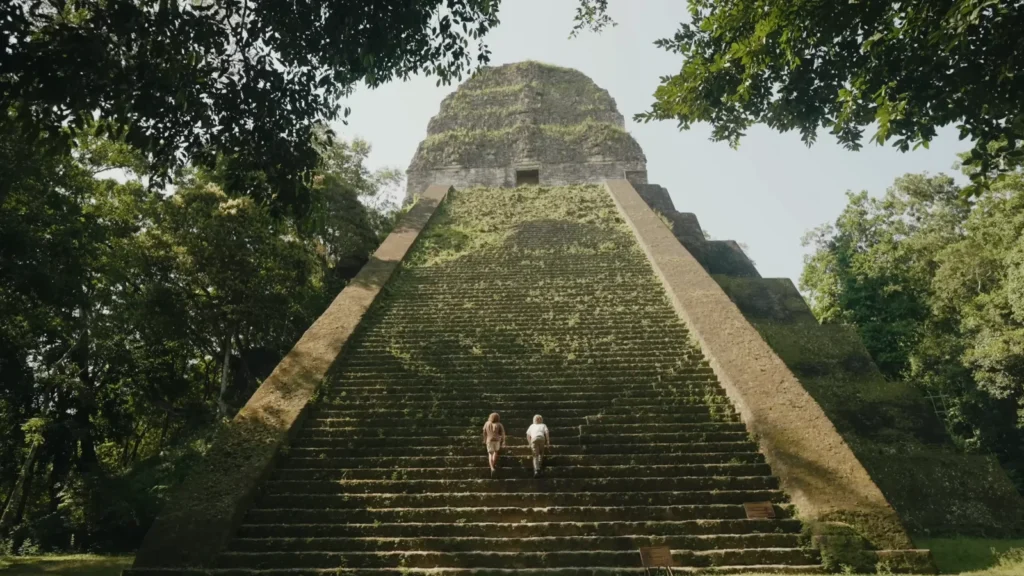
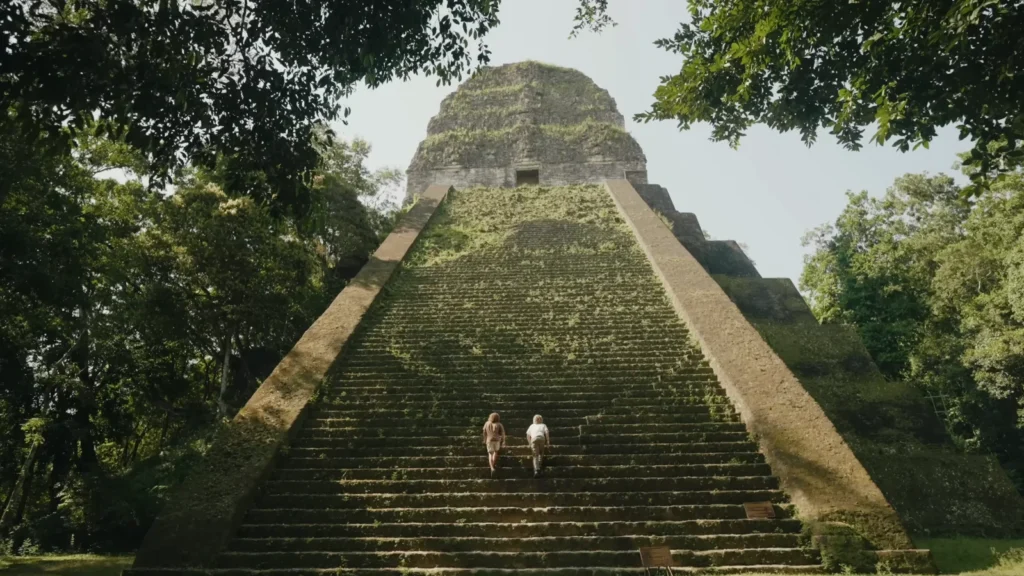
Tikal is a Mayan city, which was thriving between 600 BC and 900 AD. Then the culture fell,–the cause of which archeologists continue to argue about–and the jungle restored it. This was lost over centuries and it was only recorded by conquistadors of Spain during the 1600s. The 20th century did not see the start of serious excavation.
What it implies is that you are not strolling through a sterile and excavated location. You are going through a jungle and you can still see huge stone buildings that are above the canopy. Trees grow out of pyramids. Vines hang off temples. The forest actively attempts to return to human constructed things.
Tikal by the numbers:
| Aspect | Details |
| Temples identified | 3,000+ structures within 575 square miles |
| Tallest pyramid | Temple IV at 213 feet (still one of the tallest structures in the Americas) |
| Years of occupation | 1,200+ years continuously inhabited |
| World Heritage status | UNESCO designation since 1979 |
| Modern preservation | Still actively being studied and partially excavated |
People are attracted to the largest temples, which are the Temple IV and the complex of the Great Plaza. But the truth is the encounter that resonated with me was that of losing a path in smaller roads and falling on structures that seemed like I had found them. A pyramid was so loaded with moss and vines on it, that it resembled a hill of nature. One of the sculpted stone faces sticking through bushes. There was a temple platform on which one had been 1,500 years ago, and on which he had worked.
The Overwhelming Feeling
It seems there comes a point, as you are walking through Tikal, and its weight sinks down on you. These were constructed without the use of wheels, iron tools, without machinery. The mathematics, the engineering, the pure ambition of it,–all of that, to be seen in stone, which has outlived a millennium.
There is scholarly work on Tikal indicating that the city could have a population of 100,000 at some time. It is not a little town–it is a metropolis. And they were all constructed and supported in the jungle and this is the thing that the modern engineers admire.
I spent a full day there. Got lost multiple times. Coislinian coatis and birds unknown. Inhaled temples that most likely ought to have safety nets. Seated in the utter stillness of the jungle mid-afternoon, and attempted to visualise what it must have been like when this place was alive.
The Smaller Moments and Practical Wisdom
What Nobody Tells You
You can make all the plans you like but Guatemala will provide you with an experience that you never intended to plan. I was staying in an Airbnb in Antigua where I could see three volcanoes. One morning I woke up and the Fuego volcano was erupting actively–the lava can be seen during the day.
I randomly boarded a boat and rode on the lake through Flores and found myself in a conversation with a lady who has spent her entire life in Flores by the lake. She also instructed me on how to recognize the birds returning through the call of the birds. The 30 minutes discussion was more informative about the region than any guide book.
I experienced a two-day food poisoning and the lesson was that the Guatemalese pharmacies will sell you nearly everything as long as you explain your symptoms. I boarded the wrong bus and had to visit a village where no one could speak English, where I ate the best tamales of my life, and finally made it back.
The things that actually mattered:
- Carrying toilet paper everywhere (not all bathrooms have it).
- Learning basic Spanish phrases—people appreciate the effort.
- Being willing to take the wrong bus sometimes.
- Eating where locals eat, not where tourists congregate.
- Hiring local guides; they know things and need the income.
- Respecting that this is someone’s home, not your playground.
The Real Cost
Guatemala is also not expensive when you are staying in hostels and feeding on the street. Budget tourists can survive on a daily basis of about 30-40 USD. But I wasted more as I wanted to- good hotels, proper restaurants, hiring guides, flying rather than riding the bus. In total, two weeks of flights to the US cost me approximately $2, 500.
The official rate is kept at 7-8 Quetzales to 1 USD with carry cash. Cards are used in larger towns but not everywhere.
Why You Should Actually Go
The thing is, Guatemala does not promote itself as Costa Rica or Belize do. It does not have an enormous tourism infrastructure. That’s not a bug—it’s a feature. You are not going through the crowd of 500 other tourists at Tikal. This is not a chain hotel in Antigua.
What you get instead is real. Messy. Challenging. Beautiful without being styled.
The volcanoes remain active. The culture of the Mayans still exists. The jungle is even yet again reclaiming the ruins. The lakes remain too impossibly blue. And even without it being as though you are reading off a piece of paper you can still experience it.