
Venice doesn’t introduce itself gently. It drops you straight into movement water moving, people moving, buildings leaning toward the canals as if they’re listening in. You don’t “arrive” here the normal way. You float in.
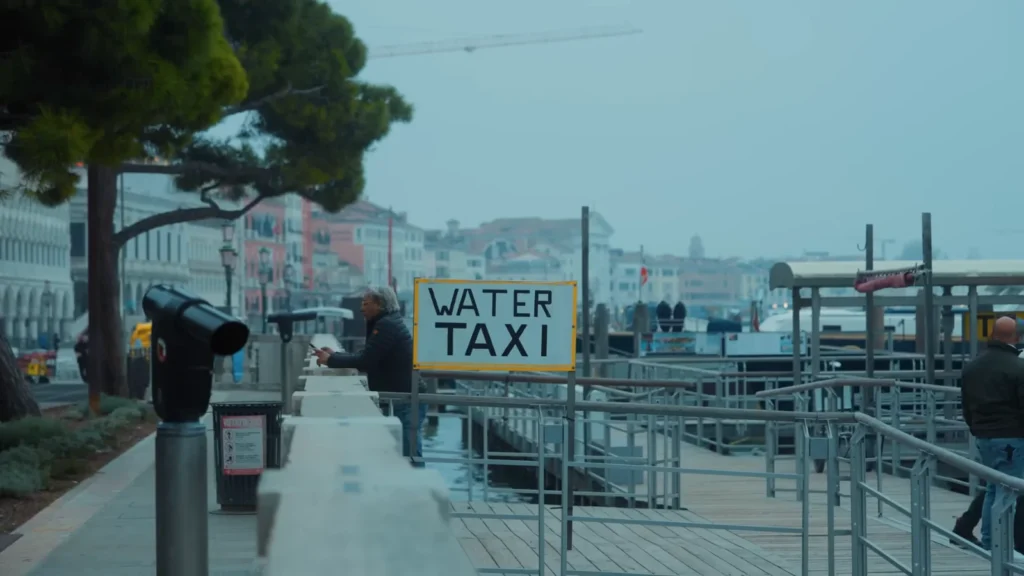
Most cities ease you in with roads. Venice doesn’t bother. My first real impression wasn’t a street or a square it was the wake of a boat cutting through green water, buildings sliding past at eye level.
According to the official Venice City Council, the historic center is made up of 118 islands connected by more than 400 bridges. That becomes obvious the moment you step off the vaporetto. There’s no grid. No predictable flow. Just movement and water negotiating space together.
Why arrival feels different here
- Boats replace taxis
- Water replaces roads
- Sound carries farther engines echo off stone
Standing at a small dock, watching water taxis come and go, I realized Venice isn’t quiet it’s absorbing. Noise softens. Motion slows your internal clock.

Getting around: what actually works
| Transport | Best for | Notes |
| Vaporetto | Long routes | Slow but scenic |
| Water Taxi | Direct trips | Expensive, efficient |
| Walking | Short distances | Expect dead ends (and enjoy them) |
| Gondola | Experience | Transport second, tradition first |
Venice rewards patience. The fastest route is rarely the most memorable.
The Rialto Bridge and the Grand Canal: Venice in Motion
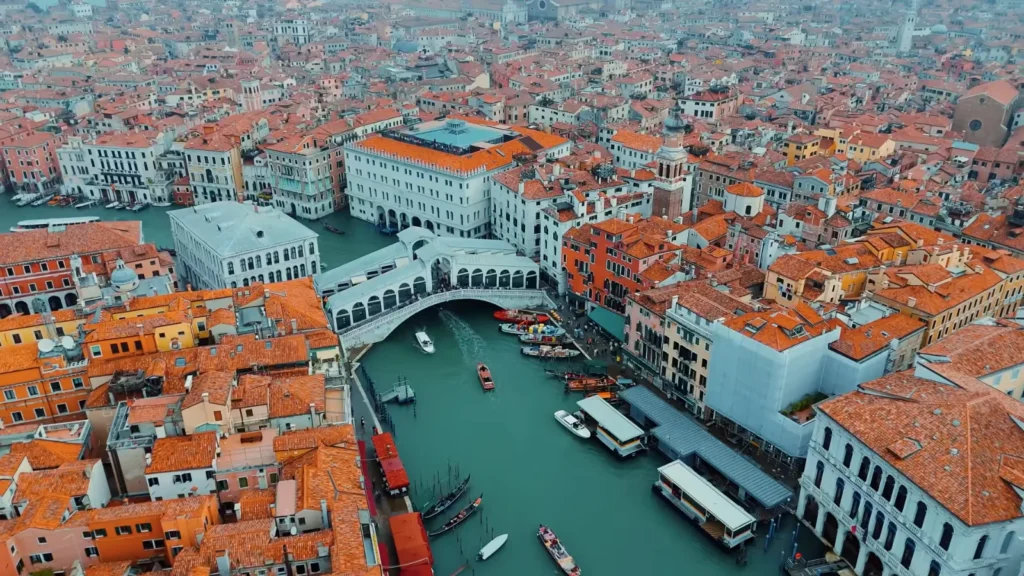
I photographed the Rialto Bridge from the water first looking up at it rather than standing on it. That felt right. Built in the late 16th century, it remains the oldest bridge crossing the Grand Canal (Encyclopedia Britannica).
From above, from a drone, from a boat the bridge behaves differently depending on where you stand. It holds crowds, traffic, history and impatience all at once.

What you notice when you slow down
- Boats crisscrossing like intersections.
- Vendors leaning out from arcades.
- Tourists pausing mid-step to renegotiate direction.
The Grand Canal itself feels functional, not decorative. According to UNESCO, it has served as Venice’s main commercial artery for centuries. Even now, delivery boats, police launches and garbage barges pass through between gondolas like it’s normal. Because here, it is.
Walking Venice: Alleys, Campi and Getting Lost on Purpose
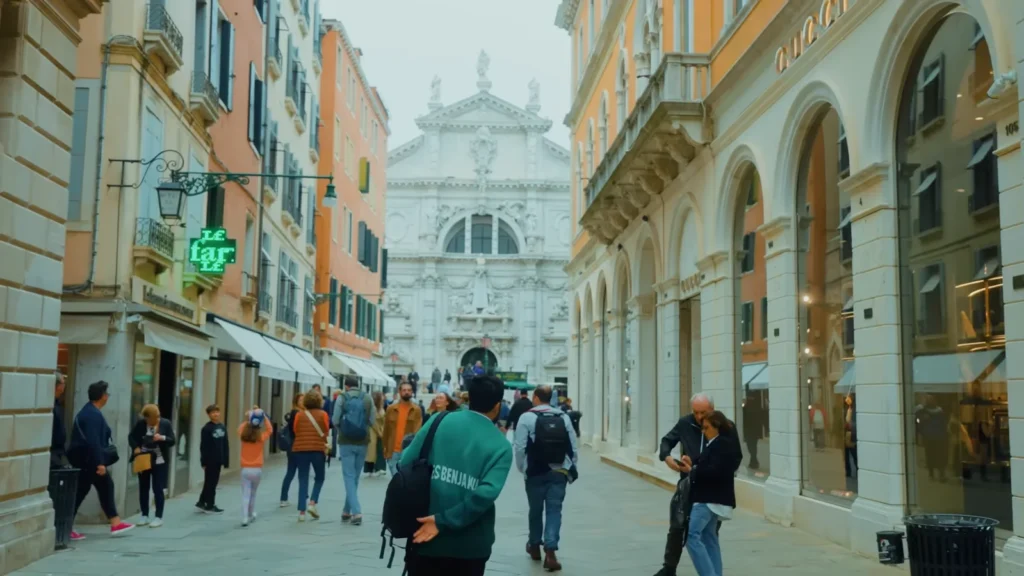
Venice makes walking deliberately inconvenient. Streets narrow without warning. Signs contradict intuition. Google Maps gives up more often than you’d expect.
That’s the point.
The city was never designed for efficiency. It grew outward from trade routes and necessity, not urban planning. According to Venice Urban History archives from Ca’ Foscari University, much of the street layout dates back to medieval footpaths.
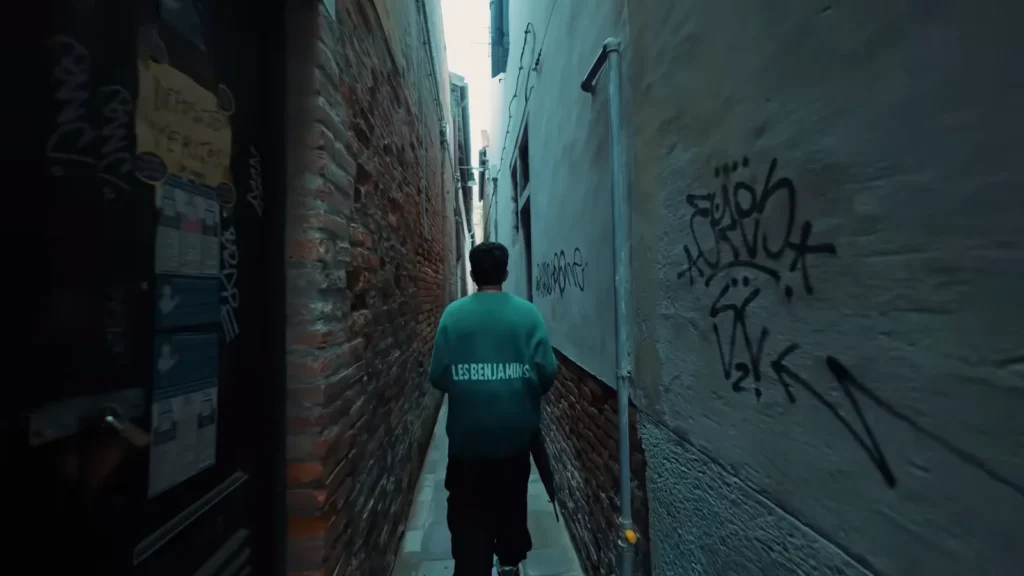
What happens when you stop navigating
- You end up in quiet residential campi.
- Kids play soccer against church walls.
- Laundry lines stretch overhead.
One afternoon, I followed sound instead of direction a violin drifting somewhere between buildings.
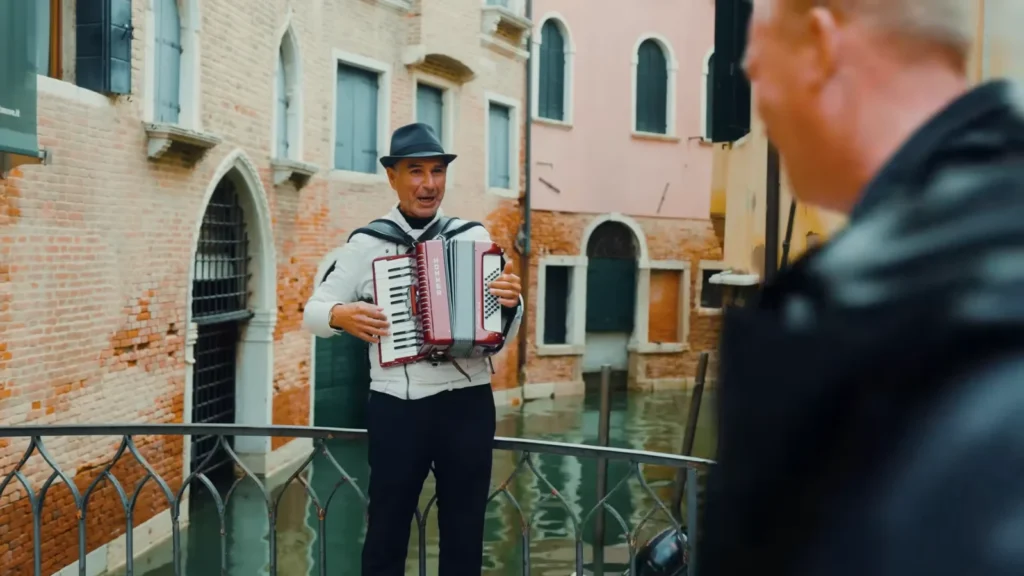
The musician wasn’t performing for anyone. He was playing near people, which feels like an important distinction in Venice.
Quick list: walking rules I learned the hard way
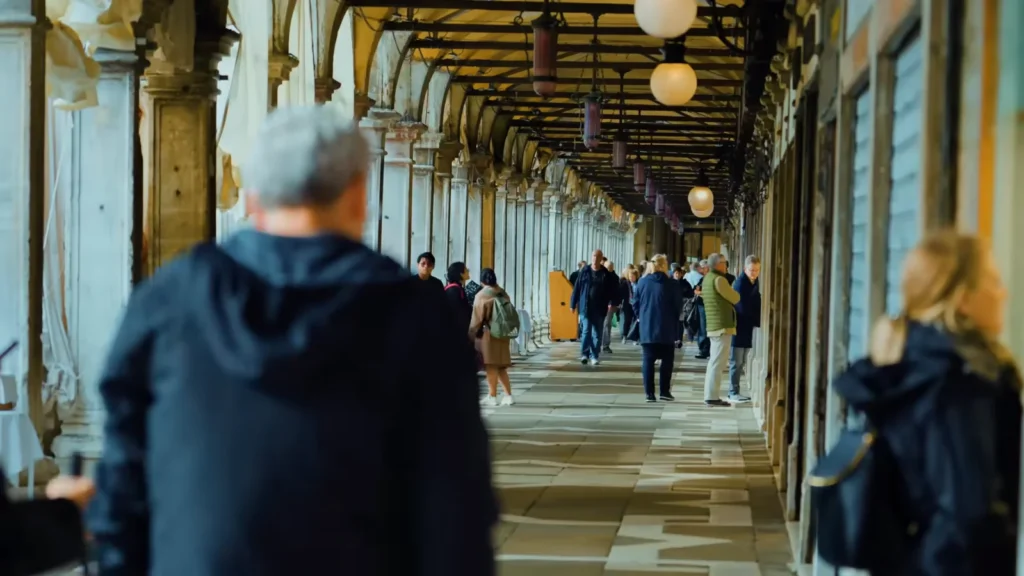
- Bridges always add time.
- Detours are inevitable accept them.
- Dead ends usually reward curiosity.
- Locals walk fast; tourists drift.
Venice doesn’t punish you for being lost. It trains you to stop fighting it.
Venice by Day and by Night: Two Different Cities
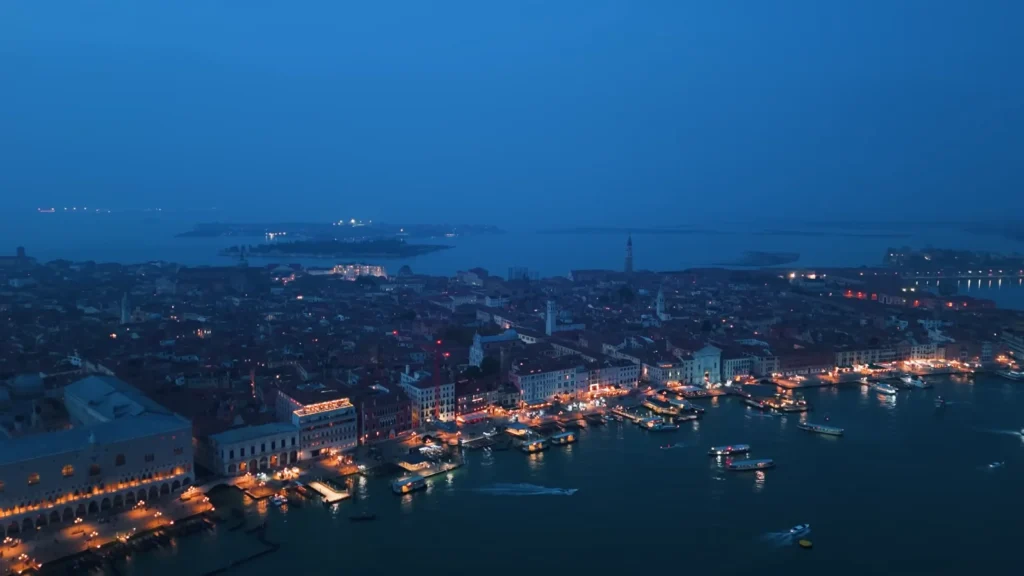
At night, Venice shifts. Ferry engines quiet down. Tour groups retreat. The city exhales.
According to Italy’s National Institute of Statistics (ISTAT), fewer than 50,000 residents live in the historic center today. After dark, you feel that immediately. Footsteps echo. Cafés shrink into warm pockets of light.
What looks different after sunset

- Water turns reflective instead of opaque.
- Building facades flatten into silhouettes.
- Navigation becomes instinctual.
I stood along the canal watching a single boat move through blue hour, it’s wake breaking reflections like glass.
Venice at night isn’t romantic in a cliché way. It’s intimate, almost guarded.
Cafés, Corners and the Habit of Lingering
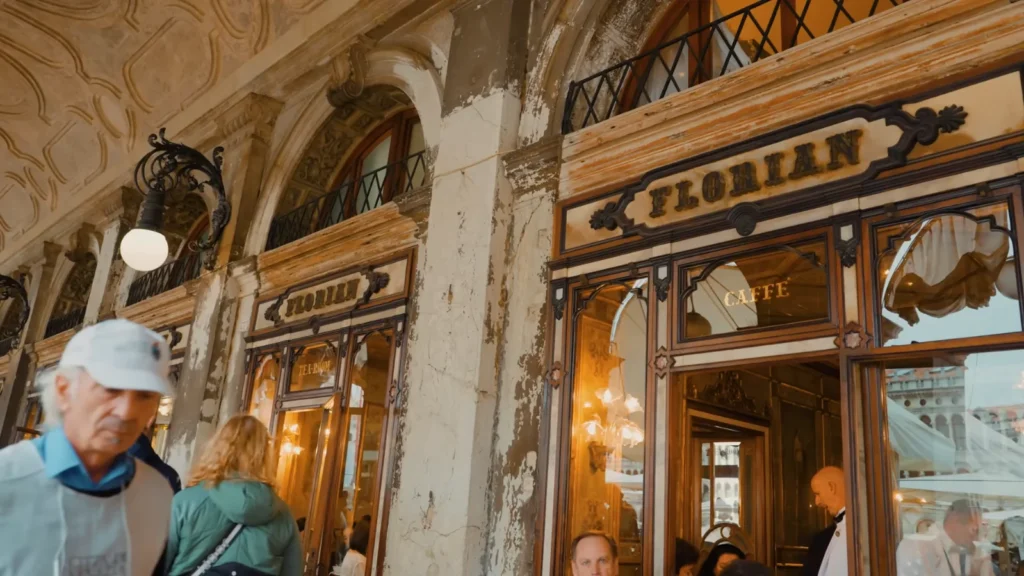
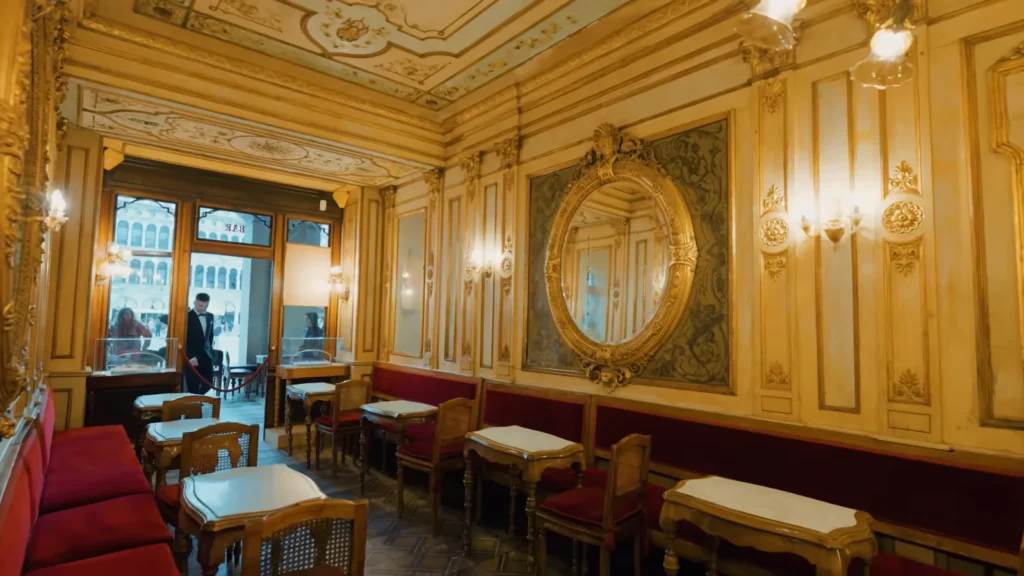
Venice doesn’t rush coffee. That’s something I noticed early and appreciated more each day. Sitting at Caffè Florian in Piazza San Marco one of the oldest cafés in Europe, founded in 1720 .I realized no one here is drinking just to finish.
Inside, the rooms feel layered with time. Mirrors dulled by age. Murals that don’t try to impress anymore. Outside, orchestras still play in the square, like they have for generations.
Why café culture matters in Venice?
- Cafés double as meeting places, not pit stops
- Sitting is participation, not interruption
- Time stretches naturally
I spent longer than planned with a single espresso, mostly watching people negotiate space in the square waiters, musicians, tourists, locals cutting diagonally through noise.
Quick comparison: standing vs sitting coffee
| Style | Cost | Experience |
| Standing at the bar | Lower | Efficient, local vibe |
| Sitting at a table | Higher | Atmosphere, observation |
Either choice works. What matters is staying long enough to notice your surroundings rearrange themselves.
How Venice Actually Works: Boats, Police and Daily Labor
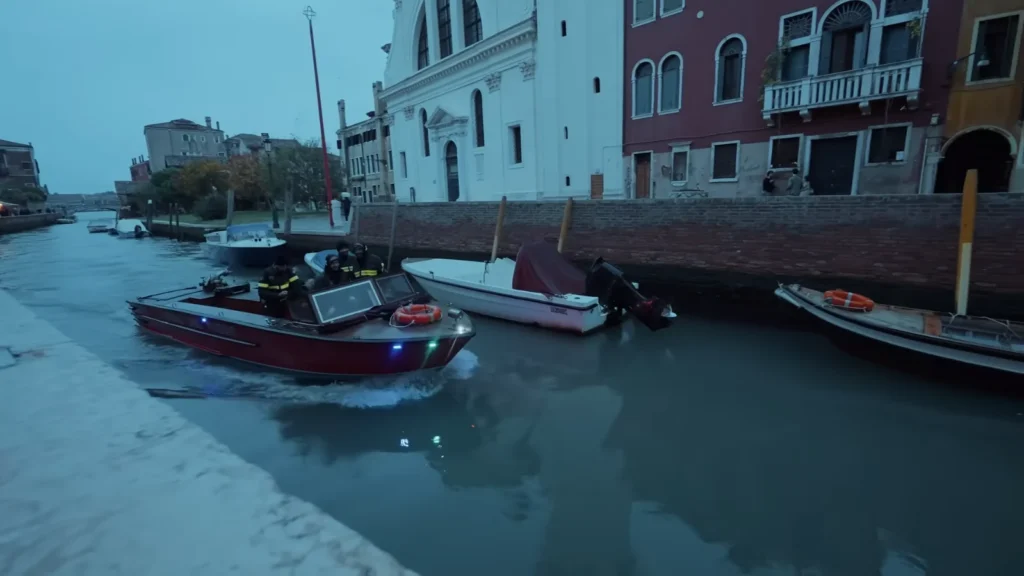
Romantic images hide the fact that Venice functions stubbornly, impressively. Everything that enters or exits the city does so by water. That includes groceries, furniture, trash collection, ambulances and law enforcement.
Venice’s police operate entirely via boat in many districts. The Polizia di Stato maintains a maritime division specifically for lagoon enforcement. Watching officers maneuver their boats through tight canals felt less cinematic and more surgical.
Infrastructure that keeps things moving
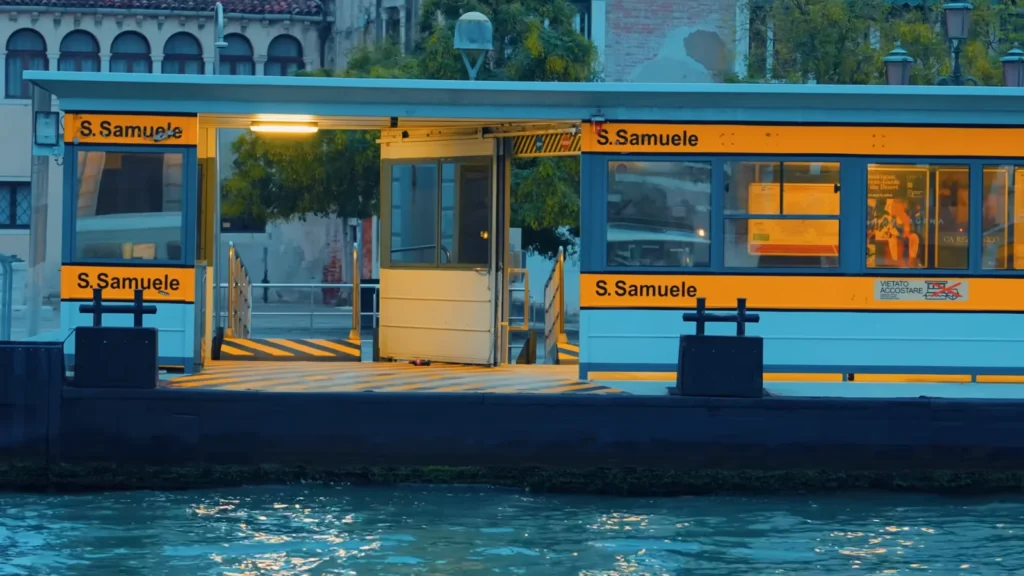
- Floating docks instead of curbs.
- Timetabled waste boats.
- Emergency response by water.
At a busy docking point, I watched commuters treat boats the way others treat buses step on, glance up, move aside.

Venice logistics
| Service | How it works |
| Deliveries | Early morning cargo boats |
| Garbage | Scheduled collection boats |
| Emergency | Water ambulances |
| Policing | Patrol boats + foot routes |
Venice survives because routines adapted to water centuries ago and never stopped evolving.
The Workshops and the Work Behind the Beauty
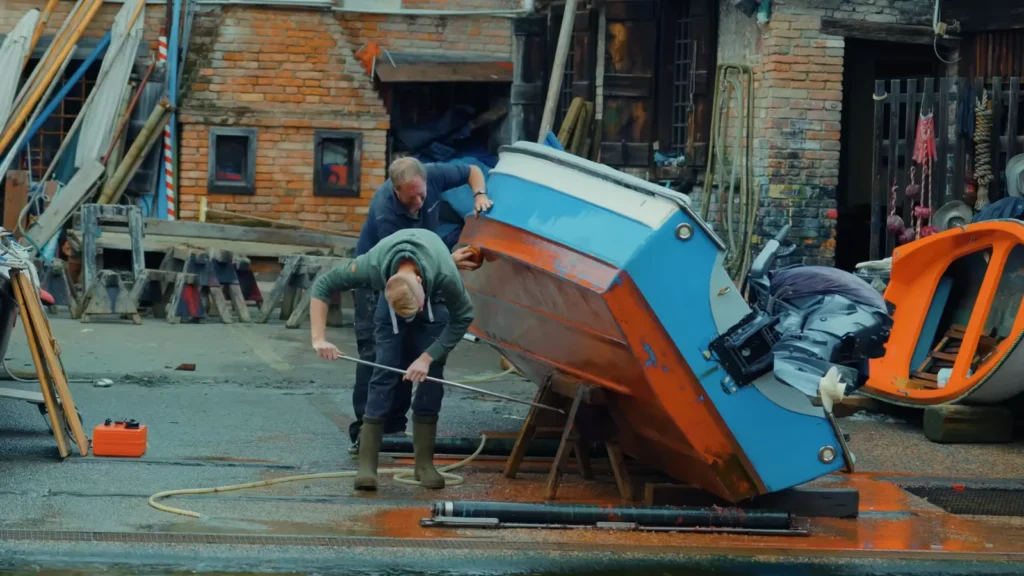
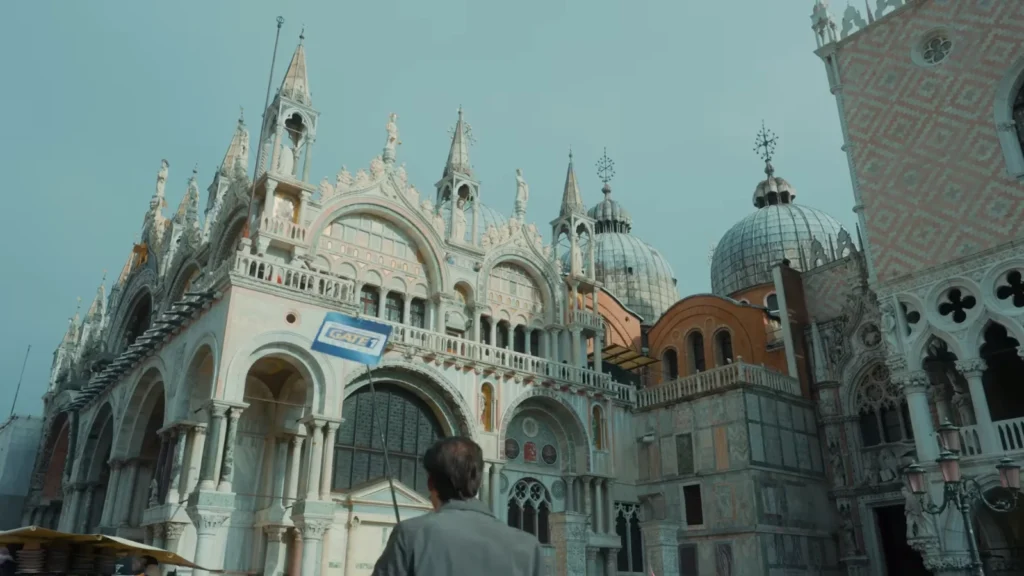
Behind the polished façades, Venice shows it’s hands. Boat workshops line quieter canals, where repairs happen without ceremony. Paint flakes. Tools get wet. Engines leak.
Traditional Venetian boat-building, especially for gondolas, still relies on specialized craftsmen known as squeraroli. Watching repairs felt honest labor folded directly into daily life, not hidden behind industrial walls.
What stood out
- No attempt to hide wear.
- Workspaces openly visible.
- Function outweighs appearance.
One afternoon, I watched two men adjusting a small boat hull, water pooled beneath their boots. No complaints. No performance. Just maintenance.
This side of Venice doesn’t ask for attention. It earns respect quietly.
Water Taxis, Cost of Convenience and When It’s Worth It
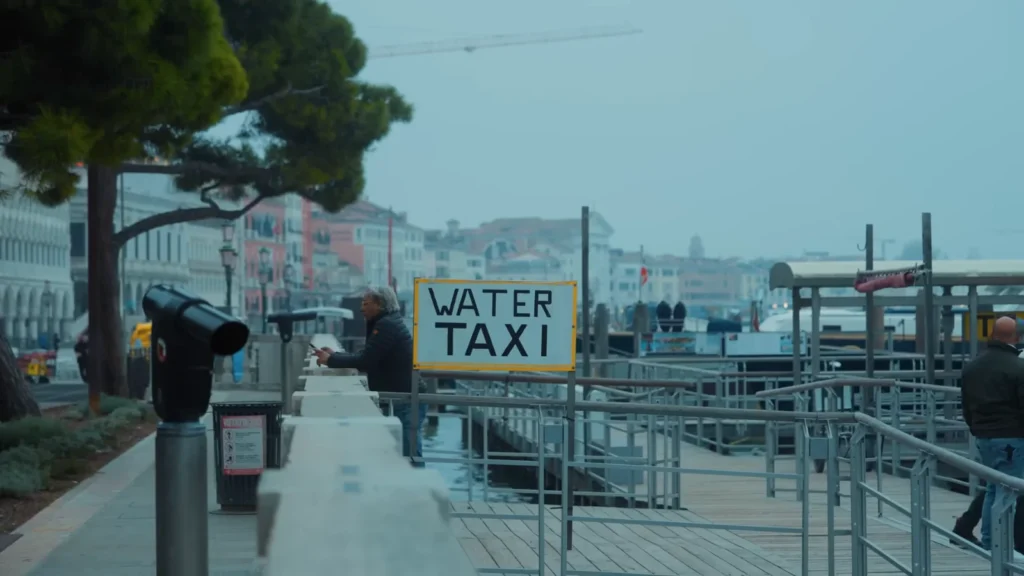
Water taxis in Venice feel extravagant until you understand what they actually solve. They don’t just move you faster they remove friction. Luggage, crowds, wrong turns, stairs. All gone.
According to the City of Venice transport authority, licensed water taxis operate 24/7 across the lagoon, but fares are distance-based and significantly higher than public transport (ACTV). My first ride felt indulgent. My second felt practical.
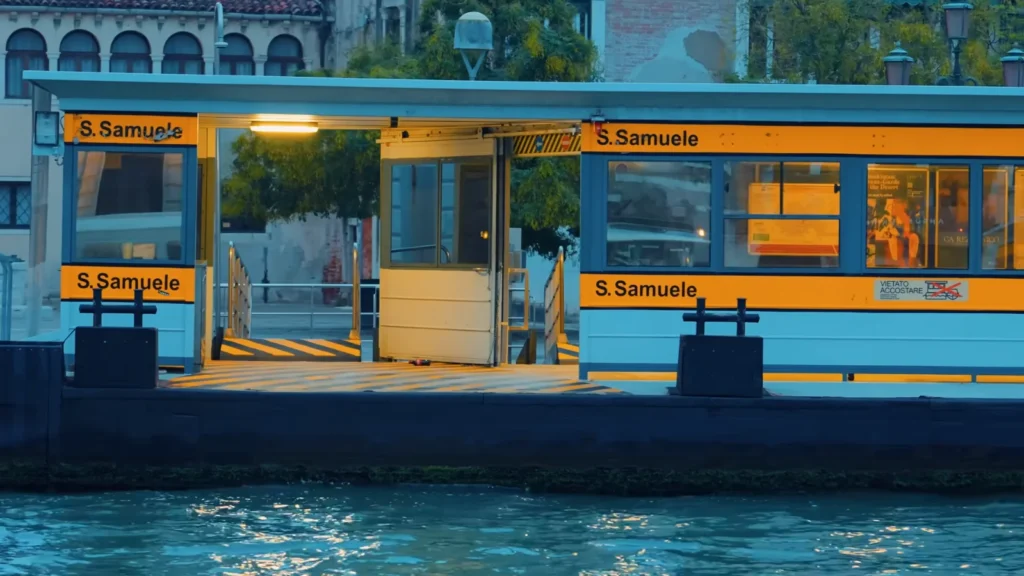
When a water taxi actually makes sense
- Late-night arrivals
- Heavy luggage
- Tight timelines
- First or last day (mental load matters)
Cost comparison (approximate)
| Transport | Cost Range | Experience |
| Vaporetto | €9.50 single ride | Slow, communal |
| Day Pass | €25+ | Flexible, reliable |
| Water Taxi | €60–120+ | Direct, private |
Venice teaches you that cost isn’t always about money. Sometimes it’s about energy.
Quiet Views and Pulling Back for Perspective
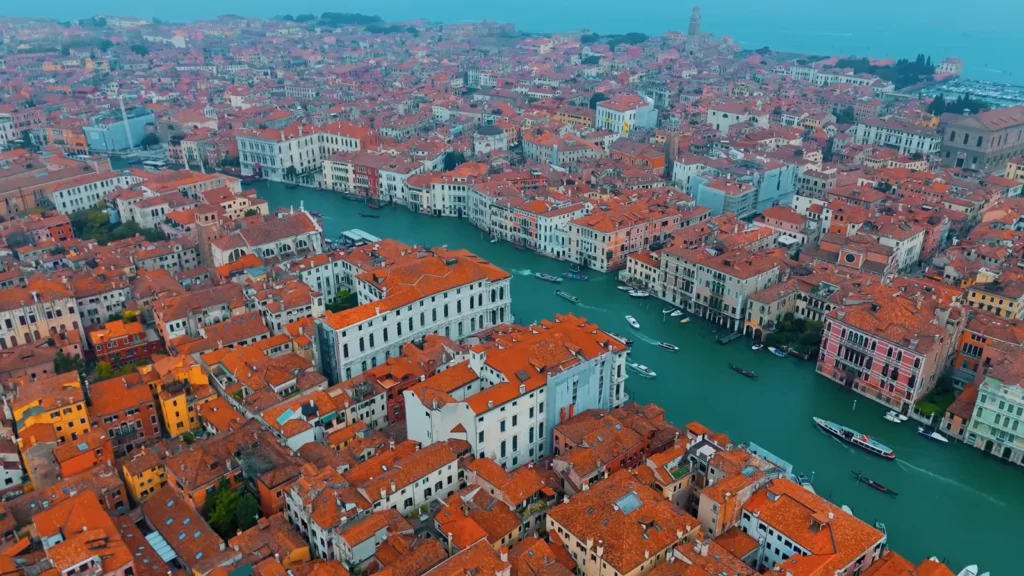
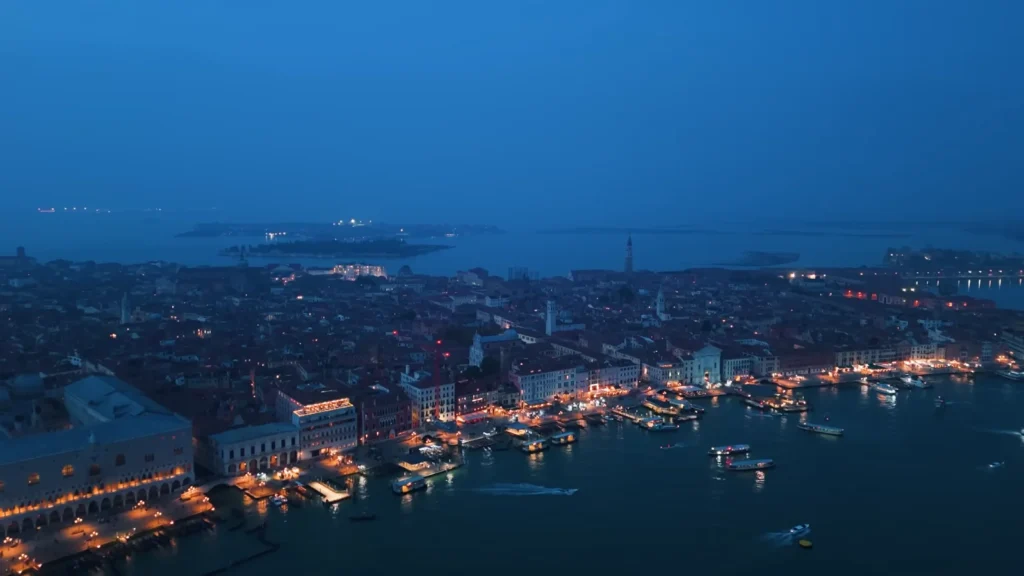
From above, Venice stops being a maze and becomes a pattern. Terracotta roofs pressed tightly together. Canals carving clean lines. Water encircling everything with calm authority.
Aerial views reveal what walking hides the city’s logic. UNESCO recognizes Venice not just for architecture, but as an example of human adaptation to environment. Seeing it from a distance finally made that idea click.
What distance gives you
- Context
- Appreciation for density
- Calm after immersion
At night, those same patterns soften. Lights scatter. Boats trace gentle lines. The city becomes graph-like nodes, paths, pauses.
Venice doesn’t glow. It hums.
Practical Advice I’d Give a Friend (Not a Tourist)
Not hacks. Not shortcuts. Just things I learned by staying attentive.
Best pacing
- 2–3 main areas per day max
- Long lunches beat long itineraries
- One intentional “nothing” window daily
What to skip
- Eating anywhere with laminated photo menus
- Trying to “see it all”
- Over-planning routes
What to seek out
- Campi away from Grand Canal
- Side canals at dusk
- Cafés with regulars, not lines
Quick reference table
| Category | Recommendation |
| Best months | April–May, Sept–Oct |
| Best time daily | Early morning, late evening |
| Shoes | Waterproof, forgiving |
| Navigation | Let yourself drift |
Venice doesn’t reward efficiency. It rewards presence.
Final Thoughts: What Venice Left With Me
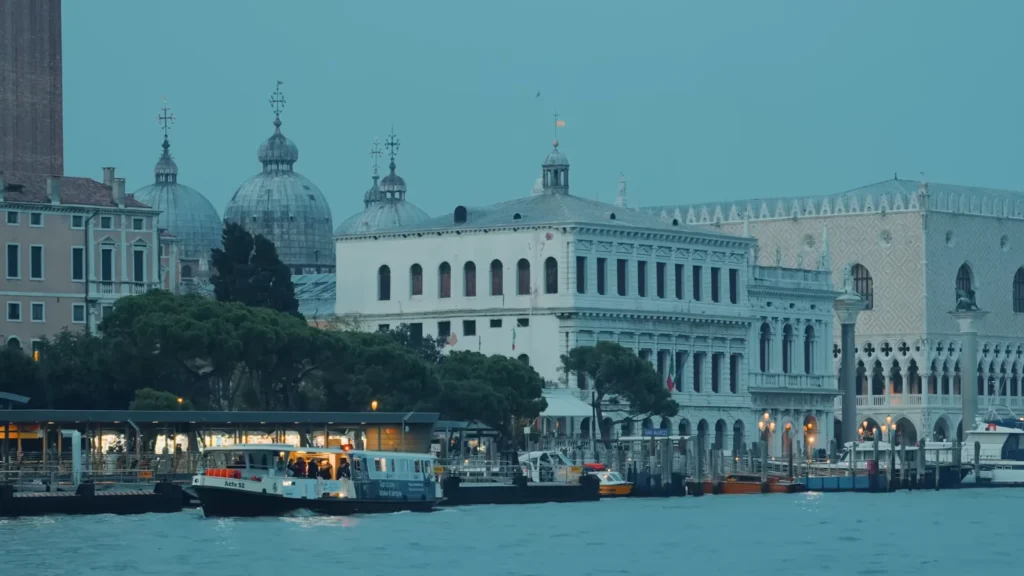
Venice didn’t feel fragile the way people often describe it. It felt resilient. Complicated. A city that has learned how to exist with instability rather than resisting it.
I left with fewer dramatic photographs than expected, but more quiet memory-fragments:
- Water slapping stone at night.
- A violin echoing through an alley.
- Two men fixing a boat without speaking.
Venice isn’t a place you conquer with a checklist. It’s a place that asks you to observe, then adjust.
And once you do, it opens slowly, deliberately in ways that feel personal rather than impressive.