
[Insert image: Cape_Kaliakra__Black_Sea_Dobrich.webp]
Three months after my first Bulgaria adventure, I was back. The southern coast and mountain lakes had hooked me, but those experiences raised more questions than they answered. What about the northern coastline? Everyone talks about Sunny Beach and Nessebar, but what lies beyond Varna? And if Pirin and Rila mountains were that spectacular, what about the Balkan range running through central Bulgaria?
This second trip revealed a completely different country. More industrial. More working-class. Less polished for tourists, but somehow more authentic because of it. The northern Black Sea coast proved wild and dramatic in ways the southern resorts never hinted at. The Balkan Mountains offered serious winter mountaineering that challenged everything I thought I knew about Bulgarian outdoor recreation.
Most importantly, I discovered that Bulgaria’s appeal isn’t just scenic beauty or affordable prices. It’s a country where you can experience genuine wilderness, working cities and local culture simultaneously. Where massive port operations exist thirty minutes from ancient stone forests. Where serious Alpine peaks rise just hours from major urban centers.
Northern Black Sea: Wild Coastlines and Ancient Mysteries
Cape Kaliakra: Drama at Land’s End
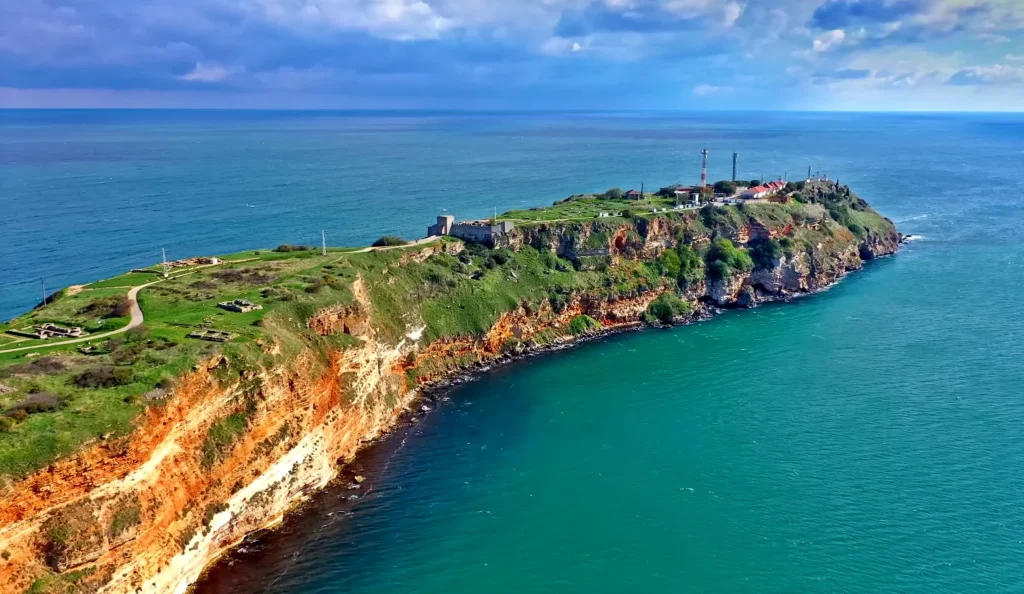
Cape Kaliakra stopped me cold. After the gentle sandy beaches and resort towns of the southern coast, these red limestone cliffs jutting into the Black Sea felt like discovering a different country entirely. The cape extends nearly two kilometers into open water, creating this dramatic finger of land where waves crash against 70-meter cliffs.
I spent an entire afternoon walking the cliff paths, trying to process the geological violence that created this landscape. The limestone here contains iron oxide, giving the cliffs their distinctive red coloration that intensifies during sunset. Local folklore claims this is where Bulgarian maidens threw themselves into the sea rather than be captured by Ottoman invaders, but standing here, the landscape feels mythical enough without tragic stories.
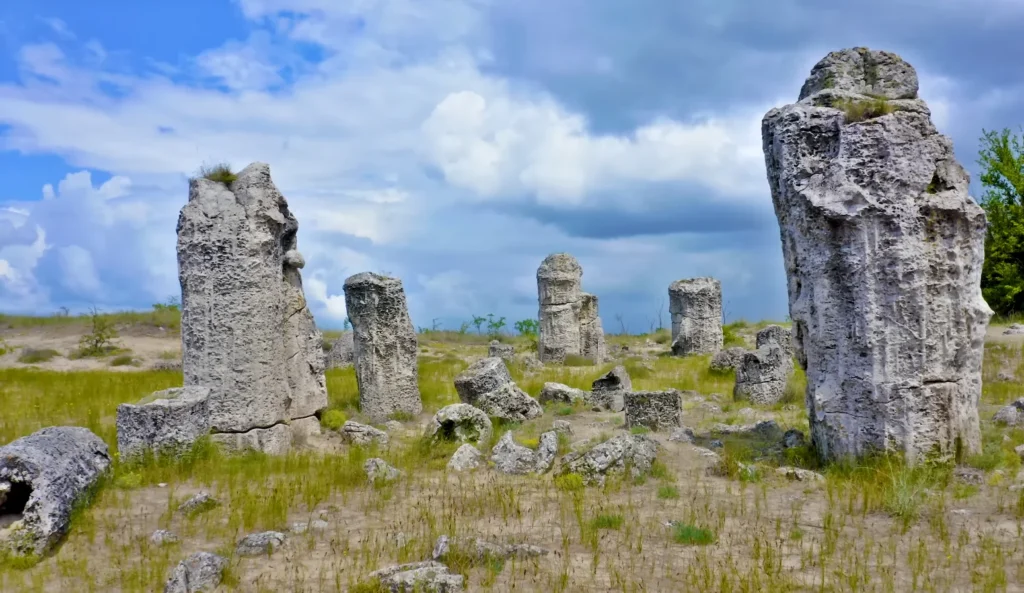
The archaeological remains scattered across the cape tell a different story – this has been strategically important for millennia. Thracian settlements, Roman fortifications, medieval Bulgarian strongholds. Each civilization recognized what becomes obvious when you visit: this peninsula controls maritime access to the entire northwestern Black Sea.
Key details for Cape Kaliakra:
- Drive time from Varna: 45 minutes north.
- Best visiting time: Late afternoon for dramatic lighting.
- Facilities: Small visitor center, minimal tourist infrastructure.
- Access: Well-maintained paths, moderate walking required.
- Historical significance: Multiple archaeological periods visible.
Stone Forests and Natural Phenomena
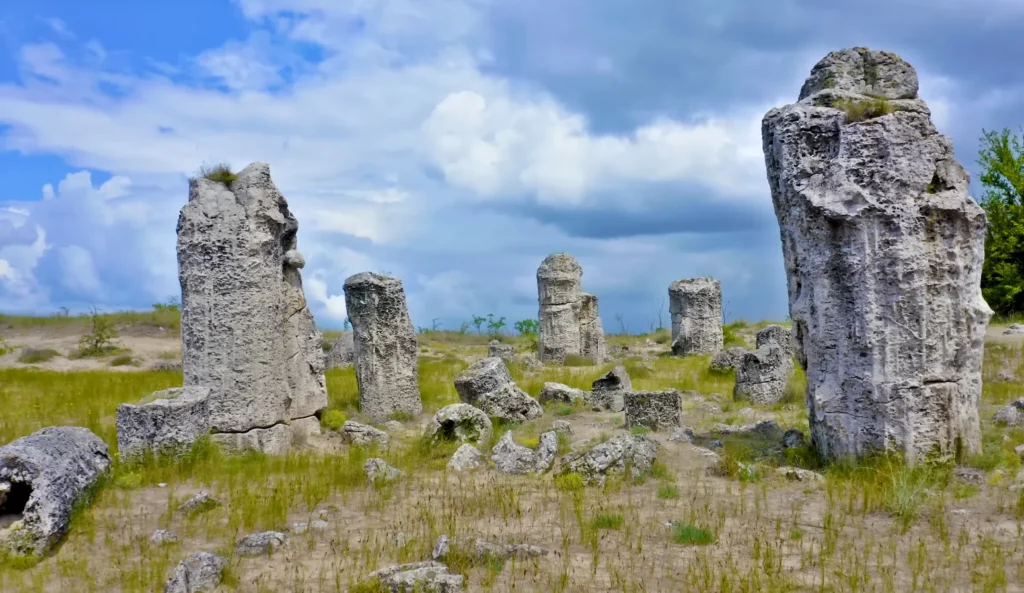
Pobitite Kamani (The Stone Forest) defied every expectation I had about Bulgarian landscapes. These limestone columns, scattered across a barren field 18 kilometers from Varna, look like something from another planet. Some reach 7 meters tall, others stand barely waist-high, but all share the same hollow, cylindrical structure that scientists still debate.
The most credible explanation involves ancient coral reefs and subsequent geological processes, but walking among these formations, you understand why local legends preferred more mystical origins. The stones create natural acoustic effects – voices carry strangely, wind produces haunting sounds. Even with clear scientific understanding, the place feels otherworldly.
What struck me was how this phenomenon exists so close to Varna’s industrial port. You can visit ancient stone forests in the morning and watch massive cargo ships navigate Bulgaria’s busiest harbor by afternoon. This juxtaposition – natural wonders alongside working infrastructure – captures something essential about Bulgarian travel that pure resort destinations miss.
Wild Coastlines Between the Resorts
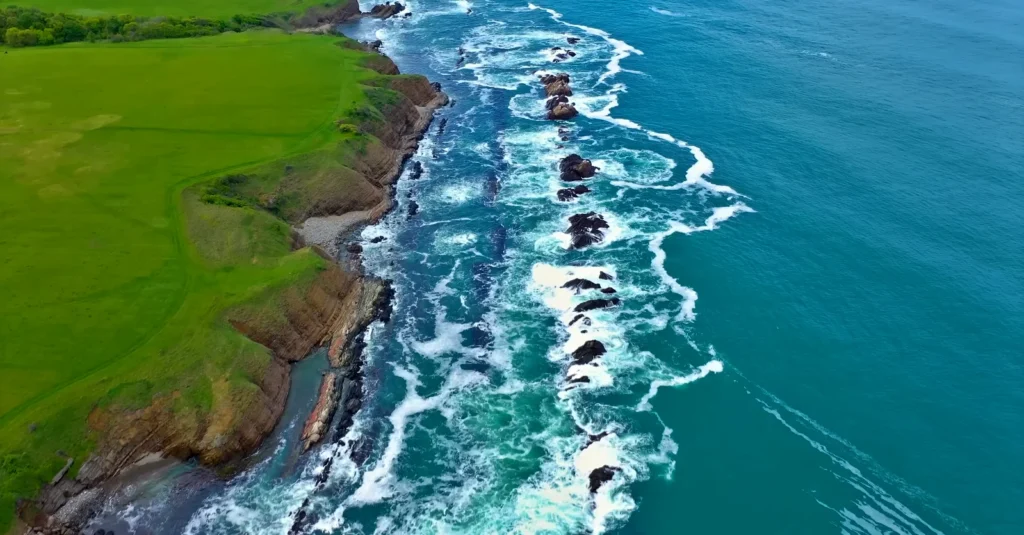
The coastline between major resort towns revealed Bulgaria’s untamed side. Near Varvara, I found stretches of rocky shore where waves crash against limestone formations, creating the kind of dramatic seascapes that belong on Atlantic coasts rather than the typically calm Black Sea.
These areas receive minimal tourist development because they lack the sandy beaches that attract resort builders. For travelers seeking dramatic landscapes over convenient facilities, they’re perfect. I spent hours photographing the interaction between green agricultural fields and turbulent coastal waters, wondering why this spectacular coastline remains largely unknown.
The practical reality is harsh weather and difficult access. These shores face the full force of Black Sea storms and the rocky terrain makes beach access challenging. But for photographers or travelers who prefer wild landscapes over tourist amenities, the northern Bulgarian coast offers experiences impossible to find in the developed southern regions.
Central Balkans: Serious Mountains in the Heart of Bulgaria
Botev Peak: Bulgaria’s Hidden Alpine Challenge
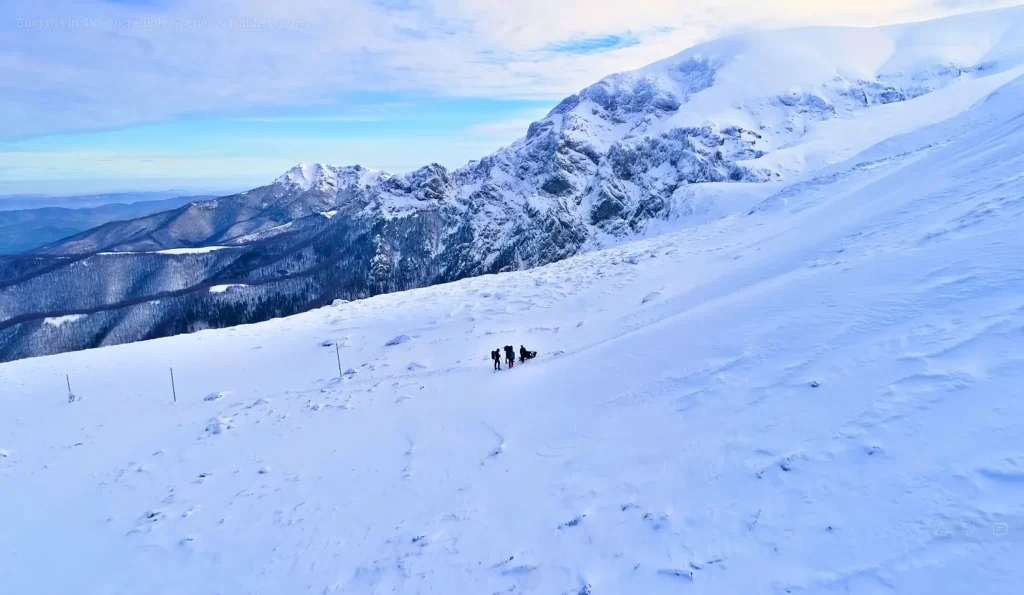
Botev Peak represents something different from Pirin or Rila mountains. At 2,376 meters, it’s not Bulgaria’s highest summit, but accessing it requires serious mountain skills that most tourists never realize exist in this country. My February attempt taught me that Bulgarian mountains demand respect regardless of their elevation compared to Alpine peaks.
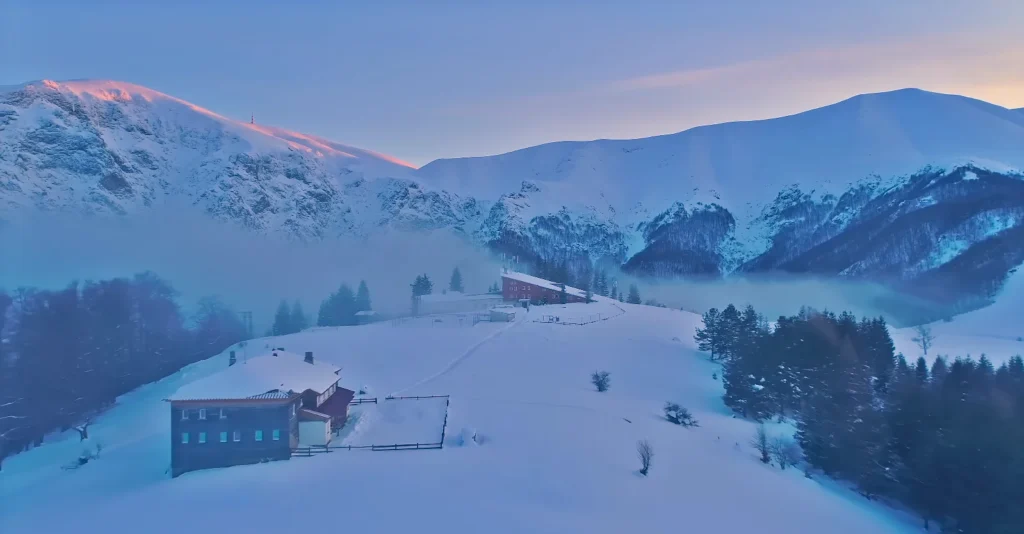
The approach from Kalofer involves hiking through dense forest before breaking into exposed Alpine terrain where weather changes rapidly and navigation becomes crucial. Unlike the marked trails and mountain huts common in Pirin and Rila, Botev’s routes feel genuinely remote. Cell coverage disappears. Trail markers become sparse. The margin for error shrinks considerably.
Winter conditions proved particularly challenging. Snow depth exceeded two meters in places and wind exposure on the final approaches created legitimate mountaineering conditions. The three other hikers I encountered that day carried full Alpine gear – crampons, ice axes, emergency bivouac equipment. This wasn’t casual hiking anymore.
Botev Peak considerations:
- Elevation: 2,376 meters (Bulgaria’s highest in Balkan range).
- Season: June-September for hiking; winter requires mountaineering experience.
- Access: Multiple routes, most challenging from Kalofer.
- Difficulty: Serious mountain conditions, navigation skills required.
- Facilities: Limited mountain hut infrastructure compared to other ranges.
Beklemeto Pass: History Written in Stone
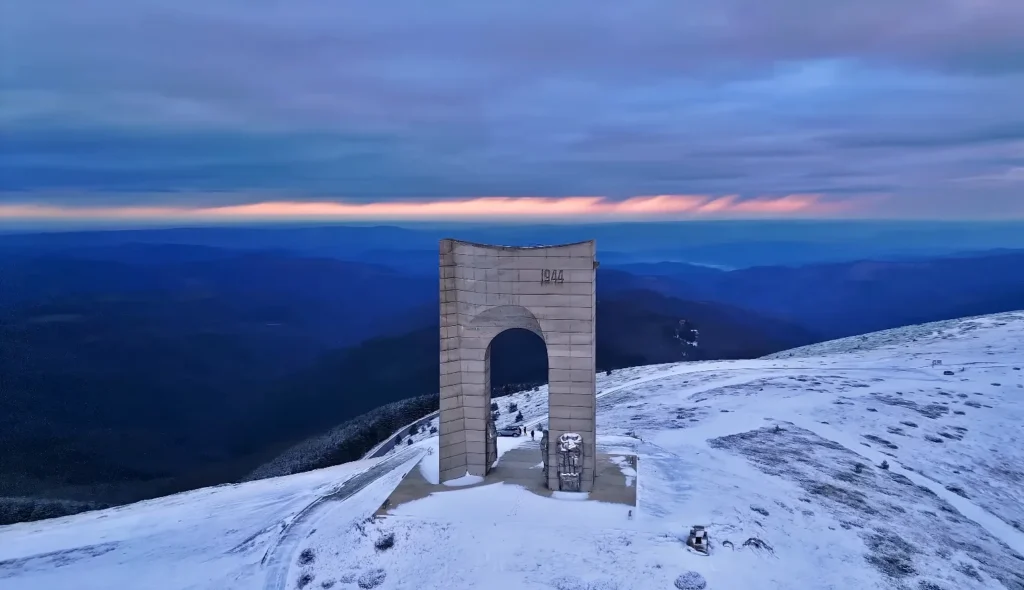
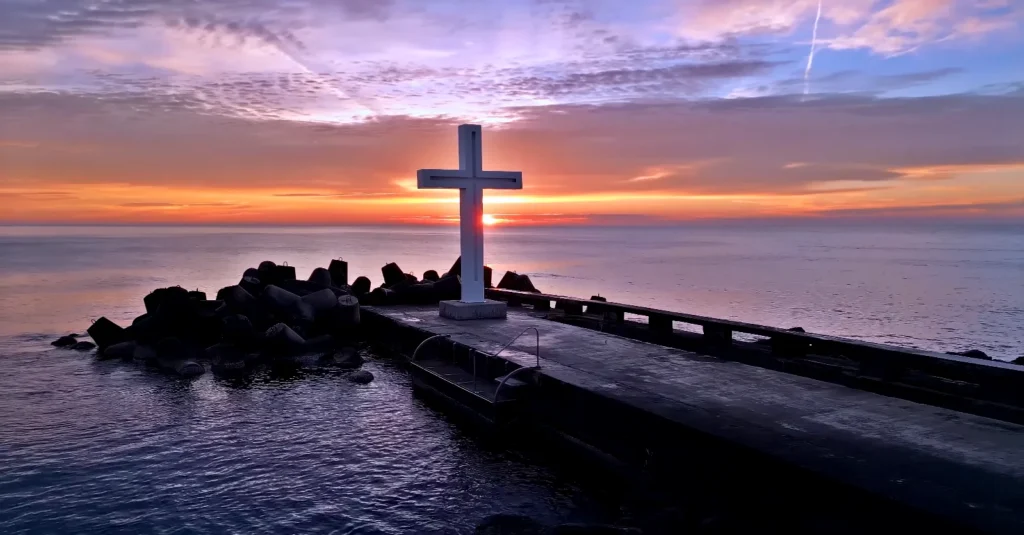
Beklemeto Pass connects northern and southern Bulgaria through the central Balkan Mountains, but the stone arch marking the highest point tells a deeper story. Built in 1944, it commemorates partisan activities during World War II, when these mountains provided refuge for Bulgarian resistance fighters opposing German occupation.
Standing at this monument during a February snowstorm, I began understanding how geography shapes Bulgarian national identity. These mountains didn’t just provide scenic hiking – they offered protection during the country’s most dangerous historical periods. The pass itself has been strategically important since Roman times, controlling movement between the Danube plains and southern valleys.
The winter landscape around Beklemeto reinforced the mountains’ defensive value. Snow-covered peaks stretched in every direction, creating a natural fortress that invading armies would struggle to penetrate. Modern highways make the crossing routine, but historical context reveals why controlling this pass meant controlling Bulgaria.
Winter Mountaineering Reality
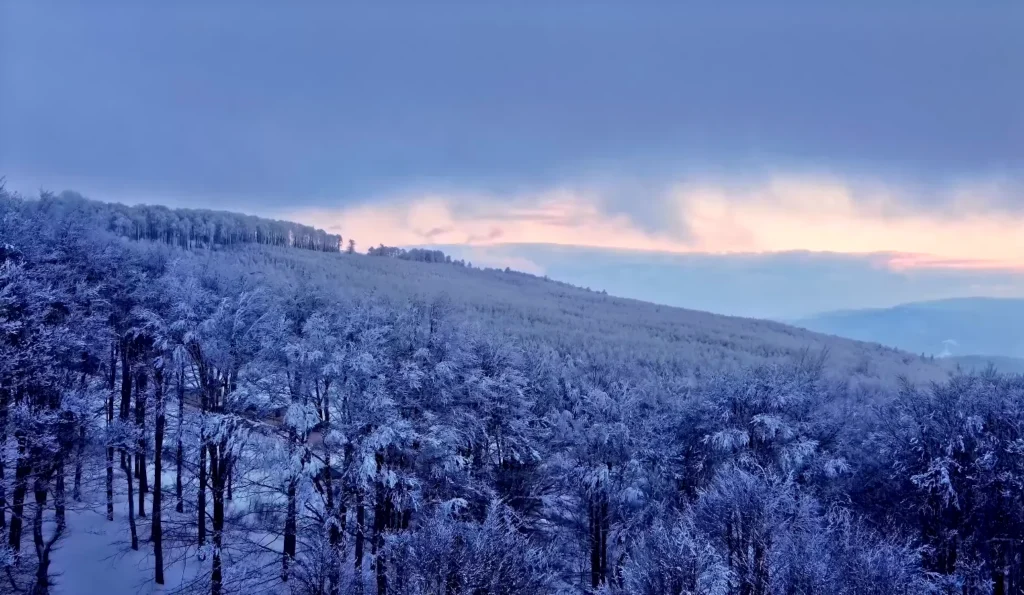
Chumerna Peak introduced me to Bulgarian winter mountaineering culture that exists completely separate from resort skiing. The frost-covered forest and exposed ridgelines require technical skills that most visitors never associate with Bulgarian outdoor recreation. This isn’t recreational hiking – it’s serious Alpine adventure.
Local mountaineering clubs maintain huts and routes throughout the Balkan range, but their focus targets Bulgarian climbers rather than international tourists. Equipment standards assume Alpine experience. Route descriptions presume navigation competency. The safety net common in more commercialized mountain destinations simply doesn’t exist.
That isolation created some of my most memorable Bulgarian experiences. Sharing a mountain hut with Bulgarian climbers who spoke minimal English but demonstrated incredible hospitality. Learning route-finding techniques adapted for local conditions. Discovering that Bulgarian mountains attract serious adventurers from across Eastern Europe who consider these ranges legitimate training grounds for major Alpine objectives.
Varna: Bulgaria’s Working Port Metropolis
Industrial Scale and Urban Reality
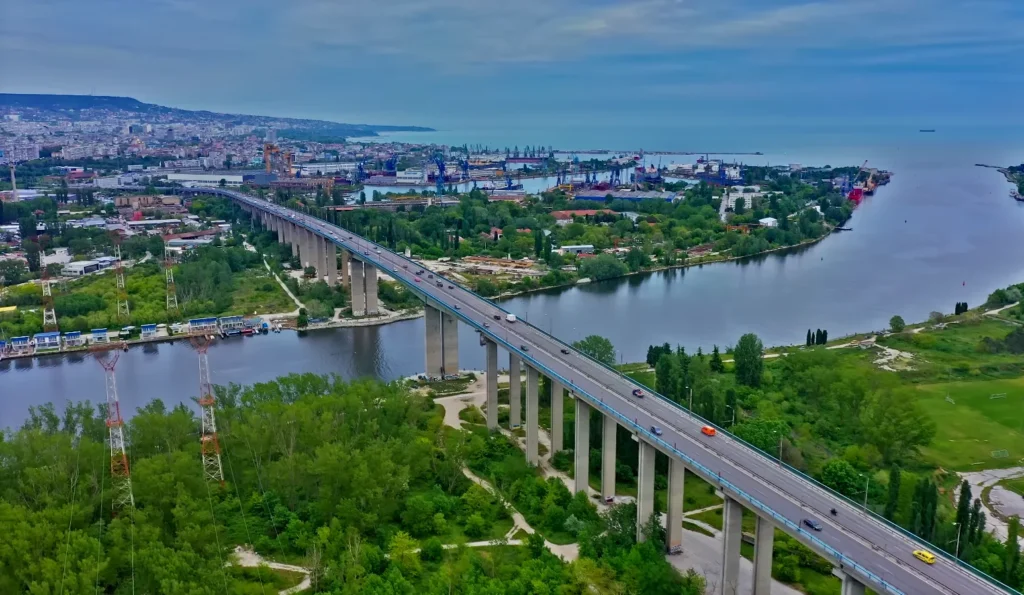
Varna revealed Bulgaria’s industrial side that tourist materials rarely mention. This isn’t a preserved historic city like Nessebar or a resort destination like Sunny Beach – it’s a working port handling massive cargo volumes for Eastern Europe’s inland countries. The scale becomes obvious from elevated viewpoints around the bay.
Container terminals stretch for kilometers along the waterfront. Rail networks connect the port to inland industrial centers. The bridge spanning Varna Bay handles constant truck traffic moving goods between the port and highway networks reaching toward the Romanian border. This infrastructure exists for economic necessity, not tourist appeal, but it creates urban landscapes that tell important stories about modern Bulgaria.
What impressed me was how the city integrates this industrial reality with cultural attractions. The archaeological museum houses world-class Thracian gold artifacts. The cathedral anchors a historic quarter with genuine architectural significance. Beach areas provide recreation spaces for residents. Varna functions as a real city where people work and live, not a tourist destination that happens to have residents.
Varna at a glance:
| Aspect | Details |
| Population | ~340,000 (3rd largest Bulgarian city) |
| Port Status | Largest Black Sea port, major cargo hub |
| Tourist Season | June-September for beaches |
| Cultural Sites | Archaeological Museum, Cathedral, Roman Baths |
| Access | International airport, rail connections to Sofia |
| Character | Working port city with tourist amenities |
Industrial Tourism and Unexpected Beauty
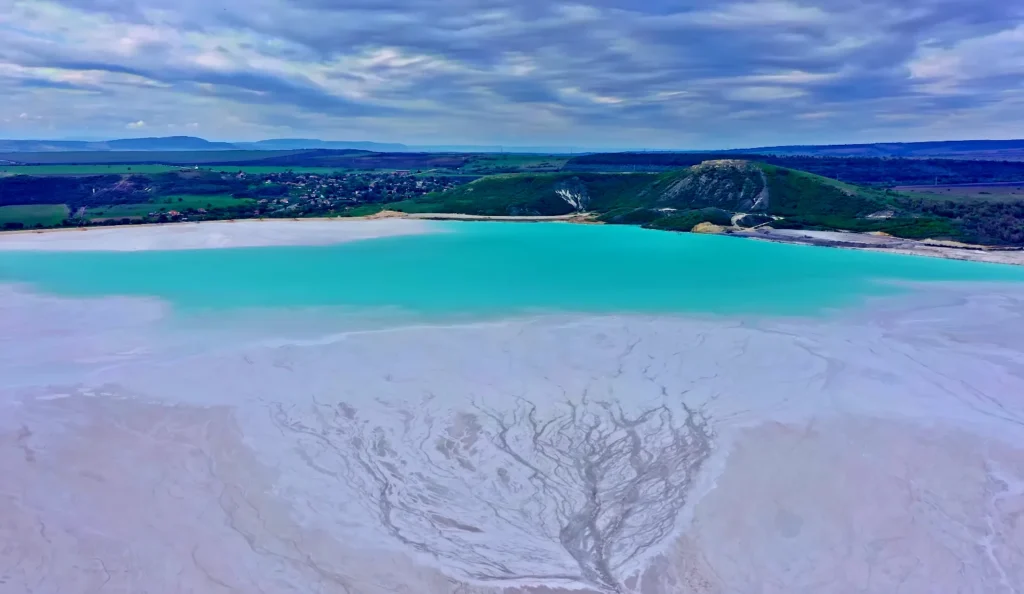
Near Devnya, industrial mining operations created an inadvertent tourist attraction that perfectly captures Varna region’s complexity. This turquoise lake formed from mining waste products, but the mineral content produces water colors that rival any natural wonder. Photographers flock here for shots that look exotic enough to be from distant tropical destinations.
The irony fascinates me – industrial processes creating accidental beauty that draws visitors specifically because of its artificial origins. The lake exemplifies how Bulgarian travel rewards curiosity over conventional expectations. Some of the country’s most striking landscapes exist because of human activity rather than despite it.
This phenomenon repeats throughout the Varna region. Quarries become swimming holes. Mining sites become geological viewing areas. Industrial infrastructure creates dramatic backdrops for photography. Bulgaria’s appeal isn’t limited to preserved natural areas – it includes landscapes shaped by human activity in visually compelling ways.
Rhodope Mountains: Bulgaria’s Southern Wilderness
Traditional Villages in Mountain Valleys
Shiroka Polyana introduced me to Rhodope mountain culture that feels distinctly different from the Alpine character of Pirin or the rugged wilderness of the central Balkans. This traditional village sits in a broad valley surrounded by gentle, forested peaks that create an intimate landscape rather than dramatic Alpine vistas. The architecture tells stories of centuries-old mountain communities that developed in isolation from outside influences.
Walking through Shiroka Polyana’s narrow streets, I discovered how Rhodope villages adapted to their environment differently than settlements in other Bulgarian mountain regions. Houses feature distinctive stone foundations and wooden upper stories designed for heavy snowfall but milder temperatures than higher elevation areas. Courtyards remain central to family life, with traditional crafts still practiced by residents whose families have lived here for generations.
What struck me most was the musical heritage. Rhodope folk music represents some of Bulgaria’s most distinctive cultural expressions and evening concerts in the village revealed vocal techniques that UNESCO recognized as representing humanity’s intangible cultural heritage. This wasn’t performance for tourists – local musicians practicing traditions that remain central to community identity.
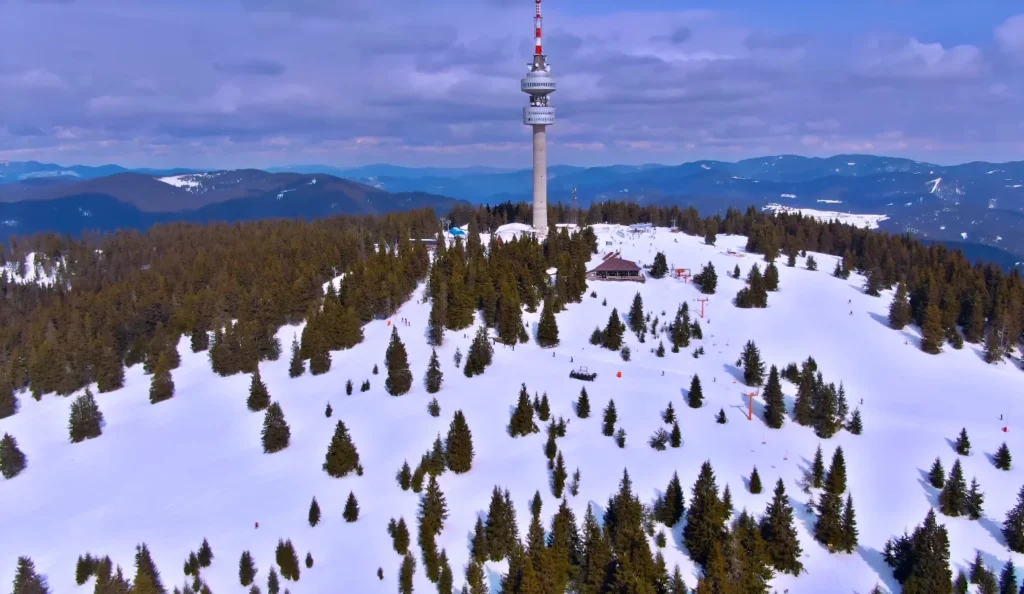
The Snezhanka television tower on the region’s highest peak creates an interesting contrast – modern telecommunications infrastructure rising from ancient cultural landscapes. From the tower’s base, you can see how traditional villages dot valley floors while dense forests cover the surrounding peaks. The Rhodopes feel more pastoral than the dramatic wilderness of Pirin, but equally authentic in representing Bulgarian mountain culture.
Rhodope characteristics:
- Elevation: Generally lower than Pirin/Rila (highest peaks around 2,000m).
- Character: Forested, gentle peaks with deep cultural heritage.
- Villages: Well-preserved traditional architecture and customs.
- Activities: Cultural tourism, moderate hiking, music festivals.
- Access: Good road networks, less remote than other ranges.
- Best season: Late spring through early fall for cultural activities.
Water Recreation in Mountain Reservoirs
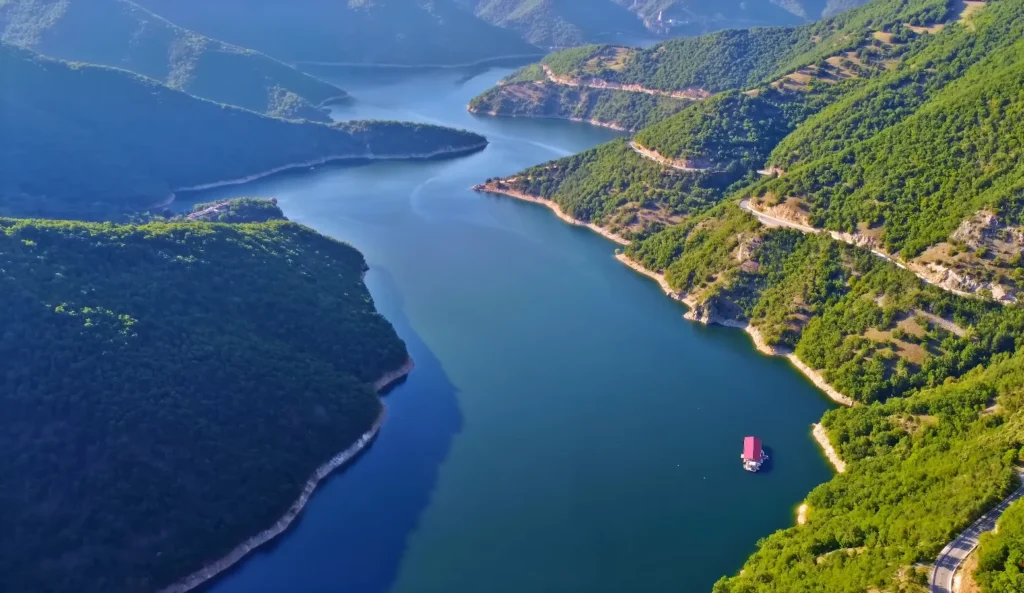
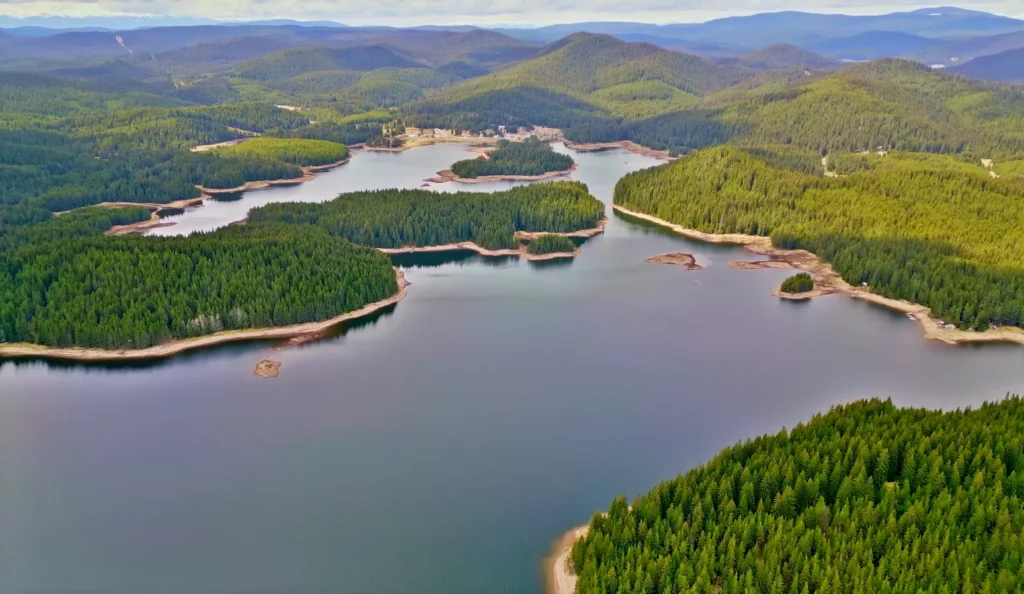
Bulgaria’s mountain geography creates numerous opportunities for reservoir-based recreation that most visitors never discover. Vacha Dam, hidden deep in Rhodope valleys, offers pristine mountain lake experiences without the challenging hikes required to reach natural glacial lakes in higher ranges. The reservoir’s clear water and forested shorelines create perfect conditions for kayaking, fishing, and photography.
I spent two days exploring Vacha Reservoir by canoe, discovering isolated coves and secluded beaches that felt completely removed from any tourist infrastructure. The water stays cool even during summer heat, fed by mountain streams that maintain excellent clarity. Fish populations support both recreational angling and local commercial operations, creating economic opportunities for mountain communities.
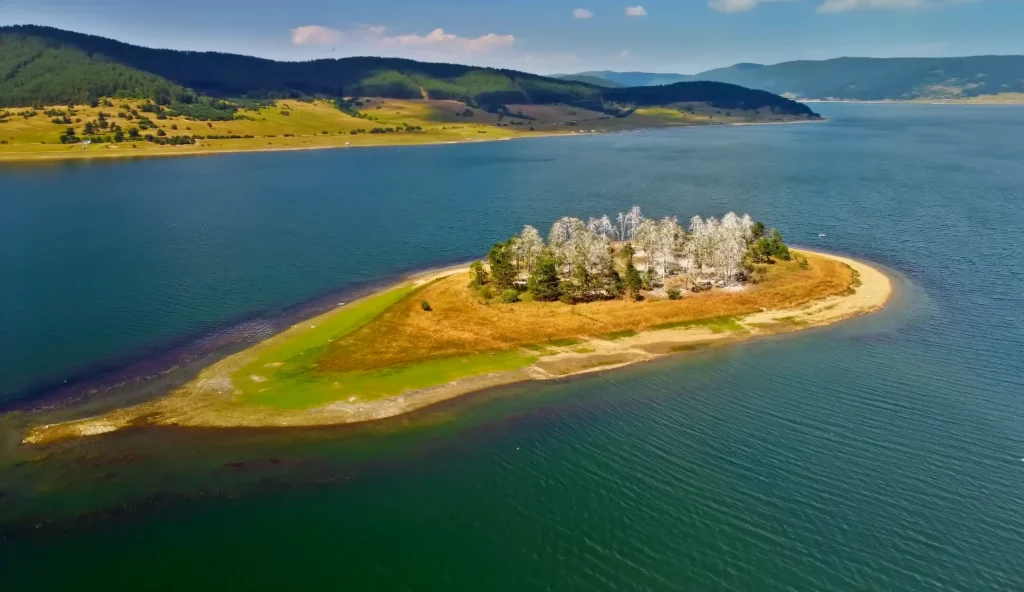
Batak Reservoir proved even more dramatic, with its island formations and surrounding peaks creating alpine lake scenery rivaling natural formations. The reservoir’s size supports multiple recreational activities simultaneously – sailing, motor boating, swimming areas, and fishing zones coexist without conflict. Developed camping areas provide access for families while wilderness camping remains possible for those seeking solitude.
These reservoirs represent Bulgaria’s practical approach to mountain recreation. Rather than limiting access to preserve wilderness character, infrastructure developments create opportunities for diverse user groups. Serious hikers can still reach pristine backcountry areas, while families and casual visitors enjoy developed facilities with spectacular mountain settings.
Mountain reservoir activities:
- Water sports: Kayaking, sailing, motor boating.
- Fishing: Both recreational and guided experiences available.
- Swimming: Designated areas with facilities.
- Camping: Developed campgrounds and wilderness options.
- Photography: Dramatic mountain lake scenery.
- Access: Generally reachable by standard vehicles.
Adventure Tourism: Beyond Standard Hiking
Unexpected Recreational Infrastructure
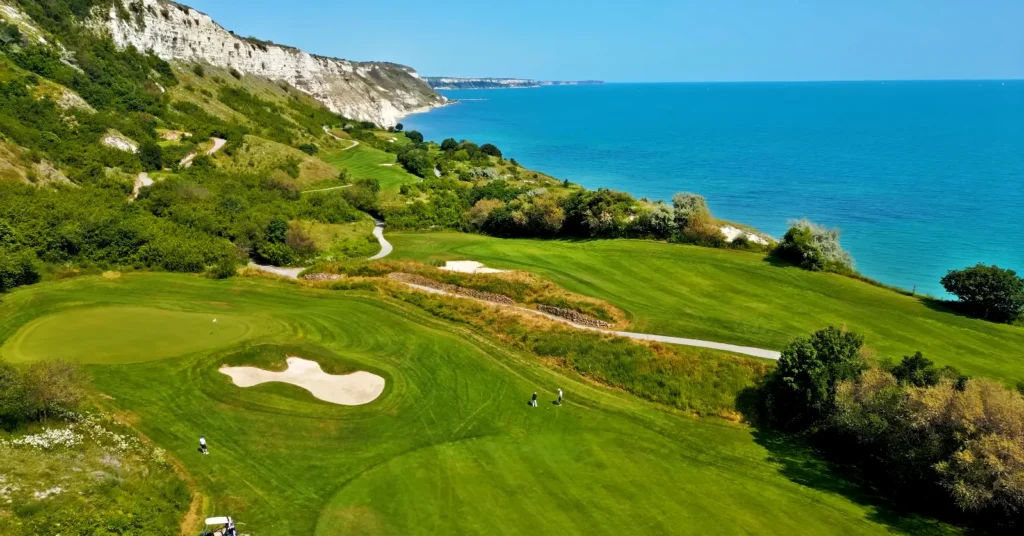
Bulgaria’s adventure tourism extends far beyond mountain hiking and coastal resorts. The golf course overlooking the Black Sea exemplifies how the country develops diverse recreational opportunities that attract different visitor categories. This clifftop course creates dramatic playing conditions where ocean breezes affect shot strategy and coastal views provide constant distraction from the game itself.
Playing golf while watching cargo ships navigate the horizon reinforced my understanding of Bulgaria’s multi-layered tourism appeal. The country accommodates luxury recreation alongside working industrial infrastructure without pretending either doesn’t exist. Golf tourists share the same coastline with port workers, creating authentic local interactions that artificial resort destinations deliberately avoid.
Rock Formations and Climbing Opportunities
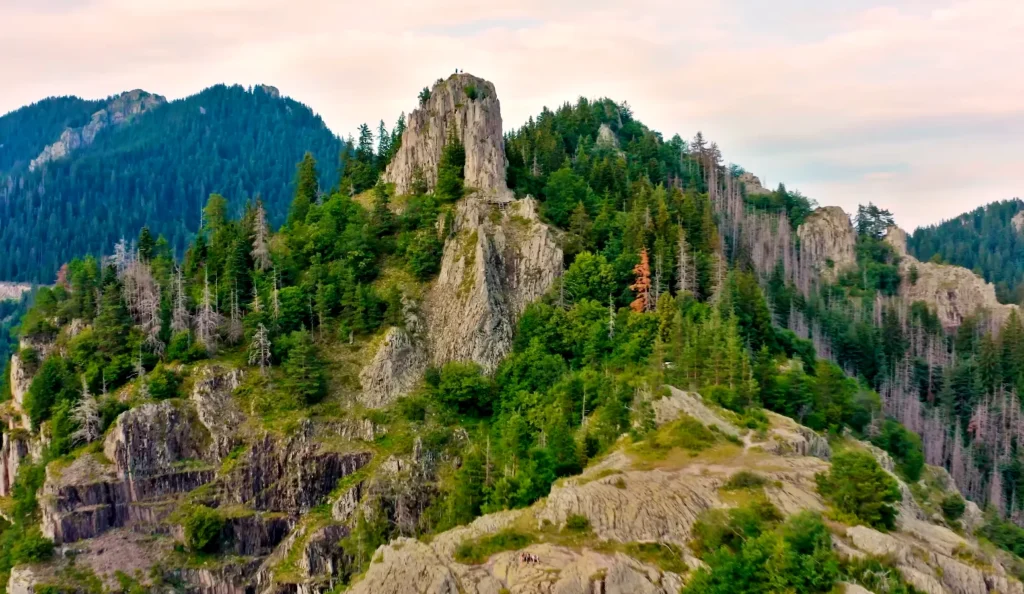
The Bride Rocks in Smolyan revealed Bulgarian rock climbing opportunities that exist completely separate from international adventure tourism marketing. These limestone formations provide technical climbing routes that local clubs have developed for decades, but information remains primarily in Bulgarian with minimal international promotion.
Spending time with local climbers opened my eyes to Bulgaria’s serious adventure sports community. These aren’t casual recreational activities – Bulgarian mountaineers and rock climbers train here for major international objectives. The technical standards and safety protocols match anything found in well-known European climbing destinations, but without the crowds and commercial infrastructure that can detract from pure climbing experiences.
The rock quality throughout Bulgaria consistently impressed visiting climbers I met. Limestone in coastal areas provides different climbing styles than granite formations in mountain regions. Route variety accommodates all skill levels, from beginner-friendly sport climbing to serious multi-pitch traditional routes requiring advanced technical skills.
Adventure tourism opportunities:
- Rock climbing: Multiple areas with varying difficulty levels.
- Mountaineering: Serious Alpine routes in winter conditions.
- Golf: Coastal courses with dramatic settings.
- Water sports: Reservoir and coastal options.
- Cycling: Mountain biking and road cycling routes.
- Photography: Diverse landscapes and cultural subjects.
Mountain Infrastructure and Winter Sports
Beyond Resort Skiing
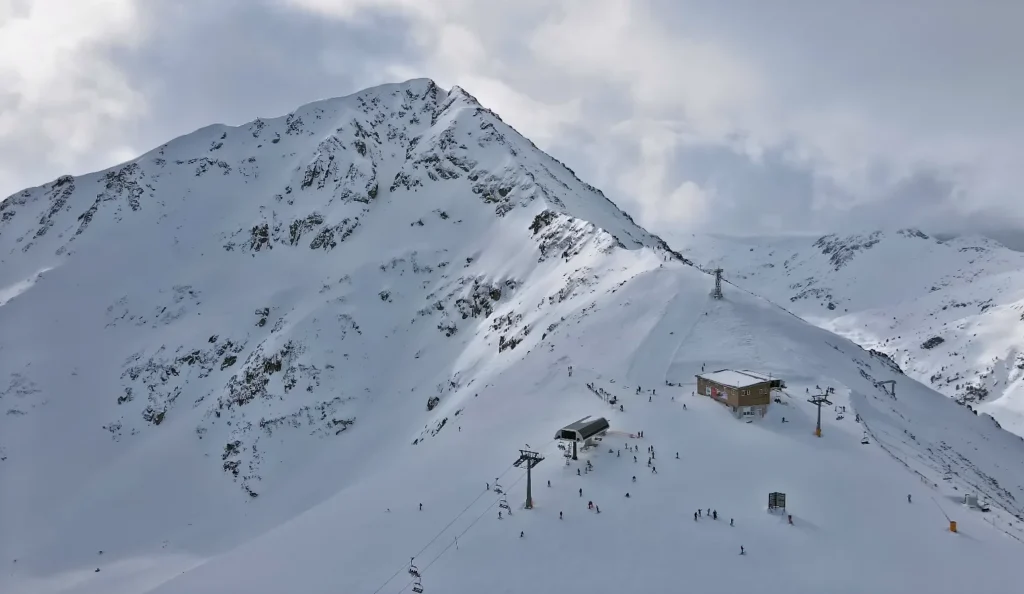
Bansko’s winter infrastructure extends far beyond the resort skiing that attracts most international visitors. The town serves as basecamp for serious winter mountaineering throughout the Pirin range, with equipment shops and guide services targeting adventurers rather than recreational skiers. My February visit coincided with Bulgarian military mountain training exercises, emphasizing how these mountains support serious Alpine activity year-round.
The contrast between resort amenities and wilderness access fascinated me. You can enjoy luxury hotel accommodations and sophisticated dining, then embark on challenging winter climbs that require full Alpine equipment and technical mountaineering skills. Bansko accommodates both recreational tourists and serious mountain athletes without compromising either experience.
Local guide services proved particularly valuable for understanding winter mountain conditions. Bulgarian guides possess intimate knowledge of route variations, weather patterns, and safety considerations specific to Pirin winter climbing. Their expertise made the difference between struggling with unfamiliar conditions and efficiently accessing spectacular winter mountain experiences.
Practical Information: Planning Your Extended Bulgarian Adventure
Transportation Networks and Access
Bulgaria’s transportation infrastructure supports diverse travel styles more effectively than most visitors realize. Rental cars provide essential flexibility for mountain and rural exploration, but public transport connections reach most major attractions. The key is understanding which destinations require independent transportation versus those accessible through bus and train networks.
Transportation recommendations:
- Sofia Airport: Main international gateway with good connections.
- Rental cars: Essential for mountain areas and traditional villages.
- Intercity buses: Reliable connections between major towns.
- Local transport: Variable quality, research specific routes.
- Domestic flights: Limited options, generally unnecessary for most itineraries.
Seasonal Planning for Different Regions
My multiple visits across different seasons revealed how Bulgarian regions peak at different times. Planning requires balancing weather conditions, cultural events, and personal activity preferences rather than assuming any single season works best everywhere.
Seasonal guide:
| Season | Best For | Considerations |
| Summer (June-August) | Coastal areas, high mountain hiking | Peak crowds, hot weather in cities |
| Fall (September-October) | Cultural tourism, photography | Variable weather in mountains |
| Winter (December-March) | Serious mountaineering, ski resorts | Limited access to some areas |
| Spring (April-May) | Moderate hiking, fewer crowds | Unpredictable mountain conditions |
Accommodation Strategies
Bulgaria accommodates different travel styles and budgets, but the key is matching lodging choices to your intended activities. Luxury resort areas offer international standard amenities but limit authentic cultural interactions. Traditional guesthouses provide cultural immersion but may lack amenities some travelers require.
Accommodation types:
- Mountain huts: Basic facilities, essential for serious hiking.
- Traditional guesthouses: Cultural immersion, moderate comfort.
- Business hotels: Reliable standards in major cities.
- Coastal resorts: Full amenities, limited local interaction.
- Rural accommodation: Variable quality, advance research essential.
Final Thoughts: Bulgaria’s Layered Appeal
After multiple visits spanning different seasons and regions, I’ve concluded that Bulgaria’s greatest strength is its refusal to be easily categorized. This isn’t a country that excels at one specific type of tourism – instead, it offers authentic experiences across multiple categories simultaneously.
You can pursue serious mountaineering in genuinely challenging conditions. You can explore working cities where tourism supplements rather than dominates local economies. You can discover cultural traditions that remain central to community identity rather than preserved primarily for visitor appeal. Most importantly, you can do all of these things within a single trip without feeling like you’re collecting tourist experiences.
Bulgaria rewards travelers who approach it with curiosity rather than expectations. The country doesn’t market itself aggressively or position specific attractions as must-see destinations. Instead, it offers the increasingly rare opportunity to explore a European country where authentic experiences outnumber manufactured ones.
That authenticity will likely change as Bulgaria gains international recognition. For now, it remains possible to discover spectacular mountain lakes through personal exploration rather than guided tours. To find coastal areas where fishing villages operate according to local rhythms rather than tourist schedules. To engage with cultural traditions practiced for community reasons rather than visitor entertainment.
Bulgaria’s window of opportunity for authentic discovery won’t remain open indefinitely. For travelers seeking genuine experiences over convenient ones, the time to explore is now.