
Honestly? Albania wasn’t even on my list. I was routing through the Balkans, loosely, Montenegro, maybe Kosovo, possibly North Macedonia and someone at a hostel in Kotor just said “you have to go to Albania, people don’t go and then they can’t stop talking about it.” That was enough. Three days turned into three weeks. I’m still not fully sure what happened.
What I found was a country that hadn’t quite figured out it was supposed to be a tourist destination yet. Roads that would suddenly turn from tarmac to gravel mid-journey. Mountain villages with no WiFi but somehow the best lamb you’ve ever eaten. Beaches that looked stolen from the Maldives, with €5 sunbeds. And cities carrying 500 years of layered history so densely packed you could trip over it.
This is that trip.
Tirana: Louder and Greener Than I Expected
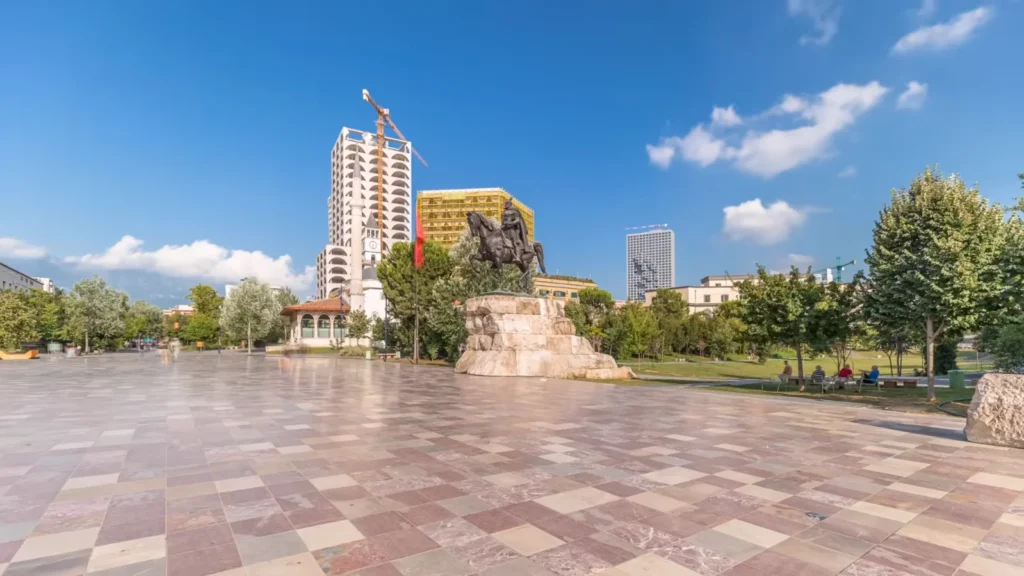
Tirana caught me off guard. The Skanderbeg Square, that massive marble-tiled plaza with the equestrian statue of Albania’s national hero front and centre hits differently when you’re standing in it versus seeing photos. There’s a crane half-finishing a tower in the background. The city’s still building itself, visibly and somehow that doesn’t ruin it. It adds something.
The park just off the square, Rinia Park, is genuinely lovely, a renovated green space with a circular fountain, curved walking paths, outdoor café pavilions. Locals actually use it, which is always the sign of a park done right. I sat there for two hours one morning eating byrek from a nearby bakery (flaky pastry, spinach and cheese, costs about 100 lek, roughly €1) watching the city move.
Quick Tirana hits worth your time:
- Blloku neighbourhood — was literally off-limits to ordinary Albanians during communist rule, reserved for the party elite. Now it’s wall-to-wall cafes and bars. The irony is not lost on anyone.
- Bunk’Art 1 & 2 — two enormous Cold War-era bunkers converted into museums. Bunk’Art 2 in particular covers the Sigurimi secret police history. Heavy, fascinating, essential.
- The National History Museum — the mosaic mural on it’s facade alone is worth stopping for.
- Et’hem Bey Mosque — right on Skanderbeg Square, 18th century, free to enter if you’re respectful about it.
I’d give Tirana two days minimum. It rewards wandering.
Berat: Two Days in a UNESCO City That Doesn’t Feel Like a Museum
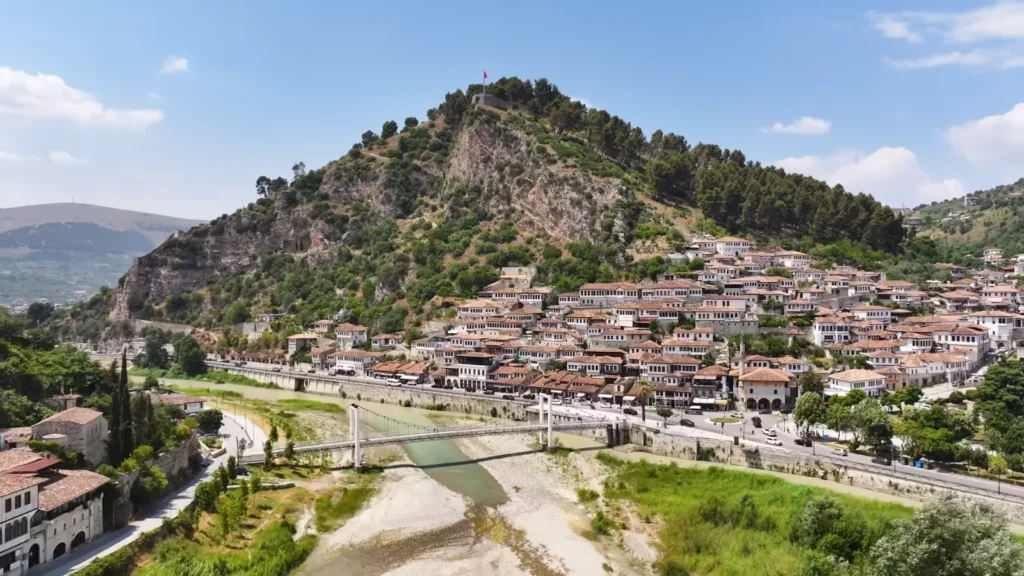
Berat got it’s UNESCO World Heritage status in 2008 and you feel it the moment you look up at the hillside rows of white Ottoman houses stacked almost impossibly vertical, each with those wide multi-paned windows that earned it the nickname “City of a Thousand Windows.” The hill above is crowned by the castle, Albanian flag flying red at the top.
What struck me was how lived-in it all still is. This isn’t a preserved ghost town. People actually live in the Mangalem quarter. You walk past restaurants and guesthouses but also just front doors, laundry, a man fixing a motorbike. That friction between heritage site and functioning neighbourhood is what makes Berat interesting.
Berat Castle deserves real time. Not just a walk-through.
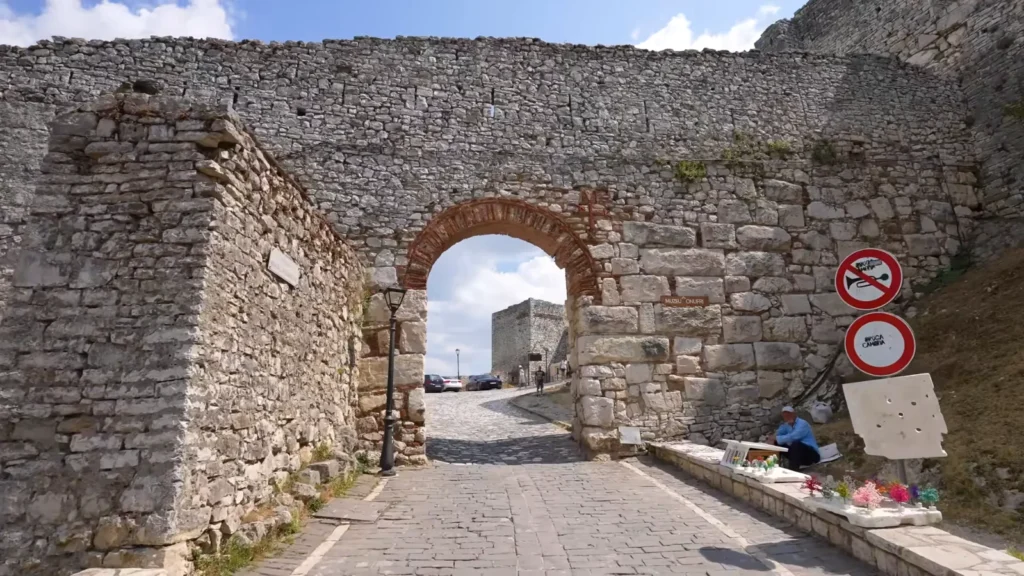
The entrance gate with it’s red brick arch and the “Muzeu Onufri” sign had a single elderly vendor sitting beside it selling small stone carvings. Nobody else around when I got there at 9am. Inside the castle walls there are Byzantine churches, crumbling Ottoman structures and views over the Osum River valley that made me stand still for a while. The Onufri Museum inside the Church of the Dormition of St Mary has 16th century iconography worth seeing even if Byzantine art isn’t your usual thing.
| What | Details |
| UNESCO Status | World Heritage Site since 2008 |
| Must-see | Mangalem Quarter, Berat Castle, Onufri Museum |
| Best time to visit | April–June or September–October |
| Getting there | 2.5 hrs by bus from Tirana (~300 lek) |
| Stay | Guesthouses in Mangalem quarter for views |
The Albanian Alps: Theth and Valbona Changed How I Think About Mountains
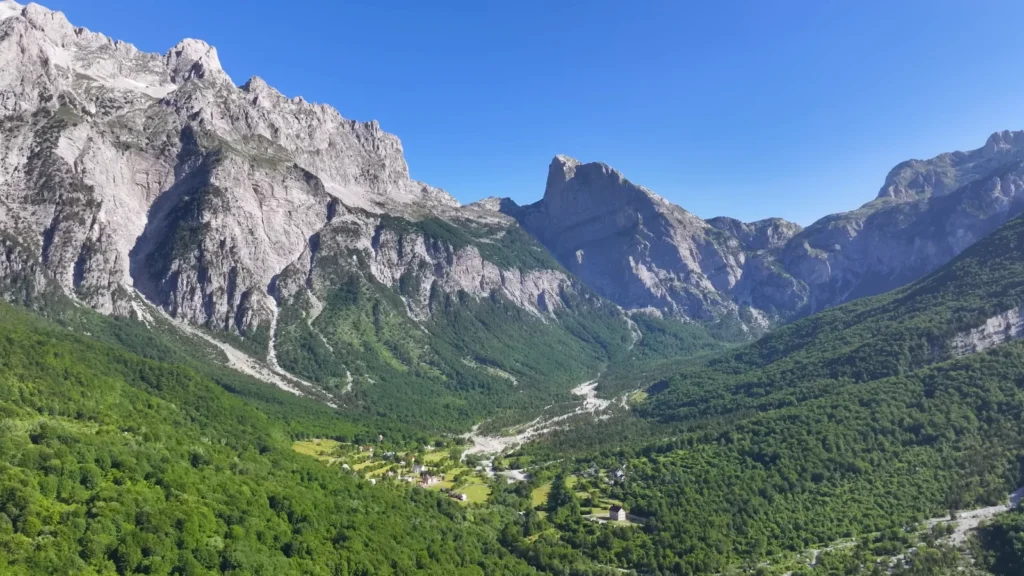
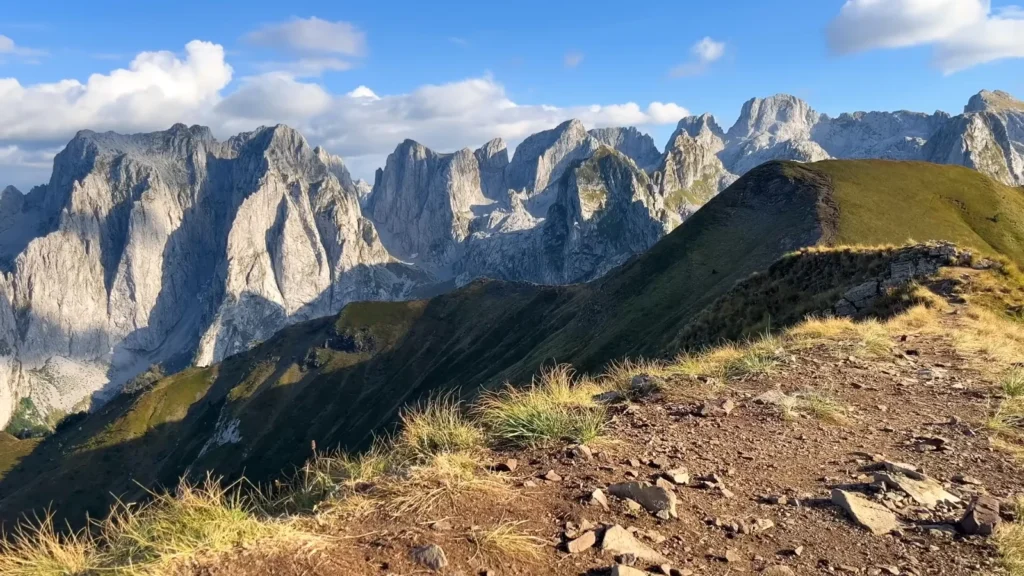
Nobody warned me the Albanian Alps would look like this. I’d seen photos but assumed some Instagram distortion. Then I got to Theth and the Prokletije peaks just — there they are — sheer limestone walls rising 2,500 metres directly behind a tiny valley with wooden-fenced farms and a stone church with a conical wooden roof. No distortion. Actually like that.
One of the buildings that have become iconic due to justifiable reasons is the church in Theth, the Catholic Church of Theth. It is placed on a flat green lawn with absurdly cinematic mountains behind it. Constructed at the beginning of the 20th century, rebuilt not so long ago.
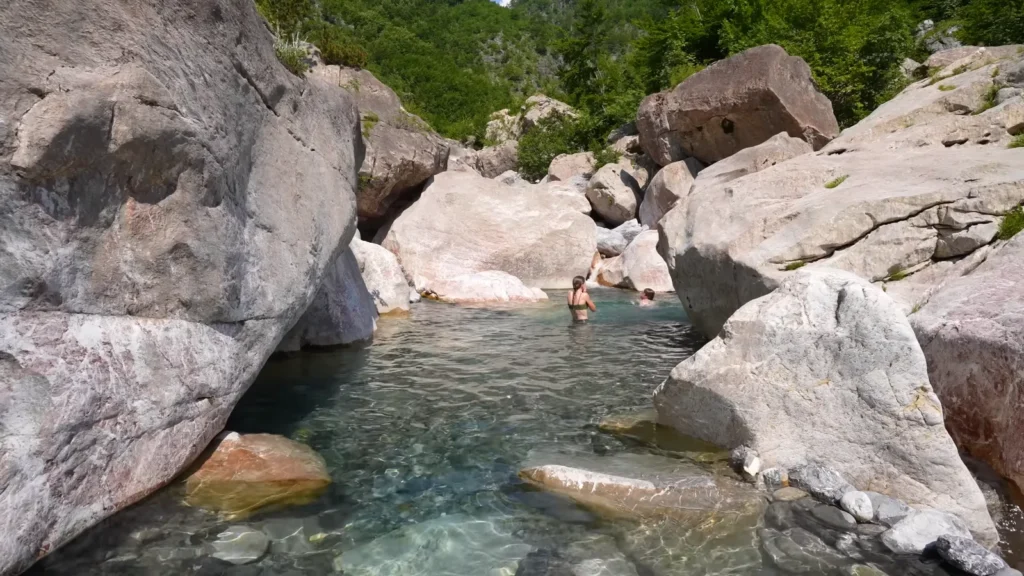
The river pools of Theth are not what I was expecting either. Great masses of smooth granite boulders to make natural swimming holes, so clear of water that you can actually count the pebbles two metres deep. I swam an hour therewith and had about four other people. In July. Attempt to find in most of Europe a swimming hole that is uncrowded.
Valbona is another energy, broader valley, more exposed, the streambed of the braided whites snaking through it giving the whole the impression of bleached high-alpine.
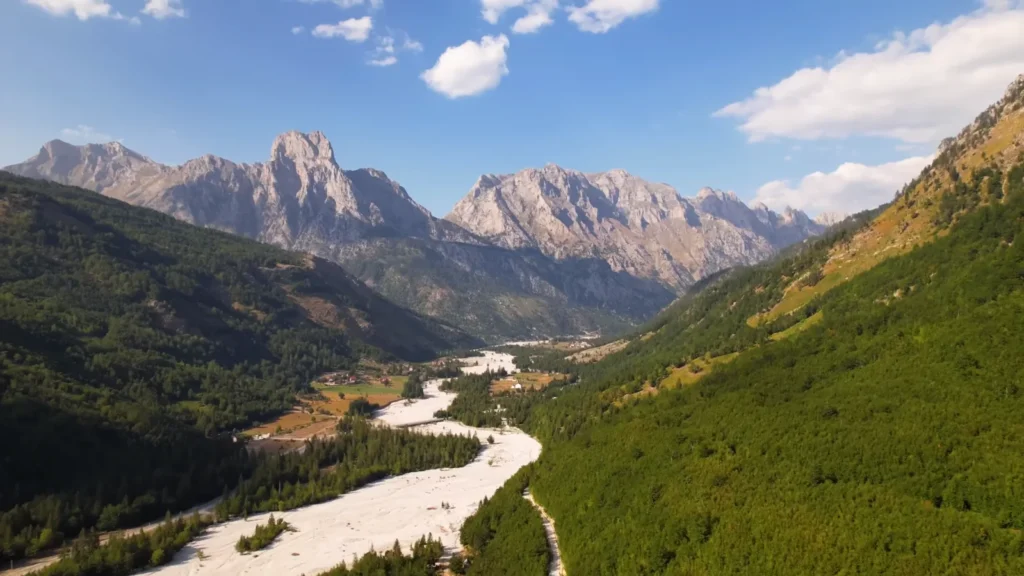
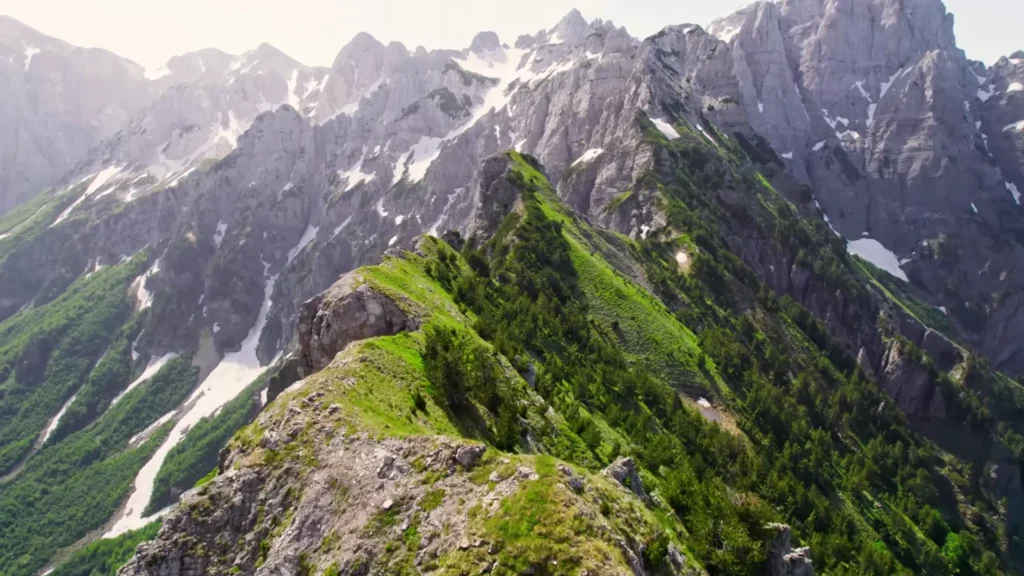
The most common one that people take is the Valbona to Theth walk of approximately 16km, crosses the Valbona Pass at approximately 1,800m, which can take 6-8 hours, based on fitness. I did it in July with a guesthouse-filled lunch and downloaded off-line maps. My legs were sore and my head was empty of all but what was down in front of me in the ridge section around Maja e Rosit. That’s a good thing.
Albanian Alps practical notes:
- Getting to Theth: Furgon (minivan) from Shkodër, usually departs 7am, ~3 hours on mountain roads. Budget 800–1000 lek.
- Getting to Valbona: Ferry across Komani Lake (2.5 hrs, stunning gorge scenery), then furgon to Valbona. Non-negotiable do the lake crossing.
- Accommodation: Both villages have family guesthouses. Expect €20–35 per night including dinner, which is usually better than anything you’d pay €80 for elsewhere.
- Best months: June–September. Snow closes the pass before and after.
- Don’t skip: The Peaks of the Balkans trail passes through both 192km multi-country route for serious hikers.
The Ionian Coast: Albania’s Beach Secret That’s Not Really a Secret Anymore
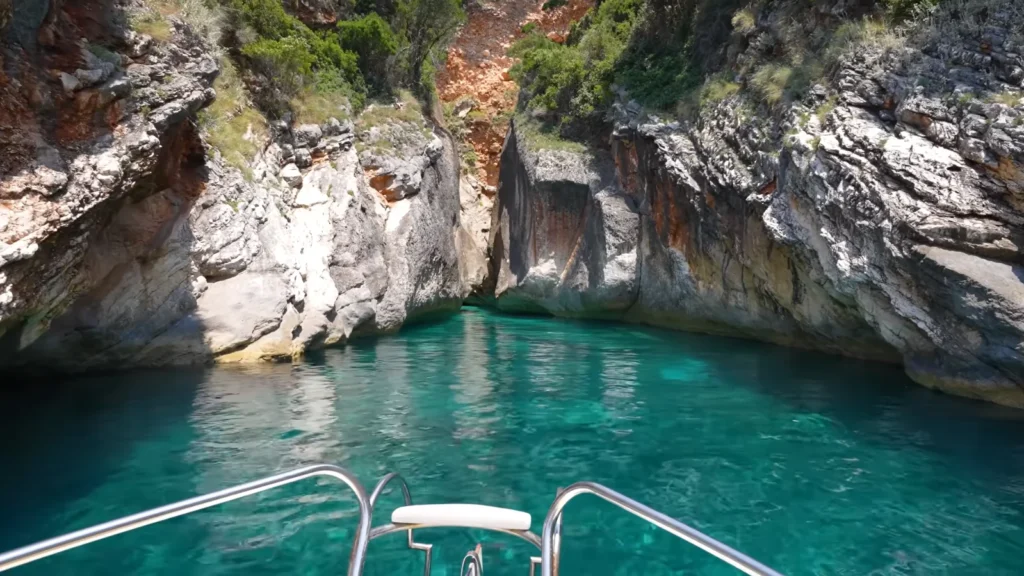
The Albanian Riviera is discussed in low tones by the type of traveller who discovered it five years ago and is a little irritated to see it come out. I get it. Himare of the water which intermingles in the colourful structures piled against the hill, boats churning in the harbour, mountains beyond, have a scruffiness that has not been rubbed out yet. It is still a real town that has just a beautiful coastline not a resort that inhaled a town.
I based myself here for four days. That was the right call.
The boat trips out of Himare are where things get genuinely ridiculous.
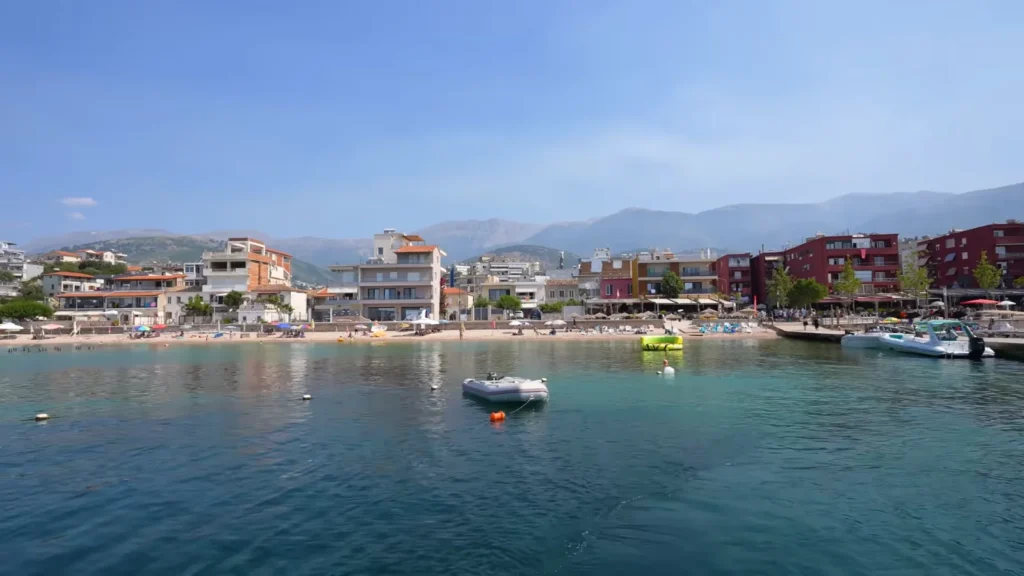
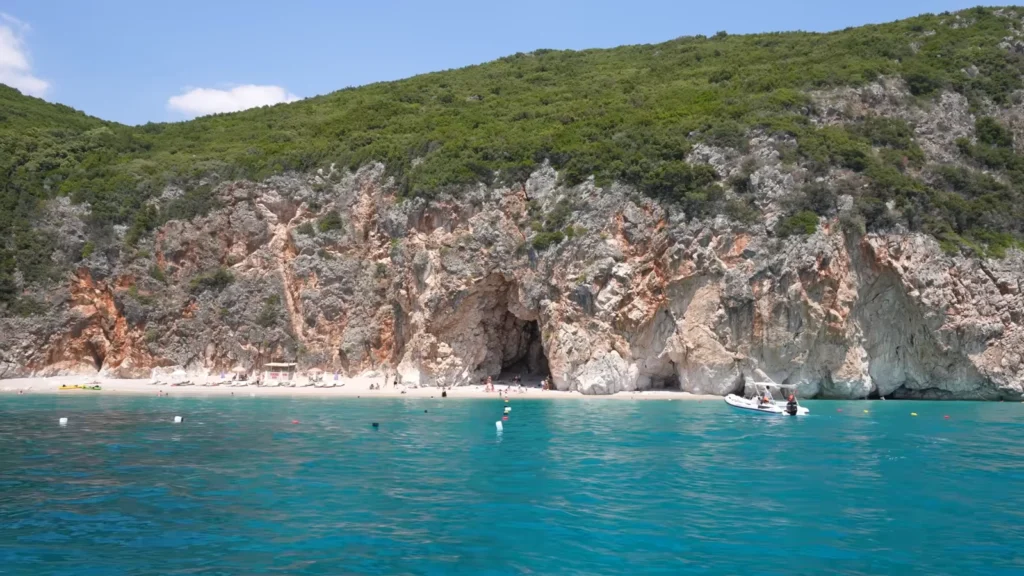
The captain a weathered guy named something I couldn’t pronounce who communicated mostly through hand gestures and a very expressive face took our small group into sea caves along the coast that I didn’t know existed until the morning we went. The water inside shifts colour in a way that doesn’t look real. In the larger caves, light filters through submerged openings below the boat and the whole cave goes electric teal. I took about forty photos and none of them captured it properly.
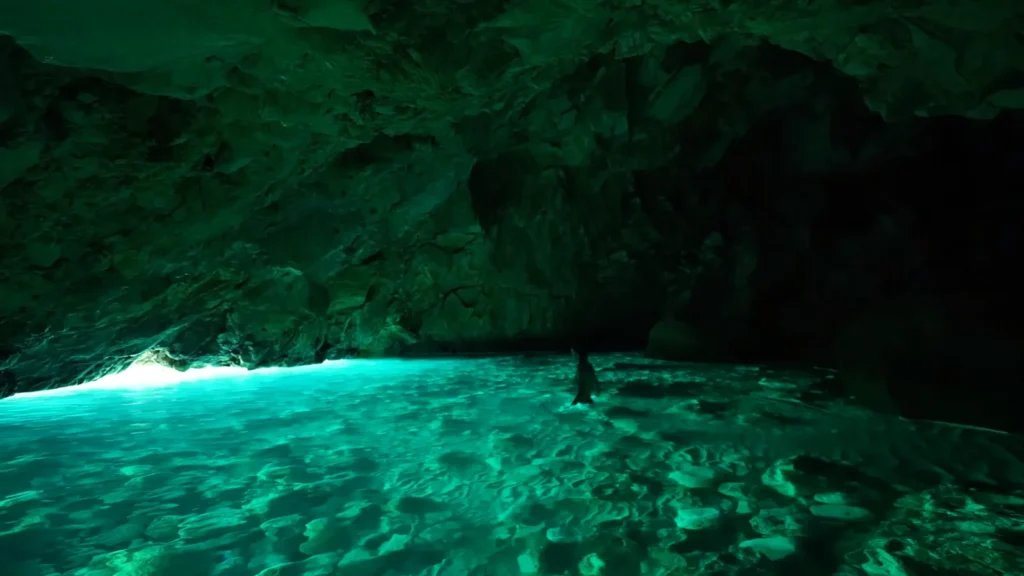
That interior cave shot the green-lit water, the dark ceiling, a single silhouette standing waist-deep is the one image from my whole Albania trip that stops people when I show them. Every single time. Nobody expects Albania to have something that looks like it belongs in Capri or the Azores.
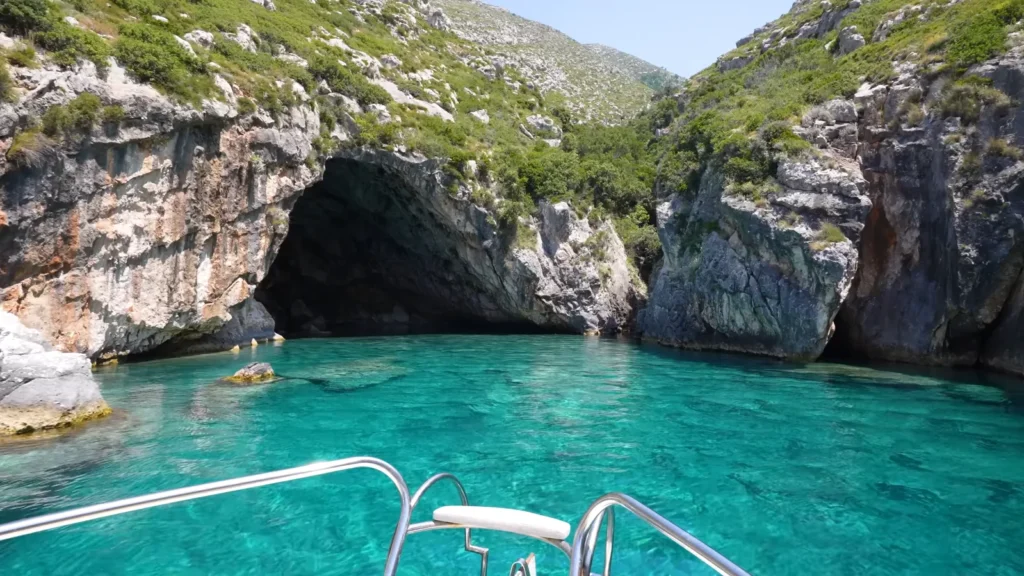
Himare boat trip basics:
- Trips depart the harbour most mornings in summer, usually 9–10am.
- Half-day trips run roughly €15–25 per person depending on group size.
- Covers sea caves, hidden coves and swimming stops.
- Book through your accommodation the night before no formal booking system, just ask around.
Gjipe Beach: The One You Have to Earn
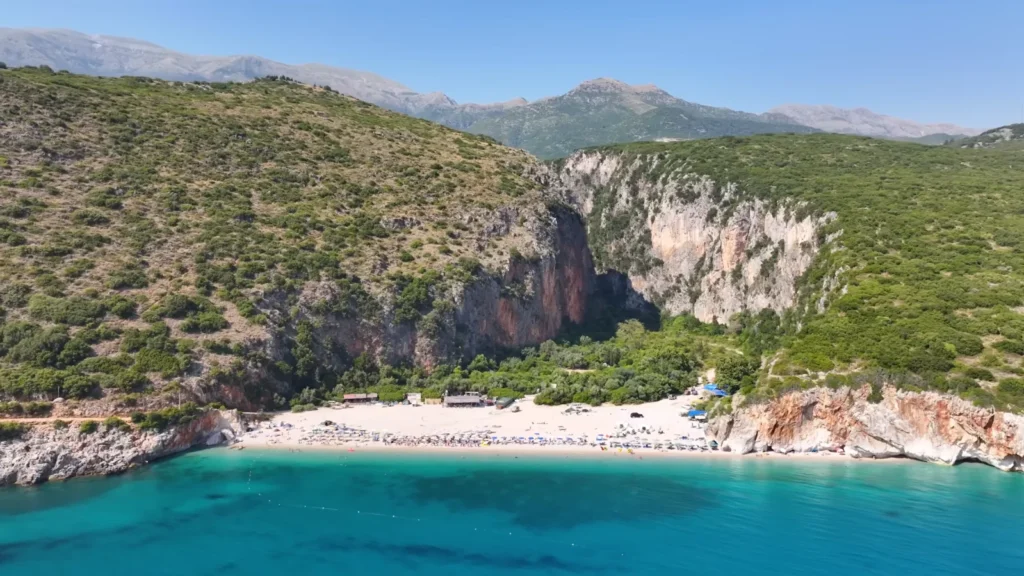
Gjipe is such a beach where half the way is everything. You walk, hiking 45 minutes down the face of the cliff, no shade, absolutely worth it or you can come by boat, at Himare. Go as you like until you reach a small trail of white sand squeezed between two rocky cliffs, the Ionian impossibly blue before you, a ravine opening into the rock behind.
There’s a small beach bar. A handful of sun loungers. The sand is directly underneath the cliffs which are 150 metres high. I had swam in the canyon, a little, through the change to cold undercurrent about a metre below, which is shocking the first time.
It gets busy by midday in July. Early in the morning or late in the afternoon when the day-trippers have quitted the place go by boat.
Corfu Detour: An Hour by Ferry, A Different World
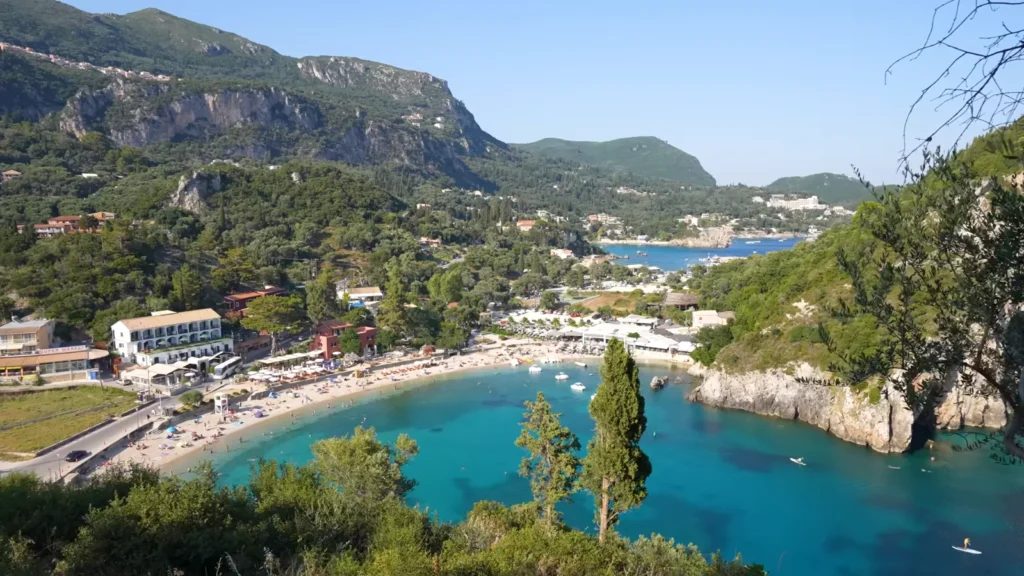
Worth a mention is Corfu, a 35 minutes ride by ferry off Saranda, a few minutes along the coast of Himare. I went for two days. Paleokastritsa in particular, that two-cove bay with the blue water and the Venetian monastery on the headland over. It is also busier and cleaner than what is on the Albanian side of the water sunbeds of EUR10 in place of EUR3, English menus all around, the entire Greek island clockwork turning seamlessly. Nice. But I continued to think of the Albanian shore. Something about places that has not been been optimised to the full extent.
Blue Eye Spring: Syri i Kaltër
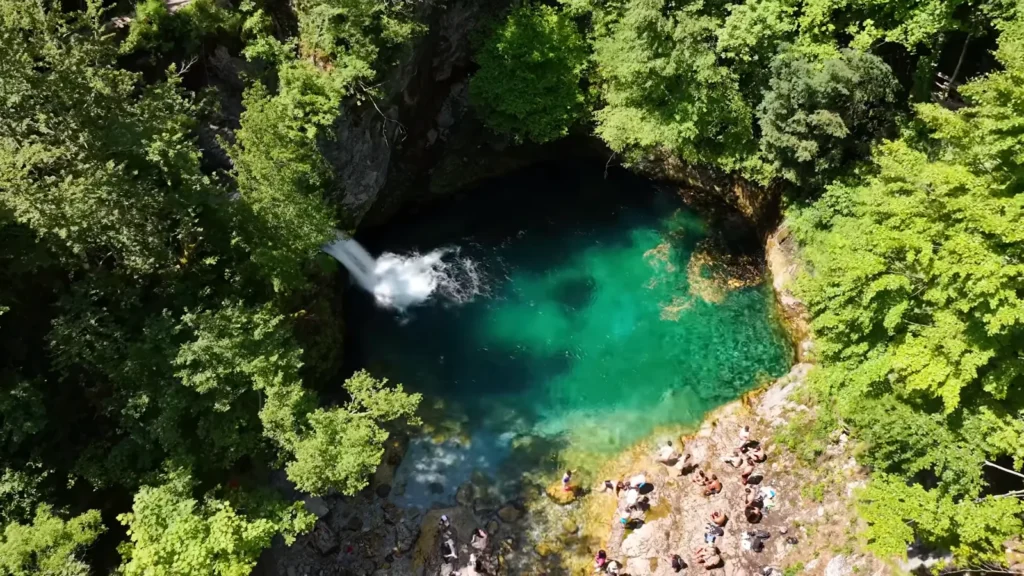
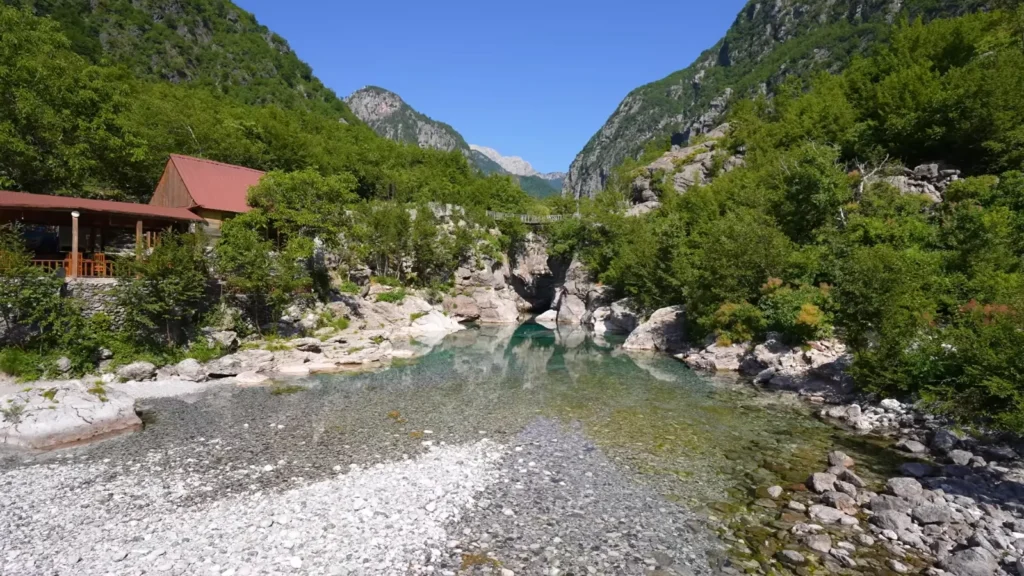
The Blue Eye — Syri i Kaltër in Albanian is about 25km east of Saranda and it’s one of those natural phenomena where you genuinely stare at it trying to understand what you’re looking at. A spring emerges from what’s essentially a circular hole in the earth. The water is so deep the centre goes pure dark navy, ringed by turquoise, ringed by pale blue at the edges, that’s the colour gradient that gives it the eye effect from above.
The temperature of the water coming up from the source is 10°C year-round. I put my hand in to check. Felt like plunging it into a freezer.
The aerial is the shot you’ve seen on Instagram. But the ground-level experience walking the forested path to it, hearing the water before you see it, watching the blue deepen as you lean over is it’s own thing. They have a small wooden platform over part of the pool.
Getting there: hire a car from Saranda (seriously, rent a car for the south the buses are infrequent and a car opens up everything) or take a day tour. Most Saranda guesthouses organise them.
Benja Thermal Baths and the Ottoman Bridge
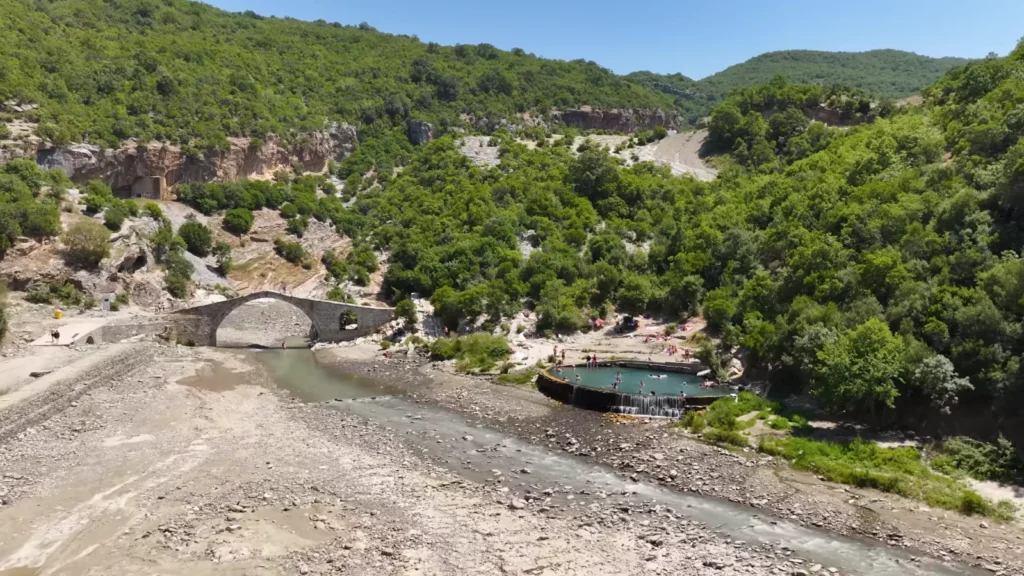
I found out about Benja thermal baths by accident a mention in a forum thread about day trips from Gjirokaster, buried under twelve other comments. That’s the kind of tip that tends to be good.
The setting alone is worth the trip. An Ottoman single-arch stone bridge spanning the Lengarica River, a dry rocky gorge hemmed in by green hills and right beside the river a circular thermal pool. About 32–35°C, sulphurous, visibly steaming in the morning. Locals and a few tourists wading in. Someone had brought folding chairs. It felt deeply, correctly informal.
The bridge dates to the 18th century. Just there, in a gorge, perfectly intact, totally uncommercialized. You park on a dirt track, walk down and that’s it.
Admission is minimal (around 200 lek last I checked). Open year-round but best May–October. About 15km north of Permet add it to any southern Albania road trip.
Gjirokaster: The Stone City
Gjirokaster is the other UNESCO city got it’s listing in 2005, extended in 2008 alongside Berat and while Berat is warmer and more immediately charming, Gjirokaster is more severe. More dramatic. The castle sits on a ridge above the city and it’s genuinely enormous, the kind of fortification that makes you recalculate how seriously people took defensive architecture in the Ottoman period.
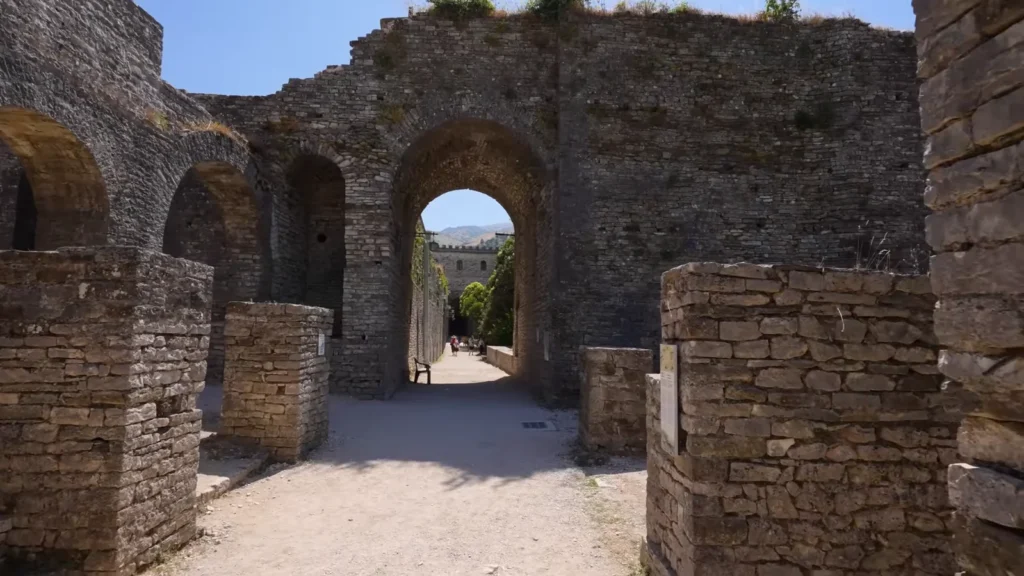
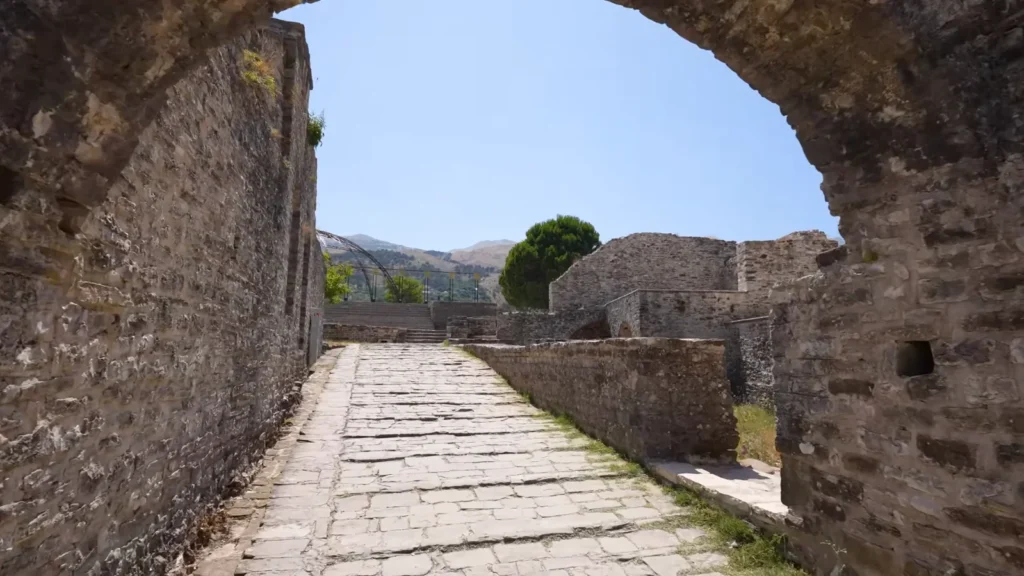
The scale continues to surprise you in the inside. Cobblestone avenues, the ruins of barracks, mosquito churches turned back into churches turned back into mosques and perspectives through the walls of the Drino Valley. The film has an American U-2 spy plane that has been shot down and parked in the courtyard, which was brought to the film by Enver Hoxha, the communist dictator, as a propaganda exhibit. Still there. No one appears to know what exactly to do with it.
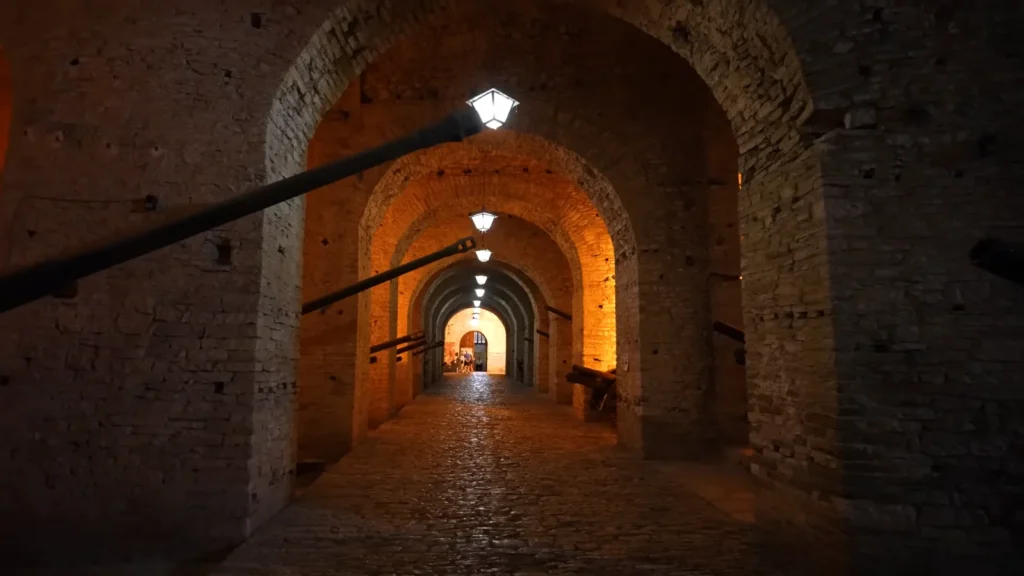
It is a night shot in the barrel-vaulted tunnel where the warm orange lamplight replicates itself in the arches with cobblestones reflecting the lights I took this at around 9pm when most tourists were through. The castle had no more than three other occupants. I heard no voice but that of my feet and some wind. That tunnel is on your list of places that you will remember very well ten years down the line.
Gjirokaster essentials:
| What | Detail |
| UNESCO Status | World Heritage Site 2005/2008 |
| Castle entry | ~500 lek (under €5) |
| Bazaar | Ottoman-era cobbled streets, still functioning |
| Famous for | Birthplace of Enver Hoxha and author Ismail Kadare |
| Getting there | 3 hrs by bus from Tirana or 1.5 hrs from Saranda |
| Don’t miss | Old Bazaar, Ethnographic Museum, castle at night |
Komani Lake and the Shala River: Northern Wilderness
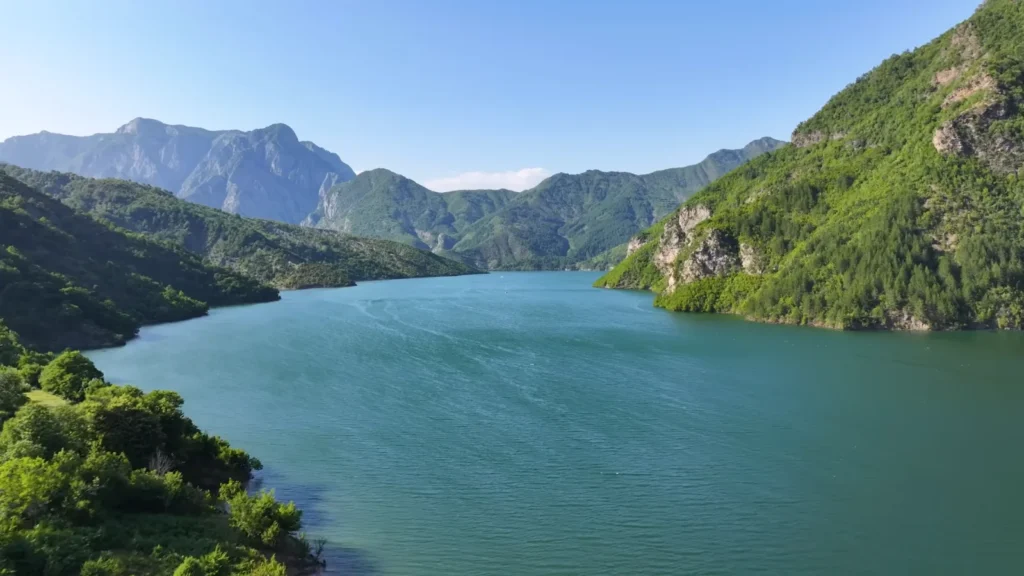
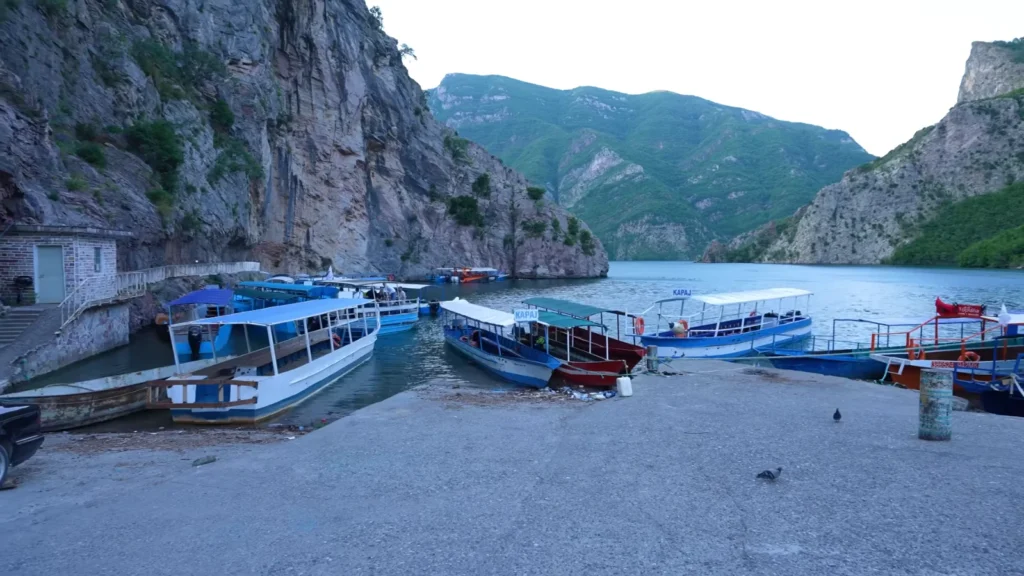
Such a travel experience as the ferry crossing at the Komani Lake turns out to be more moving than you thought it would be. You catch a dilapidated wooden passenger boat at the dock the “KAPAJ” boats – blue and white, nothing fancy – in the early morning when the walls of the gorges are half in shadow. Then two and a half hours of sitting on the roof and watching vertical limestone cliffs go by so near that one can touch the cold air off of them, the teal water beneath.
It’s not a tourist attraction dressed up as an adventure. It’s a functional ferry that connects isolated villages with no road access. People bring groceries on it.
The Shala River branches off the lake and that’s where the kayaks and the wooden bridge and the log-cabin restaurants appear.
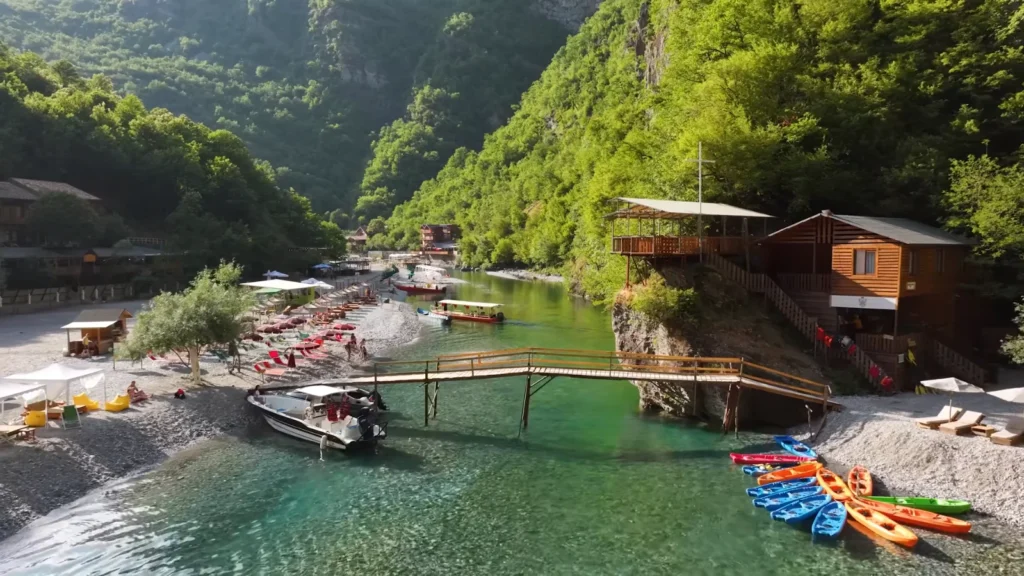
Bright orange, red, blue kayaks lined up on the pebble bank. An emerald-green river. A modest footbridge. Afternoon sun hitting the canyon walls above. It’s one of those places that looks slightly too good to be real but is actually exactly that good.
Lepushe and Grebaje: The Road Less Taken
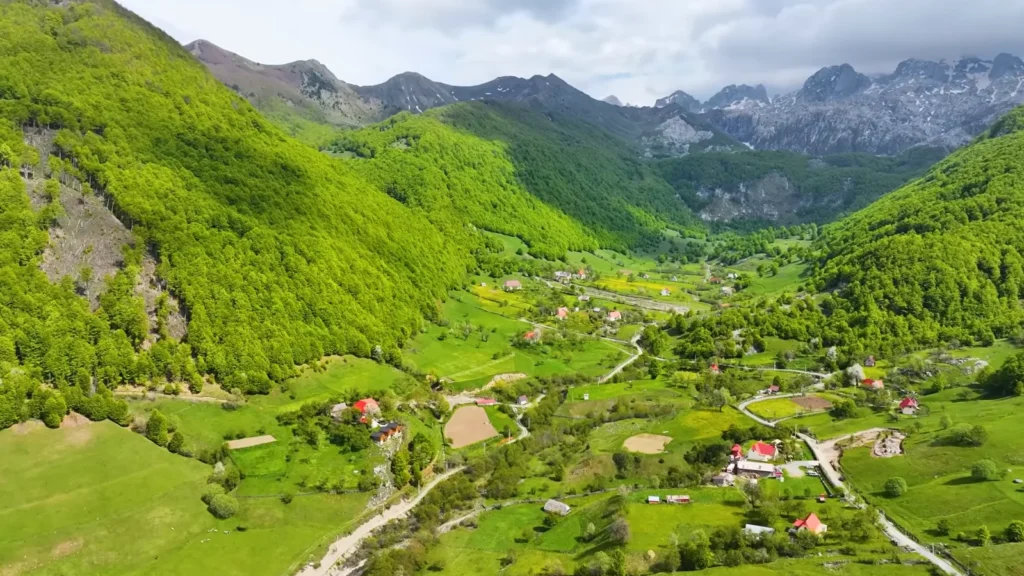
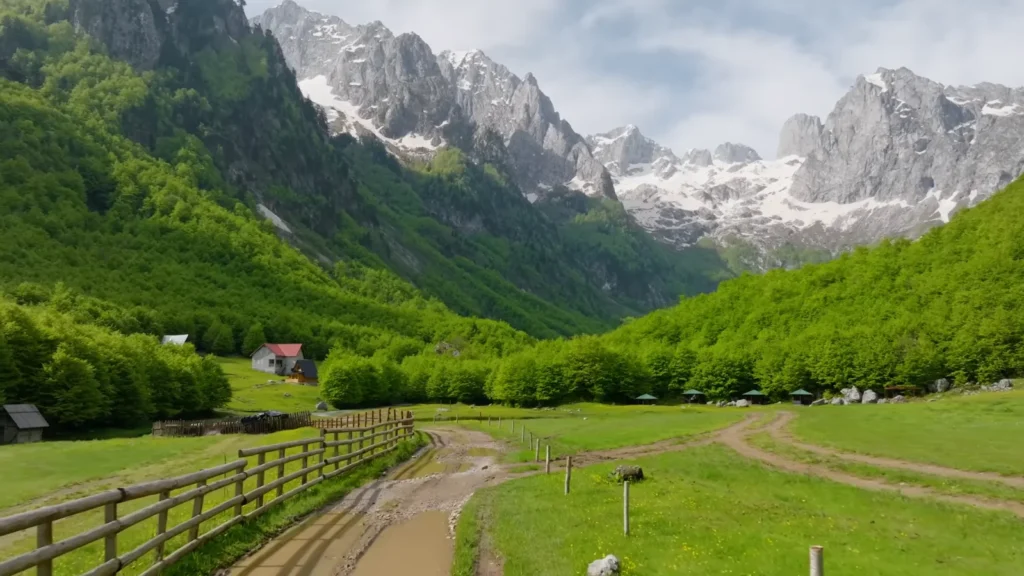
Most people don’t get here. That’s kind of the point. Lepushe is a scattered mountain village in the Kelmend region red-roofed houses in a wide green valley, the Accursed Mountains rising behind with late snow still visible on the peaks in June. You reach it on a road that gets progressively less convincing as you climb.
Grebaje Valley, just across the border zone near Montenegro, has that farm-track-and-wooden-fence pastoral quality that feels almost aggressively peaceful. A few farm structures, distant peaks, the kind of silence that’s not actually silent wind, birds, the occasional cow bell. No amenities. No information boards. You bring your own food and leave.
These aren’t bucket list destinations. They’re what’s left when the bucket list is finished and you realise you’ve been going to the wrong places.
Quick Albania Travel Reference
| Category | Info |
| Currency | Albanian Lek (ALL) — €1 ≈ 108 lek |
| Visa | EU/US/UK citizens — visa-free up to 90 days |
| Language | Albanian — English widely spoken by under-40s |
| Getting around | Rent a car for the south. Furgons (minivans) for the north. |
| Budget per day | €30–50 covers accommodation, food, transport comfortably |
| Best overall months | May–June and September |
| Avoid | August on the coast — packed and prices spike |
| Safety | Generally very safe — FCDO travel advice here |
| Useful resource | Albania.al official tourism site |
Albania’s one of those places where you arrive with low expectations not because you think badly of it, but because you simply don’t know enough to expect anything and then it just keeps going. Another valley. Another coastline. Another thing nobody told you about. I’ve been back twice since that first three-week trip. I’ll probably go again.