
I’ll be honest before I booked my ticket to Oman, I knew embarrassingly little about the place. Somewhere on the Arabian Peninsula, lots of sand, maybe some camels? That was about it. But sometimes the best trips are the ones where you go in blind and Oman turned out to be exactly that kind of surprise.
I spent three weeks exploring this country and what I found was nothing like the glitzy high-rises of Dubai or the crowded souks I’d imagined. Oman is different. Quieter. There’s this raw, untouched quality to it that’s hard to find anywhere else in the Gulf region. The landscapes shift from turquoise coastlines to Mars-like deserts to green wadis that seem to appear out of nowhere. And the people? Some of the most welcoming I’ve met anywhere.
Why Oman Should Be on Your Travel Radar
Most travelers heading to the Middle East make a beeline for the UAE or maybe Jordan if they’re feeling adventurous. Oman flies under the radar, which is precisely why it works. I’m not going to call it “undiscovered” that’d be ridiculous but it hasn’t been overrun yet. You can still find beaches where you’re the only person for miles. Forts that aren’t swarming with tour groups. Mountain villages where locals are genuinely curious about where you’re from.
The country sits on the southeastern edge of the Arabian Peninsula, bordered by the UAE, Saudi Arabia and Yemen. It’s got about 3,165 kilometers of coastline along the Arabian Sea and the Gulf of Oman, which means beaches lots of them. The interior is dominated by the Hajar Mountains and vast stretches of desert, including part of the Rub’ al Khali, the Empty Quarter.
What struck me most was how Oman has modernized without losing it’s identity. Sultan Qaboos, who ruled from 1970 until his death in 2020, pulled off something remarkable: he took one of the most isolated countries in the region and opened it up while still preserving Omani culture. According to the World Bank, Oman’s GDP per capita jumped from around $1,000 in 1970 to over $15,000 by 2019. But unlike some of it’s neighbors, the development feels… tasteful. No 800-meter towers here. Just well-maintained infrastructure, clean cities and a respect for tradition that’s built into everything.
Getting There and Visa Basics
Flying into Muscat International Airport was straightforward. The airport itself is modern, efficient and way less chaotic than I expected. I flew in from Europe via a connection in Istanbul, but there are direct flights from major cities across Asia, Europe and the Middle East. Oman Air is the national carrier and they run a solid operation nothing fancy, but comfortable enough for long hauls.
Visa requirements are pretty simple for most nationalities. Citizens from 103 countries, including the US, UK, EU nations, Canada and Australia, can get a free tourist entry permit on arrival for stays up to 14 days. If you want to stay longer, you can purchase a visa online through the Royal Oman Police portal before you travel. I opted for the 30-day tourist visa, which cost me 20 Omani Rials (about $52). The process took less than 10 minutes online and I had the approval in my inbox within 24 hours.
One thing to note: Oman takes it’s visa rules seriously. Make sure your passport is valid for at least six months from your entry date and don’t overstay your visa. Fines start at 10 rials per day and nobody wants to deal with that hassle.
When to Visit: Timing Matters More Than You’d Think
Oman has a desert climate, which sounds simple until you realize just how extreme the temperature swings can get. I made the mistake of visiting in late June during my first trip. Big mistake. We’re talking 45°C (113°F) in the shade. Walking around felt like being slowly roasted alive. The steering wheel in my rental car was too hot to touch without a towel.
The best time to visit is between October and April when temperatures are mild think 20-30°C (68-86°F) during the day and cooler at night. I went back in January and it was perfect. Warm enough to swim, cool enough to hike without feeling like you’re going to pass out. December through February is peak season, so prices go up and popular spots get busier, but it’s still nothing compared to European summer crowds.
If you’re thinking about visiting the Dhofar region in the south, the timing flips. The khareef season (monsoon) runs from June to September and the area around Salalah turns impossibly green. It’s stunning, but be prepared for rain and humidity. The rest of Oman is baking during those months, so pick your region based on when you’re going.
Planning Your Oman Itinerary: Where I Actually Went
I’m not great at sticking to plans. My original itinerary had me spending most of my time in Muscat and maybe doing a day trip or two. That lasted about three days before I realized I needed to get out and see the rest of the country. Here’s how I ended up structuring my three weeks, broken down by region.
Muscat: The Capital That Doesn’t Feel Like One
Muscat surprised me. It’s the capital, sure, but it doesn’t have that aggressive city energy you get in places like Dubai or Bangkok. The city sprawls along the coast, hemmed in by mountains and there’s this relaxed, almost sleepy vibe to it. No skyscrapers punching through the skyline building codes restrict heights to preserve the traditional look. Most buildings are white or sand-colored with subtle Islamic architectural details.
I spent four days here, which was about right. Any less and you’ll miss the good stuff. Any more and you’ll start to get antsy.
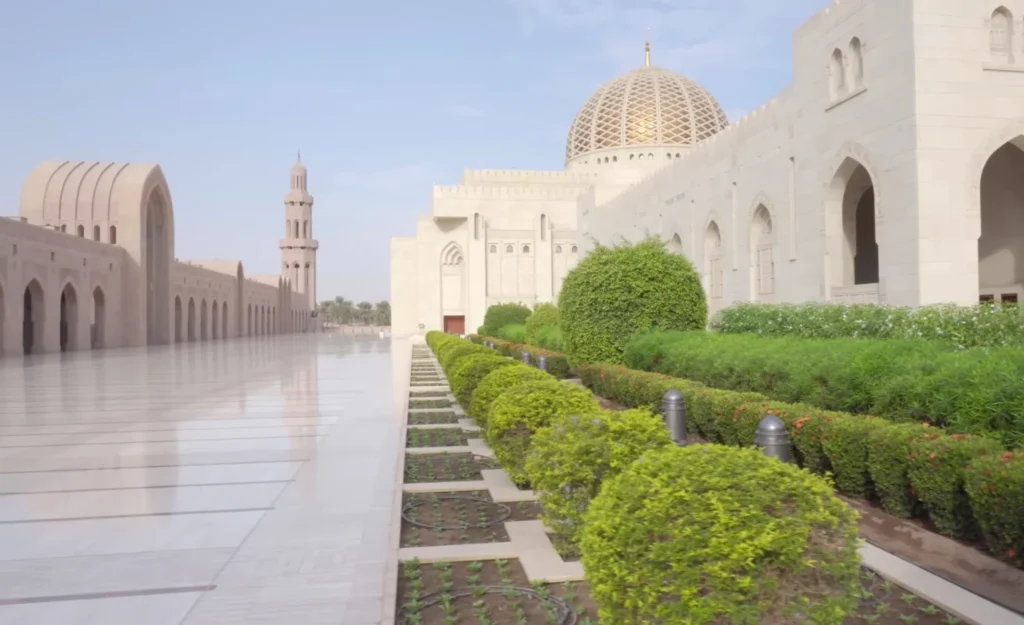
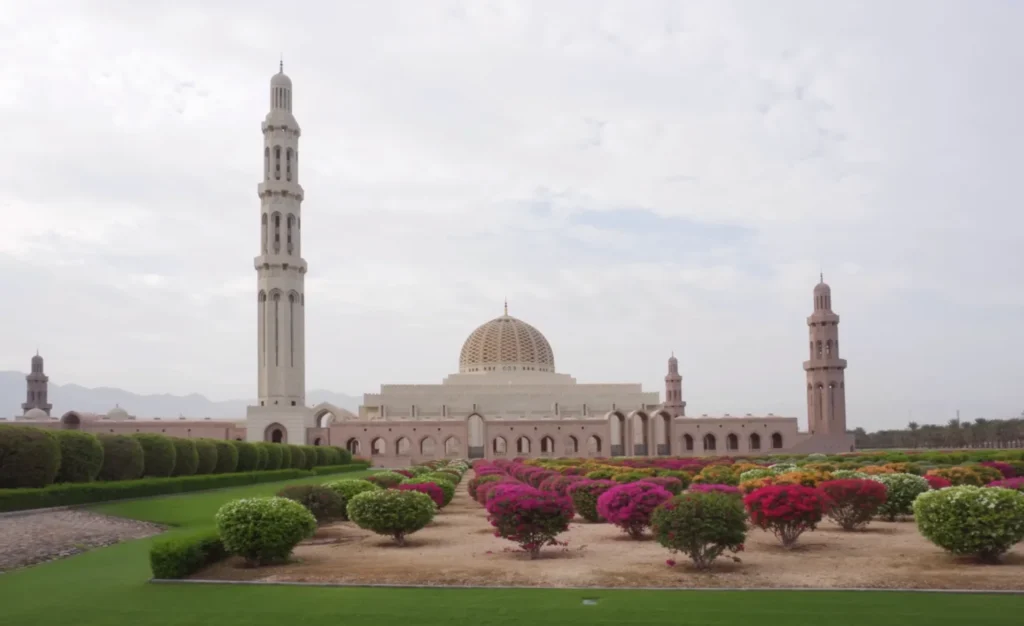
Sultan Qaboos Grand Mosque was my first stop and honestly, it’s worth the trip to Oman by itself. This place is massive it can hold 20,000 worshippers. The main prayer hall has a chandelier made from Swarovski crystals that weighs eight tons and a Persian carpet that took 600 weavers four years to complete. According to the mosque’s official records, the carpet is one of the largest single-piece carpets in the world, measuring 70m x 60m.
Non-Muslims can visit, but timing matters. It’s open to visitors Saturday through Thursday from 8:00 AM to 11:00 AM. Dress modestly long pants and sleeves for everyone and women need a headscarf. They’ll lend you one if you forget, but bring your own to be safe.
Mutrah Souq is where you go to get lost on purpose. This is one of the oldest markets in Oman and it’s got that authentic chaos that modern malls will never replicate. Narrow alleys packed with shops selling everything from frankincense to silver Omani khanjars (curved daggers) to cheap electronics. The smell hits you first incense, spices, perfume all mixing together. Haggling is expected. I bought a small bag of frankincense resin for 3 rials after the vendor initially quoted me 8. Just be friendly about it and don’t act offended when they start high.
The Mutrah Corniche runs along the waterfront and makes for a great evening walk. I’d usually grab some shawarma from one of the stalls and watch the dhow boats bob in the harbor while the sun set behind the mountains. Simple, but these ended up being some of my favorite moments.
Royal Opera House Muscat was another highlight. I’m not huge into opera, but the building itself is worth seeing. The architecture blends traditional Omani design with modern elements and if you can catch a performance, do it. I saw a classical Arabic music concert that cost me 15 rials for a decent seat. The acoustics were incredible.
For history buffs, the Al Jalali and Al Mirani forts sit on either side of Muscat harbor. You can’t go inside Al Jalali (it’s used for state functions), but they’re photogenic from the harbor. I took a short dhow cruise that departed from the marina for 10 rials and got great views of both forts plus the coastline.
Where I Stayed in Muscat
I bounced between a couple of places. Started at a budget hotel in Ruwi called Golden Oasis for about 20 rials a night. Basic, clean, close to local restaurants. Nothing special, but it worked. Later I splurged for two nights at the Al Bustan Palace, a Ritz-Carlton Resort, which was absurdly nice. Private beach, pools, mountain backdrop. Cost me 120 rials a night, which actually isn’t terrible for a five-star resort. Worth it for the contrast.
Beyond Muscat: Coastal Adventures and Desert Highways
After Muscat, I rented a 4×4 and pointed it south. This is where Oman really opened up for me. The highways are excellent smooth, well-marked and mostly empty. You’ll pass through landscapes that shift every hour: coastal roads hugging cliffs, flat desert stretches where you can see for miles, then suddenly you’re climbing through mountain passes.
Driving in Oman is straightforward. They drive on the right, speed limits are clearly posted (usually 120 km/h on highways) and gas is cheap about 0.19 rials per liter (roughly $0.50). I filled up my tank for less than 10 rials most times. The only real hazards are camels wandering onto roads (especially at dawn and dusk) and the occasional driver who thinks speed limits are suggestions.
Sur and the Turtle Beaches
Sur is about 150 km southeast of Muscat, roughly a two-hour drive along the coast. It’s a port town that’s been around for centuries used to be a major shipbuilding center for dhows, those traditional wooden boats you see everywhere. I stayed two nights here, mostly because I wanted to see the turtles.
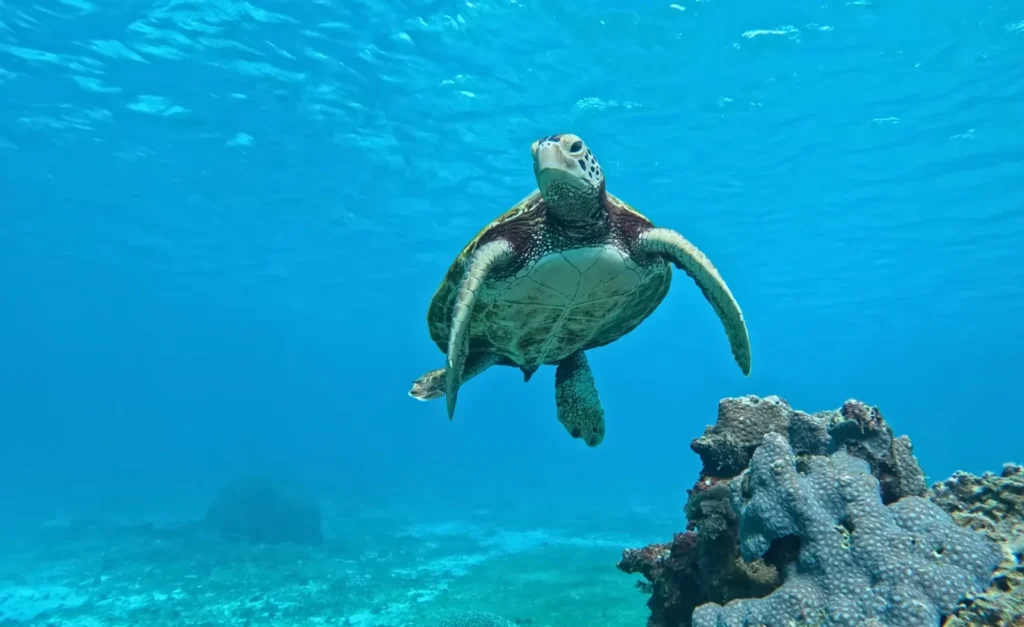
Ras Al Jinz Turtle Reserve is about 50 km past Sur and it’s one of the most important green turtle nesting sites in the Indian Ocean. According to the reserve’s research data, around 20,000 female turtles come ashore here each year to lay eggs between April and September, though you can see them year-round.
I booked a night viewing tour through the reserve’s visitor center. Tours run after sunset and before sunrise. You pay 12 rials for adults, which includes a guide. They’re strict about the rules: no flash photography, no touching the turtles, stay quiet, follow the guide. Fair enough these are wild animals doing something pretty vulnerable.
Watching a massive green turtle drag herself up the beach, dig a nest and lay 80-100 eggs before covering them up and heading back to the ocean was unexpectedly moving. The whole process takes about two hours. Our guide explained that only about 1 in 1,000 hatchlings makes it to adulthood. Brutal odds, but that’s nature.
The reserve has basic accommodation if you want to stay on-site. I opted for a hotel in Sur called Sur Plaza Hotel 35 rials a night, decent breakfast, walking distance to the dhow yards where they still build boats by hand using traditional methods. Watching these craftsmen work without power tools, just hammers and saws and decades of experience, was worth the stop alone.
The Fjords of Musandam (Sort Of)
Okay, technically Musandam is separated from the rest of Oman by a chunk of the UAE, so it feels like a separate trip. But I flew up to Khasab from Muscat (about 70-minute flight on Oman Air for 45 rials) because everyone kept telling me the “fjords” were unmissable.
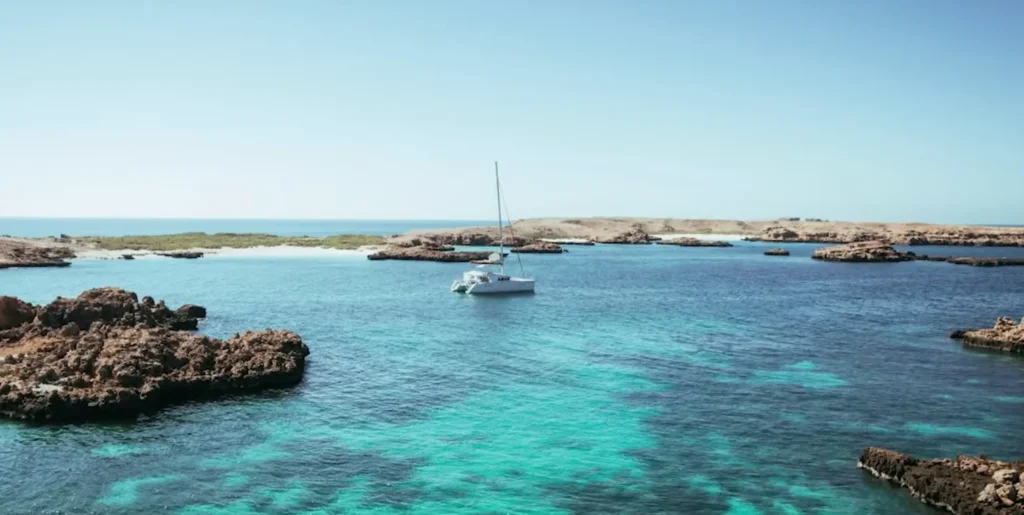
They’re not actually fjords they’re khors, which are flooded valleys carved by geological activity, not glaciers. But the comparison makes sense. Steep limestone cliffs drop straight into crystal-clear turquoise water. It’s dramatic.
I booked a full-day dhow cruise through a local operator for 40 rials, which included lunch, snorkeling gear and stops at a couple of swimming spots. We cruised through Khor Ash Sham, Telegraph Island (where the British laid telegraph cables in the 1860s) and spotted dolphins along the way. The water was so clear I could see fish from the boat deck.
Musandam is also a great diving destination. The Strait of Hormuz creates strong currents that bring in nutrients, which means healthy coral and lots of marine life. I did two dives with Extra Divers Musandam saw octopus, moray eels, cuttlefish and schools of barracuda. Two-dive package cost me 60 rials including equipment rental.
The downside? Musandam is expensive compared to the rest of Oman. Accommodation options are limited and pricey. I stayed at Golden Tulip Resort Khasab for 65 rials a night, which was the cheapest I could find that wasn’t a total dump. Worth it for the scenery, but budget accordingly.
Wadis, Mountains and Why 4x4s Matter
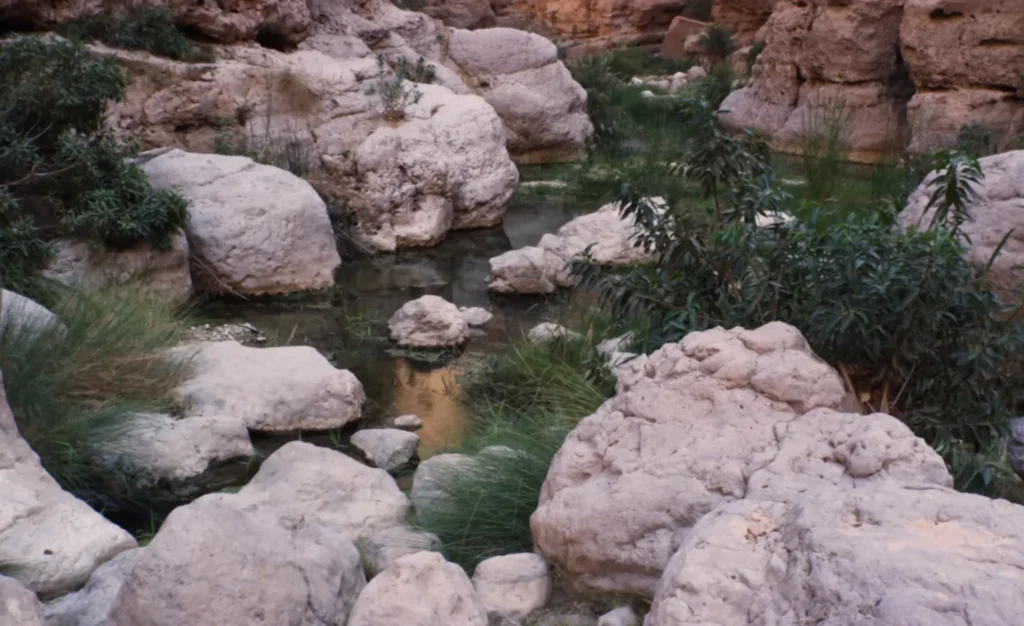
This is where Oman gets really interesting. Wadis are valleys, usually dry, but when there’s water they become these incredible oases with pools, waterfalls and lush vegetation surrounded by barren rock. The Hajar Mountains run through northern Oman and they’re packed with wadis worth exploring.
Wadi Shab: The Instagram Famous One
Wadi Shab is about 140 km south of Muscat, maybe 90 minutes of driving. It’s popular probably the most visited wadi in Oman and for good reason. The hike takes you through a narrow canyon with multiple pools where you can swim and if you keep going for about 45 minutes, you reach a hidden waterfall inside a cave.
Getting there requires a short boat ride across the wadi entrance (1 rial per person each way). The hike itself isn’t technical, but you’ll be scrambling over rocks and wading through water, so wear proper shoes not flip-flops. I wore water shoes and was glad I did.
The pools are stunning. That perfect blue-green color that doesn’t look real. I swam through a narrow opening into the cave where the waterfall crashes down and it felt like something out of an adventure movie. Just don’t bring valuables there’s nowhere secure to leave stuff and the water’s deep enough that you need both hands free.
Crowds are the main issue. If you arrive after 10 AM, it’ll be packed with tour groups. I got there at 7:30 AM and had the place mostly to myself for the first hour. That made all the difference.
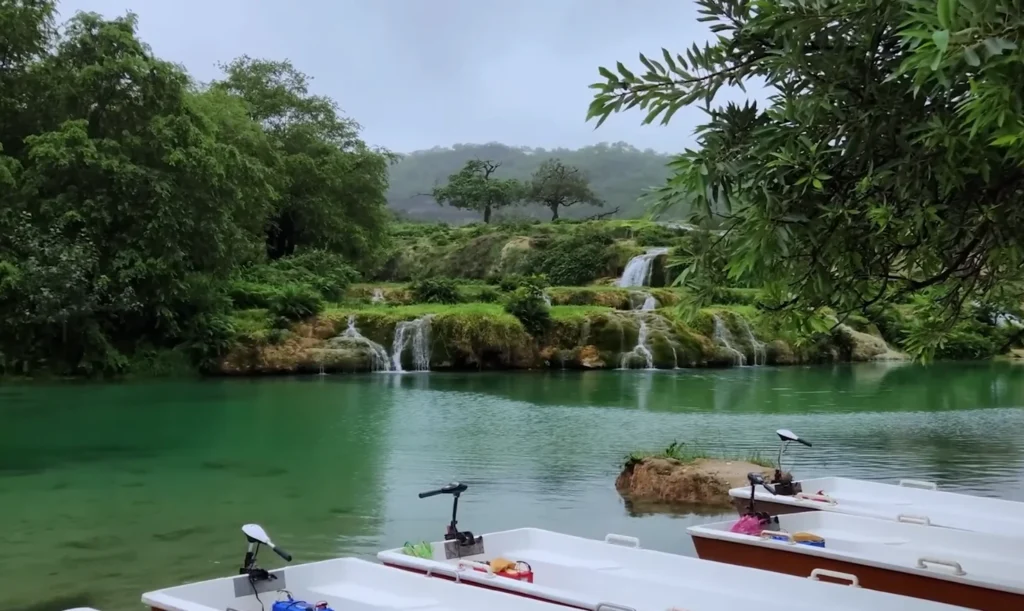
Wadi Bani Khalid: Easier Access, Still Beautiful
Wadi Bani Khalid is further inland, about 200 km from Muscat in the Sharqiya region. This one’s accessible by regular car (no 4×4 needed), which explains why it gets busy on weekends when Omani families come out for picnics.
The main pool area is developed with pathways and facilities, which takes away some of the adventure feel, but the water’s pristine. There are caves you can swim into if you’re comfortable in water and not claustrophobic. I explored one that opened into a larger chamber with natural light filtering through cracks in the rock.
The real reward here is hiking further up the wadi beyond the developed area. After about 20 minutes of walking, you leave the crowds behind and find quieter pools. I spent an afternoon reading and swimming with maybe five other people around. Bring snacks and plenty of water there’s one small shop at the entrance, but prices are inflated and selection is limited.
Jebel Shams: Oman’s Grand Canyon
Jebel Shams is the highest mountain in Oman at 3,009 meters. “Mountain of the Sun” in Arabic and yeah, the name fits. The drive up takes you from hot desert into cooler mountain air where you can actually see your breath in winter mornings.
The main attraction is Wadi Ghul, often called Oman’s Grand Canyon. It’s a massive gorge dropping 1,000 meters and the views are absurd. I did the Balcony Walk, a popular hiking trail that follows the canyon rim. It’s about 5-6 km round trip, mostly flat, takes 2-3 hours. Not challenging, but the drop-offs are real no guardrails, just you and the edge. Don’t attempt this if you’re afraid of heights.
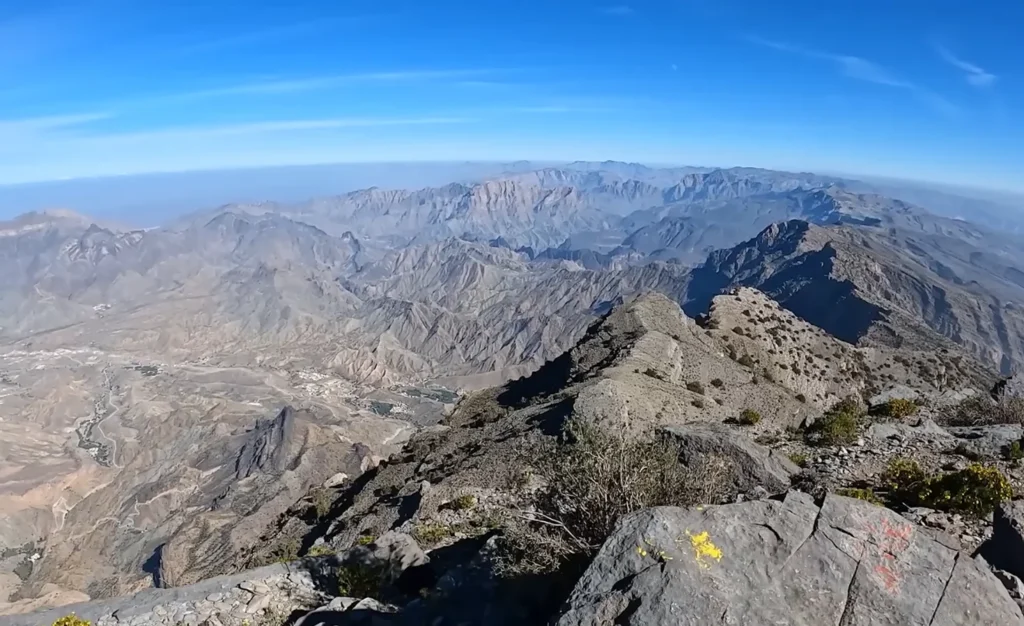
I camped at the Jebel Shams Resort campsite (calling it a “resort” is generous it’s basic camping facilities for 10 rials per night). Watching sunset from the canyon rim and then seeing the Milky Way appear as the sky darkened was probably my favorite single experience in Oman. The temperature dropped to near freezing overnight, so bring warm layers if you’re camping.
The road to Jebel Shams requires 4×4. The final section is steep, unpaved and has some sketchy switchbacks. I saw a couple of sedans turned back by locals who rightfully told them they wouldn’t make it. Don’t be that person.
Wadi Bimmah Sinkhole: Quick Stop, Worth It
This is literally a giant sinkhole filled with turquoise water, located right off the coastal highway between Muscat and Sur. Takes 5 minutes to see, free to visit and you can swim in it. Local legend says it was created by a meteorite strike, but geologists say it’s a collapsed limestone cavern. Either way, it’s photogenic.
The water’s about 20 meters deep and stays around 20-22°C year-round. There are stairs leading down, changing rooms and a small park area. I stopped here on my way back from Sur, spent 30 minutes swimming and continued on. Perfect road trip break.
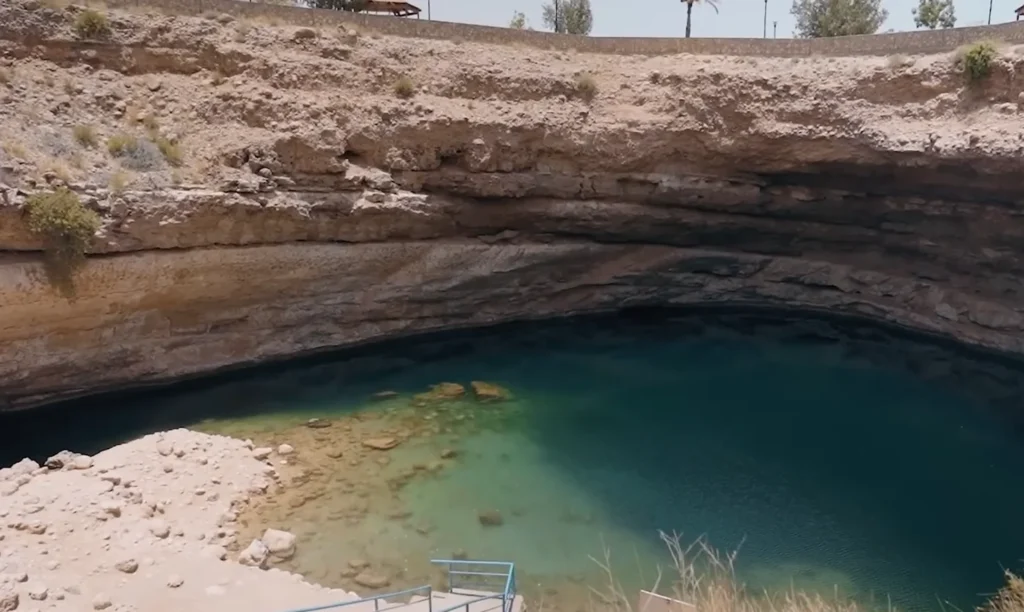
Misfat Al Abriyeen: Mountain Village Time Capsule
This village in the Al Hamra region feels like it hasn’t changed in 400 years. Stone houses stacked on a hillside, narrow alleyways, traditional falaj irrigation systems channeling water through date palm gardens. It’s still inhabited and you can walk through the old quarter for free.
I stayed at Misfah Old House, a restored traditional home turned guesthouse. My room had thick stone walls, tiny windows and Omani rugs on the floor. Cost me 45 rials including breakfast (fresh dates, Omani bread, honey and strong coffee). The owner, Ahmed, spent an hour telling me about the village’s history and showing me how the falaj system works some of these channels are over 1,000 years old.
The village sits at about 1,000 meters elevation, so it’s noticeably cooler than the lowlands. There’s a short hike through the palm gardens and up to a viewpoint that overlooks the village and valley. Go in late afternoon when the light turns everything golden.
The Desert: Empty Quarter Adventures
The Wahiba Sands (also called Sharqiya Sands) is a massive desert region covering about 12,500 square kilometers. It’s not technically part of the Rub’ al Khali (Empty Quarter), but it gives you the full desert experience: towering dunes, endless sand and that profound silence you only get when there’s nothing around for miles.
I spent two nights at a Bedouin-style camp called Desert Nights Camp. They picked me up from a meeting point on the highway (my rental car would’ve gotten stuck immediately) and drove me in via 4×4. The camp had about 30 tents, each with beds, private bathroom and surprisingly good air conditioning. Cost was 80 rials per night including dinner and breakfast.
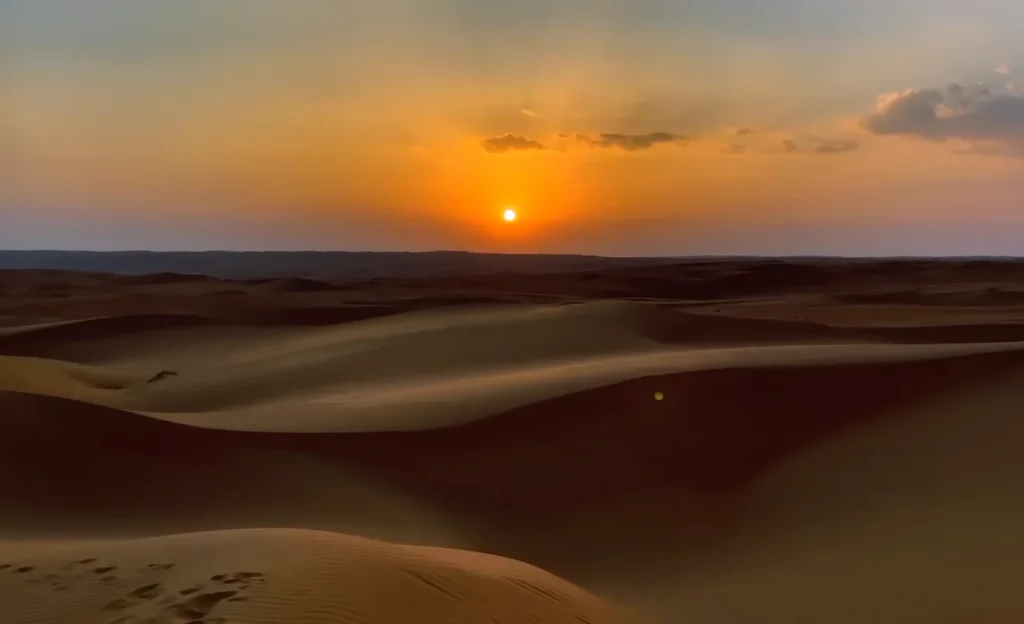
The dunes here reach up to 100 meters high. I tried dune bashing (terrifying and exhilarating), sandboarding (harder than it looks) and camel riding (uncomfortable but photogenic). But the best part was climbing to the top of a big dune before sunrise, sitting there alone with coffee and watching the sky change colors as the sun came up.
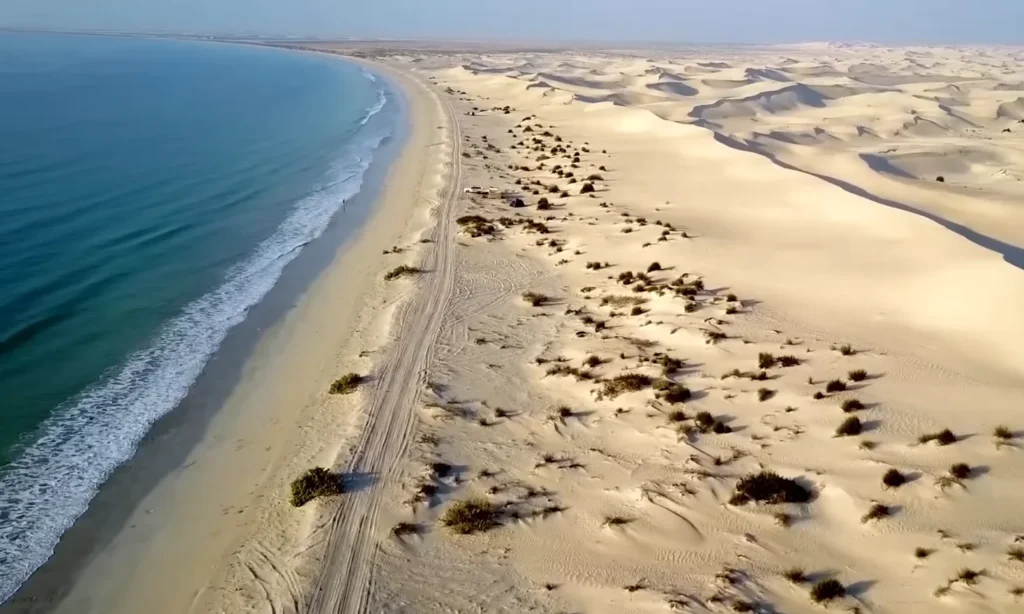
The camp arranged a visit to a local Bedouin family who still maintain a traditional lifestyle. We sat in their tent, drank sweet tea and they explained how they navigate the desert using stars and landmarks. Their kids all go to school in nearby towns now the lifestyle is changing but they still spend time in the desert keeping the skills alive.
If you want to camp wild (not at a formal campsite), you can. Just drive into the desert until you find a spot you like, set up tent and you’re done. No permits required. But know what you’re doing GPS, plenty of water, recovery gear if you get stuck and tell someone your plans. The desert doesn’t care about your Instagram photos.
Salalah and the Southern Coast: A Different Oman
Salalah is about 1,000 km south of Muscat roughly a 10-hour drive or a 90-minute flight. I flew because spending two full days driving through empty highway didn’t appeal to me, though some people do it as a road trip with stops along the way. Oman Air tickets cost me 55 rials round trip when I booked a couple weeks in advance.
Salalah feels like a different country. The climate’s tropical, there are coconut palms and banana trees and during khareef season (June to September) the whole region turns green from monsoon rains. The rest of Oman is brown and dry, but Salalah’s lush. I visited in late October, just after khareef ended and everything was still green.
Why Salalah Matters: Frankincense and History
Salalah sits in the Dhofar region, which has been producing frankincense for over 5,000 years. This resin from Boswellia trees was more valuable than gold in ancient times used in religious ceremonies, medicine and perfumes across the ancient world. The Romans, Egyptians and Chinese all traded for Dhofari frankincense.
You can still see frankincense trees growing wild in the mountains around Salalah. I visited Wadi Dawkah, a UNESCO World Heritage site that protects about 5,000 frankincense trees. It’s just an open area with trees scattered across a valley no fancy visitor center or exhibits but knowing you’re looking at the same species that built entire trade empires puts it in perspective. Entry is free, bring your own water.
The Al Baleed Archaeological Park gives you the full historical context. This was a major port city during the frankincense trade era and the museum walks you through maritime history, trade routes and the archaeology of the site. UNESCO designated the frankincense trade route as a World Heritage site in 2000, recognizing it’s importance to global commerce. Admission was 3 rials and I spent about two hours there.
Beaches Nobody’s Heard Of
Salalah’s beaches are incredible and they’re empty. Mughsail Beach has white sand, turquoise water, dramatic rock formations and on the day I visited, maybe 20 other people spread across several kilometers. There are blowholes in the limestone cliffs where waves force water up through narrow channels, creating these massive spray geysers when the tide’s right.
The drive to Mughsail takes you along one of the most scenic coastal roads I’ve seen anywhere. Cliffs dropping to the ocean, mountains on one side, desert meeting sea. There’s a viewpoint about halfway where I stopped for 20 minutes just watching the waves.
Fazayah Beach is less developed basically a small fishing village with a perfect crescent of sand. I swam here for an hour and didn’t see another tourist. Just local fishermen working on their boats, some kids playing in the shallows and me. The water’s warm year-round (25-28°C) and visibility for snorkeling is excellent along the rocky edges.
Jebel Samhan and Wadi Darbat
Jebel Samhan is a mountain plateau that rises about 2,100 meters above sea level. The drive up takes you through multiple climate zones you start in tropical lowlands and end up in cooler mountain air with completely different vegetation. There are Arabian leopards up here, though seeing one is next to impossible. According to conservation estimates, there might be fewer than 200 Arabian leopards left in the wild, mostly in Oman’s mountain regions.
I didn’t see a leopard, but I did see several Arabian gazelles and some impressive raptors. The viewpoint at the top looks straight down 1,800 meters to the coastal plain below. It’s dizzying. The road requires 4×4 and decent driving skills some sections are narrow with no barriers and long drops.
Wadi Darbat transforms during khareef season into a landscape with waterfalls and green hillsides that look nothing like Arabia. I visited post-monsoon when water levels were lower, but there were still pools you could swim in and small waterfalls cascading over travertine formations. Omani families come here to camp and picnic, especially on weekends. It’s developed with pathways and facilities, maybe too developed if you’re looking for wilderness, but the scenery’s still worth it.
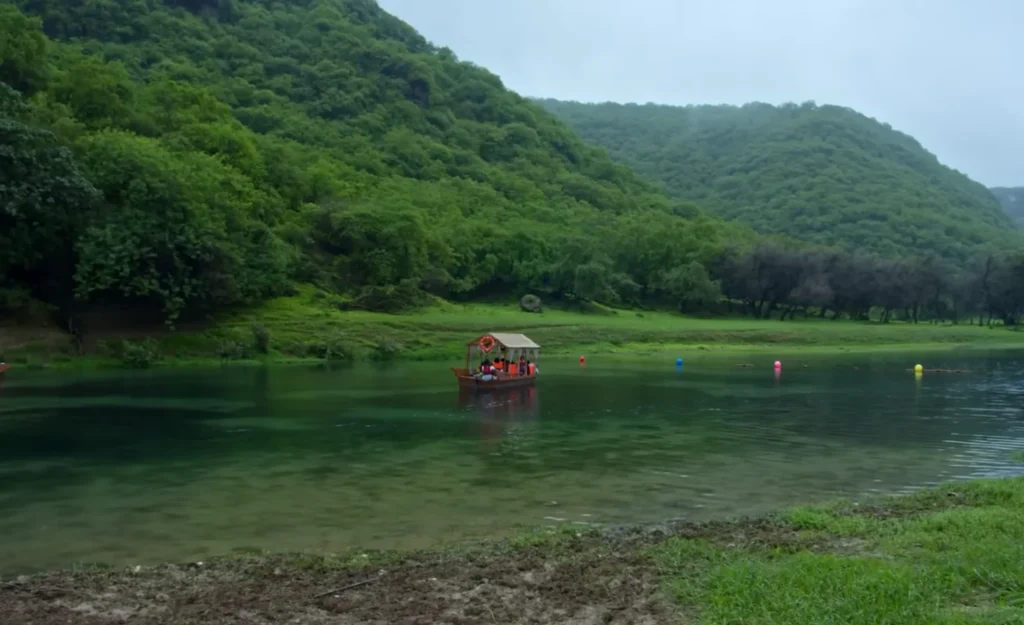
There’s also a population of camels that just wander through the wadi and around the parking areas. They’re used to people and mostly ignore you, but they will investigate your car if you leave food visible.
Where I Stayed in Salalah
I stayed at Juweira Boutique Hotel near the beach for 55 rials a night. Nice property, pool, good restaurant, about 10 minutes from central Salalah. Room was spacious with a balcony overlooking gardens. Breakfast included fresh tropical fruits you don’t get in northern Oman papaya, bananas, mangoes.
There are fancier resorts along the coast (Anantara, Marriott, Hilton), but they’re 100+ rials per night and felt isolated from the actual city. I preferred being closer to local restaurants and markets.
Nizwa and the Interior: Forts, Souqs and History
Nizwa is about 170 km from Muscat, roughly two hours inland through the mountains. It was Oman’s capital back in the 6th and 7th centuries and remained an important Islamic center for centuries after. The city sits at the base of the Hajar Mountains and serves as a good base for exploring the interior region.
Nizwa Fort and Souq
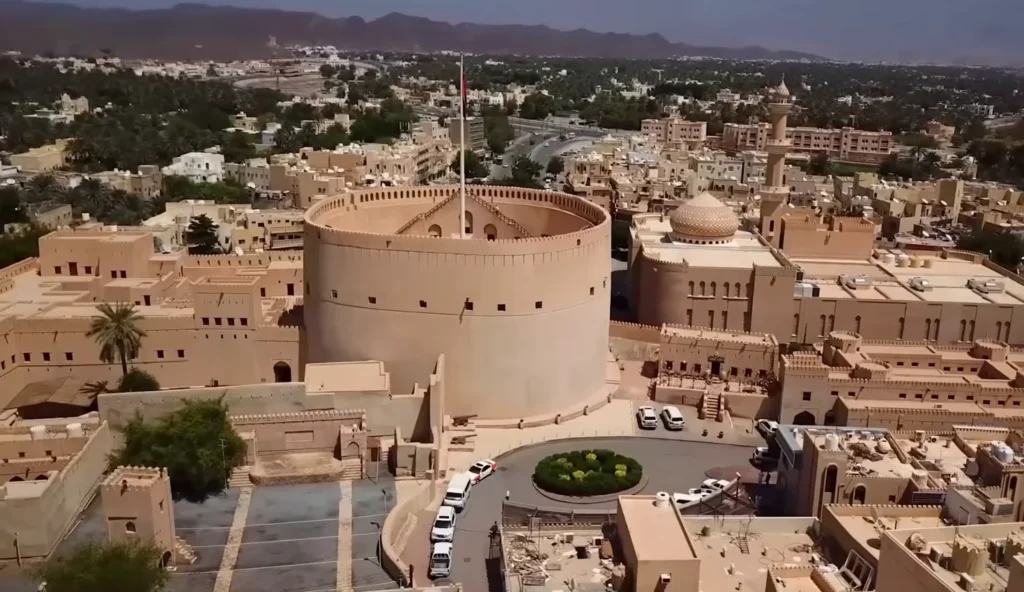
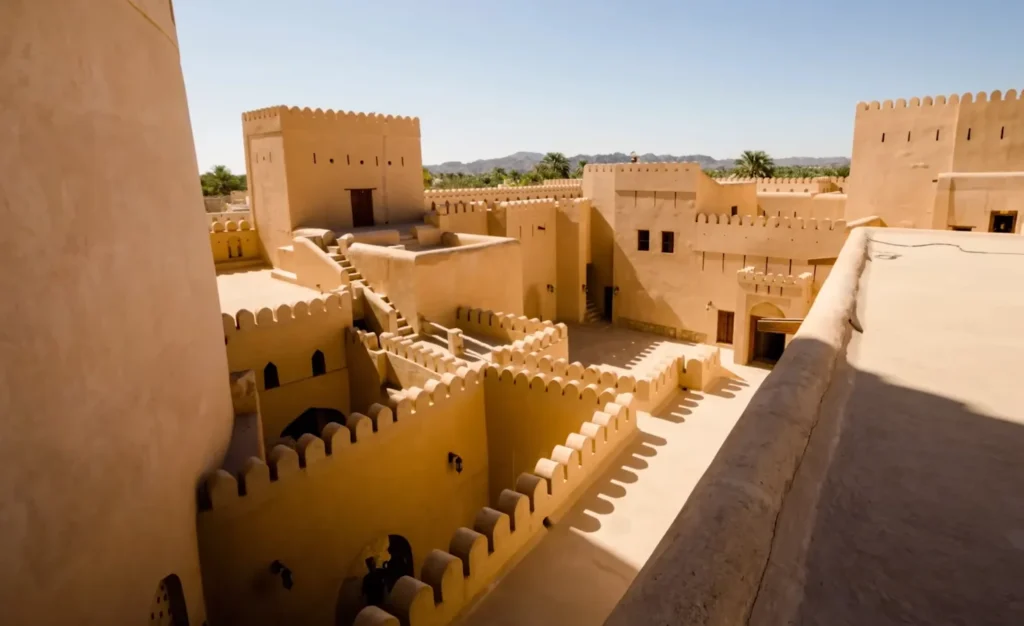
Nizwa Fort is the big draw here. It’s dominated by a massive cylindrical tower that was built in the 1650s and took 12 years to complete. The walls are seven meters thick in places designed to withstand cannon fire and sieges. I paid 5 rials to enter and spent about 90 minutes exploring.
You can climb to the top of the tower for views over the city and date palm plantations stretching toward the mountains. Inside, there are exhibits on Omani history, traditional weapons and the engineering of the fort’s defensive systems. They’ve done a good job restoring it without making it feel like a theme park.
Nizwa Souq sits right next to the fort. This is where you come for authentic Omani handicrafts silver khanjars (ceremonial daggers), hand-woven textiles, pottery and copper goods. Friday morning is the livestock market where Bedouins bring goats, sheep and cattle to sell. It’s chaos in the best way lots of noise, haggling, animals everywhere. I bought a small silver Omani coffee pot for 25 rials after negotiating down from 40. Same item would’ve cost 60+ rials in Muscat.
The souq also has a section dedicated to dates. Oman grows over 200 varieties of dates and vendors will let you sample before buying. I tried probably 20 different types before settling on khalas dates, which are soft, caramel-sweet and don’t need refrigeration. Bought two kilos for 8 rials.
Bahla Fort and the Pottery Town
Bahla Fort is about 40 km from Nizwa and was inscribed as a UNESCO World Heritage site in 1987. It’s massive one of Oman’s oldest forts with origins dating back to pre-Islamic times, though most of what you see today was built between the 12th and 15th centuries. UNESCO notes that the fort reflects the power of the Banu Nebhan tribe who dominated the area.
The fort underwent 15 years of restoration and reopened in 2012. Entry is 5 rials. The scale is impressive 12 km of walls surrounding the old town, with the fort as the centerpiece. Parts of the structure are crumbling, which gives it an authentic weathered look that newer restorations sometimes lack.
Bahla is also famous for pottery. There are workshops throughout the town where artisans still make traditional clay pots, water jugs and incense burners using techniques passed down for generations. I watched one potter throw a jug on a simple kick wheel, shaping it in about three minutes with his hands. No fancy equipment, just skill and repetition. You can buy pieces directly from workshops prices range from 5-30 rials depending on size and detail.
Jebel Akhdar: The Green Mountain
Jebel Akhdar is a plateau in the Hajar Mountains known for it’s terraced farms and cool climate. It sits at about 2,000 meters elevation and the temperature drops 10-15°C compared to the lowlands. In winter, it sometimes snows up here, which blows people’s minds when they think “Oman = desert.”
The area is famous for pomegranates, roses and stone fruits. I visited in late April when the rose harvest was happening. The roses are used to make rose water, which is huge in Omani culture used in cooking, perfumes and religious ceremonies. Watching workers collect petals early in the morning before the sun’s heat dissipates the oils was fascinating.
Access to Jebel Akhdar requires a 4×4 and a permit, which you get at a checkpoint on the access road. They check your vehicle if it’s not a 4×4, you’re not getting through. The road is steep with serious gradients that would destroy a regular car’s transmission.
There are hiking trails throughout the plateau, including a route connecting several villages through terraced farms. I did the Wakan Village trail, which took about three hours and passed through farms where locals grow wheat, garlic and fruit trees on narrow terraces carved into the mountainside centuries ago. The engineering is remarkable these terraces hold soil and manage water runoff without modern tools or machinery.
Accommodation on Jebel Akhdar is limited and expensive. Anantara and Alila both have luxury properties here (150-300+ rials per night). I stayed at a smaller guesthouse in Saiq called Sama Al Jabal for 65 rials including breakfast. Basic but clean, with killer views.
Other Forts Worth Your Time
Oman has over 500 forts and castles scattered across the country. I didn’t see them all (obviously), but here are the ones I made time for:
Jabrin Castle (about 50 km from Nizwa) is actually more palace than fort. Built in the 1670s, it’s remarkably well-preserved with painted ceilings, carved wooden doors and detailed stucco work. The interior rooms show how Omani nobility actually lived. Entry is 5 rials. Takes about an hour to see properly.
Rustaq Fort in the western Hajar Mountains is one of the largest in Oman. Parts of the structure date back to the pre-Islamic era, though it’s been rebuilt and expanded many times. The fort overlooks a large oasis and there are hot springs nearby (Ain Al Kasfa) where the water comes out at about 45°C. You can swim in cooled-down pools fed by the springs. Entry to the fort is 5 rials; the hot springs are free.
Al Hazm Fort near Rustaq was built in the early 1700s and shows more sophisticated defensive engineering hidden escape tunnels, murder holes in the ceilings, reinforced doors with iron spikes. It’s well-maintained but sees fewer tourists than Nizwa or Bahla. Entry is 3 rials.
Practical Information: What You Actually Need to Know
After three weeks on the ground, I figured out what actually matters for planning a trip here. Some of this you’ll find in guidebooks, but a lot of it only makes sense once you’re dealing with it in real time.
Money and Costs
Oman uses the Omani Rial (OMR), which is divided into 1,000 baisa. One rial equals about $2.60 USD, making it one of the stronger currencies in the world. This catches people off guard when you see something priced at 50 rials, that’s actually $130, not $50.
ATMs are everywhere in cities and most towns. They accept international cards (Visa, Mastercard) and withdrawal limits are usually around 200-300 rials per transaction. I used ATMs exclusively and never bothered with exchange offices the rates were worse and fees were higher.
Credit cards are widely accepted in hotels, restaurants and larger shops, but you’ll need cash for souqs, small local restaurants and paying for things like boat crossings or parking. I kept about 50-100 rials in cash on me most of the time.
Daily Budget Breakdown (based on my spending):
Budget Traveler:
- Accommodation: 15-25 rials/night (basic hotels, hostels).
- Food: 5-8 rials/day (local restaurants, street food).
- Transportation: 15-20 rials/day (rental car split between people, or buses).
- Activities: 5-10 rials/day (fort entries, basic tours).
- Total: 40-63 rials/day ($104-164)
Mid-Range Traveler (what I did):
- Accommodation: 35-65 rials/night (decent hotels, some splurges).
- Food: 10-15 rials/day (mix of local and tourist restaurants).
- Transportation: 25-30 rials/day (4×4 rental, gas).
- Activities: 15-25 rials/day (tours, diving, camping).
- Total: 85-135 rials/day ($221-351)
Luxury Traveler:
- Accommodation: 100-300+ rials/night (5-star resorts).
- Food: 25-40 rials/day (hotel restaurants, fine dining).
- Transportation: 40-60 rials/day (premium car rental, drivers).
- Activities: 40-80 rials/day (private tours, premium experiences).
- Total: 205-480+ rials/day ($533-1,248+)
Gas is cheap (0.19 rials/liter), highway tolls don’t exist and parking is usually free. My 4×4 rental cost me 22 rials per day for three weeks through a local company. International companies like Hertz and Budget were 35-45 rials/day for the same vehicle.
Getting Around: Transportation Deep Dive
I already mentioned renting a 4×4, but let me break down all the transportation options and what actually makes sense.
Rental Cars:
This is how most independent travelers see Oman. Public transportation exists but is limited and taxis get expensive quickly for longer distances. I rented through a local company called Muscat Cars (not affiliated, just worked well for me). The 4×4 cost 22 rials per day with full insurance. Picking it up and dropping it off was straightforward minimal paperwork, quick inspection and I was on the road in 20 minutes.
Your home country driver’s license works in Oman if it’s in English or has an English translation. Otherwise, get an International Driving Permit before you travel. Insurance is mandatory and I’d recommend full coverage dodging rocks on unpaved roads and navigating wadis creates opportunities for damage.
When You Actually Need a 4×4:
- Jebel Shams
- Jebel Akhdar
- Wahiba Sands
- Remote wadi exploration beyond the main pools
- Mountain villages on unpaved roads
- Any route marked “4×4 only” (they mean it)
When You Don’t Need a 4×4:
- Muscat and city driving
- Main highway routes (Muscat to Sur, Muscat to Nizwa, Muscat to Salalah)
- Wadi Bani Khalid
- Most coastal roads
- Fort and city tourism
If your itinerary is mostly cities and main attractions, rent a regular sedan and save money. If you’re doing mountain and desert exploration, get the 4×4. I split the difference rented a sedan for my first four days in Muscat (14 rials/day), then switched to a 4×4 for the rest of the trip.
Fuel stations are plentiful along major routes. I never felt like I was cutting it close on gas. Most stations are self-service with card payment. Some remote stations are cash-only, so keep small bills handy.
Buses:
Oman National Transport Company (ONTC/Mwasalat) runs intercity buses connecting major cities. Muscat to Nizwa costs about 3 rials and takes 2.5 hours. Muscat to Salalah is 12 rials and takes about 12 hours overnight. Buses are comfortable, air-conditioned and reliable, but schedules are limited usually one or two departures per day on most routes.
I took the bus once from Muscat to Nizwa just to see what it was like. Fine for budget travelers or if you’re not in a hurry, but you lose the flexibility to stop at random wadis or viewpoints. For serious exploration, you need your own vehicle.
Taxis:
City taxis don’t use meters consistently. Agree on a price before getting in. A ride across Muscat typically ran me 3-5 rials. From the airport to Mutrah was 10 rials. Drivers will often quote higher prices to tourists negotiate or walk away and find another taxi.
For longer distances, you can hire taxis for full days. I met a couple who hired a driver for a week to take them from Muscat to Salalah with stops along the way. They paid 80 rials per day including the driver’s accommodation. Not bad if you split it between multiple people and don’t want to drive yourself.
Domestic Flights:
Oman Air connects Muscat with Salalah (multiple daily flights), Khasab (daily) and Sohar (limited service). Flights are reasonably priced if you book in advance I found Muscat-Salalah for 45-65 rials depending on dates. Flying makes sense for Salalah given the distance. For shorter trips like Muscat to Nizwa, driving is easier and cheaper.
Final Thoughts: Was Oman Worth It?
Yeah, absolutely. This wasn’t just another stamp in the passport. Oman surprised me in ways that don’t happen often anymore after you’ve been traveling for years. The landscapes are legitimately stunning not “pretty for a desert” stunning, but world-class. The empty beaches, the wadis, the mountains all delivered.
What stuck with me most, though, was how welcoming people were. In Misfat Al Abriyeen, the guesthouse owner Ahmed spent two hours showing me around the village and explaining the irrigation system when he could’ve just checked me in and moved on. In the Wahiba Sands, a Bedouin family invited me into their tent for tea and dates even though we couldn’t communicate beyond basic gestures. At a small restaurant in Sur, the owner insisted on making me a special fish dish that wasn’t on the menu because “tourists don’t know our best food.”