
Europe does not do things half-way. It could be the final of the Champions League or the most sought-after club night in the world or even in front of the Mona Lisa with 8,999 strangers, but the continent offers something which really justifies the hype. This guide crosscuts six segments including stadiums, museums, opera houses, nightclubs, party venues and business summits. Ranked all, all relevant 2026.
Europe’s Biggest Sporting & Concert Titans
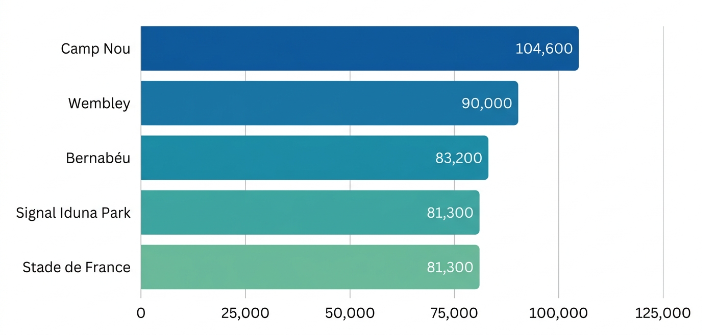
Camp Nou is back. Spotify Camp Nou in Barcelona has undergone a significant renovation and is regaining it’s status as the biggest stadium in Europe – 104,600 seats. It is not a football ground, but a little city that fills up on the match day.
Then there’s Wembley. London’s 90,000-capacity giant doesn’t just host football — it’s practically the final boss of the global concert touring circuit. The world’s longest single-span roof. Over 2 million fans expected through it’s gates in the summer concert season alone. Artists don’t just want to play Wembley. They need to.
| Venue | Location | Capacity |
| Spotify Camp Nou | Barcelona, Spain | 104,600 |
| Wembley Stadium | London, UK | 90,000 |
| Santiago Bernabéu | Madrid, Spain | 83,200 |
| Signal Iduna Park | Dortmund, Germany | 81,300 |
| Stade de France | Paris, France | 81,300 |
Santiago Bernabue is at 83,200 – the home of Real Madrid, recently renovated with an air-in air-out roof which has transformed it into a true multi-purpose facility all year long. Signal Iduna Park in Dortmund and the Stade de France in Paris are even on paper, 81,300 to 81,300, but anyone who has occupied the south stand at Dortmund, the much-deemed Yellow Wall, will tell you that the air there is of quite a different quality.
Beyond capacity numbers, IQ Magazine tracks the venues that actually deliver the best concert experience. Their elite European shortlist: Wembley, Berlin’s Olympiastadion, Stade de France, Stockholm’s Strawberry Arena, Warsaw’s PGE Narodowy, Milan’s San Siro and Dublin’s Croke Park. Different cities, different vibes — but all earning their spot based on more than just seat count.
The Louvre, La Scala & World Famous Landmarks
In 2025, almost 9 million individuals entered The Louvre. Nine million. It is the world’s most visited museum, occupying the heart of Paris as though it is entitled to it, which, architecturally speaking, it is. The Mona Lisa. Venus de Milo. Galleries miles long and which people never reckon on how difficult it is to walk.
| Venue | Location | Annual Visitors (Est.) |
| Louvre Museum | Paris, France | ~9 million |
| Vatican Museums | Vatican City | ~6.9 million |
| British Museum | London, UK | 6.4 million |
| Prado Museum | Madrid, Spain | ~3.6 million |
It attracts 6.9 million to the Vatican Museums and that is with the Sistine Chapel as the star attraction. The British Museum in London with 6.4 million is also one of the few places where you can view artifacts of almost all ancient civilizations in one roof, without paying any fee. The Prado of Madrid completes the four with 3.6 million but anyone who is serious about art will say that Velazquez alone is worth the flight.
Here we have one of the unexpected ones. The 2025 Travellers choice Awards by Tripadvisor ranked the Sagrada Familia as the one best rated attraction in the whole world. Not Europe alone–the world. A building which has been in construction since 1882 and is yet to be completed. Something nearly poetic about that. It outdid the Eiffel Tower (Paris) and the Colosseum (Rome) – both recognizable, both a little easier to grasp in a one-time visit.
The opera houses are worthy of discussion. The work of Rossini, Verdi and Puccini was premiered in Teatro alla Scala in Milan, the year it opened was 1778. It is not merely a historic building but it is also still active and is considered to be one of the best opera houses in operation today. The visual spectacle of the Palais Garnier, Paris, is accompanied by it’s Second Empire extravagance: chandeliers, gilding, the type of ceiling that causes one to lose track of the fact that there is a performance underway. And the Teatro di San Carlo in Naples, the opera house, was established in 1737 and is the oldest still operating opera house in Europe. Four decades older than La Scala.
In the music city category, the Omio 2025 survey placed London (100 points) and Paris (89.4) top in the list of best music-related destinations, including nightclubs, concert halls and the density of festivals. There is nothing much to be surprised at, but the distance between London and all the rest is worth mentioning.
Europe’s Highest-Rated Nightclubs & Group Party Spots
Ibiza has been called the clubbing capital of the world so many times it almost sounds cliché. Except the data keeps proving it right.
A single Spanish island received the first three places in the list of The International Nightlife Association of the 100 Best Clubs in the World in 2025. UNVRS scored #1 in the world – a new venue that also received the Most Innovative Nightlife Project of the year in the first year of operation. Hï Ibiza and Ushuaïa Ibiza are behind it, in the 2nd and 3rd positions respectively. The three of them worked under the same banner- The Night League of Ibiza. Three clubs that are among the best in the world, one company. It is a monopoly on the night life business around the world that is difficult to exaggerate.
| Rank | Club | Location |
| #1 | UNVRS | Ibiza, Spain |
| #2 | Hï Ibiza | Ibiza, Spain |
| #3 | Ushuaïa Ibiza | Ibiza, Spain |
| #4 | Bootshaus | Cologne, Germany |
| — | Various | Madrid, Spain |
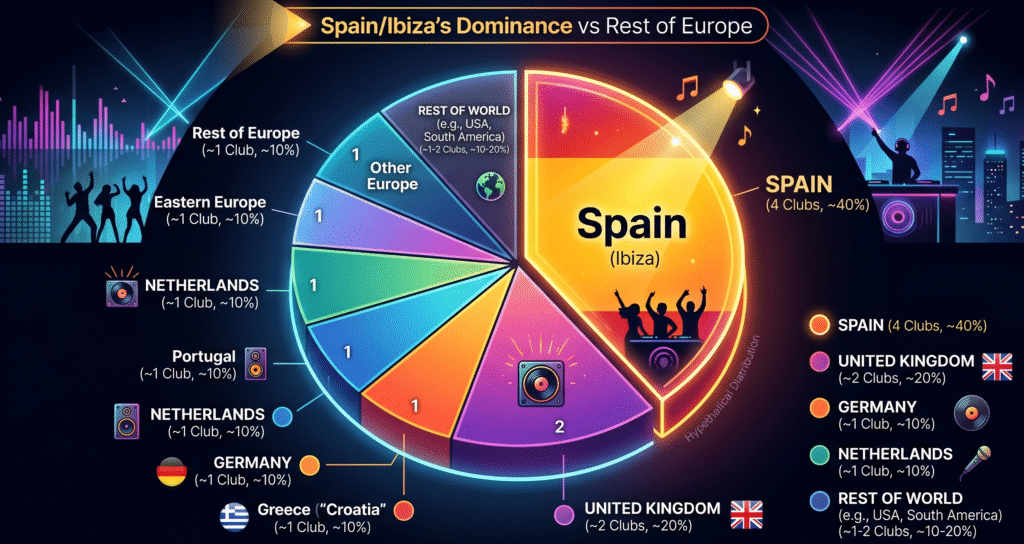
But mainland Europe isn’t just sitting back. Bootshaus in Cologne grabbed #4 globally — a windowless techno bunker that’s become a genuine pilgrimage site for electronic music fans across Germany and beyond. Different energy to Ibiza entirely. Smaller, rawer, harder.
Then there’s Madrid. The 2025 ranking by Time Out was named the best nightlife city in Europe, not because of one mega-club, but because of it’s sheer number and diversity of after-dark culture. Late suppers which run into early mornings. Flamenco bars side by side with rooftop cocktail bars, side by side with underground clubs. It is only after midnight that the city comes into full play and that either sounds exhausting or idyllic, depending on your preference.
Stag Dos, Hen Parties & Group Getaways
Quick explainer for anyone unfamiliar — a “Stag Do” (or Stag Party) is the UK and Irish term for a bachelor party and a “Hen Do” is the equivalent for brides-to-be. These are typically group trips, often abroad, built around nightlife, activities and general chaos.
In 2026, Benidorm has already shot up to the top in stag and hen parties in Europe. That is a turn about – Dublin and Amsterdam have had that discussion a long time. The rising of Benidorm reduced to three factors, good sunshine and cheap group accommodation and infrastructure that has been virtually designed with large party group in mind. It is not attempting to be classy. It has the slightest idea of what it is.
The full top 10 for group party destinations in 2026:
- 🥇 Benidorm
- 🥈 Albufeira
- 🥉 Dublin
- Tenerife
- Marbella
- Barcelona
- Ibiza
- Lisbon
- Amsterdam
- Budapest
Worth flagging — Dublin and Amsterdam dropping from their traditional top spots doesn’t mean they’ve declined. Both still make the list. Benidorm just got better at the specific game of catering to groups and the price gap matters more post-2023 inflation.
Where the World Meets: Europe’s Top Summit & Business Venues
Corporate events, conferences, trade show– this is another type of most popular. Not so much about the atmosphere, but more about the infrastructure, the flight connections, the hotel stock and the type of convention centre capable of accommodating 10,000 delegates and not allow everything to go bad.
Cvent 2024 Top Meeting Destinations in Europe listed the top cities across Europe in terms of large scale business events:
- 🥇 London — Consistently #1. Heathrow alone connects to more destinations than any other European hub and the city’s hotel and venue capacity is unmatched.
- 🥈 Barcelona — Top meeting destination and home to the world’s #1 tourist attraction. Delegates don’t exactly complain about being sent here.
- 🥉 Madrid — Third for business, first for nightlife. The combination makes it a strong choice for events that want a social programme to match.
- Berlin (#4) — Europe’s startup and tech conference capital. Affordable compared to London or Paris, with a creative edge that attracts younger industries.
- Lisbon (#5) — The breakout city of the last decade for both tourism and tech events. WebSummit called it home for years for a reason.
- Amsterdam (#6), Paris (#7), Rome (#8), Frankfurt (#9), Munich (#10)
The pattern here is hard to miss. London, Paris, Barcelona — they show up in almost every category across this entire guide. Stadiums, museums, nightlife, business. That kind of versatility is what separates a world city from just a popular one.
Madrid is quietly making the same argument. Top 3 for business, #1 for nightlife, third-largest stadium on the list. No single headline moment, but it keeps placing.
Planning Your Visit: Quick Comparison of Season vs. Venue Type
Timing a Europe trip around venues is genuinely underrated as a planning strategy. Most people pick a city then figure out what’s open. Flip that around and the trip gets a lot better.
Here’s the honest breakdown:
| Season | Best Venue Types | Top Cities |
| Summer (Jun–Aug) | Stadiums, Nightclubs, Outdoor Festivals | Ibiza, Barcelona, London |
| Spring (Mar–May) | Museums, Landmarks, Opera Houses | Paris, Rome, Vienna |
| Autumn (Sep–Nov) | Business Summits, Mixed Culture | London, Berlin, Lisbon |
| Winter (Dec–Feb) | Opera, Indoor Arenas, Museums | Milan, Naples, Madrid |
Summer is Ibiza’s season, obviously. But it’s also when Wembley earns it’s reputation — 2 million concert fans in a single summer season means roughly one massive show every few days from June through August. Camp Nou’s redevelopment makes Barcelona a genuine double-header destination: stadium by weekend, Sagrada Família and the Prado’s neighbour city by day.
Spring is quieter at the Louvre — relatively speaking, 9 million annual visitors never really thins out, but March and April sit below the summer spike. Better lighting for the landmarks too. The Eiffel Tower at dusk in April without August’s shoulder-to-shoulder crowds is a different experience entirely.
Autumn is conference season. London, Berlin, Lisbon — that whole Cvent top 10 comes alive September through November. Lisbon in October specifically has become a tech industry pilgrimage. Cooler weather, serious programming and still warm enough to sit outside.
Winter drives you indoors and this in Europe translates to opera houses and old concert halls. The season of Teatro alla Scala opens on December 7th each year – the day of Sant’Ambrogio, patron saint of Milan. It is a cultural experience by itself. Operating all winter long in Naples, the Teatro di San Carlo is the oldest currently operating opera house in Europe and at the time that all other operas have shut the curtains.
Madrid is the one city that genuinely doesn’t have an off-season. Nightlife runs year-round, the Prado never closes, Bernabéu hosts events across the calendar and the business summit calendar keeps filling up regardless of month. If forced to pick one European city that delivers across every season — Madrid makes a strong case, even if it rarely gets the top billing.
One practical note: opera houses and historic theatres book out months ahead. The Palais Garnier in Paris, La Scala, San Carlo — these aren’t walk-in venues. If that’s on the list, plan backwards from the performance date, not forwards from the travel date.
Frequently Asked Questions About European Venues
After it’s redevelopment, Spotify Camp Nou in Barcelona takes the top spot at 104,600 capacity — making it the largest stadium on the continent. Wembley follows at 90,000, which in the concert world effectively functions as it’s own category given how central it is to global touring circuits.
It dominates the rankings — three of the world’s top four clubs are on the island according to the International Nightlife Association’s 2025 list. But “only place” is a stretch. Bootshaus in Cologne sits at #4 globally and runs a completely different kind of experience — tighter, more underground, technically uncompromising. And Time Out crowned Madrid the best nightlife city in Europe for 2025, which is about variety and culture rather than any single venue. Ibiza leads. It doesn’t have a monopoly.
The Louvre in Paris — and it’s not particularly close. Nearly 9 million visitors in 2025 puts it ahead of the Vatican Museums (6.9 million) and the British Museum (6.4 million). That said, TripAdvisor’s 2025 Travellers’ Choice Awards named Sagrada Família in Barcelona the single top-rated attraction in the entire world — which is a different metric, rating over raw footfall, but worth knowing if you’re choosing between the two.