
Three months back I was of the opinion that I understood the meaning of remote. Then I was rowing along blackwater canals in the Yasuní National Park of Ecuador, where I heard nothing save the sound of the paddle of my guide in the water, and the sound of something very large breaking the canopy over our heads.
The Amazon is not merely a site to visit, but an all-inclusive sensory experience that will make you wonder everything you knew about the experience of wildlife.
Getting There: The Journey into the Wild Heart of Yasunani
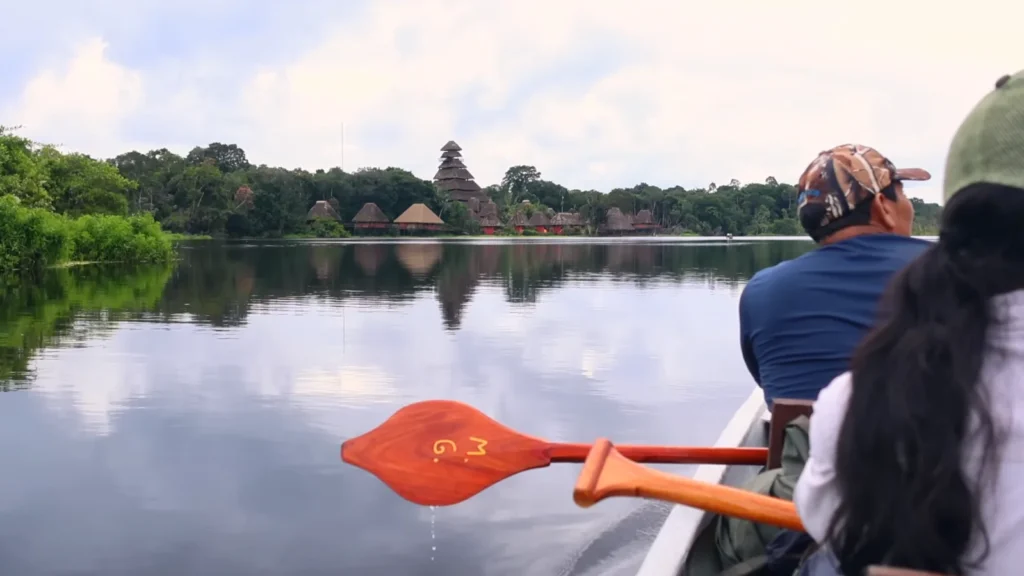
The easiest part of my adventure began with what the locals term the easy part; a 40 minutes flight between Quito and Coca, then two hours on a motorized canoe down the Napo river. Easy? My back still disagrees.
This is what no one tells you about traveling by river in the Amazon: it is hypnotic. The monotone of the engine, the interminable green walls going by, the surfacing of pink dolphins at intervals. I was doing my best to process the sheer scale of it all by just staring during most of that ride.
The Napo Wildlife Center Adventure
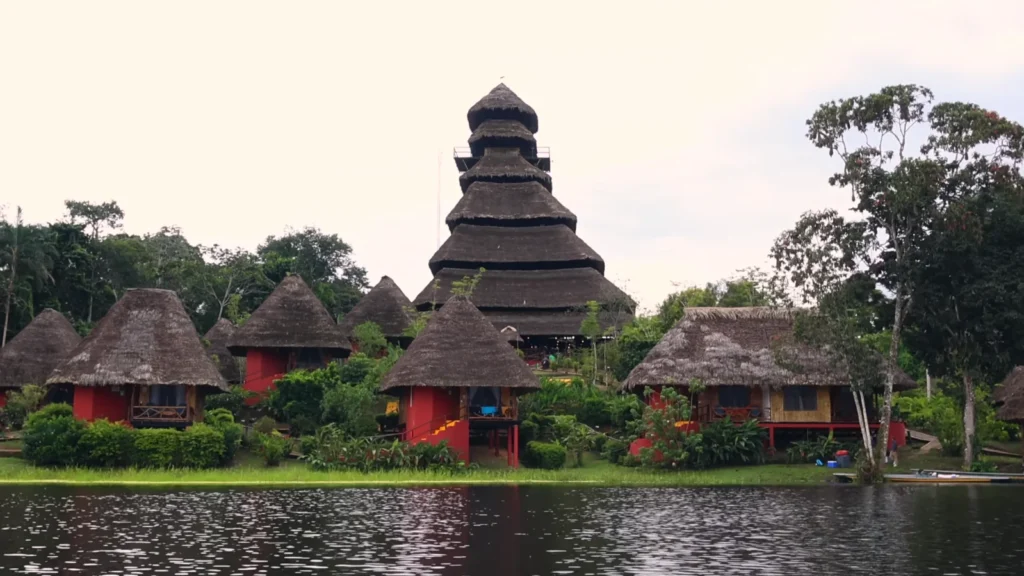
I will say when the unique tower of the Napo Wildlife Center really appeared in sight, I was glad. Two days travelling will do that. However, it is no ordinary eco-lodge, but it is run and owned by the local community called Añangu Kichwa, and this is what is important.
What Makes Napo Wildlife Center Special:
- Community-owned and operated since 1993.
- 100% of profits stay within the indigenous community.
- 21,000 hectares of pristine rainforest protection.
- Zero hunting or fishing within their territory.
The accommodations? These thatched-roof cabanas that you see reflected in the lagoon are not mere show stuff. They are surprisingly comfortable, but do not anticipate Wi-Fi. What, by the way, just what you need.
Animals to See to Change Your Mind
The Parrot Clay Lick: Nature in its Everyday Show
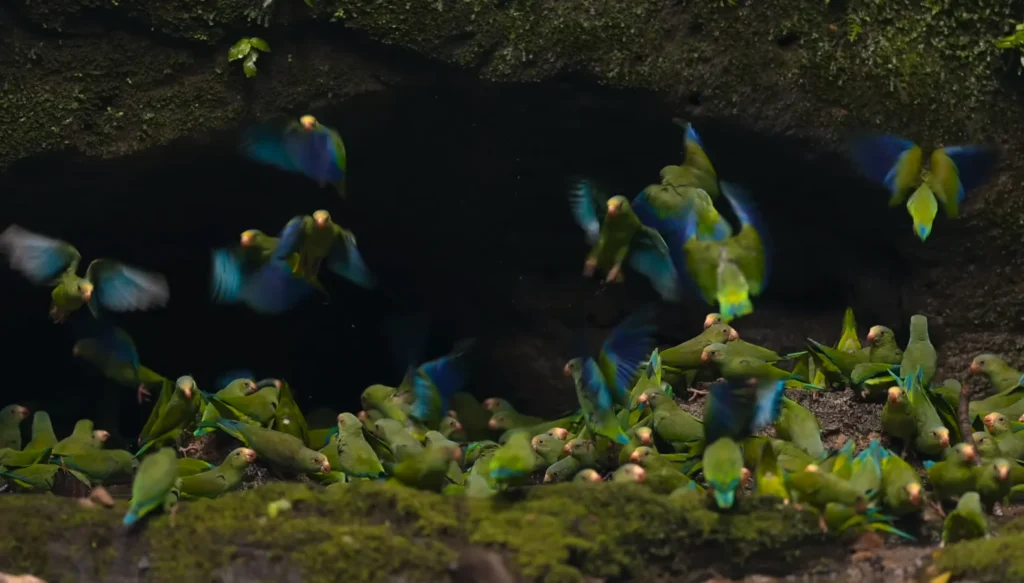
Something magical occurs at the clay lick every morning at approximately 7 AM. It begins with the silence of some parrots in the forest. Though, in a moment, the whole cliff face bursts out in the color and disorder.
I am referring to hundreds of parrots. There are green ones and blue ones and red-headed ones, all of them falling down on this one clay bank like it is Black Friday at Best Buy. It is amazing how noisy it is–imagine all the parrots you had ever heard in a pet shop, and times it by fifty.
Species I Identified During My Visit:
- Blue-headed parrots (the most numerous)
- Yellow-crowned amazons
- Red-lored amazons
- Mealy amazons
- Orange-winged amazons
My guide, Carlos, clarified that they consume the clay as a source of the minerals that neutralizes the poisons of their diet rich in fruits. It is logical, but it is like observing some kind of ancient ritual.
The best part? They’re completely wild. Foodless, no artificial attractant. Bare naked behavior that has been going on here centuries.
Monkeys: The Circus Artists of the Amazon
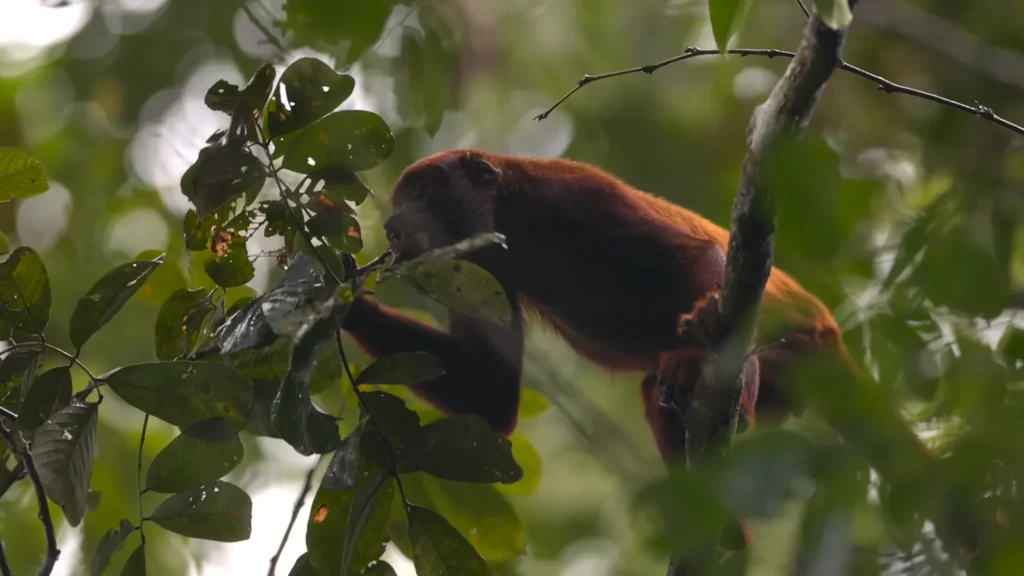
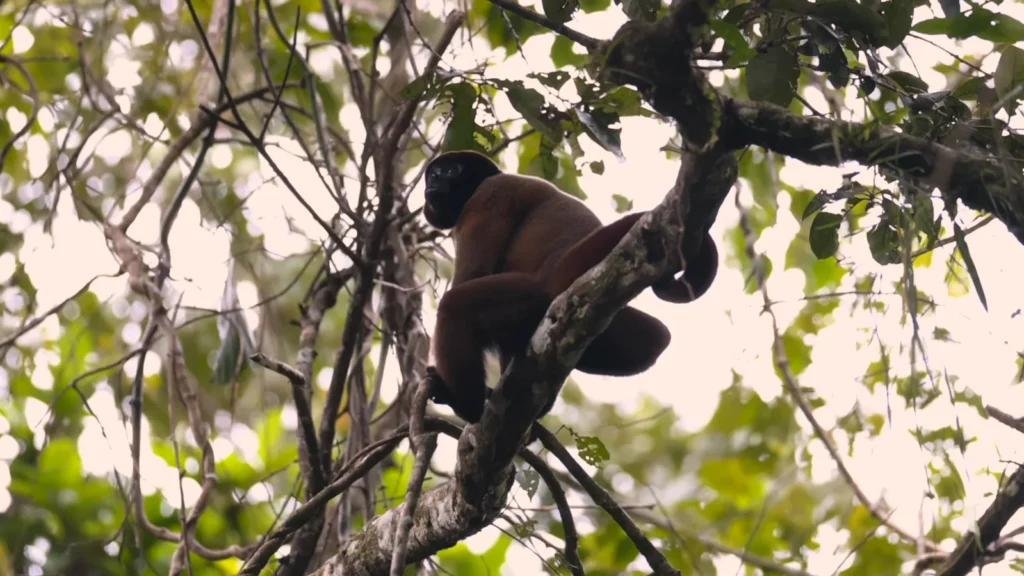
You have never listened to a red howler monkey first getting up, and you lack one of the most frightening clocks in nature. These men are audible at least 3 miles and they sound as though they are in Jurassic Park.
One whole afternoon I followed a band of woolly monkeys through the canopy. These are not the little, fast monkeys you would think they would be–woolly monkeys are heavy, slow climbers with faces that are almost human. Their ability to spend time on the branches 100 feet above the ground without even breaking a sweat makes the sessions in your own climbing gym look small.
Primate Species in Yasuní National Park:
| Species | Best Viewing Time | Difficulty to Spot | Behavior Notes |
| Red Howler Monkey | Early morning | Easy (you’ll hear them first) | Territorial, loud calls |
| Woolly Monkey | Mid-morning | Moderate | Curious, may observe humans |
| Squirrel Monkey | All day | Difficult | Fast-moving, travel in large groups |
| White-fronted Capuchin | Morning/evening | Moderate | Tool users, highly intelligent |
Sloths: Lords of the Slack Life
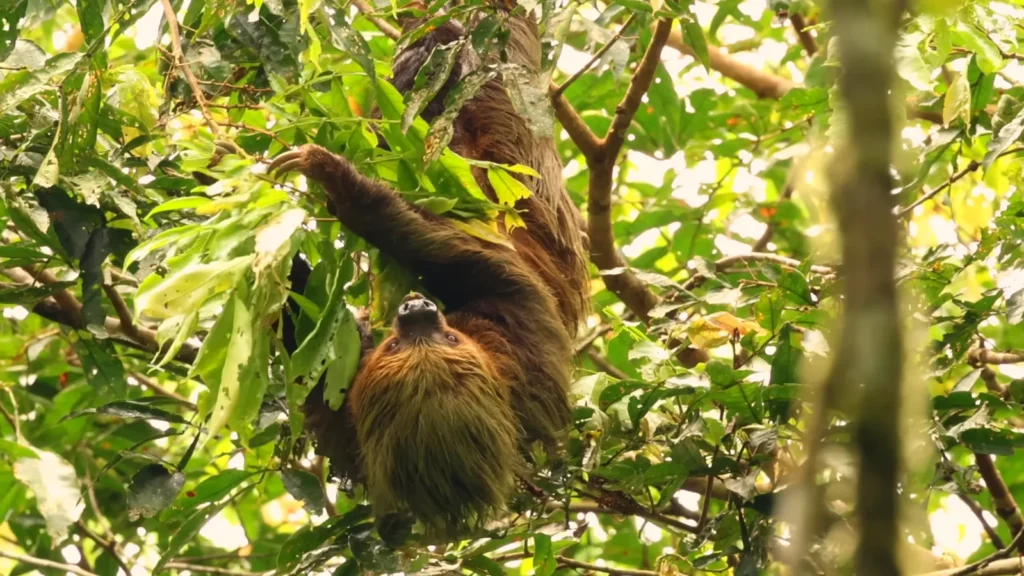
It is as rare to see a sloth in the wild as it is to see living meditation. The sloth, shown, was a three-toed one, and had been suspended in the same cecropia-tree three days when I took the photograph. Three days. In the same position.
The most interesting fact that Carlos mentioned is that sloths defecate only once a week, and they always descend to the level of the ground to do it. You could be so attached to bathroom etiquette that you would risk losing your life by not climbing down out of safety to go and use the proper toilet.
River Otters: The Fun-loving Souls of the Amazon
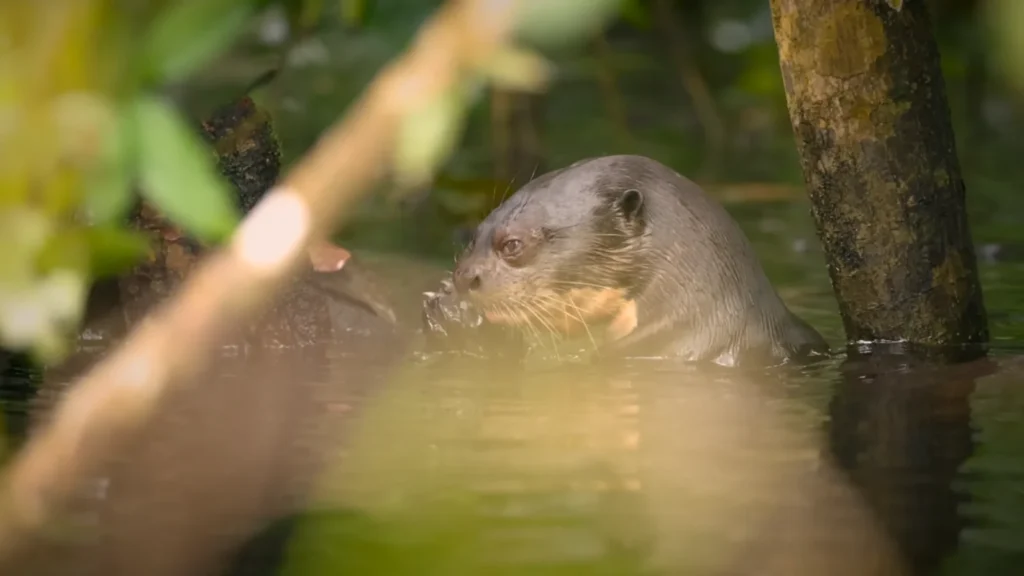
The most attractive predators of the Amazon are giant river otters, though, they are also very elusive. Two whole days were devoted to searching riverbanks when at last one day I saw a group of people in an early morning canoe trip.
These are no ordinary otters, they measure 6 feet long and larger than the character of most dogs. The family I met was as inquisitive of us as we were of them, and the heads appeared in and out like popcorn to have a closer look at the bizarre human beings in the canoe.
Conservation Reality Check: The giant river otters are endangered species that are rated by the IUCN Red List. Fur hunting led to their crash in the 1970s and the destruction of their habitat remains a threat to recovery efforts.
Travelling through the Liquid Highways of Amazon
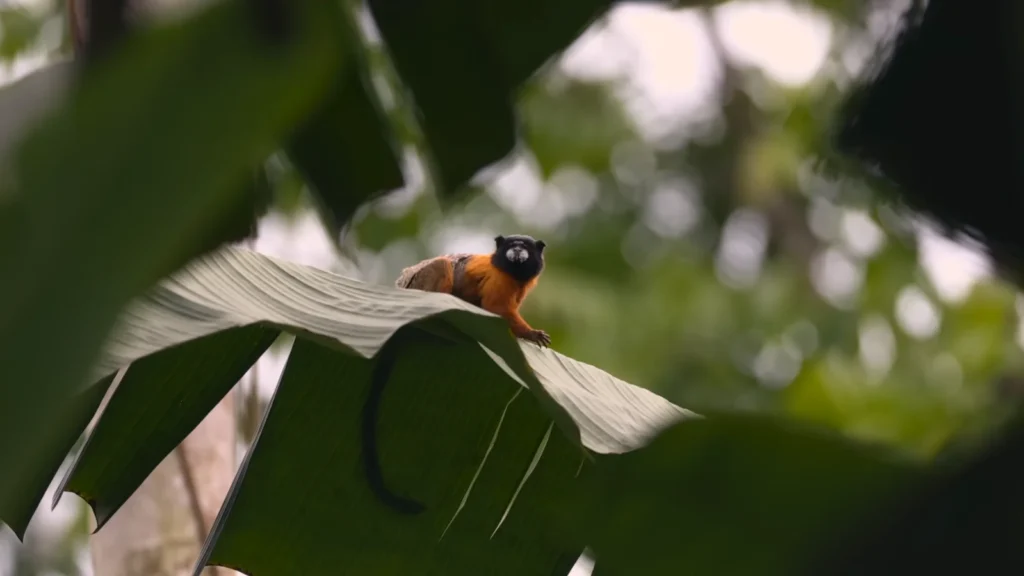
As soon as you forsake the great river, the actual adventure starts. See those little tributaries that are winding up into the wood? That is where the magic occurs–and is where things do get really difficult.
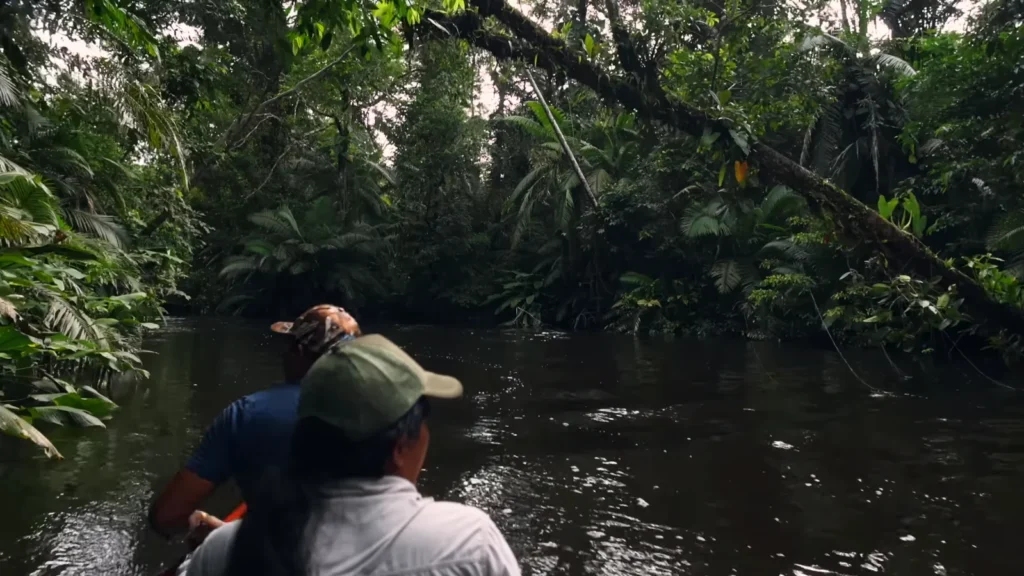
My initial run on a side channel saw me almost drown in the water, face first. These are not the streams of the gentle kind. Obstacle course Fallen trees, shift the level of water, and your GPS has been rendered as useful as a chocolate teapot.
When I inquired about maps Carlos laughed. It is all different every season, he said, indicating apparently terra firma which, in fact, was floating drift. You do not learn by reading, but learning by doing.
The Water: Skills You Never Knew You Needed
Essential Amazon Navigation Signs:
- Water color changes – Dark water often means deeper channels.
- Bird activity – Kingfishers and herons indicate fish, which means deeper water.
- Floating debris patterns – Shows current direction and obstacles ahead.
- Canopy gaps – Often mark where tributaries join.
I learned this the hard way after spending 20 minutes paddling up what turned out to be a dead-end channel. The locals call these quebradas – small streams that look navigable but peter out into swamp.
The Art of Silent Movement
Wildlife watching in the Amazon requires a completely different approach than safaris or other nature trips. Forget about engine noise – everything here is about stealth and patience.
We’d paddle for hours in complete silence, Carlos occasionally pointing out movement I’d completely missed. A flash of orange 80 feet up? Probably a woolly monkey. Ripples near that fallen log? Could be a caiman or an otter.
The frustrating part? The average wildlife viewing time is between 30 seconds and the next moment whatever you were viewing is once more lost into the forest. No second chances, no may we get nearer.
Conservation Reality: What Is Tourism In actuality doing?
The Community-Based Conservation in Action
The Napo Wildlife Center is an example of a project that sounds far too good to be true but is in fact effective: conservation-based tourism. Since 1993 when the Añangu community took control of their 21, 000 hectares, hunting has been practically eliminated on their territory.
Conservation Results Since 1993:
- No cases of zero poaching over the last 5 years.
- The number of large mammals grew by 240% in population.
- 15 locals are now certified naturalist guides.
- Community development projects made 2.3 million dollars.
However, here is what made me believe, this is not a mere marketing of eco-tourism: I got to see Jorge who once worked as a hunter, but now leads tourists. I killed around 200 a year before the center, I said to me flatly. Now I can demonstrate people 50 species in a week and not damage anything.
The Economics of the Non-Cutting-Down of Trees
Comparison of Annual Income/per hectare:
| Activity | Income per Hectare | Sustainability |
| Sustainable logging | $150-300 | 15-20 years |
| Cattle ranching | $200-400 | 5-10 years |
| Ecotourism | $800-1200 | Indefinite |
The math is compelling, but implementation isn’t simple. It took the Añangu community over a decade to build the infrastructure and training needed to make tourism work.
Threats That Tourism Can’t Solve
Let’s be honest about limitations. While community tourism protects this specific area, Yasuní National Park faces massive external pressures. Oil exploration, illegal logging, and agricultural expansion continue just outside protected boundaries.
During my visit, we could actually hear chainsaws from illegal logging operations across the river. The contrast was surreal – pristine forest on one side, destruction on the other, separated by maybe 200 meters of water.
Practical Preparation: What They Don’t Tell You
Packing for Reality, Not Instagram
Forget the khaki safari outfit fantasy. Amazon travel is hot, humid, and muddy – always muddy.
Essential Items Nobody Mentions:
- Duct tape – Fixes everything from torn rain gear to broken paddle handles.
- Dry bags within dry bags – Single waterproofing fails constantly.
- Backup phone charger – Solar panels work poorly under thick canopy.
- Anti-fungal powder – Everything gets damp, including you.
- Zip-lock bags – Protect everything electronic, twice.
I learned about the dual dry bag system after my camera got soaked during a sudden afternoon storm. The “waterproof” bag? Not so much.
Physical Reality Check
Amazon exploration isn’t a gentle nature walk. Daily distances in canoes can reach 15-20 kilometers, often against current. Add high humidity, intense sun, and you’re looking at genuine physical challenge.
My fitness level? I run marathons. I was still exhausted after day two.
Realistic Fitness Requirements:
- Cardiovascular endurance – 4-6 hours of paddling daily.
- Core strength – Constant balance adjustments in canoes.
- Heat tolerance – 85-95°F with 90%+ humidity.
- Mental resilience – Long days with basic facilities.
When to Visit: Timing Matters More Than You Think
Dry Season (June-November):
- Pros: Easier river navigation, better wildlife concentrations.
- Cons: Higher temperatures, more insects, crowded clay licks.
Wet Season (December-May):
- Pros: Fewer tourists, lush vegetation, easier canopy access.
- Cons: Difficult navigation, frequent rain, some areas inaccessible.
I was there towards the end of dry season (October), which meant terrific sightseeing of wildlife, but it also meant that I shared the parrot clay lick with three other parties. The birds did not appear to mind, however, photo opportunities became competitive.
Cultural Preparation: Respect Goes Both Ways
The Añangu community practices are traditional and do not exclude the tourism operations. It is not only polite to learn some Kichwa greetings and learn about local customs, but it is essential to change your experience.
Carlos told me that it was bad omen to stare right at wildlife. Rather, directions are signaled by slight movements of the chin by the locals. This might seem insignificant, but this kind of approach did in fact lead to a better rate of spotting.
Last Word: The Amazon will disprove all your conception about nature tourism. It is painful, unpredictable and not worth missing a moment of muddy and exhausting moments. Just don’t expect it to be easy.