
My three-week trip to Los Angeles made me come to one definite conclusion: this city is the one that breaks all the stereotypes and at the same time represents them all. I had already visited more than 50 countries, thinking that I knew the meaning of urban sprawl. LA proved me wrong.
The place where I observed something amazing was the moment that my plane landed at LAX. Neighborhoods, miles long, were running towards mountains in the distance, no central point, simply communities spilling into one another as watercolors bleeding on canvas. It was not going to be a normal city break.
Downtown Los Angeles: Sports Culture vs. Urban Grime
Arriving at downtown was like getting into two films at the same time. The financial district, with it’s shiny towers overshadows some of the dirtiest streets that I have ever seen in America. But sports? The heart of LA really beats there.
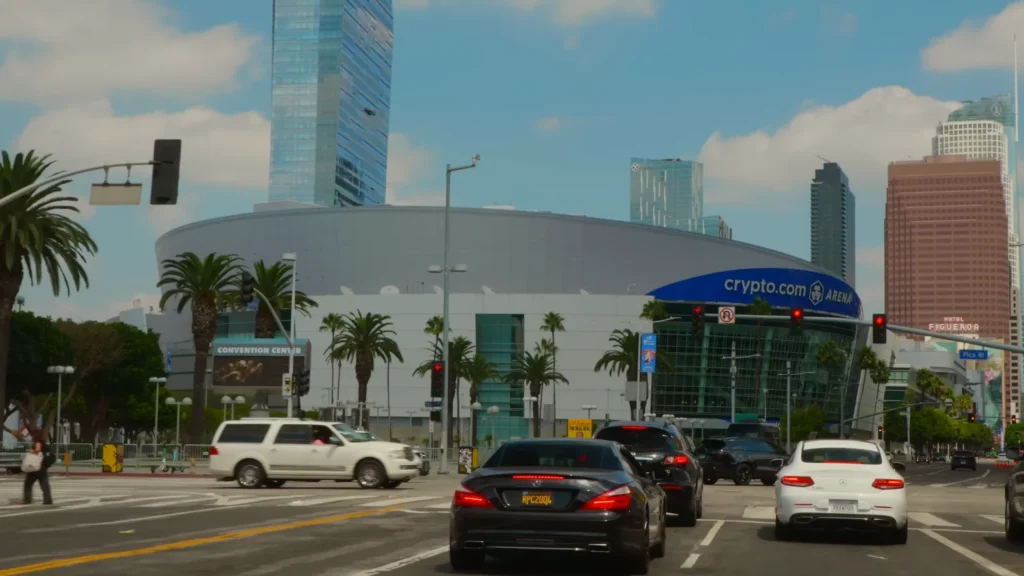
I was standing on the streets outside the Crypto.com Arena on a game night and could see thousands of people in Lakers uniforms. The energy was infectious. It is not another stadium but the living room of LA as celebrities occupy the courtside seats and ordinary people in the East LA entertain with cheers matching those of celebrities. It immediately occurred to me that the palm trees are fluttering in the face of the glass towers, the brutalist style of the Convention Center and it’s rivalry with the modern high-rises.
The Dodger Stadium Experience.
But Dodger Stadium? Pure Los Angeles poetry.
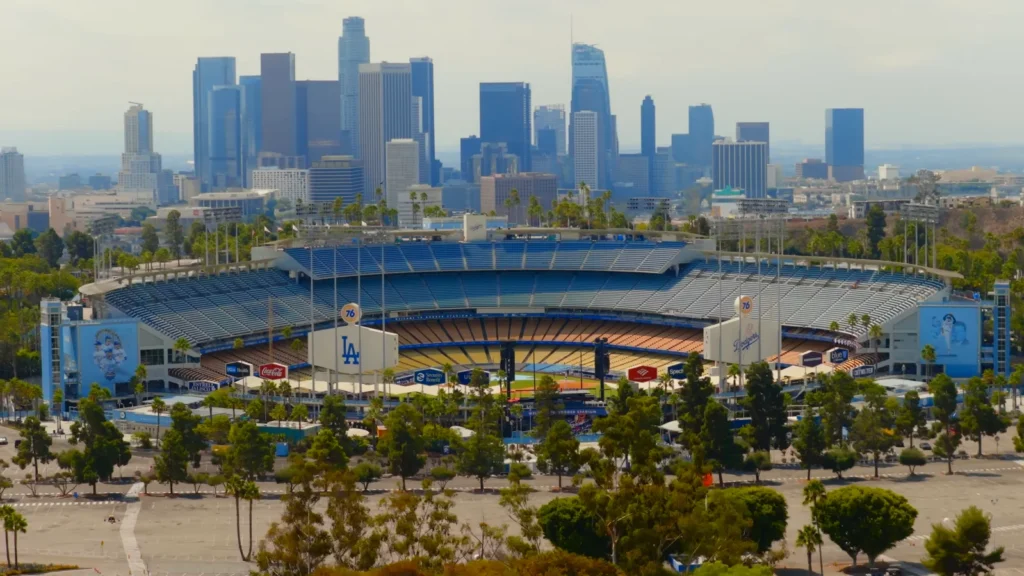
My tour of the stadium was on a Tuesday afternoon when it was vacant. I was taken on a tour of the complicated history of the Chavez Ravine by a lifelong Angeleno called Maria. This skyline of downtown, she said, seeming to be pointing at it, looks like a stadium that has suddenly emerged. But this was in place of displaced families. It’s beautiful and tragic.”
The skyline of downtown is the perfect backdrop to this, having been seen through the lens of the upper deck, the city spread in all directions without end. That perception is pushed out during games by a blue cap sea but in the few quiet moments you realize how big LA is. The LA Tourism Board estimates that on an annual basis, the Dodgers games are attended by over 3 million people yet these figures do not reflect the importance of the culture.
Key Downtown Sports Venues:
- Crypto.com Arena: Home to Lakers, Clippers, Kings.
- Dodger Stadium: Third-oldest MLB ballpark still in use.
- Banc of California Stadium: LAFC’s soccer fortress.
- Microsoft Theater: Live entertainment venue.
Beverly Hills: Beyond the 90210 Fantasy
Every travel writer visits Beverly Hills. Most focus on the shopping, the excess, the celebrity homes hidden behind gates. I discovered something different: a city that takes it’s image seriously while winking at it’s own absurdity.
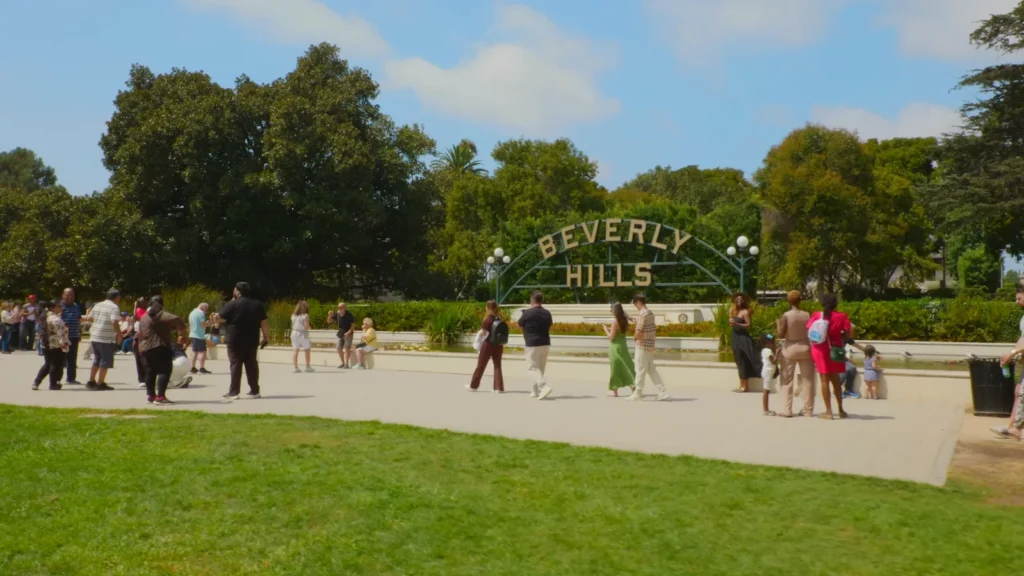
There are always large crowds around the Beverly Hills sign. Family members in Ohio take pictures and influencers hold lavish shoots. Here I sat an hour people-watching, with notebook in my hand. One of the Mexican grandmothers in Mexico City informed her granddaughter that this is the place where one can find dreams. It was a teenager who was complaining to her mom about the simple photo possibilities near. Both views were equally valid.
Rodeo Drive Reality Check
As I strolled along Rodeo Drive one Wednesday 2 PM, I was surprised to see that it is actually very small. Three blocks of luxury retail which create more mythology than any other small country.
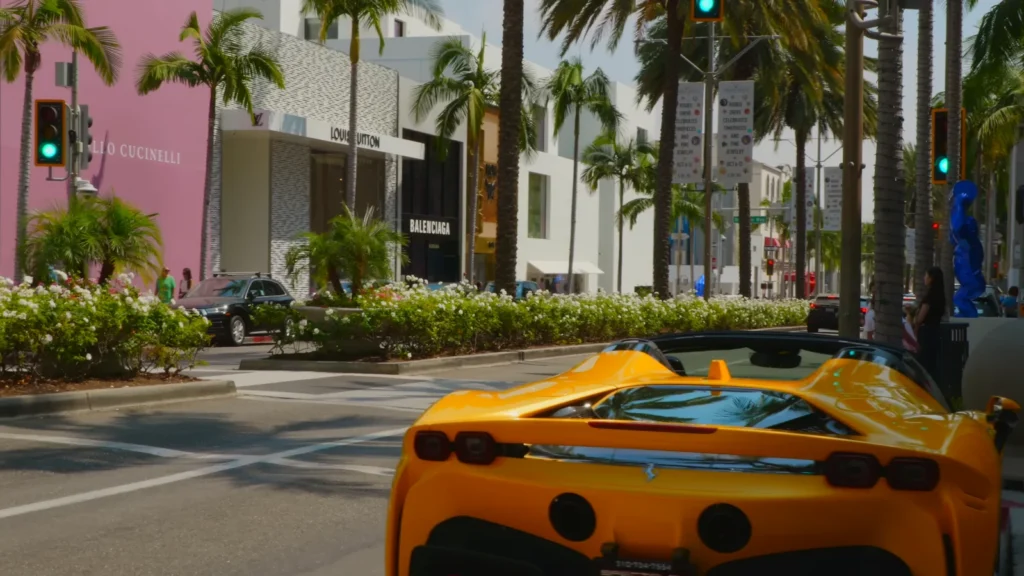
The orange Lamborghini parked outside of Louis Vuitton was not an accident, but performance art. It was content created by a young man, Marcus, who was the owner of the same. It is expected, people expect it here, I explained as I adjusted my phone to get the right angle. I am only giving them their money as they came to see me.
However, go one block to the east or west and Beverly Hills is distressingly homely. Streets with trees, simple houses (compared to the neighbors), dog walkers and strollers. The fantasy is there but it is packed into these small commercial blocks serving as a place where people are supposed to consume and take photos.
Beverly Hills Shopping Districts:
- Rodeo Drive: Ultra-luxury flagship stores.
- Canon Drive: More accessible boutiques.
- Beverly Drive: Local cafes and services.
- Robertson Boulevard: Trendy restaurants and shops.
According to the Beverly Hills Conference and Visitors Bureau, 75 percent of the visitors to the Rodeo Drive are international shoppers, hence the performative nature.
The Chinatown: The Most Real Cultural experience in LA
Following the glamour created in Beverly Hills, Chinatown seemed like it was a secret. It is not the sanitized tourism business you would get in other cities, it is laboring families, real business and cultural practices that exist whether there are visitors or not.
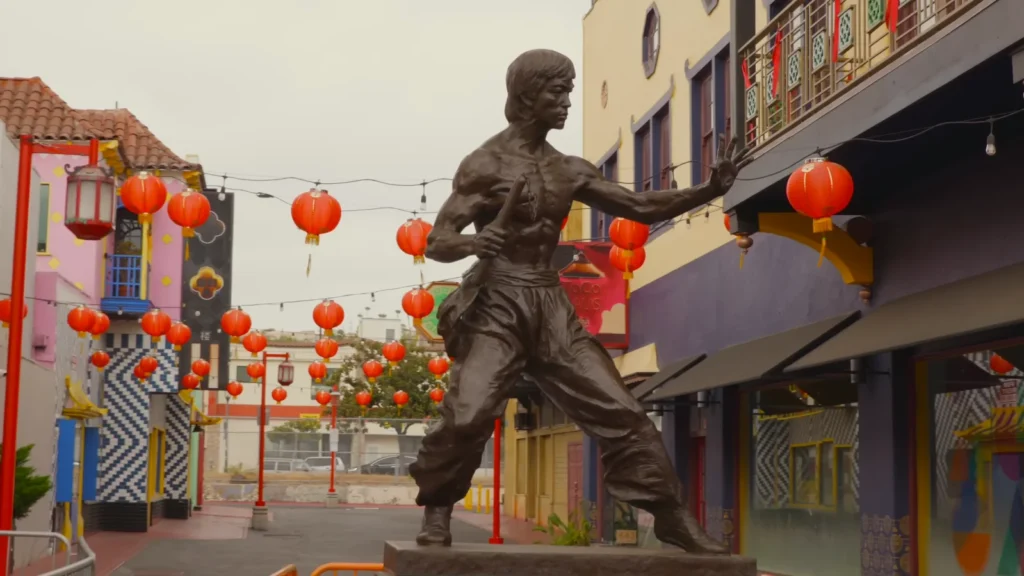
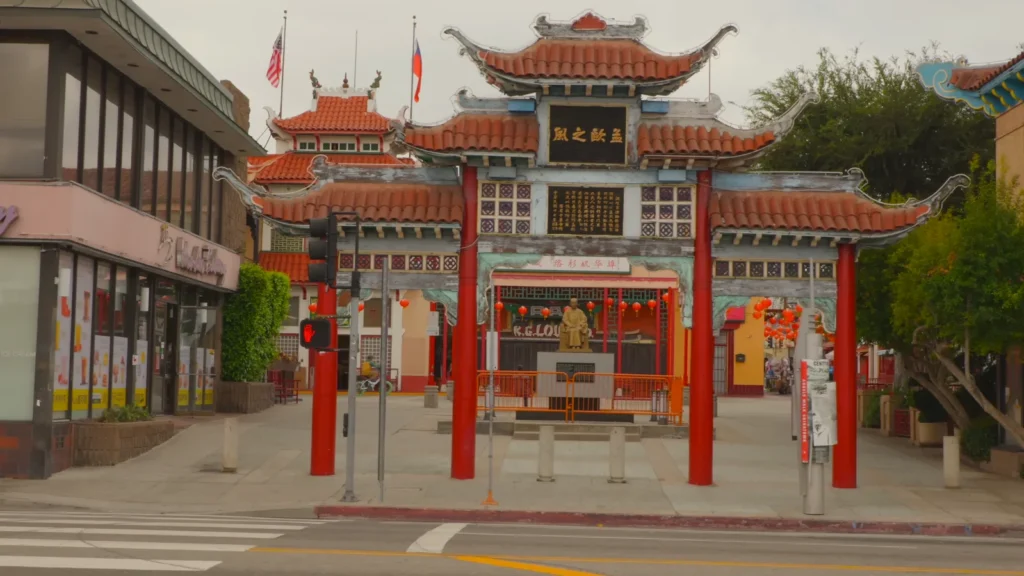
The Bruce Lee statue is where Central Plaza is grounded, however, the real story is the details surrounding it. Old guys who play xiangqi in the shade, children running amongst the red lanterns, as their parents go to buy groceries, the air filled with the aroma of real dim sum in the restaurants which do not even bother to have their menus translated.
Architecture That Tells Stories
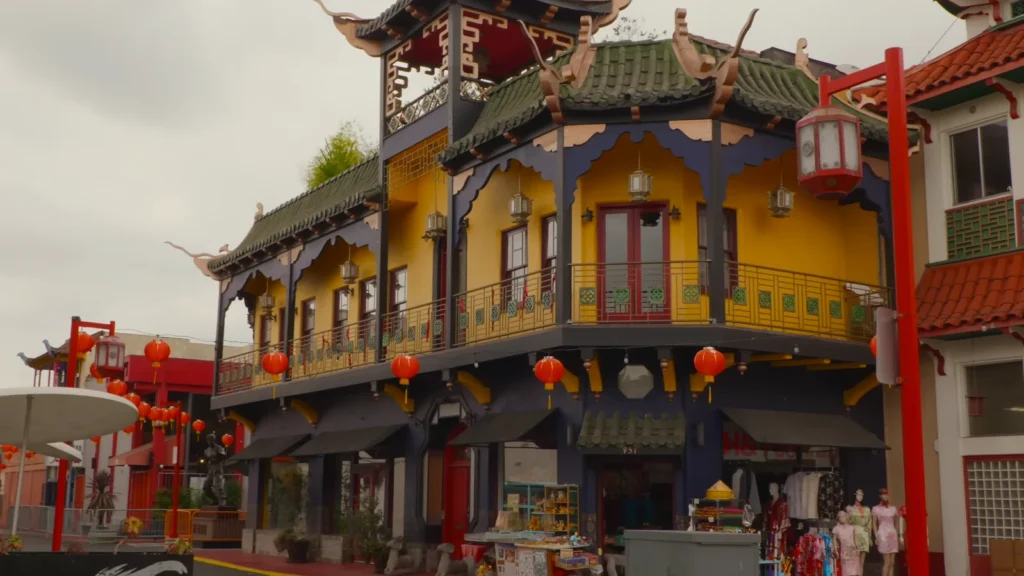
I took three hours to capture the architecture- curved roof line, painted dragons, the wise take on traditional Chinese architecture to suit earthquake needs in the Southern California. A very old woman who has resided in the neighborhood, Mrs. Chen, described how these buildings have been rebuilt following the urban renewal that has almost wiped out the original Chinatown.
That was our first restaurant, which was in 1975, she said, indicating a building with elaborate balcony decorations. We had recreated the whole place to look like China, but it is actually LA architecture in Chinese clothes.
The shopping corridor reveals layers of LA’s immigrant experience:
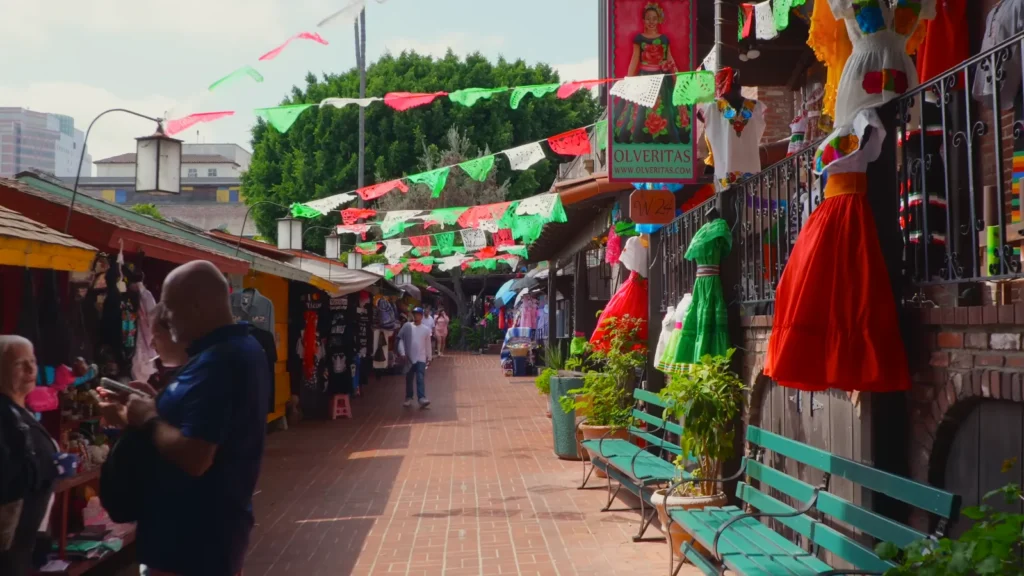
Those papel picado decorations strung overhead? They represent LA’s Mexican community claiming space in traditionally Chinese territory. The vendors selling everything from jade bracelets to Lakers jerseys create this beautiful cultural collision that exists nowhere else.
Chinatown Cultural Highlights:
- Central Plaza: Historic heart with traditional architecture.
- Philippe’s: Home of the French dip sandwich (disputed).
- Chinese American Museum: Immigration history exhibits.
- Dragon Gate: Ceremonial entrance on North Broadway.
Hollywood Boulevard: The Tourist Trap that Works
It was a sociological experiment going down Hollywood Boulevard. It should be terrible in every aspect: packed streets, rude street entertainers, high prices on everything. But somehow it presents exactly what millions of visitors desire, condensed Hollywood mythology on walkable blocks.
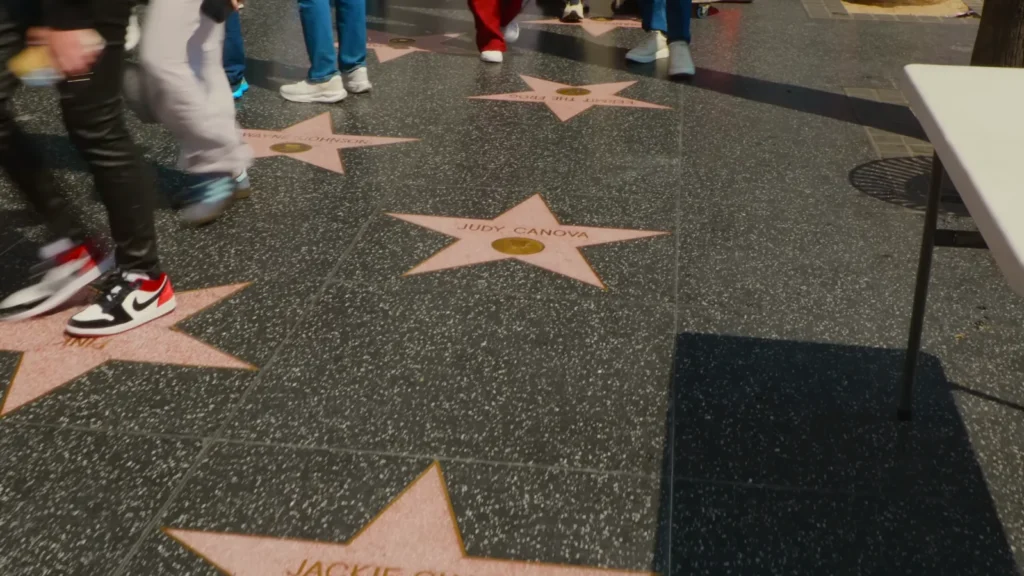
The Walk of Fame makes clear the relationship that LA has with fame in it’s purest expression. The star of Judy Garland trampled by Nike sneakers, people pushing past without even seeing her–these bronze symbols in the working sidewalks are being used as a decorative manhole cover. Five minutes later I counted seventeen individuals who were literally standing on the star of Marilyn Monroe. Nobody seemed to care.
But that’s the genius of it. Fame here is not an asset or safeguarded, but it is literally pavement, a part of the city. The Hollywood Chamber of Commerce has more than 2,700 stars, which they add approximately every year, but they specifically put them in places where people physically pass.
The Chinese Theater Experience at TCL
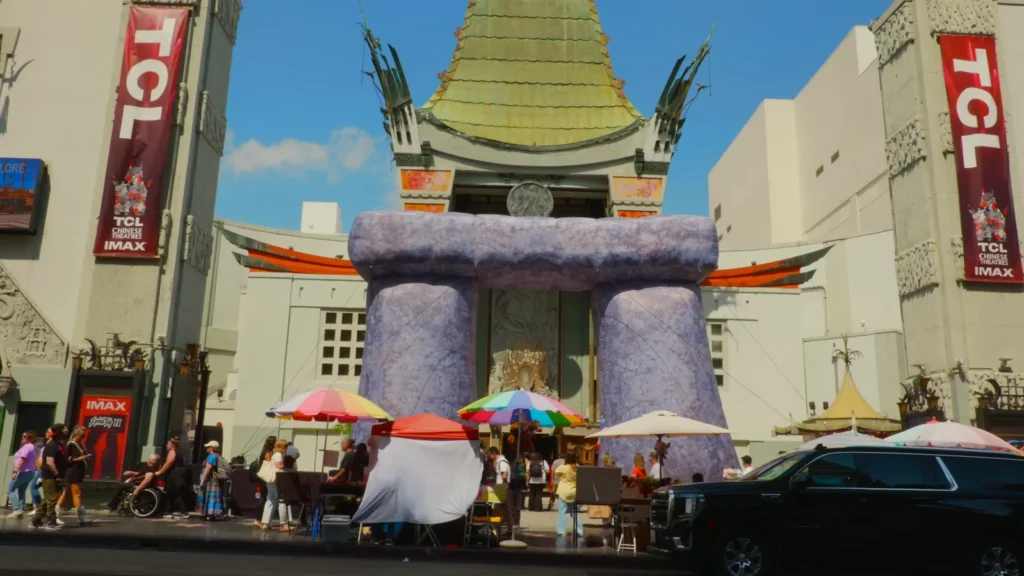
The TCL Chinese Theater (which the locals continue to refer to as Grauman) is evidence that not all tourism attractions are special. I did come when it seemed like they were preparing a red carpet–this is why there were umbrellas and crowd barriers in my picture–but I was informed that it was merely Tuesday afternoon preparation of a high-budget movie release.
The hand and footprint ceremony concept seems gimmicky until you realize it’s cultural impact. Standing where countless premieres happened, I watched tourists from six different countries trying to match their hands to celebrity prints. A Japanese family spent twenty minutes finding all the Marvel stars. Two teenagers from Brazil live-streamed their visit to followers back home.
“This theater made Hollywood,” explained James, a tour guide who’s worked the area for fifteen years. “Before this, movies were just entertainment. Sid Grauman turned them into events.”
Hollywood & Highland: Controlled Chaos
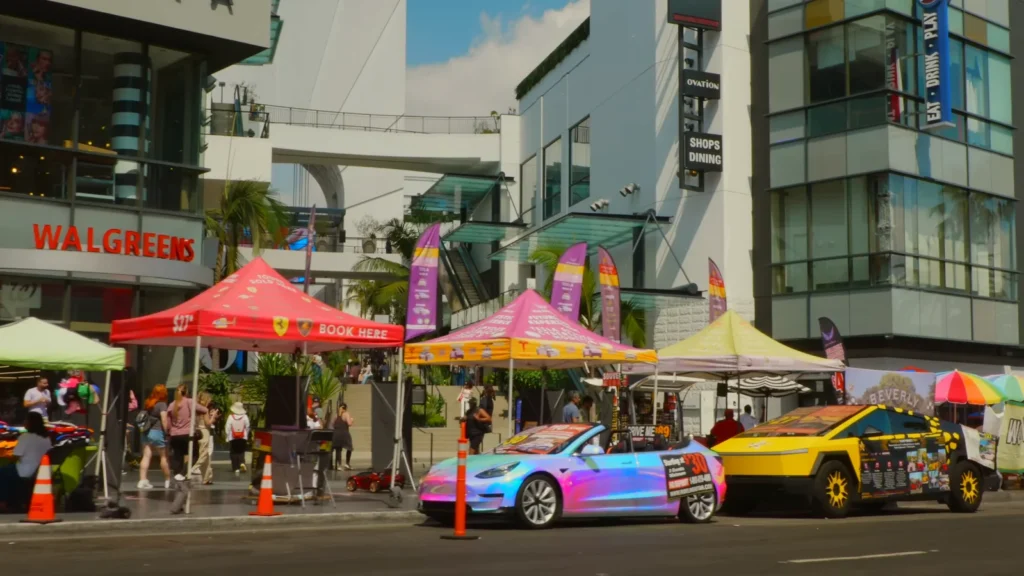
The Hollywood & Highland shopping complex embodies modern LA perfectly: corporate architecture trying to contain organic street culture. Those colorful vendor tents, the iridescent-wrapped car, the mix of chain stores and independent hustlers—it’s capitalism and creativity colliding in real time.
I spent two hours documenting the vendors. Maria sells custom T-shirts from Guatemala while her teenage son practices saxophone nearby. Jerome, a local artist, creates portrait sketches for tourists but also sells his original LA street art. The Walgreens anchoring this chaos sells everything from aspirin to “I ❤️ Hollywood” keychains.
Hollywood Tourist Essentials:
- Walk of Fame: 2,700+ stars along Hollywood Boulevard.
- TCL Chinese Theater: Celebrity hand/footprints since 1927.
- Hollywood Sign: Best viewed from Griffith Observatory.
- Hollywood Museum: Four floors of entertainment history.
Santa Monica: Where LA Meets the Ocean
After days inland, reaching Santa Monica felt like finally understanding why 4 million people choose to live in this desert. The Pacific Ocean changes everything—the air, the light, the entire city’s energy.
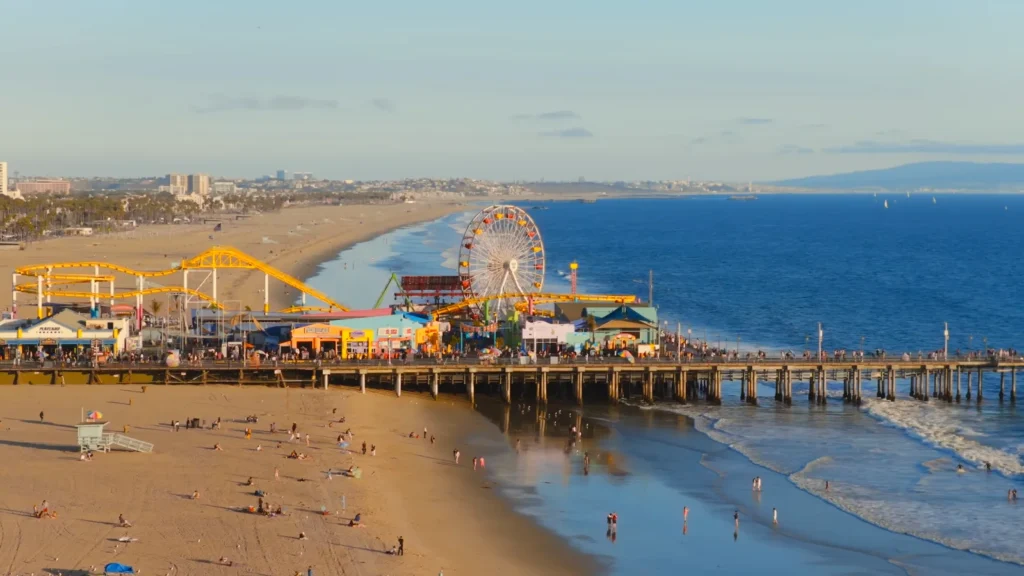
It was not until I was standing on the Santa Monica beach during sunset and the Pacific stretched towards Hawaii before I understood the attractiveness of LA. It is not the city of another American, but the western extremity of a continent, where the migration tendencies, which started on the East Coast, are exhausted because of the lack of other migrating points.
Pacific Pier: Carnival Monetizes California Dreaming
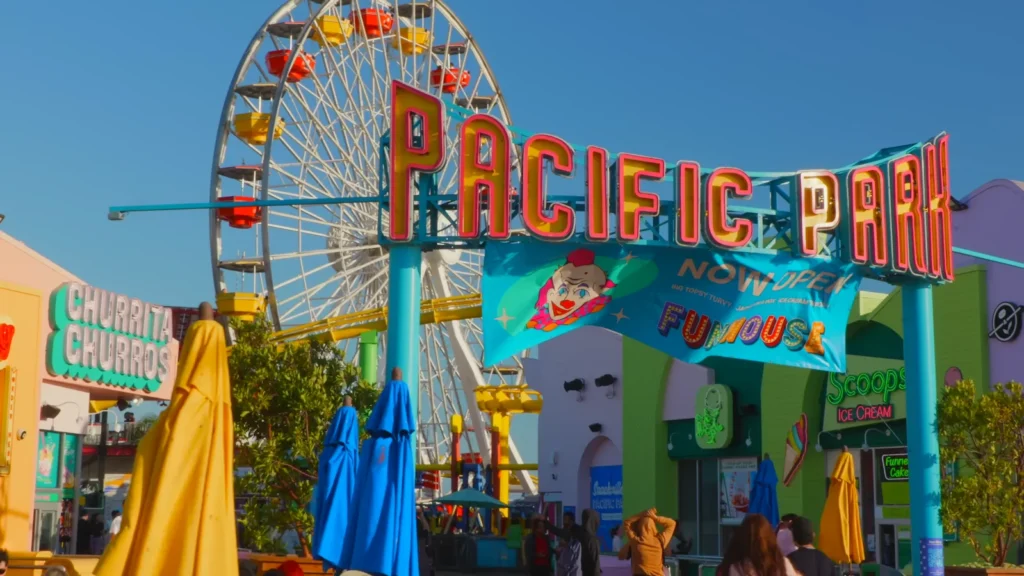
The Santa Monica Pier is providing California utopia. The yellow roller coaster, the Pacific Wheel whipping against blue sky, families all over the world enjoying their first bite of Southern California beach culture, it is artificial happiness, but somehow it feels natural.
I was on the Ferris wheel two times, one daytime and another time it was after sunset. The panoramic view of the city creates the illusion of the impossible scale of LA that the beaches of Malibu extend to the Palos Verdes Peninsula, the city spreads inland until it collides with mountains. By night, we can also make rivers of light out of the same views toward the invisible horizons.
It is the carnival spirit of the pier that everybody goes to see: the celebrity families who are trying to fit in, tourists who have never seen the ocean before and are on vacation in the midwest of the USA, teenagers on a date, old couples who have been here since their childhood. According to Santa Monica Tourism, there are 9 million visitors every year and the statistics of this kind of tourism do not reflect the emotional effect.
The Santa Monica Beach Activities:
- Original Muscle Beach: Outdoor gym where bodybuilding began.
- Santa Monica Pier Aquarium: Small but focused on local marine life.
- Third Street Promenade: Pedestrian shopping and dining.
- Venice Beach: Bohemian boardwalk culture (1 mile south).
Griffith Observatory: LA’s Best Free Experience
Every guidebook mentions Griffith Observatory, usually focusing on it’s Hollywood Sign views. But the observatory itself—perched on Mount Hollywood like a Art Deco spaceship—offers something more valuable: perspective on LA’s human scale.
Arriving mid-afternoon on a Tuesday, I found families picnicking on the lawn while their kids ran between the building and the city viewpoints. The white dome against clear blue sky creates this perfect California postcard, but it’s the democratization of science that impressed me most.
Inside, the exhibits explain light pollution using LA as a case study. The planetarium shows films about space exploration while the city sprawls below. It’s free education with million-dollar views, exactly what public institutions should provide.
The Real LA Views
The geography of LA is finally comprehended through the perspectives of the observatory. The San Fernando Valley is extending north, the towers forming downtown, the western border formed by the Pacific Ocean. On a clear day you can see all the way through the mountains to the sea–some 60 miles of urban growth.
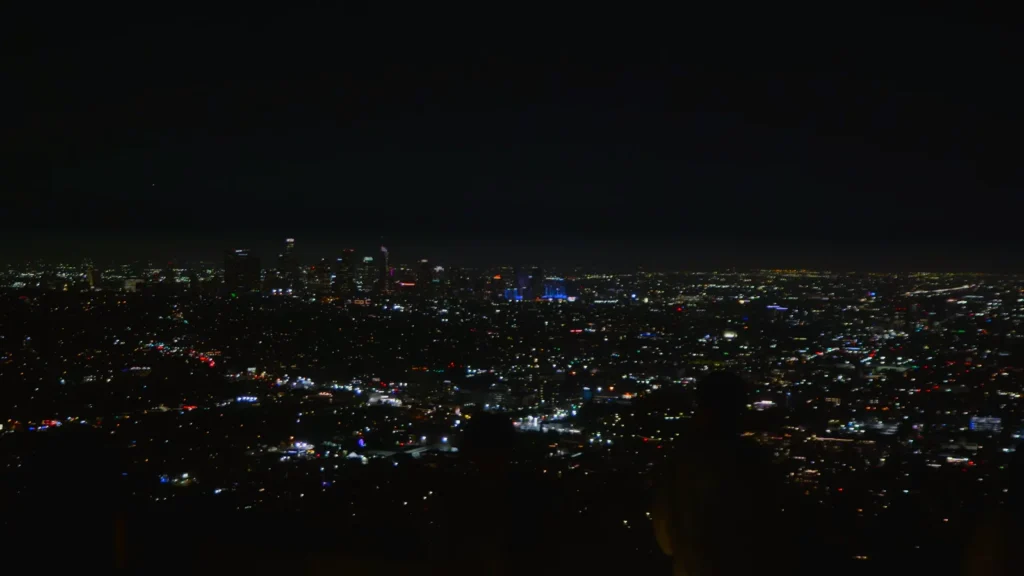
The experience is totally different in the night. The shape of the city is uncovered in those millions of lights: the square grid of central LA, the wavy lines of the streets that run along canyon lines, the glowing lines of the big highways. It is breathtaking and magnificent at the same time.
A middle-aged man in his sixties, who was visiting, Robert, stood beside me and did not utter a word during twenty minutes. At last he remarked, “I never knew how large this place was. None either, until I had seen it up above.
Getting Around: Transportation Reality and Angels flight in LA
The association of Los Angeles with transport is the whole story. It is a car-based city, with a public transit that is not characterizing the experience. But there is some transportation which is attraction.
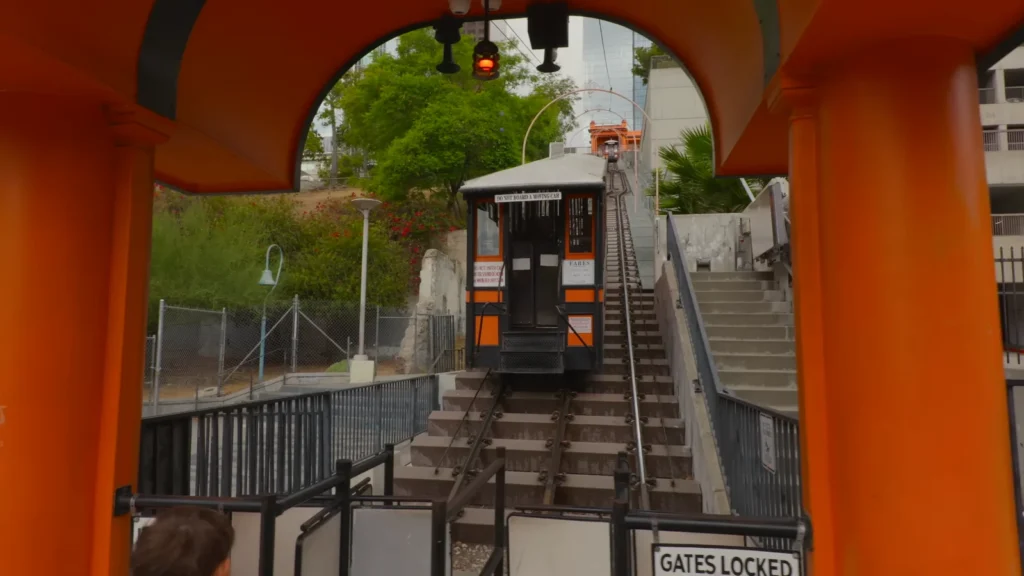
The small funicular called Angels Flight that runs between Hill Street and Grand Avenue has a distance of only 298 feet that can be covered in a one minutes period. It is actually a form of public transportation, 75 cents a ride, but it serves as a kind of historical experience as well. During two days, I rode it six times: three times taking pictures of it in various perspectives and three times conversing with the other riders.
The railway operator, a chatty local named Dennis, explained it’s significance: “This thing opened in 1901. It’s moved more people than any railway in the world—over 100 million rides. Most went less than 300 feet.”
LA’s Real Transportation Network
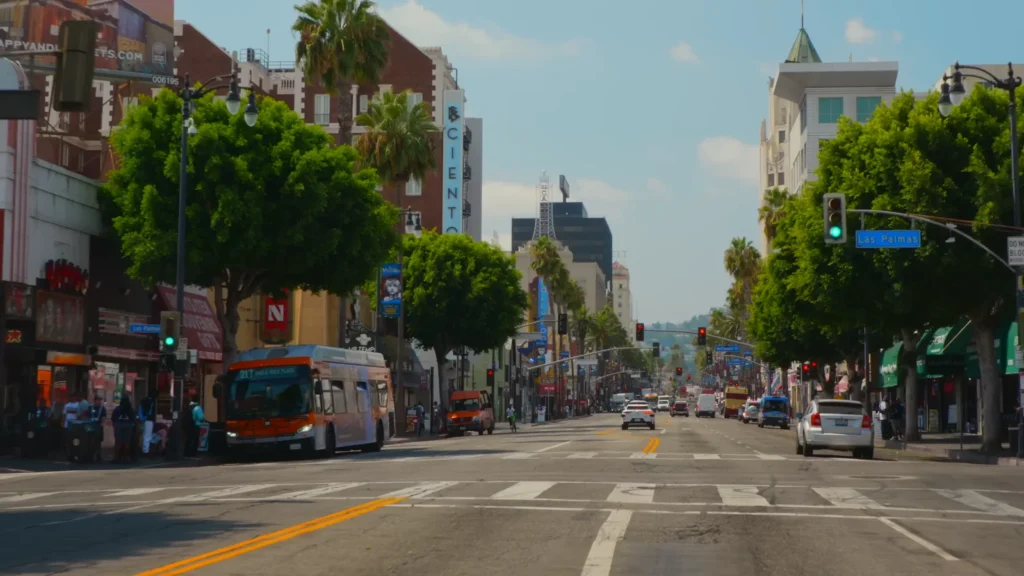
This image depicts real LA: broad avenues, palm trees that bring shade, medium traffic during a working a-saturday afternoon. The city is a place that you know the rhythms. Rush hour implies freeway avoidance between 7 AM and 9 AM and 4 PM and 7 PM. Parking will cost actual money in tourist locations, but it will be free in residential zones.
I used combination strategies with three weeks renting a car to go to the beach and mountains, ridesharing to nighttime places, Metro rail to see the places around downtown and walking to focus neighborhood such as Chinatown or Santa Monica.
LA Transportation Tips:
- Metro Rail: Clean, safe, limited coverage.
- Rideshare: Expensive but convenient.
- Rental Car: Essential for comprehensive exploration.
- Walking: Possible within specific neighborhoods.
- Parking: $15-30/day in tourist zones, often free residential.
The Real LA: Residential Neighborhoods Most Visitors Miss
Beyond the tourist attractions lies the LA most visitors never see: residential neighborhoods where 4 million people actually live.
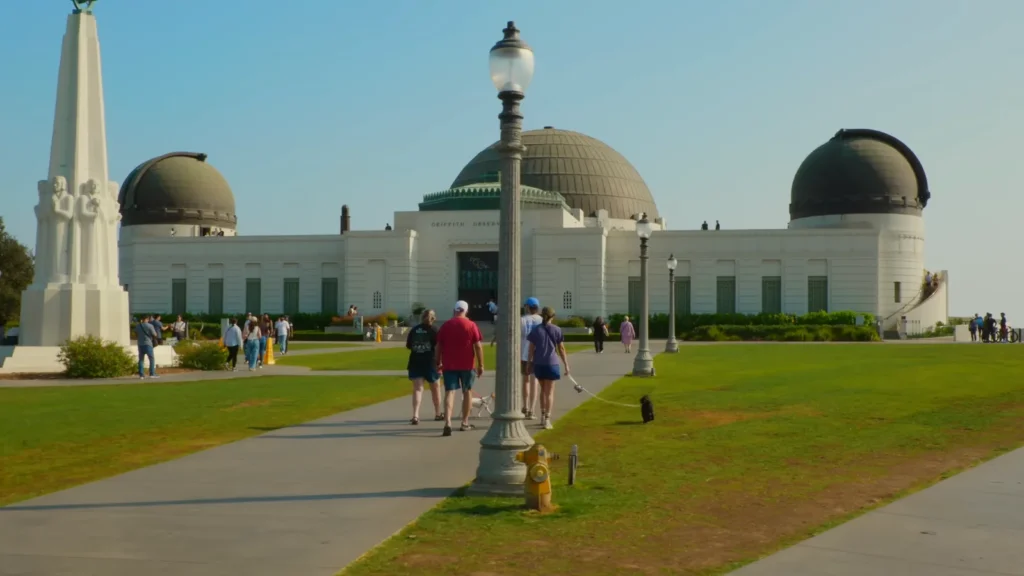
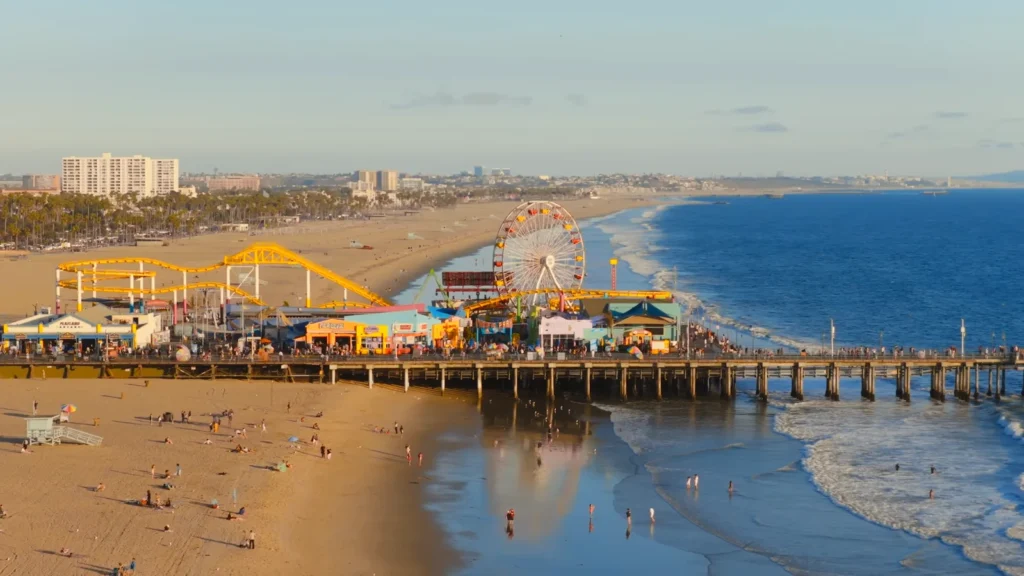
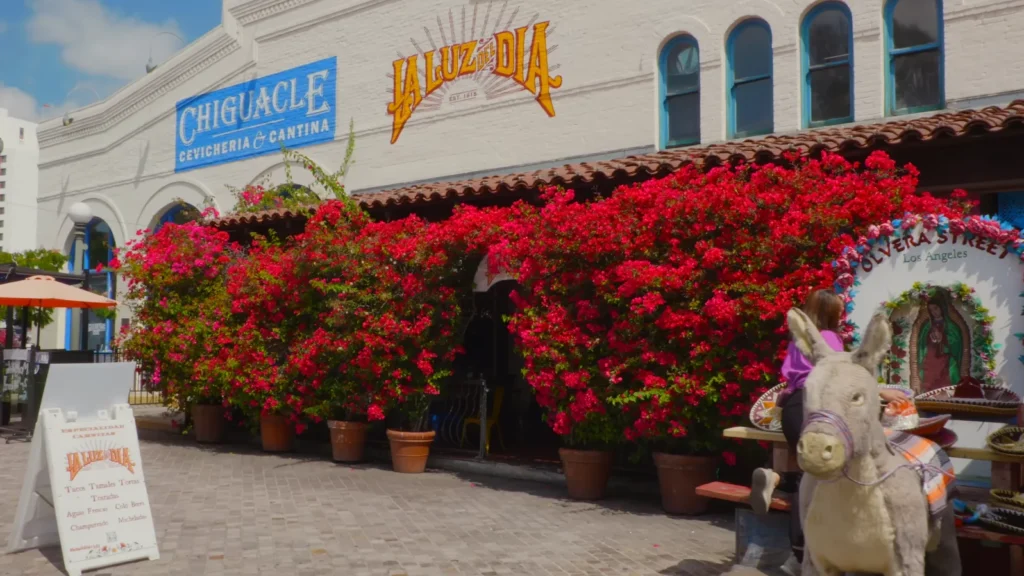
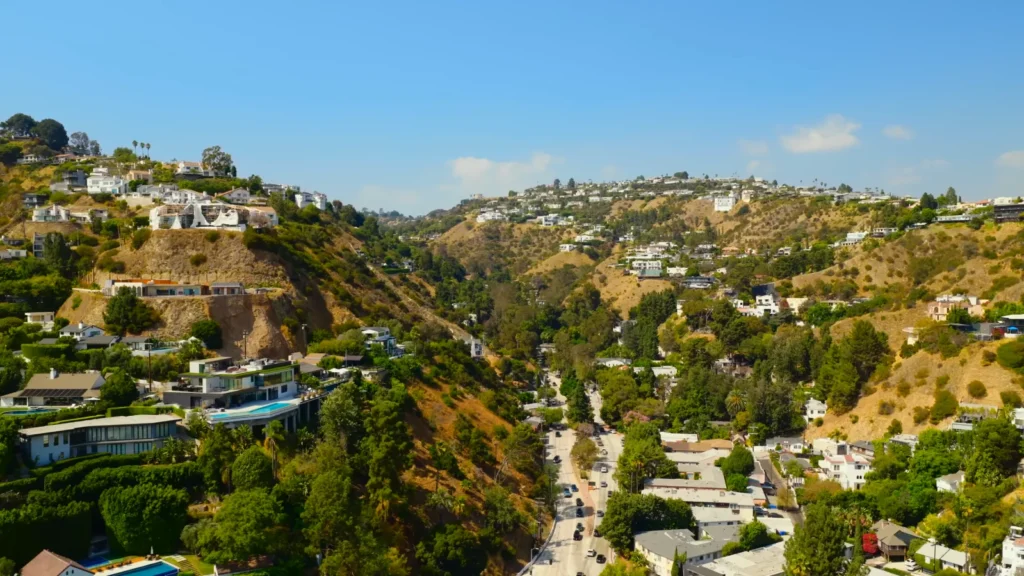
These overhead shots unveil the residential truth of LA: houses interspersed in the hills and flatlands, backyards being filled with swimming pools like blue confetti, palm trees offering infrastructure to neighborhoods that run endlessly. The Hollywood Hills, Beverly Hills and innumerable other neighborhoods are all a mash of patterns, which cannot be comprehended at all without an elevated perspective.
I used to spend days in various neighborhoods such as Los Feliz, Silver Lake and Manhattan Beach, which are some of the neighborhoods where people live, work and raise their families without tourist interference. These societies possess their restaurants, coffee places and cultural spaces which exist without Hollywood mythology.
Sightseeing LA: Underground LA Neighborhoods:
- Los Feliz: Artsy hillside community near Griffith Park.
- Silver Lake: Hipster haven with excellent restaurants.
- Manhattan Beach: Upscale beach community south of LAX.
- Pasadena: Historic city with Rose Bowl and Caltech.
Final Thoughts
Having spent three weeks in Los Angeles, I am aware of why some people either love it so much or completely reject it. This city requires patience and transportation planning and the readiness to accept contradictions.
LA is not a place to walk like New York or New York is not a place to be like it’s San Francisco counterpart. It comprises 500 square miles of neighborhoods linked with freeways, where the desert meets beach culture, where the communities of immigrants maintain traditions and Hollywood creates dreams.
The traffic exists. The parking costs money. The distances between attractions need planning. But the variety is greater than any other place I have visited in America, in the way of cultural, geographical and culinary.
Would I return? Absolutely. Is it something I would recommend to everyone? Probably not. LA rewards the visitor who can treat it as an experience to be had, instead of a place to be visited but who knows that in order to experience this city in it’s entirety it takes time, flexibility and tolerance that there are some stereotypes which hold because to a certain degree they are so.
It is not an ideal place but the City of Angels is fascinating forever. Sometimes, that’s enough.