
Honestly speaking Omaha was not on my bucket list. However, there are occasions that the most amazing traveling experiences occur when one takes a wrong turn and gets into a city assuming nothing. Below is a three-day layover situation (do not inquire, last month), which I found myself in, and rather than sleeping in an airport parking lot, I rented a car and drove to downtown Omaha.
Best decision I made all year.
The Old Market: Where Omaha’s Soul Actually Lives
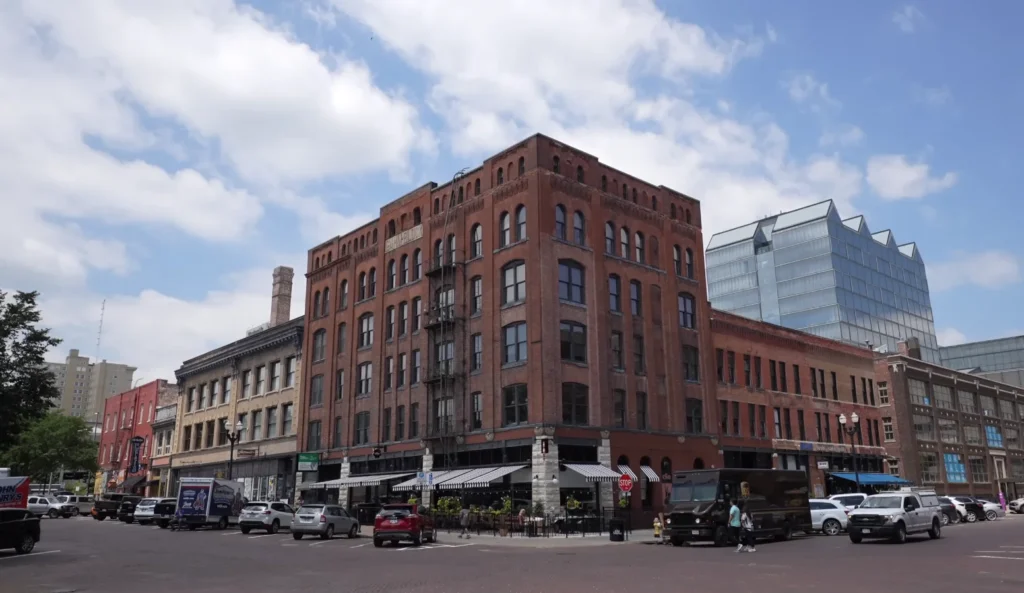
Walking through the Old Market District feels like stepping back into the 1890s – if the 1890s had craft cocktails and really good tacos. These aren’t recreated tourist facades. This is the real deal.
Even the red brick warehouses have a burden of their past. You can hear just about the clattering of the horse-drawn wagons over cobblestones, the grain dust of when this was the breadth of the agricultural trade in America. But now? Sidewalks are overrun by restaurants on the ground floor where railroad cars used to be loaded.
Hidden Gems in Plain Sight
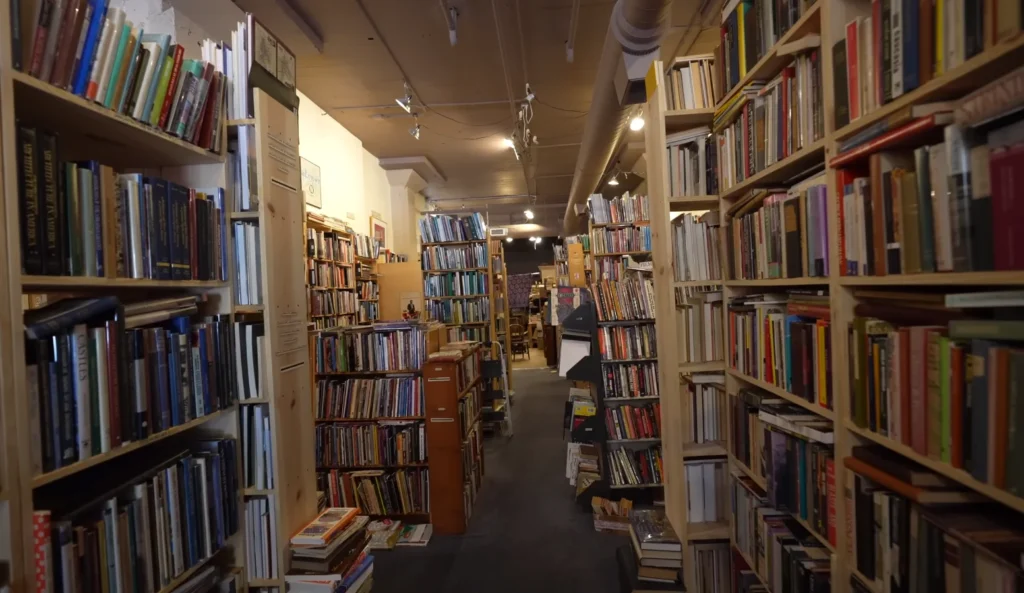
I fell down this ditch of a bookstore – floor-to-ceiling shelves all stacked with the first-edition Hemingway right up to the paperback mysteries that your aunt reads on vacation. The type of establishment you visit to have a coffee table book and to find yourself three hours later with a tower of novels and having spent more than you had put in your wallet.
The shop owner, an elderly gentleman with ink-stained fingers, told me: “People think independent bookstores are dying. Maybe in some places. Not here.” He was right. I watched customers browse for real books, not Instagram props.
The owner of the shop is an old man who has ink-stained fingers, he informed me: People believe that independent bookstores are dying. Maybe in some places. Not here.” He was right. I saw people go and window shop actual books, as opposed to Instagram props.
The contrast shouldn’t work. It does.
Food Scene: Block 16 and Beyond
Why do you want to discuss why I gained five pounds in Omaha? Block 16 is receiving national acclaim and that is why I have taken two meals there in 24 hours. It is not farm-to-table daintiness, molecular gastronomy nonsense. It is simply good food prepared by people who obviously care.
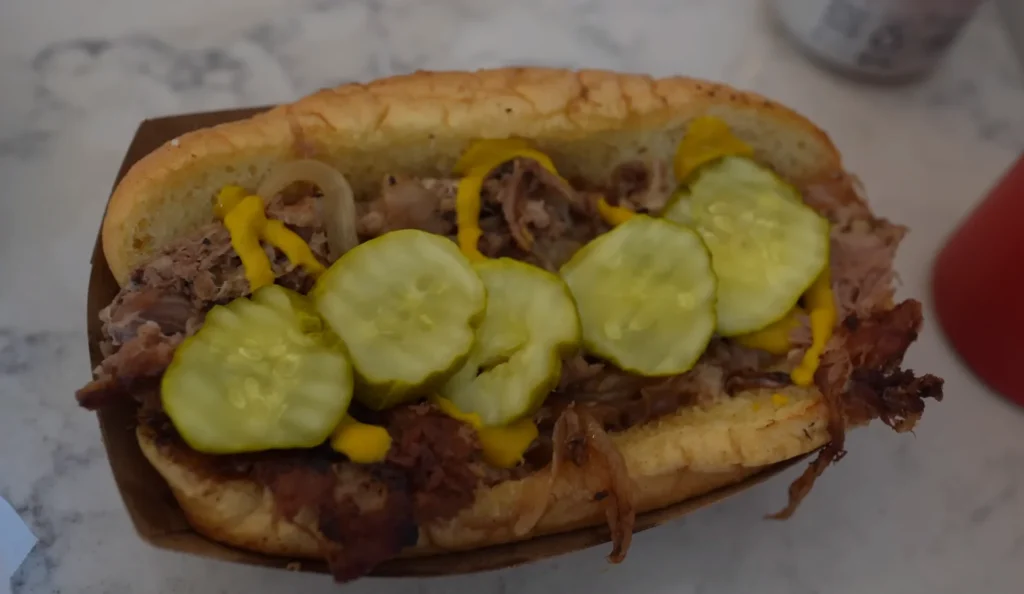
Their cheesesteak is garnished with pickles. Sounds wrong, tastes perfect. The acid slices through all that meat and cheese in such a way that makes one question all other cheesesteaks they have ever consumed. My server, Jessica, said that they use 40 pounds of pickles a day just on this sandwich. It makes people love it or they believe we are crazy, she laughed. “Mostly they love it.”
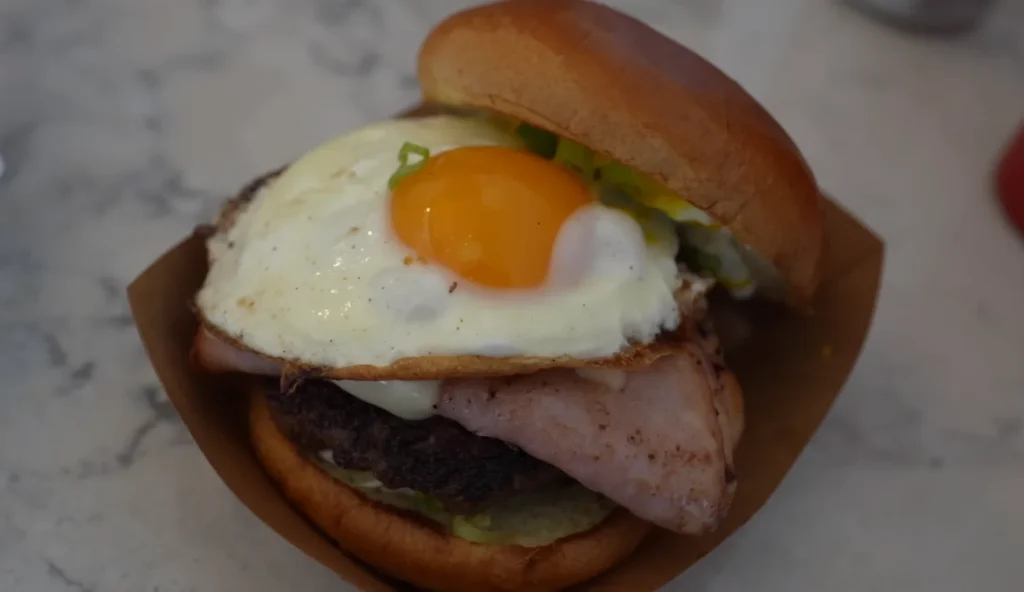
The breakfast burger deserves its own paragraph. Fried egg, perfectly runny. Bacon thick enough to require architectural engineering. This isn’t health food. This is what happens when someone decides to make the best possible version of comfort food without apologizing for calories.
But those loaded fries…
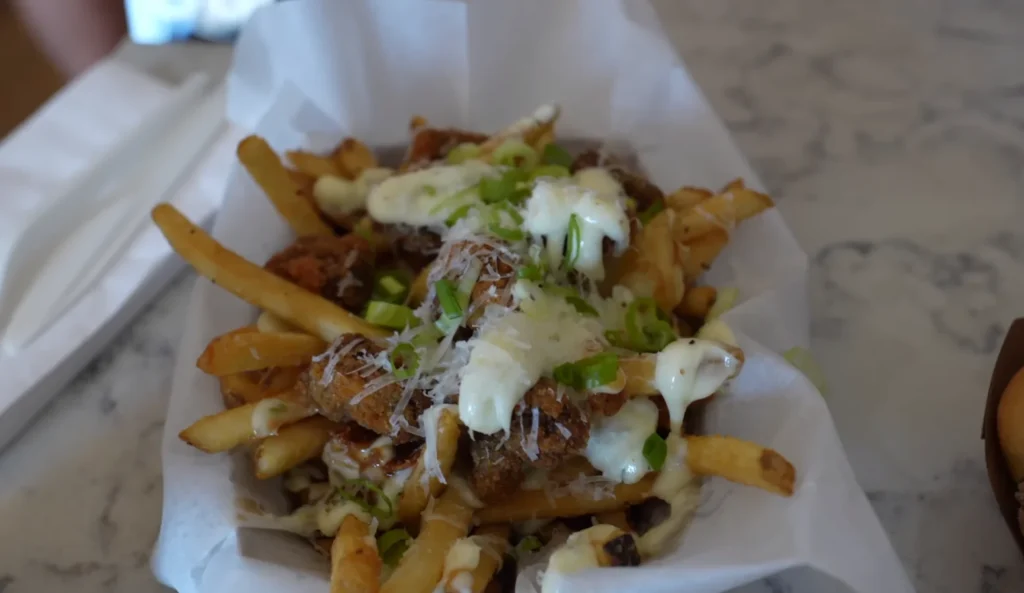
Cheese, green onions, what I’m pretty sure was pulled pork or brisket. Fork required. Sharing recommended unless you want to hibernate for the afternoon.
The Unexpected Culinary Landscape
What surprised me most? The variety. Within walking distance of Block 16, I found:
- Authentic German cuisine at a place where the bartender spoke fluent German with obvious tourists.
- Vietnamese pho that had me questioning my loyalty to coastal cities.
- Steakhouses that put some famous Chicago joints to shame (though I won’t name names).
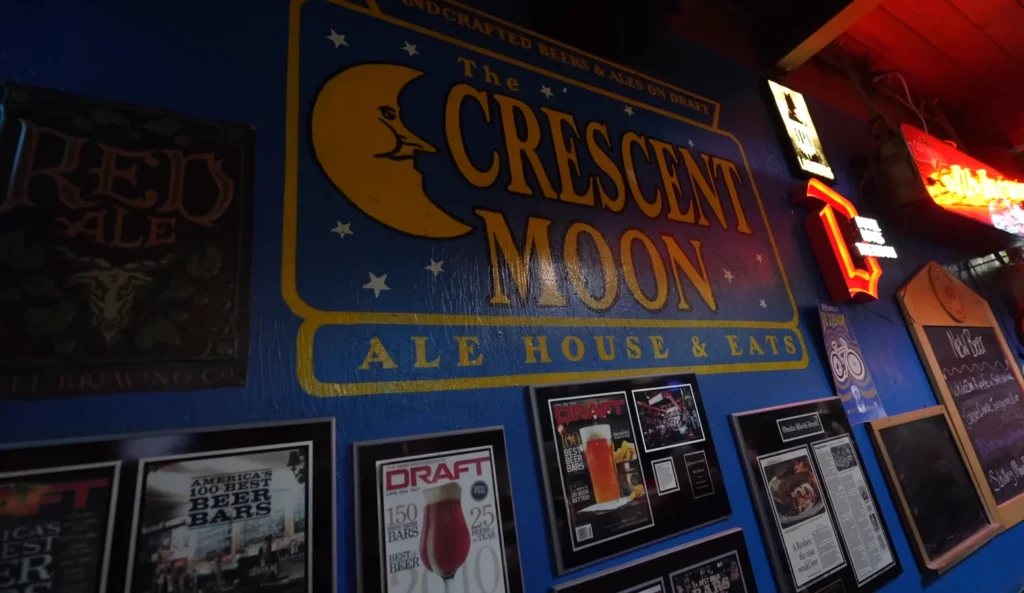
Crescent Moon Ale House caught my attention with all those beer awards plastered on the walls. Sometimes that’s marketing. Sometimes it’s earned. This was earned. Their local beer selection reads like a love letter to Midwest brewing, and the bartender knew the story behind every tap.
The Museums: Durham’s Art Deco Masterpiece
I’m not usually a museum person unless there’s something genuinely special happening. The Durham Museum qualifies.
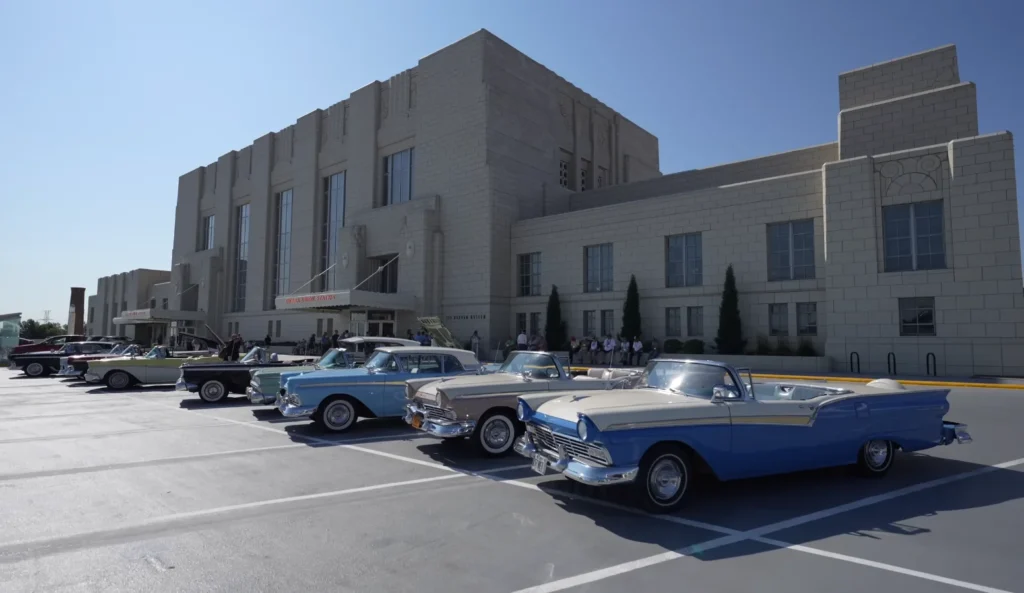
First, the building itself. Union Station, built in 1931, represents Art Deco architecture at its most confident. Before you even walk inside, you’re looking at limestone facades and geometric details that scream “we believed in the future once.”
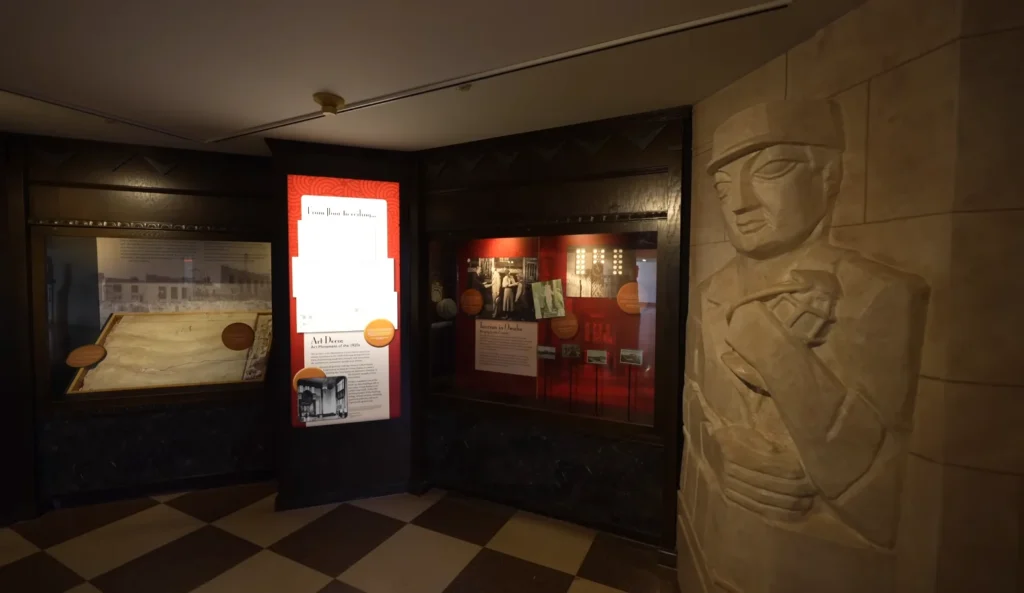
Inside, they’ve preserved and restored the original waiting areas. Not recreated – preserved. You’re standing where thousands of travelers waited for trains to carry them across the continent. The scale feels both grand and intimate.
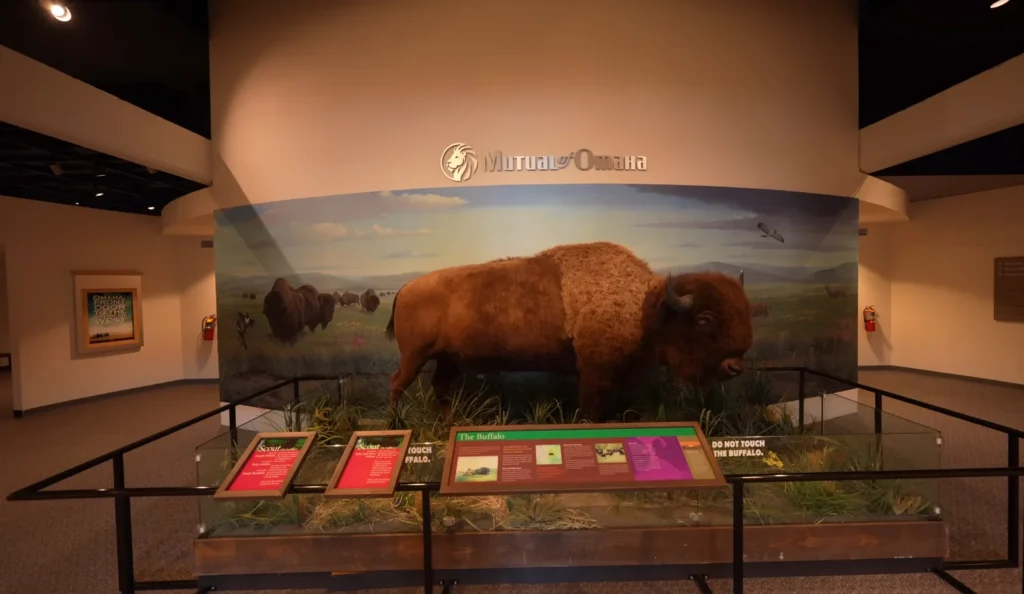
The exhibits blend local history with broader American narratives. Railroad history, obviously, but also immigration stories, agricultural development, and – this caught me off guard – a surprisingly thorough section on the region’s Native American heritage that doesn’t whitewash the complicated parts.
Outside during my visit, someone had organized a classic car show. Pure coincidence, but watching 1950s Chevrolets lined up in front of 1930s architecture created this perfect time-warp moment. The cars weren’t museum pieces – these were clearly loved, driven vehicles owned by people who probably meet every weekend to talk carburetors and chrome.
Henry Doorly Zoo: World-Class in an Unexpected Place
I’ve been to a lot of zoos. Most disappoint me – cramped enclosures, bored animals, overpriced everything. Henry Doorly Zoo shattered every expectation I had.
This is not that usual city zoo that has problems keeping up with the budget. It is a 160-acre conservation powerhouse which just happens to be situated in Nebraska. The Henry Doorly zoo in Omaha is always rated within the top five zoos in the world and after the six hours I spent in the zoo, I know why.
The Desert Dome: Engineering versus Biology
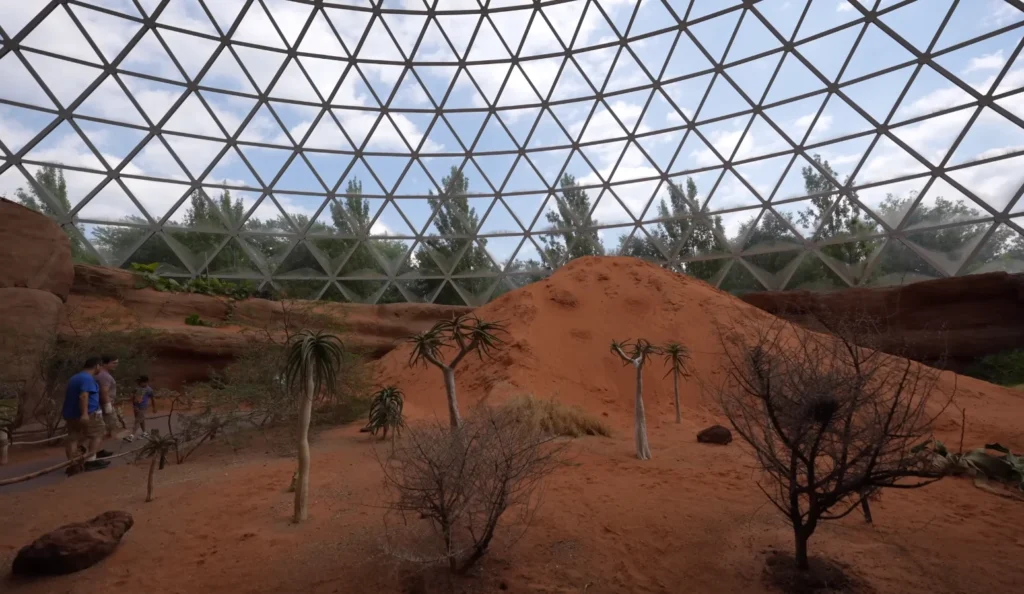
It is as though one were walking into another planet when they enter the Desert Dome. The 42,000-square foot geodesic dome is home to the largest indoor desert in the world – not a greenhouse with some cacti, but the ecosystem in its entirety with free-range animals and 90-degree heat that slaps you in the face.
The care taken in detail shocked me. Sand red imported to the Southwest. The rock formations resembling the ones that were worn by the centuries by winds. Plants in the desert were set up in natural formation, not in botanical garden lines. I have seen a roadrunner run past me in the road in Nebraska when it was 40 o C outside.
However, here is what struck me the most: the animals appeared to be really happy. I have visited enough animals in zoos, who are seen going round the clock and are stressed. Not here.
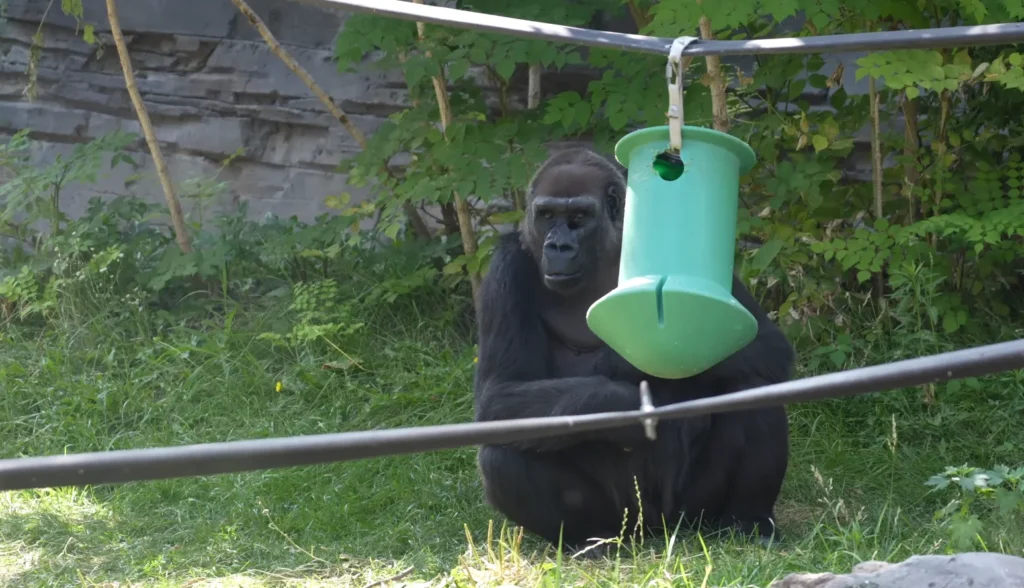
This gorilla was enriching with playthings, problem-solving, occupying himself with his surroundings. The keepers that I interviewed spoke of animal welfare as though they were interested, and not as though they were reading off corporate scripts.
Real Conservation in Action
The rhino habitat was my halting point. Not due to the design of the exhibition (however, it is also impressive), but due to what I saw.
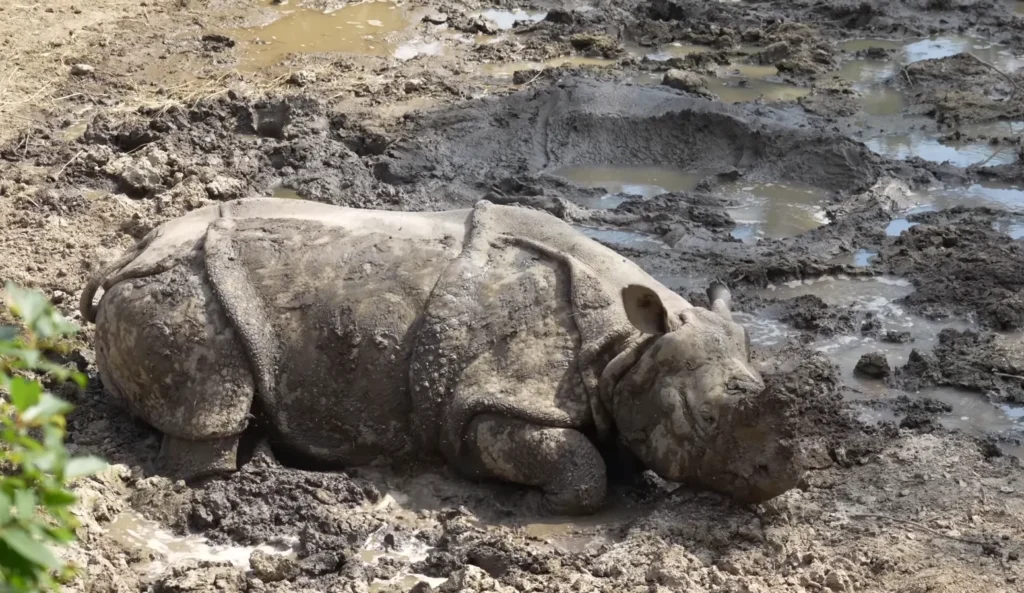
This rhino was just… being a rhino. Rolling in mud, completely unbothered by the dozen humans watching through glass. The exhibit gives them space to express natural behaviors, and it shows. The International Rhino Foundation partners with Henry Doorly for breeding programs that have successfully reintroduced endangered species to the wild.
That’s not marketing speak. I have encountered Dr. Sarah Chen who is a veterinarian and reproductive researcher with endangered species. We are not just wasting time on amusing people, she told me as she was watching a pregnant Malayan tapir. “We are purchasing temporary existence of the species that may soon not be present in the wild.
Heavy stuff for a Saturday afternoon at the zoo. But important.
Scott Aquarium: Unexpected Ocean in the Plains
After the zoo, I almost skipped the Suzanne and Walter Scott Aquarium. Aquariums can feel repetitive – how many fish tanks can one person appreciate?
I’m glad I ignored my own cynicism.
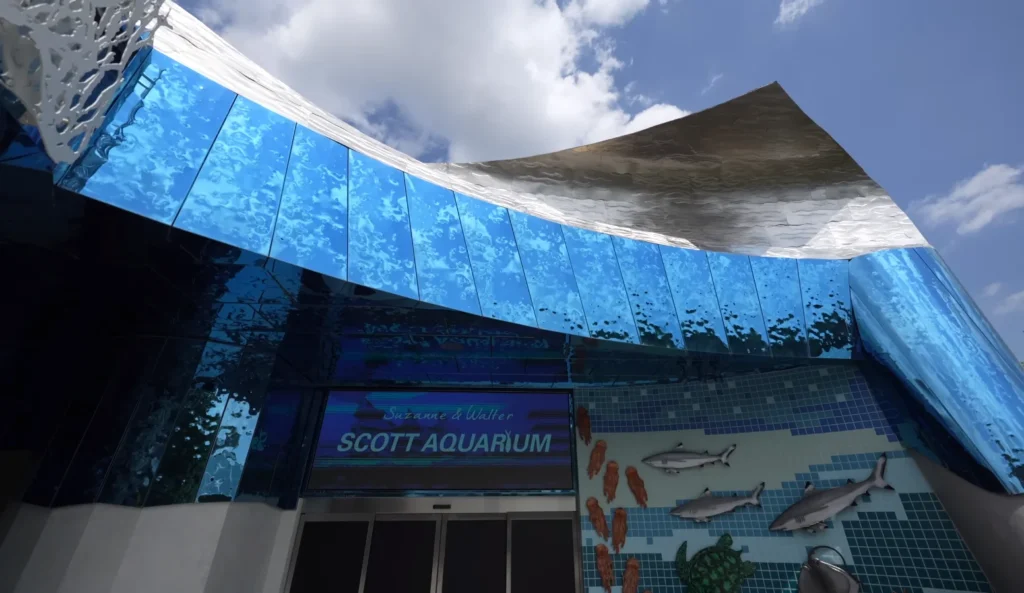
The building itself makes a statement. This isn’t a rectangular box with tanks lining the walls. The curved architecture flows like water, and walking through feels deliberately cinematic.
The Tunnel Experience
Most aquarium tunnels disappoint. Too short, too crowded, glass covered with fingerprints and algae. Scott Aquarium’s tunnel delivers on the promise.
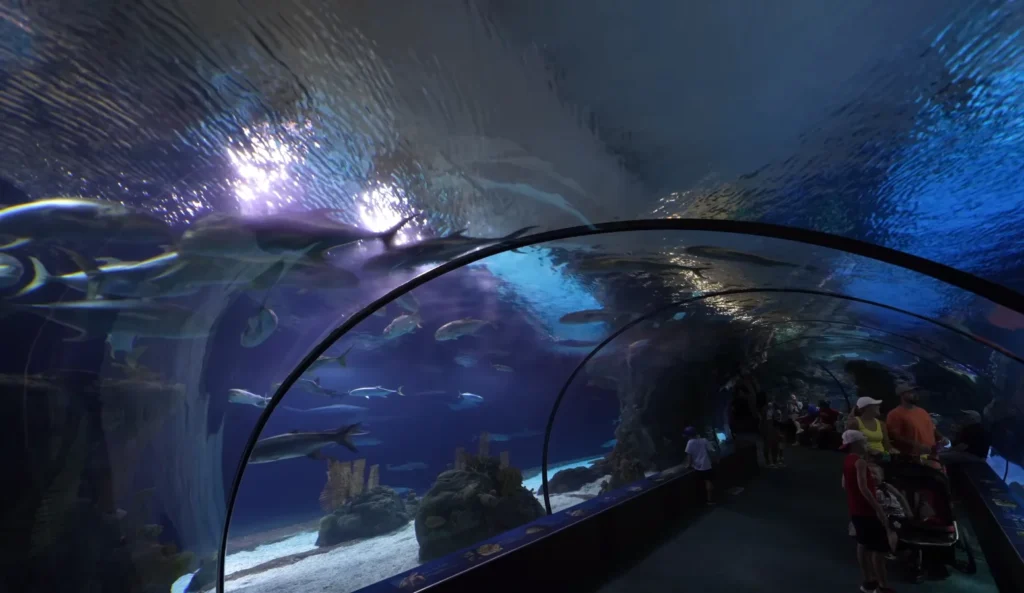
Walking through this 70-foot-long tunnel, sharks glide over your head while rays sweep past at eye level. But it’s not just about the big dramatic animals. Schools of smaller fish create these constantly shifting patterns, like living murals that change every few seconds.
I stood there for twenty minutes watching a green sea turtle methodically work its way around the tank. No drama, no feeding show – just a 200-pound turtle doing turtle things while kids pressed their faces against the glass in wonder.
The Jellyfish Gallery
Here’s where Scott Aquarium becomes art installation as much as education.
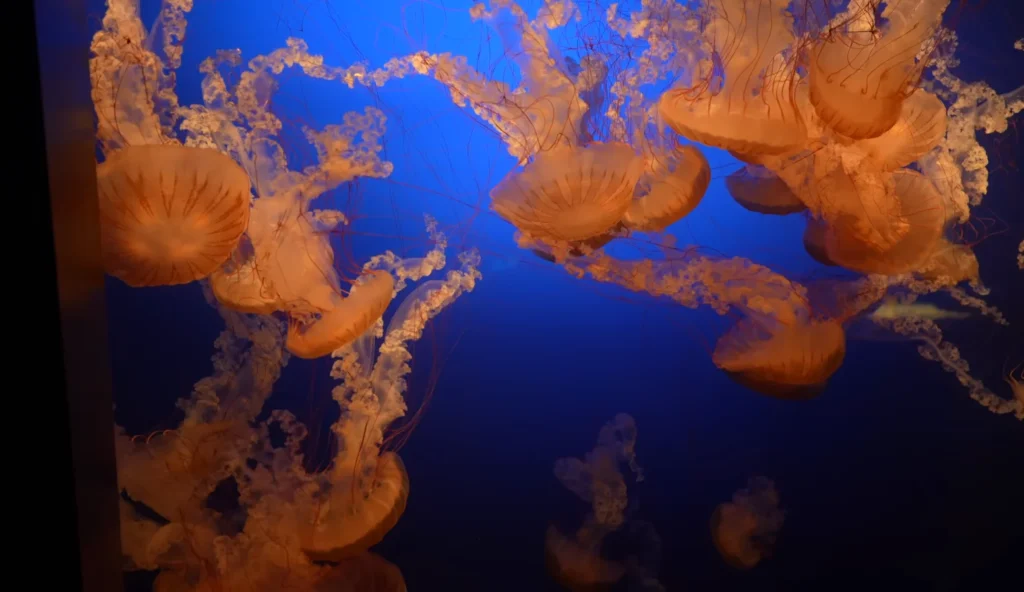
These Pacific sea nettles drift through perfectly lit tanks like living lava lamps. The orange and white patterns pulse and flow in hypnotic rhythm. I watched a woman stand transfixed for fifteen minutes, her toddler equally mesmerized.
“They’re 95% water,” the volunteer guide mentioned to a group of school kids. “No brain, no heart, no blood. They’ve been around for 500 million years.”
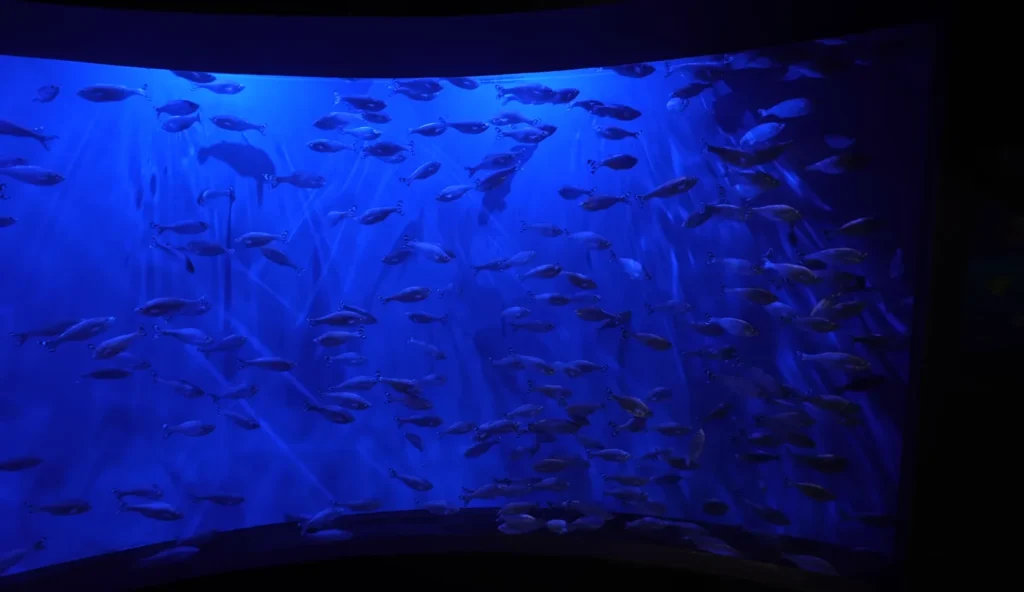
This ever-changing wall of silver is made by the schooling fish exhibit. Hundreds of separate fish acting like one entity, and reacting to something that cannot be seen, and forming patterns which are like choreography, yet are entirely instinctive.
Riverfront Renaissance: Mississippi River Corridor
Omaha has a long attachment with the Missouri River. This was ever a river city – fur-traders, steamboats, railroad bridges. The city virtually ignored the water in the decades. They were cut off of the riverfront by industrial growth, highways, flood controls, etc.
Not anymore.
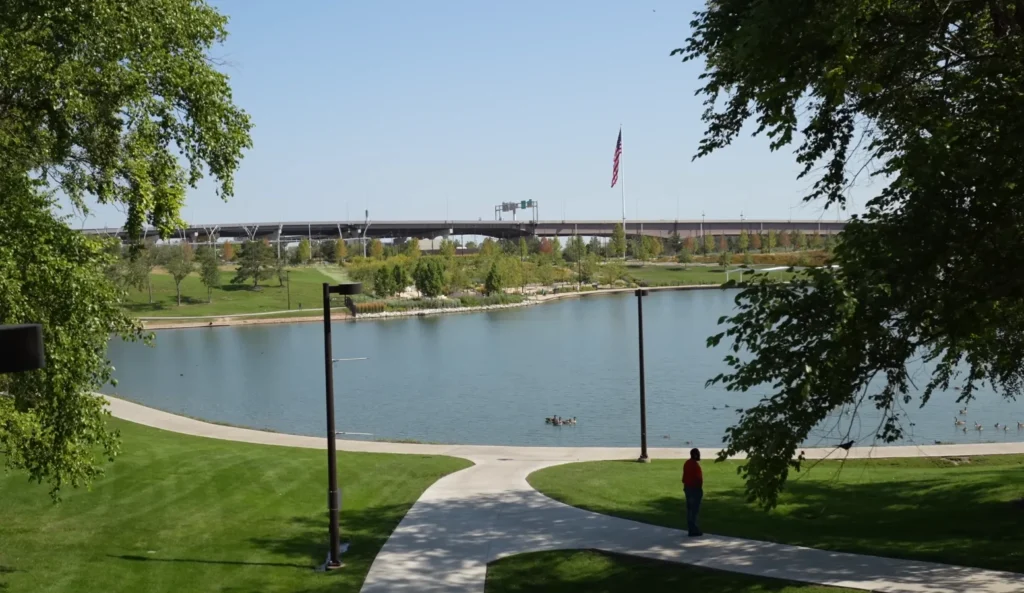
The new vision is the Heartland of America Park. A 31-acre park that has an artificial lake, fountain, walking paths and unhindered views of downtown skyline. It is not attempting to be Central Park – it is very Midwestern, functional yet friendly.
The Bob Kerrey Pedestrian Bridge
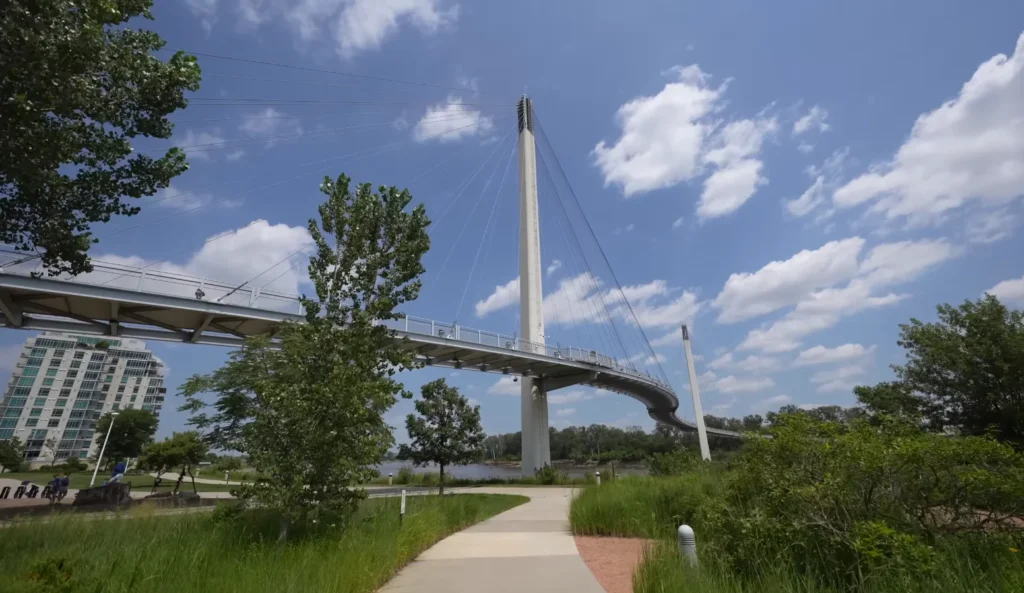
The Bob Kerrey Pedestrian Bridge is a solution to a problem that I was unfamiliar with Omaha having – how to be on foot connecting Nebraska and Iowa. The 3,000-foot cable-stayed bridge is a functional structure but it has already turned into a destination in itself.
Striding over, you are literally in two worlds at the same time. The midpoint marker is on the state line, and tourists do stand with one foot in this state and the other in the other. I may have been one of them.
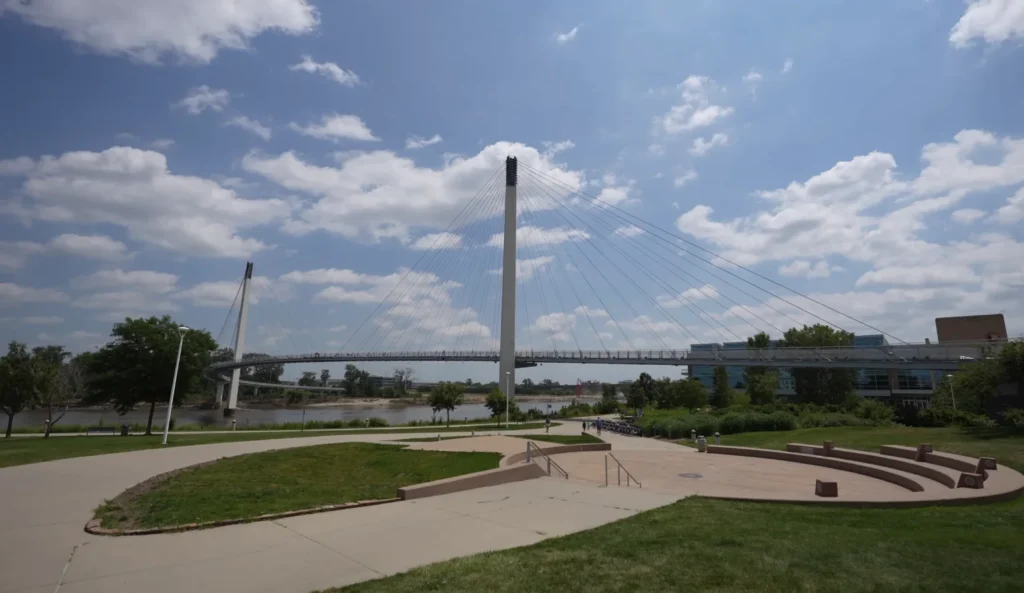
But beyond the novelty, it works as urban planning. I watched morning joggers, families with strollers, cyclists, and evening dog walkers all sharing the space comfortably. The bridge connects Council Bluffs, Iowa with downtown Omaha, creating a true metropolitan experience across state lines.
Riverfront Development Done Right
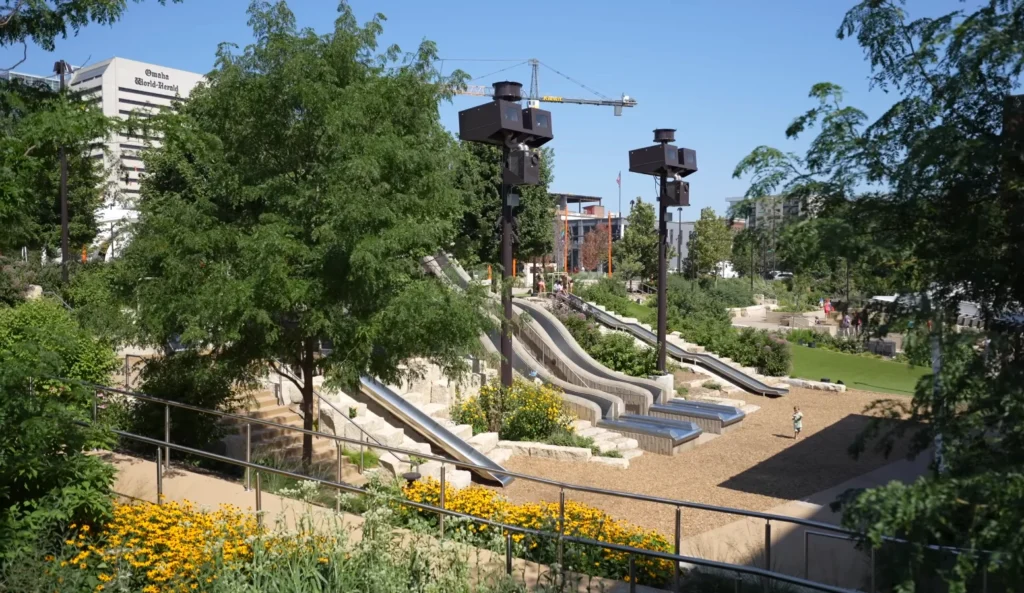
This sculptural fountain outside the riverfront is one that I noticed – three towers made of metals that formed water walls that children could run through during summer. It is the public art which is both literally functional the sort of detail that reveals that someone was concerned about making spaces that people want to inhabit rather than spaces that look well on the development brochures.
The whole riverfront area development is not obtrusive. Pedestrian walkways are laid along the river. Native plantings also use less water and less maintenance and offer habitat to migrating birds. The benches do not face parking lot but water.
It was on one of those benches that I sat at sundown, and watched a great blue heron fishing in the shallows; and the lights in the downtown offices were shining over my back. A couple of minutes later, I did not remember that I was in a metropolitan place.
Omaha’s: Surprising People
All cities are weird, but in Omaha, it seems that it is genuine. Example: outside one of the corporate buildings in downtown there is a statue of Chef Boyardee made of bronze.
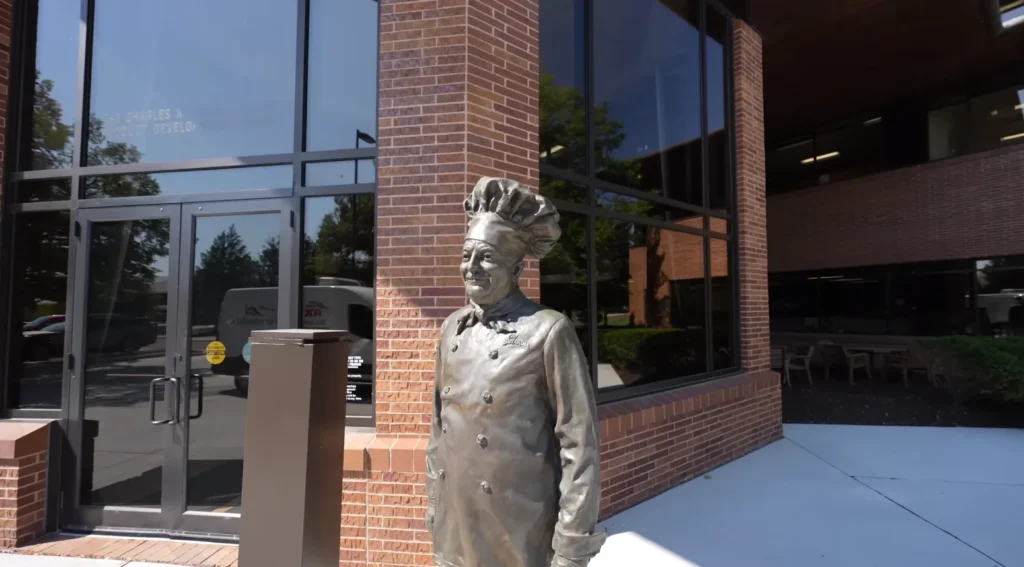
I almost walked past it. Then I stopped. Then I laughed. The food conglomerate of ConAgra Brands is based here and somebody had the idea of having the Italian-American chef who stacked cans of ravioli on the shelves of the grocery stores, permanently enshrined in bronze. With his actual name being Hector Boiardi, this would likely have been the case, as he would have loved to see himself being honored outside a corporate building in Nebraska.
It’s gloriously absurd. And somehow perfectly Omaha.
Hollywood Candy: Where Nostalgia Meets Nightmare
Remember that horror collectibles shop I mentioned in the Old Market? I went back for a closer look, and it deserves its own section.
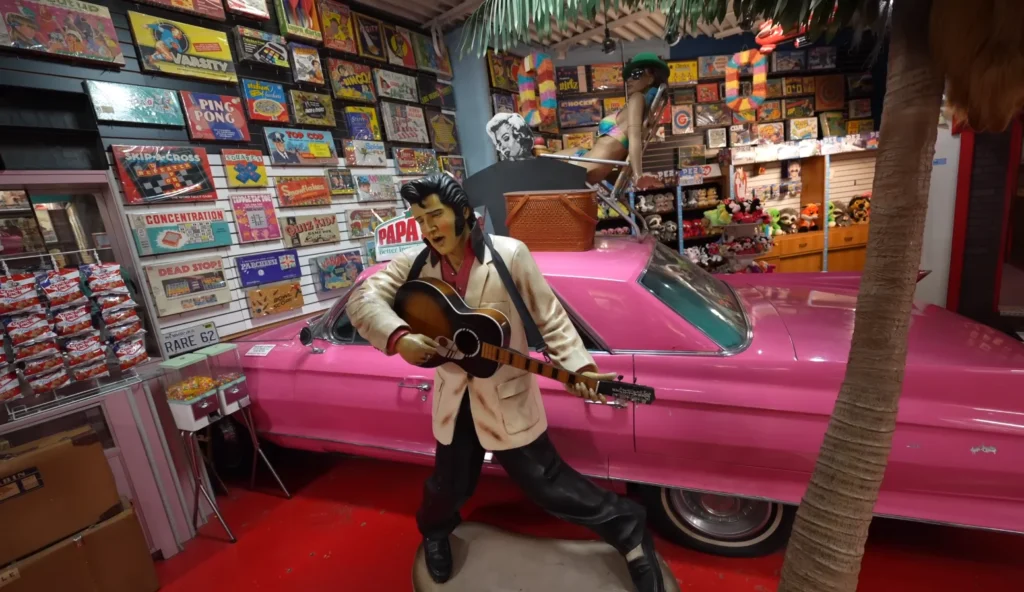
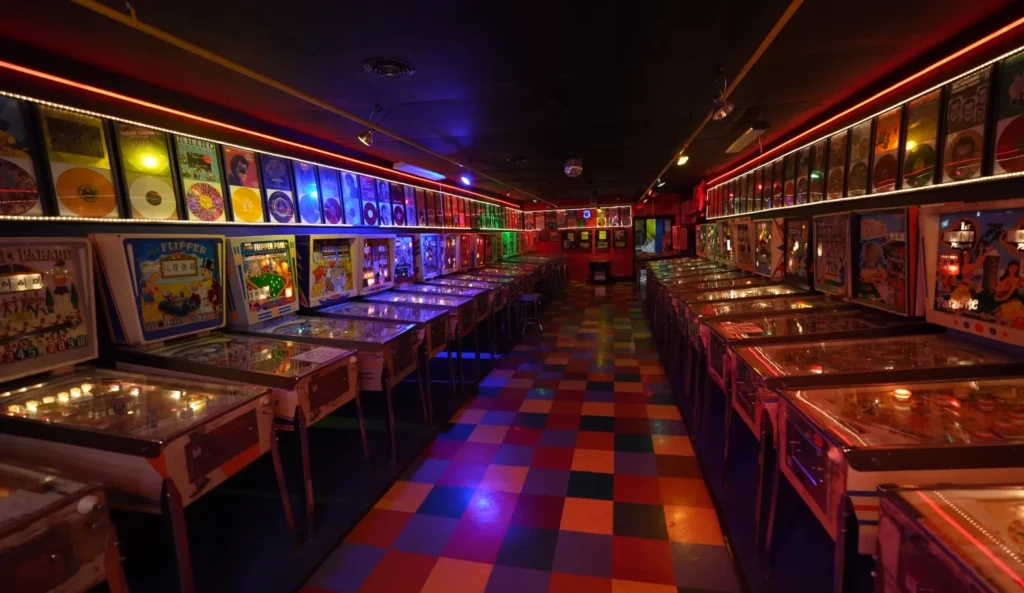
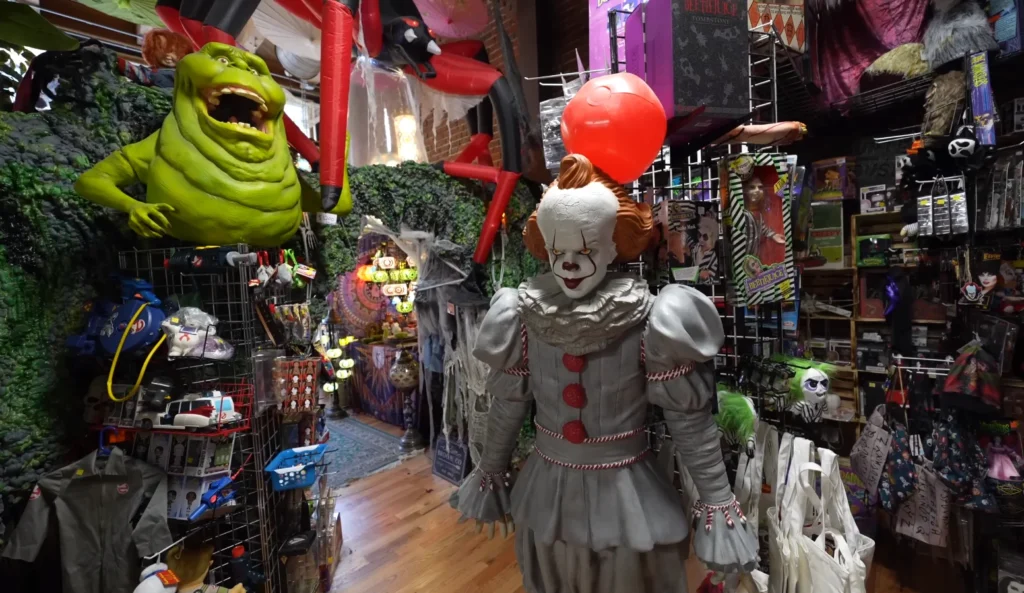
Hollywood Candy is affected on several levels of nostalgia at the same time. One wall has vintage pinball machines, not imitations, but real pinball machines that were used in the 70s and 80s. There is an Elvis figure standing close to the entrance. And everywhere, walls of old candy wrappers and movie paraphernalia and what seems to be every horror movie character ever brought to plastic.
The owner, Mike, told me he’s been collecting for thirty years. “Started with just candy, but people kept bringing me weird stuff. Pretty soon I had Freddy Krueger next to Pez dispensers. Seemed to work.”
It shouldn’t work. It absolutely works.
I watched a grandmother buy her grandson a vintage Superman comic while Pennywise stared down from the ceiling. The kid was equally fascinated by both. Mike rang them up next to a display of 1950s candy cigarettes and what I’m pretty sure was a life-sized Chucky doll.
“Halloween’s our Christmas,” Mike explained, “but honestly, people want weird stuff year-round. Last week someone bought that Slimer figure for their office.”
Coffee Culture: CRTL Coffee
I’m particular about coffee. Travel extensively, and you do form a firm view of what is a good espresso and what is a coffee in the majority of hotel lobbies.
CRTL Coffee gets it right. Local roaster, real barista art, and they are not making an attempt to be Portland or Brooklyn. When I inquired of Emma, the barista, about their single-origin offerings, she explained it to me as though she cared about the difference between Ethiopian and Guatemalan beans.
“We source directly from farmers when possible,” she mentioned while pulling my shot. “It costs more, but you can taste the difference.”
She was right. Best cortado I had between Chicago and Denver.
Final Thoughts
Three days wasn’t enough. That is not hyperbole on the part of a travel writer, I really wish I had planned more.
Omaha does not do what most cities have trouble doing, it does not want to be what it is not. It is not striving to be New York or San Francisco or Austin. It is a Midwestern city with agrarian origins, business head offices, international cultural venues, and citizens who appear to whole-heartedly enjoy residing there.
The food scene rivals much larger cities. The museums punch above their weight class. The riverfront development shows what thoughtful urban planning can accomplish. And somehow, a city of 470,000 people supports both independent bookstores and comprehensive horror collectibles shops.