
I was looking at the pictures of Croatia long enough. You can guess rooftops of orange, water of impossibly blue, old walls. What type of pictures do you ask yourself are they even real or just highly filtered Instagram bait. Turns out, they’re real. Almost annoyingly so.
This visit was put together rather hurriedly. I had a week, a car rental was booked and I had an idea: headquarter in Split, visit Krka National Park and possibly, so long as the timing was right, make a side trip to Bosnia somewhere. Villain: it went much better than expected.
The Split Landing: First impressions
Split does not take its time. You arrive and in a matter of twenty minutes, you are in a city that has been inhabited seven hundred years long. The Palace of Diocletian, though in fact no longer a palace, but the whole old town, strikes you at first. This was constructed in 305 AD by Roman Emperor, Diocletian, who constructed this structure as his retirement home. Retirement. To retire, the man constructed a fortified complex that was 30,000 square meters.
What I did not anticipate: that there were individuals inside the walls of the palace. Squeezing in between what was Roman quarters are apartments, shops, restaurants. Laundry is suspended on windows that look at 1700-year-old columns. It is strange and fantastic collision of the old and the new.
I spent my first afternoon just wandering. No map, no agenda. Got lost in narrow alleyways maybe six feet wide. Found a guy selling lavender sachets from a doorway. Watched a cat sleep on a Roman ruin like it owned the place.
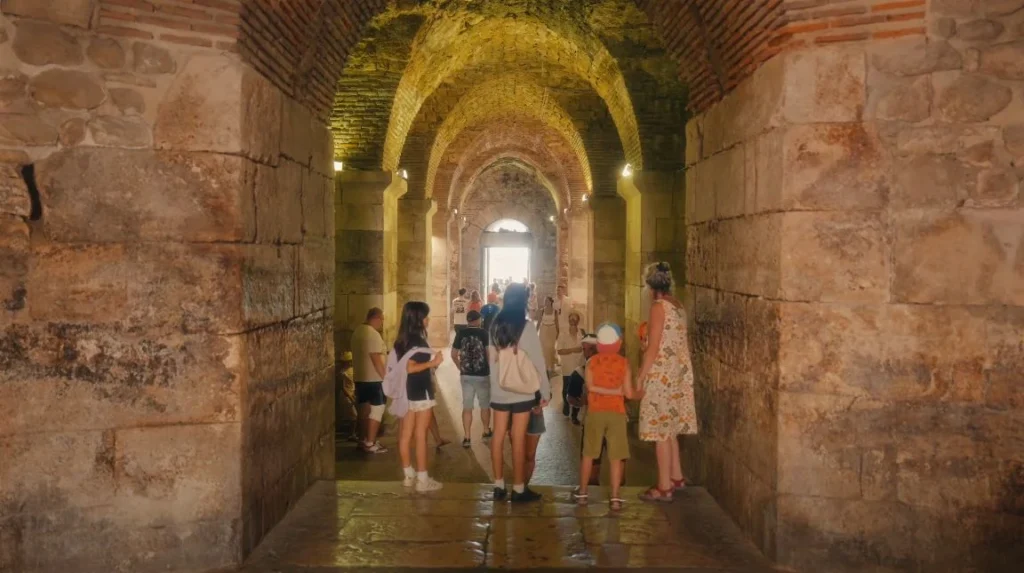
The Underground Cellars
These almost didn’t survive. Since centuries, inhabitants took advantage of the basement halls as a dumping ground, in other words, literally piled up the halls with rubbish. It was not until the 20th century that excavations were taken seriously. You may walk through the vaulted rooms now, and the scale smote you. The cellars replicate the plan of the palace on top, thereby allowing the archeologists to literally use the cellars to calculate how the upper floors must have looked like.
The interior lighting is dark and golden. Children were running when I went over their treaden feet resounding on stone, which the slaves of Diocletian used to face. Strange feeling.
| Diocletian’s Palace Quick Facts | |
| Built | 295–305 AD |
| Original Purpose | Emperor’s retirement residence |
| UNESCO Status | Listed since 1979 |
| Current Use | Residential, commercial, tourist site |
| Location | Split, Croatia |
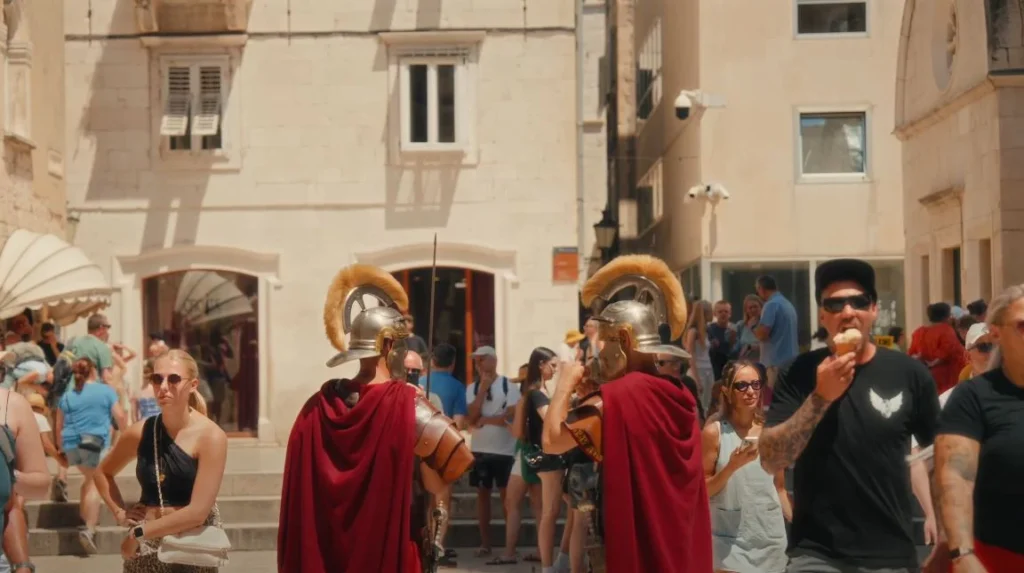
The Ice Cream (and the Reenactors)
There are Roman soldiers wandering around the Peristyle—the central square of the palace. Full armor, red capes, plumed helmets. Mostly for photos with tourists, but they commit to the bit. Meanwhile, a guy three feet away is eating gelato in a tank top. That’s Split in one image, really.
Hotel: A Modern Hotel with Marina Views
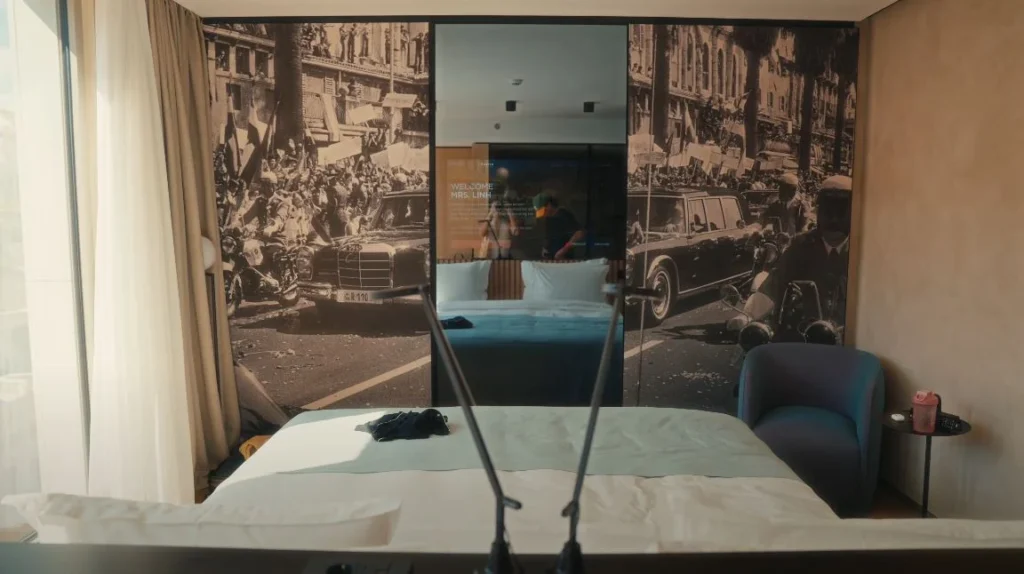
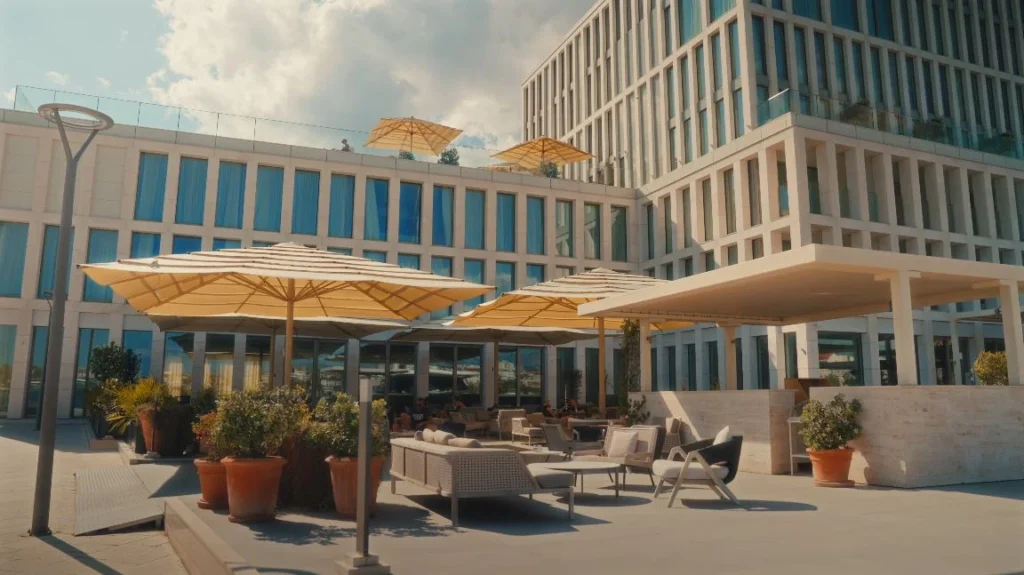
I made a reservation in the area of the ACI Marina that is approximately 15 minutes by foot of the Old Town. Lots of glass and clean lines Modern building. The covering of one wall of my room was this huge old photo mural–some old European street scene with old-fashioned Mercedes sedans and people. It was like I was dreaming in somebody else.
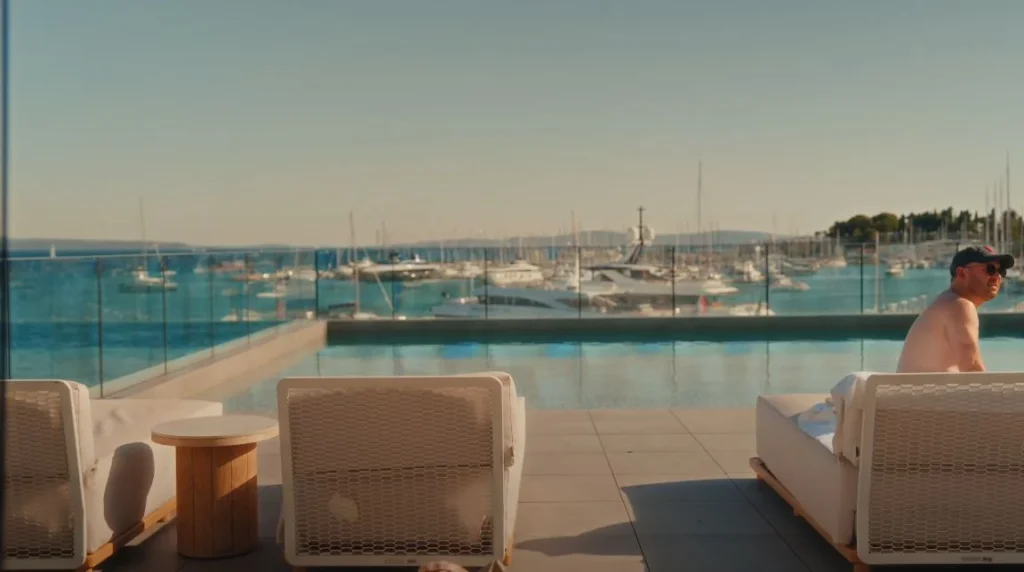
The terrace scenario was the actual attraction. Infinity swimming pool with view of the marina, loungers in the sun, mountains on the other side of the water. At that pool, I sat, and I am not generally a sit-by-the-pool kind of person.
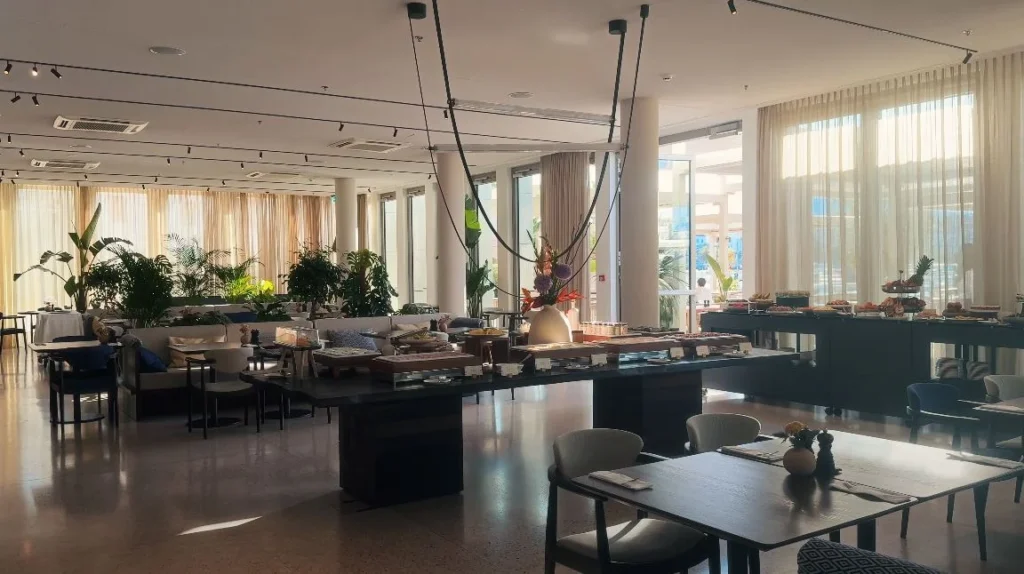
Breakfast buffet was good nothing special but good coffee and spread including basics and some local stuff. The restaurant area was brightly lit with floor-to-ceiling windows, abundant plants, which Scandinavian-minimalist hotels cannot get enough of at the moment.
What I Ate in Split
The food of Croatia on the coast is not only heavily Italian-inspired but also includes lots of seafood, olive oil, fresh vegetables. Nevertheless, there is something Balkan about it.
Two standout meals:
Lunch in a restaurant near the palace: Prosciutto pizza and mushrooms. Thin crust, well burnt, the prosciutto was added after baking in order to remain smooth. Simple. Perfect.

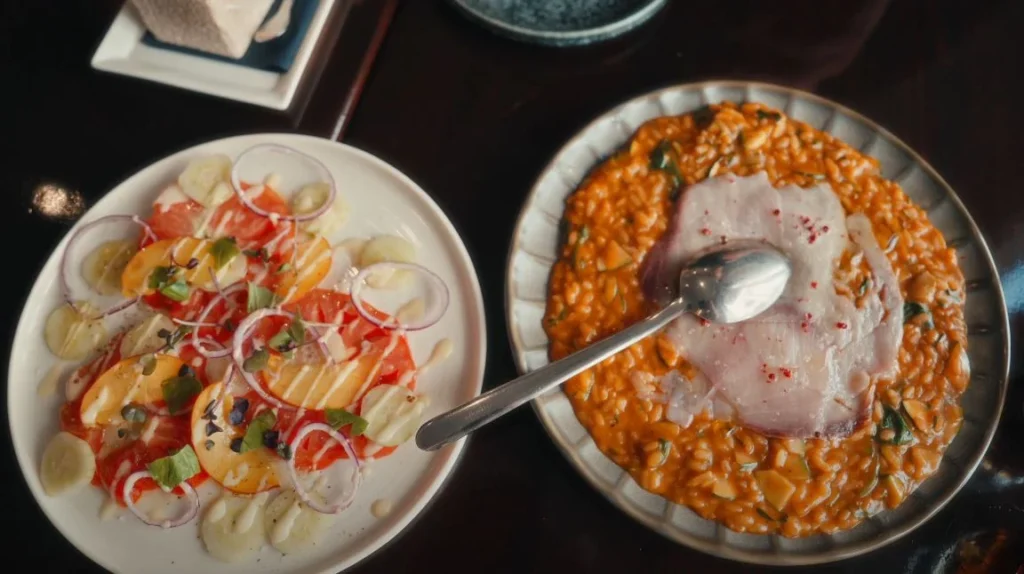
Dinner with the water view Caprese salad: -but with these heirloom tomatoes, so crimson and orange, nearly sweet. And a tomato risotto with what I believe was fish carpaccio on it. The risotto was not heavy yet it was rich and as I took the bite, the fish melted in it.
Day Trip: Krka National Park
It is impossible to visit this part of Croatia without visiting Krka. It is only an hour drive north of Split, and, unlike Plitvice (the more famous national park), you can even swim here. Well, at certain spots. The biggest of them is Skradinski Buk – a chain of seventeen waterfalls on a total length of 800 meters, dropping approximately 46 meters in total.
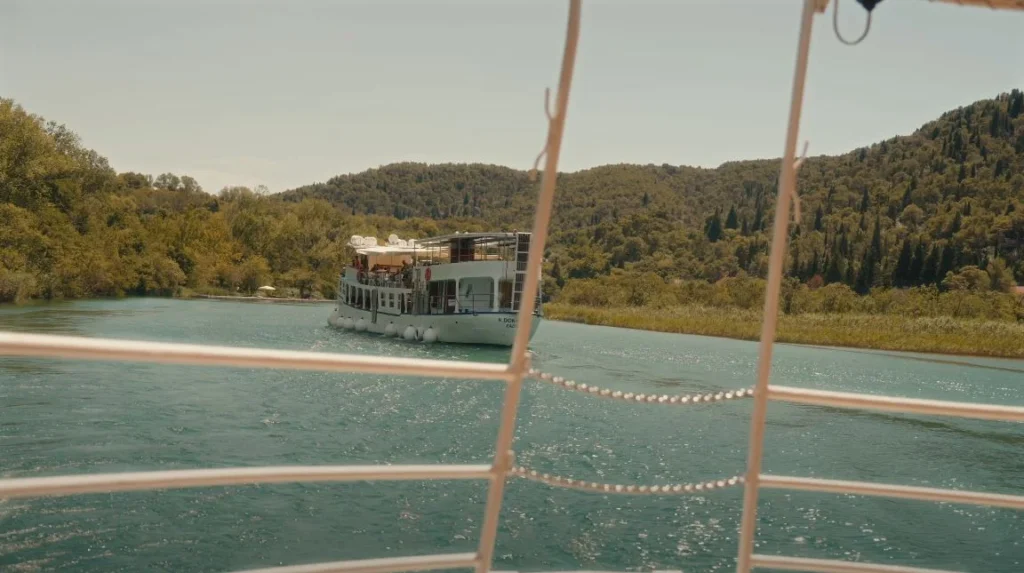
I got the boat in at Skradin, which, according to me, is the better way. The climbing up the river provides you with a gradual unveiling. Two green hills, and water so transparent you can see the fish swimming under.
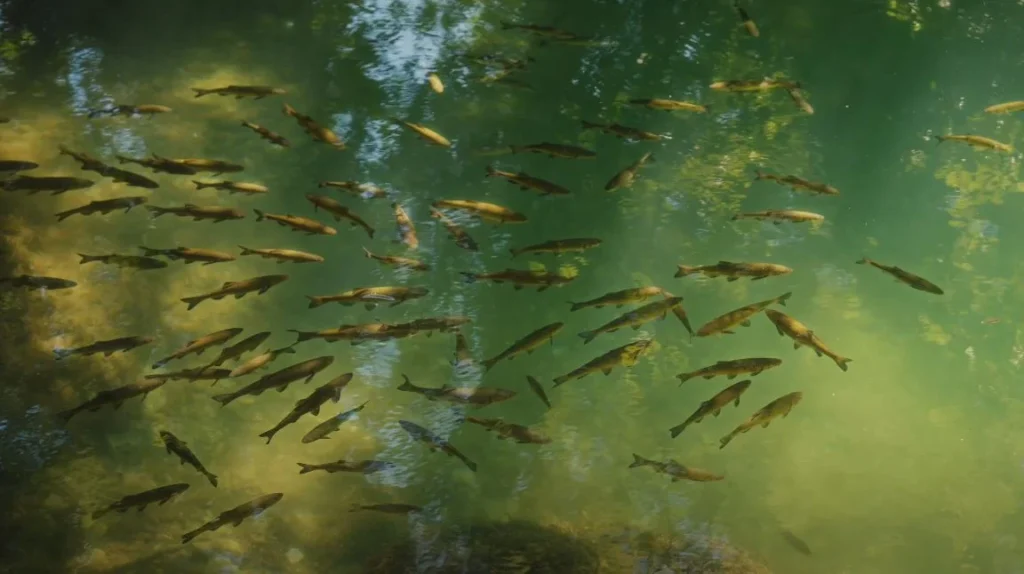
Walking the Boardwalks
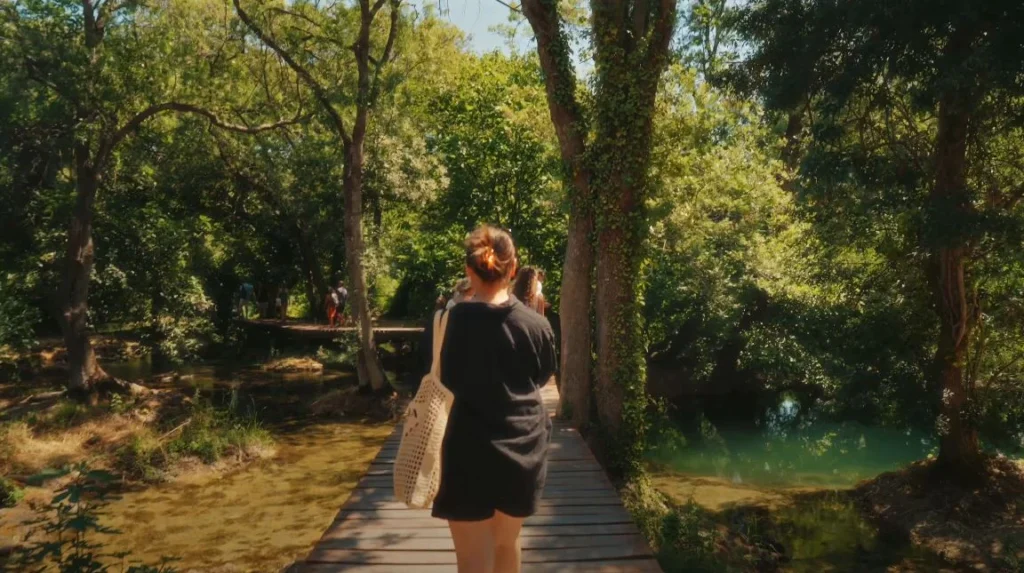
Majority of the park you walk through is on wooden boardwalks which meander through the woods and across the water. When I went it was late summer, and dry, and hot, and vegetation a bit crispy at the edges. But still beautiful. Rushing sound all all about.
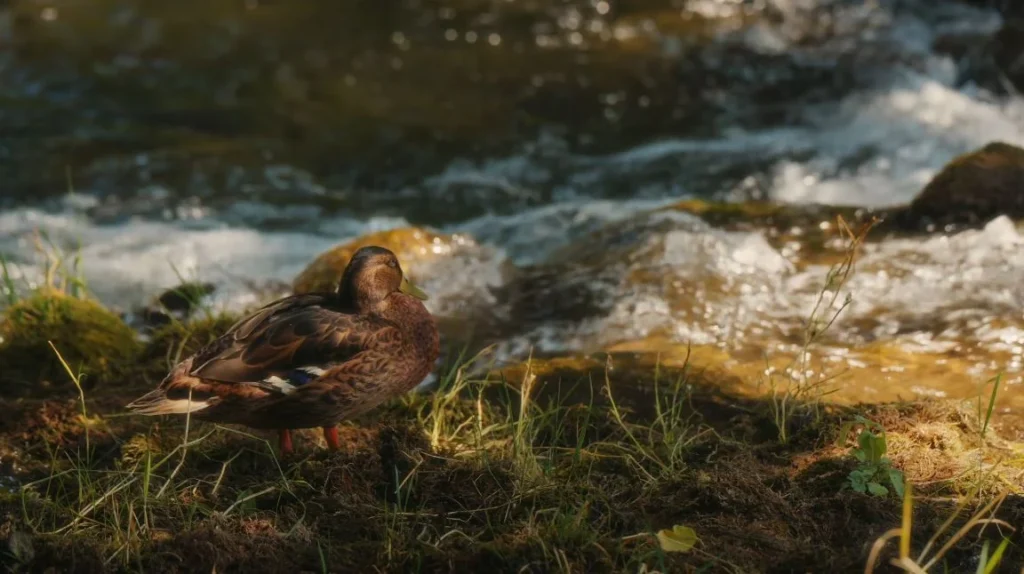
At one point I stopped to watch a duck just… existing. Standing by the falls, totally unbothered by the tourists shuffling past.
And then the main falls.
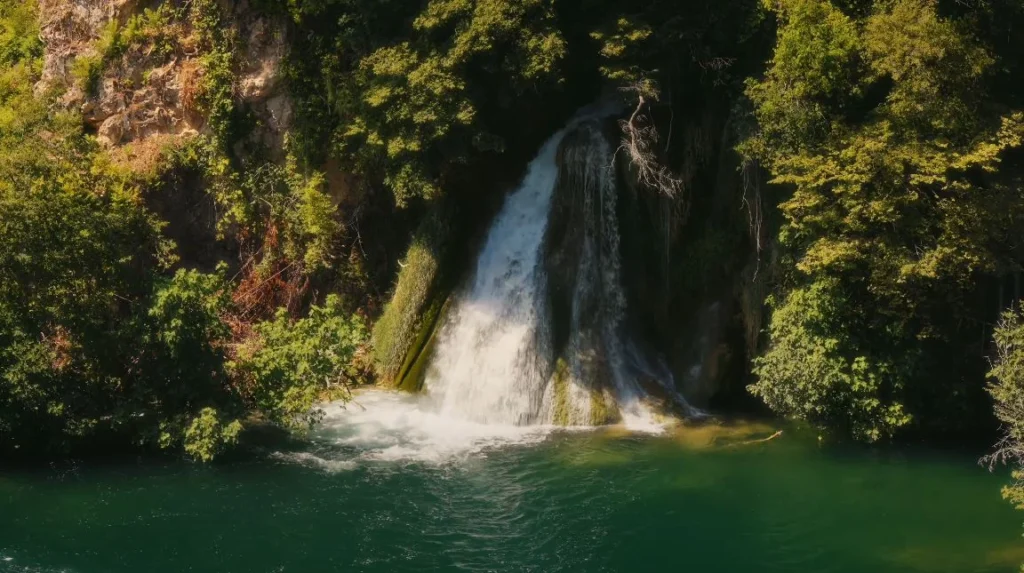
Obviously, the sound is not captured by photos. Or the fog upon your face when you come near. Or how the green of the pool is almost unnatural so that someone has turned the saturation.
Krka vs. Plitvice: Rapid Comparison
| Krka | Plitvice | |
| Distance from Split | ~80 km (1 hour) | ~250 km (2.5 hours) |
| Swimming Allowed | Yes (designated areas) | No |
| Crowds | Busy, but manageable | Very crowded in peak season |
| Main Feature | Skradinski Buk waterfall | 16 interconnected lakes |
| UNESCO Status | No | Yes (since 1979) |
| My Take | Easier day trip from Split | Worth it if you have more time |
Day Trip to Mostar: Bosnia
I almost didn’t do this. To introduce a new country seemed to make it too complicated. But Split is just around 2.5 hours away of Mostar, and all of the people I discussed it with told me to go.
So I went.
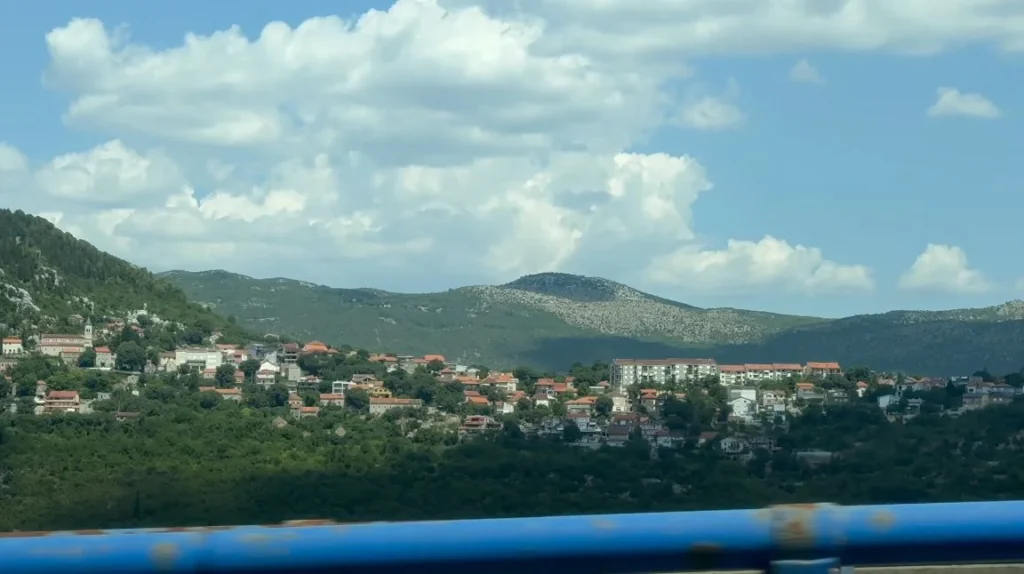
The experience includes its drive itself. You abandon the Croatian coast, venture up into the mountains and the landscape is changed. Greener. Rougher. You cross the border- passport inspection, nothing dramatic, and next you can see the signs in Cyrillic and Latin characters. Villages begin to have minarets. The architecture changes.
The Old Bridge and the Bazaar
Mostar is there due to Stari Most -the Old Bridge. The first one was constructed in 1566 by the Ottoman architects and was in use more than four hundred years during which it served to bridge the two halves of the city on the Neretva River. Then it was destroyed in 1993 in the Bosnian War by Croatian forces. The bridge which survived earthquakes, floods and centuries of use was erased in just an afternoon.
They rebuilt it. Opened in 2004, it was built with the same local stone, with the same Ottoman methods wherever feasible. It is no longer only an object of monuments on the list of UNESCO but also a symbol of reconciliation.
I stood on it for a while. The rock is greasy–slicked off by millions of feet. Beneath, the Neretva is running wild and green. Young men plunge off the bridge to take tips. It seemed to be a centuries-old tradition, yet I was not able to observe. The drop is 24 meters.
The bridge surrounds an Old Town that is like going backwards. Paving, stone construction of the Ottoman era, copper smiths at their small workstations. The bazaar stretches all around the bridge-scarves, jewellery, Turkish coffee sets, the ornamental plates so much beloved by tourists.
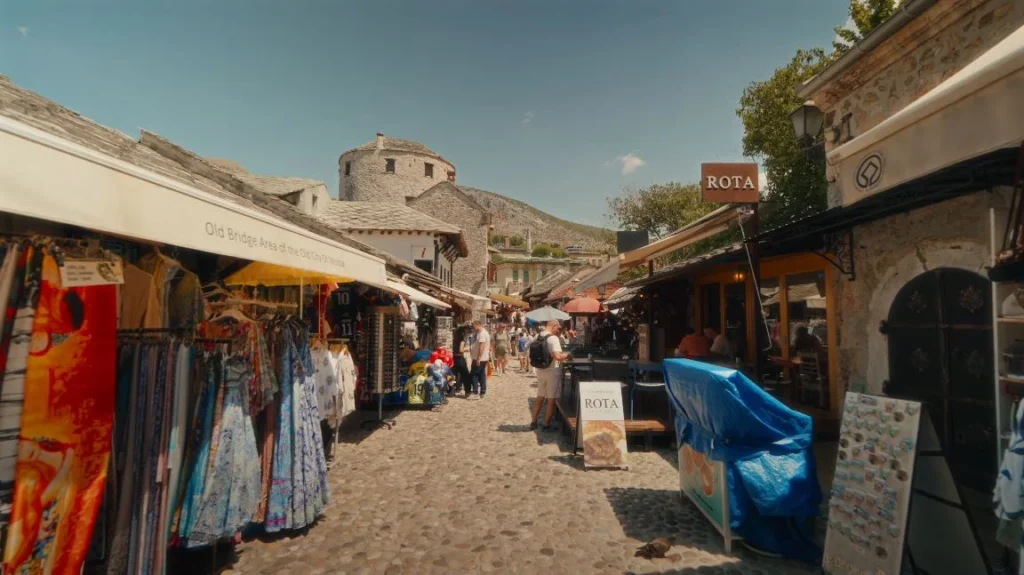
I bought a small copper coffee pot. Haggled badly. The seller and I both knew I was going to pay what he wanted anyway.
What Struck Me About Mostar
It’s not just pretty. There’s weight here. Some buildings are still made with bullet holes. One will find a mosque in perfect reconstruction, and the other one is a shell that has been bombed and nobody has repaired it during the last thirty years. It is felt in 1995, yet the war ended.
A local I chatted with over coffee put it simply: “We rebuilt the bridge. The rest takes longer.”
| Mostar Snapshot | |
| Country | Bosnia and Herzegovina |
| Famous For | Stari Most (Old Bridge) |
| Bridge Originally Built | 1566 (Ottoman Empire) |
| Destroyed | November 9, 1993 |
| Rebuilt & Reopened | July 23, 2004 |
| UNESCO Status | Listed since 2005 |
| Distance from Split | ~130 km (2–2.5 hours by car) |
The Bridge of the Pelješac: Croatia: the New Shortcut
Yet when you pass Mostar on your way back–or when you go to Dubrovski–you will probably pass the Pelješac Bridge. This was only opened in 2022 and it is a big deal.
This is what happened: the coastline of Croatia is interrupted by a small bit of Bosnia. Approximately, 20 kilometers of the territory of the Bosnian is crossed, and it simply signifies that in order to drive between Split and Dubrovski you had to cross two international borders before. Passport checks. Potential delays. In peak summer, a nightmare.
All of that is bypassed on the Pelješac Bridge. It links the mainland of Croatia with the Pelješac peninsula with no Bosnian passage. Most of it was funded by EU 85 percent of the total of the 526 million. Construction time on the building was approximately four years.
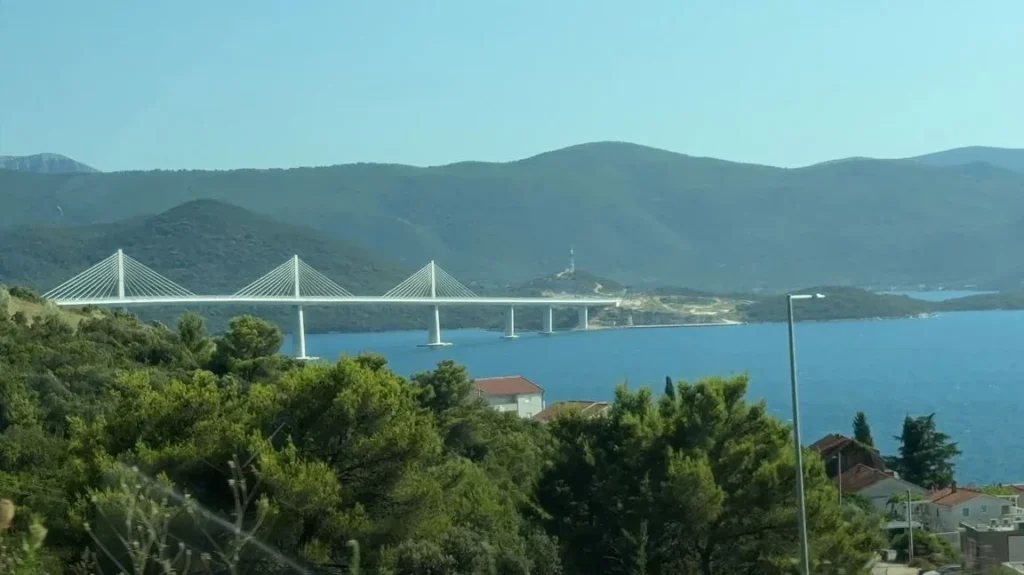
As you cross over, you have this expansive view of blue water, mountains and the white cables of the bridge waving over your head. It is 2.4 kilometers in length, in cable-stayed design, true genius engineering. Yet also: it is nice not to pull over on the border control when you are in a hurry to get somewhere.
Practical Stuff: What I Spent, What I Learned
I’m not going to break down every coffee and bus ticket, but here’s roughly what a week like this costs. Your numbers will vary depending on how you travel.
Budget (Assuming 7 days, solo traveler)
| Category | Approximate Cost (USD) |
| Accommodation (mid-range) | $700–$900 |
| Rental Car (7 days + fuel) | $250–$350 |
| Food & Drink | $300–$400 |
| Krka National Park Entry | $35 (summer high season) |
| Mostar Day Trip (self-drive) | Gas + ~$5 Bosnian coffee |
| Miscellaneous (souvenirs, tips) | $100–$150 |
| Total | $1,400–$1,850 |
You might do it on the cheaper, hostels, buses, less eating out. You could also spend way more. Split is not short of luxurious hotels and restaurants which will gladly accept the cash.
A Few Things I Would Have Done Different.
- Start earlier for Krka. I got there mid-morning and it was already crowded. The park opens at 8 AM in summer. Be there when the gates open.
- Bring cash into Bosnia. Card acceptance is hit or miss in Mostar’s Old Town. The currency is the convertible mark (BAM), but many places take euros. I used euros. Still, cash is king.
- Don’t skip the Pelješac peninsula itself. I only crossed the bridge; I didn’t explore. Locals told me the wine there—especially the Dingač reds—is some of Croatia’s best. Next time.
- Learn three words of Croatian. “Hvala” (thank you), “Molim” (please/you’re welcome), “Dobar dan” (good day). People appreciate it. They’ll still reply in English, but they appreciate it.
Final Thoughts
Croatia is crowded. I won’t pretend otherwise. Dubrovnik is a zoo in summer. Split gets packed. Even Krka had moments where I was shuffling behind tour groups on the boardwalks.
But then you find a quiet corner in Diocletian’s cellars. Or you’re on a boat at 9 AM with mist rising off the Krka River and nobody talking. Or you’re standing on a bridge in Mostar that was destroyed and rebuilt and is still standing.
That’s what I’ll remember. Not the crowds. The weird, layered history of it all. Roman emperors and Ottoman architects and wars that happened in my lifetime and a brand-new EU-funded bridge and a duck just standing by a waterfall.
I’ll go back. Maybe in the shoulder season next time. Maybe I’ll actually make it to Dubrovnik instead of just driving past. But Split—Split I’ll definitely see again.