
I’d seen Socotra in photographs for years. Those umbrella-shaped trees, that water too blue to be real. I figured there was heavy editing involved. Some Instagram filter magic. Then I actually went.
Turns out the photos don’t do it justice. They can’t. Socotra doesn’t photograph like a real place because it doesn’t feel like one either. UNESCO calls it a World Heritage Site with “universal outstanding value.” Scientists call it the “Galápagos of the Indian Ocean.” I’m calling it the strangest, most beautiful week of my life.
Why Socotra Feels Like Another Planet
That is why this island found its way on every list of the most alien places on the Earth that you have ever scroll through. Its plant species are around 37 percent and can be found nowhere on this planet. Not a single other place. Isolation This separation of the Socotra archipelago with the mainland of Africa happened 6 million years ago the Socotra geological unit formed a form of an evolutionary pressure cooker.
The result? There are trees that resemble those in a Dr. Seuss book. Birds grew without predators, forgot how sheep were. Beaches over which there were no footprints.
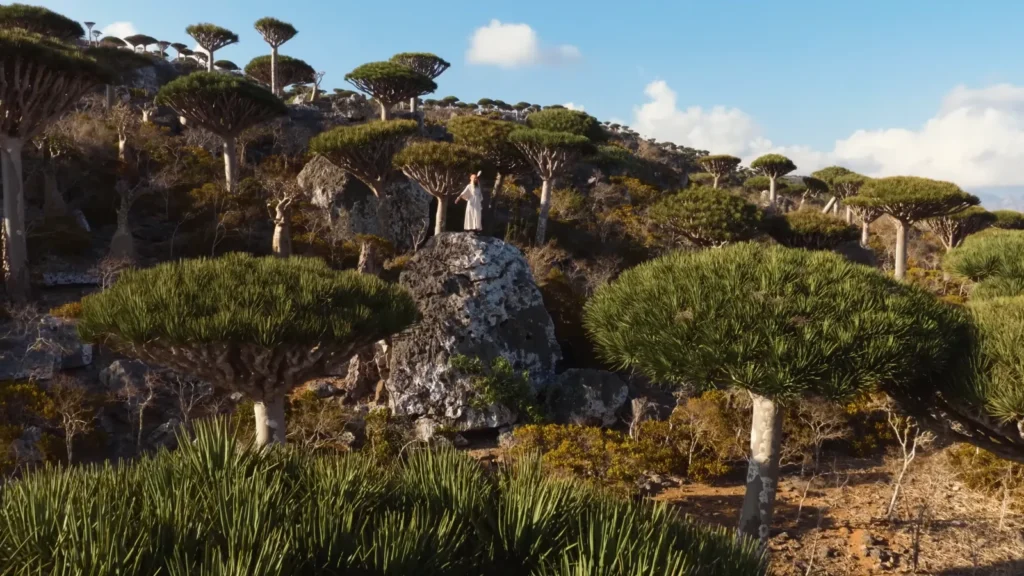
I came in anticipating alien scenery. What struck me was that it was so quiet. No tour buses. No masses of people pushing against the same Instagram photo. Good wind, waves and the goat coming at you every now and then like you are the one who is strange.
| Socotra Quick Facts | |
| Location | Yemen, Arabian Sea |
| Size | 3,625 km² (largest of 4 islands) |
| Population | ~60,000 (mostly Socotri people) |
| UNESCO Status | World Heritage Site since 2008 |
| Endemic Species | 700+ found nowhere else |
| Best Season | October – April |
Travelling to Socotra: Not as Impossible as You Might Think
To tell the truth, the logistics put me off. The civil war in Yemen, flights, visa situation. I was half persuading myself it was not worth the trouble.
It absolutely is.
The island is slightly autonomous of the ills on mainland Yemen. Yemenia Airways operates flights on Abu Dhabi and Cairo but with varied timetables. At the time that I was there, the Abu Dhabi route was operating twice a week. A visa is going to be required organized by a local tour operator, and solitary independent travel is not really an option, but this was actually alright. My guide was aware of places where I could not have discovered myself alone.
Practical breakdown:
- Flights: Abu Dhabi → Socotra (roughly 2.5 hours) or Cairo → Socotra.
- Visa: It can be arranged by tour operator, and it costs between 50-100 USD.
- Touring: Essential local guide to every visitor.
- Distance: The average duration of the tours is 7-10 days.
- Cost: Budget $150-250/day including guide, transport, camping, meals.
The infrastructure is basic. This is, we are speaking of camping the majority of the time, no electricity and no ATMs on the island. Carry cash (USD works), and change your expectations. This isn’t Bali. That’s precisely the point.
The Diksam Plateau Dragon Blood Trees
All people visit Socotra because of these trees. I get it.
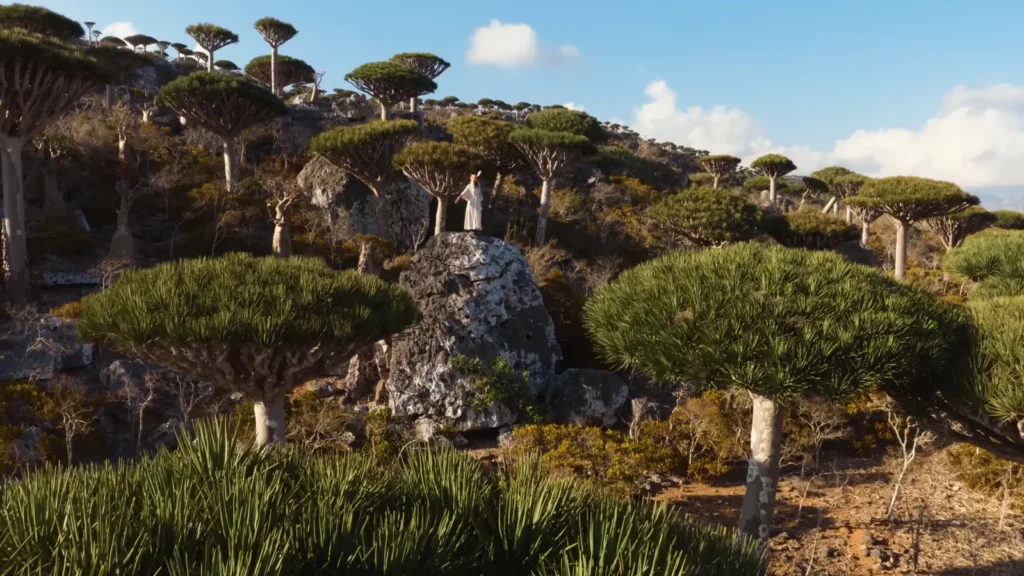
Dracaena cinnabari – the dragon blood tree – is a shrub growing in the extensive group in the Diksam Plateau in the center of the island. Their covers resemble turned-upside-down umbrellas, which have been developed throughout a thousand years to absorb the moisture in the fog that flows between the mountains. The sap of the red, which bloodshed on your bark? That is the blood of the dragon – dye, medicine and incense since time immemorial. It was a valuable trade commodity of the ancient Romans.
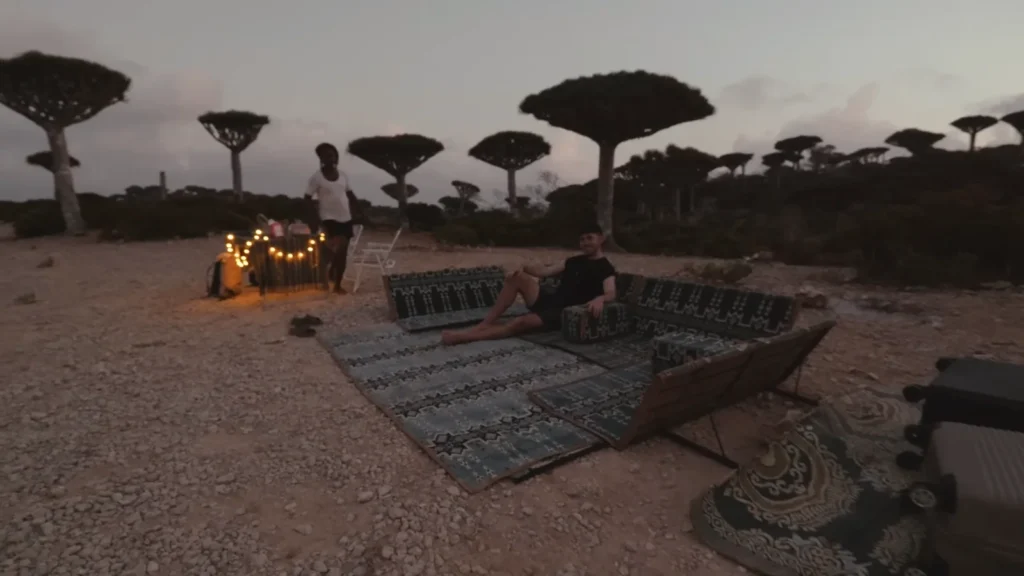
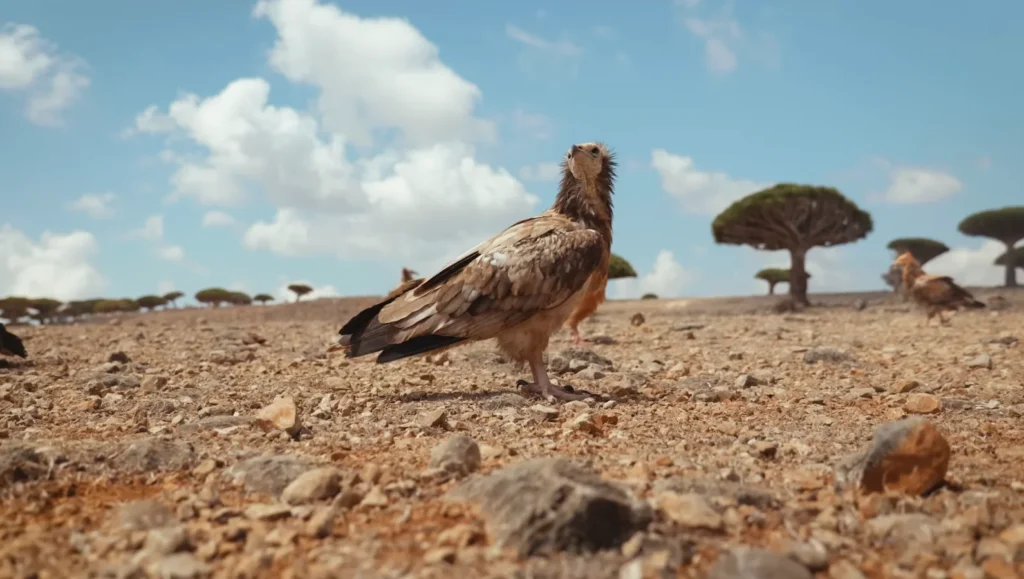
It is prehistoric to be under them. The place is all loose gravel and scrub. Vultures fly around with such, Egyptian vultures they are whitish with black tips of their wings, and there are no worries about them since they do not bother people going down the street.
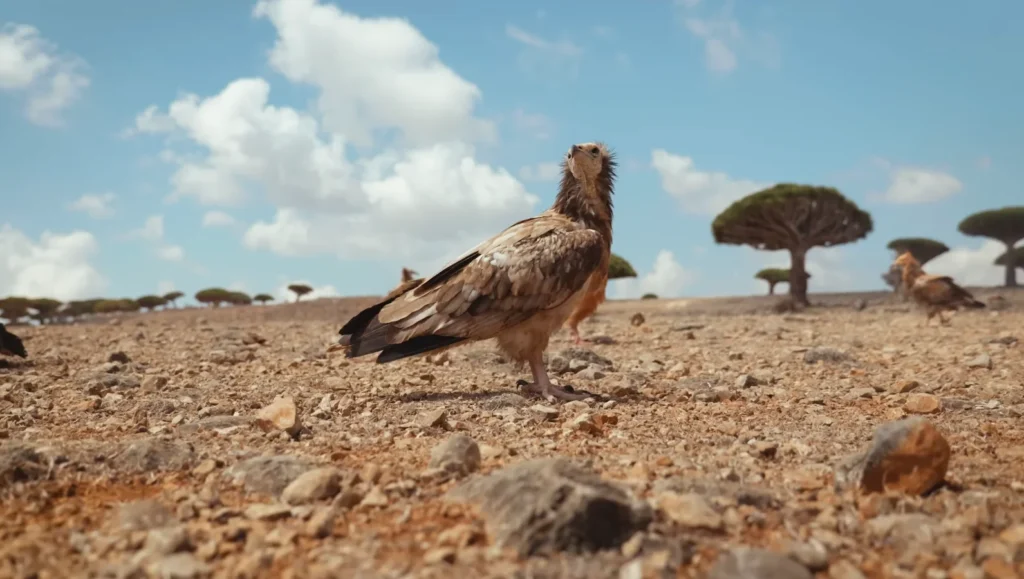
One evening my guide pitched camp in a place where the trees had been cut down. Pillows on the gravel floor, strands of lights that run off of a small generator, tea boiling on a blaze of fire. We sat there as the sun was going down and the entire forest was turned gold then purple and then black. No light pollution. Just pierces those alien figures.
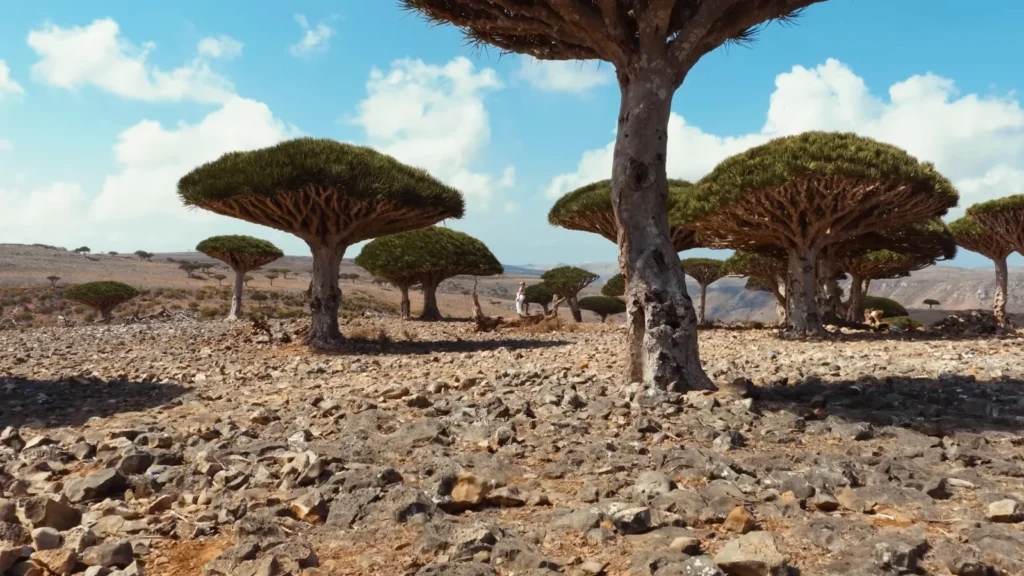
What struck me wasn’t just the trees themselves but the silence between them. No engine noise. No distant traffic. Just wind moving through branches that haven’t changed their shape in millions of years.
What You’ll Find at Diksam:
- Dragon blood tree forests (densest concentration on the island).
- Egyptian vultures and endemic bird species.
- Rocky hiking trails with panoramic viewpoints.
- Traditional Bedouin-style camping experiences.
- Bottle trees (Adenium obesum socotranum) scattered among the rocks.
Arher Dunes: Where the Desert Meets the Sea
I couldn’t wrap my head around Arher until I saw it in person.
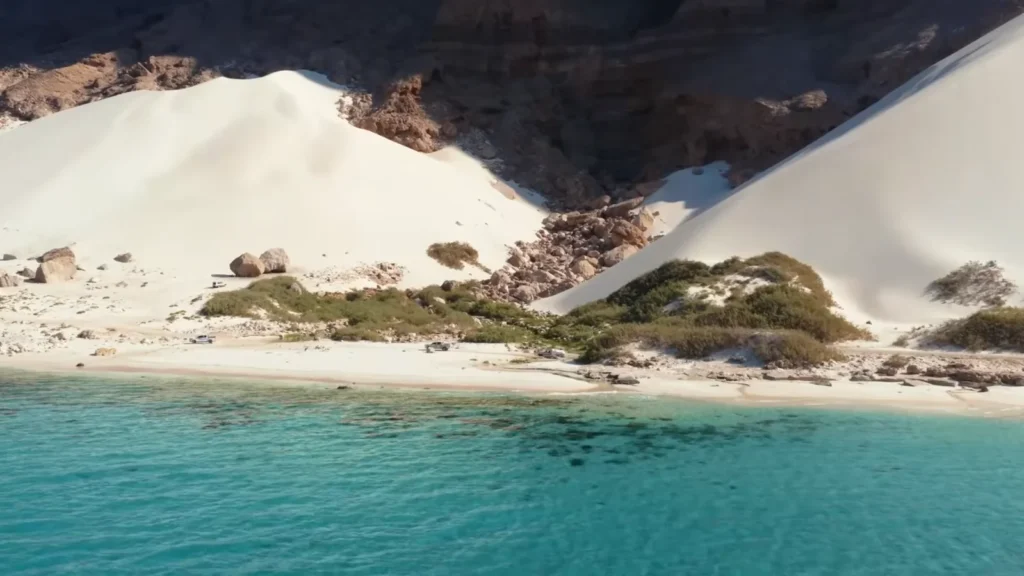
White sand dunes — massive ones, with rippled textures like frozen waves — dropping directly into turquoise water. Mountains rising behind. It’s three ecosystems colliding in a single frame, and none of them should logically coexist.
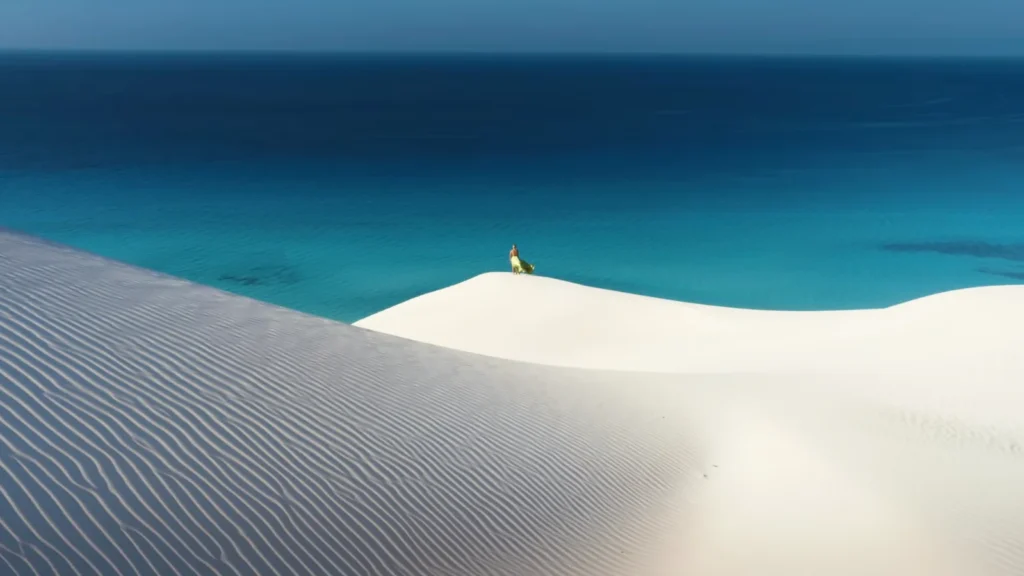
The road to Arher is by the North coast of the Island. We went past fishing towns, limestone cliffs, water so clear it would have been seen through the road. then the dunes are seen off the coast, like a mirage of some kind.
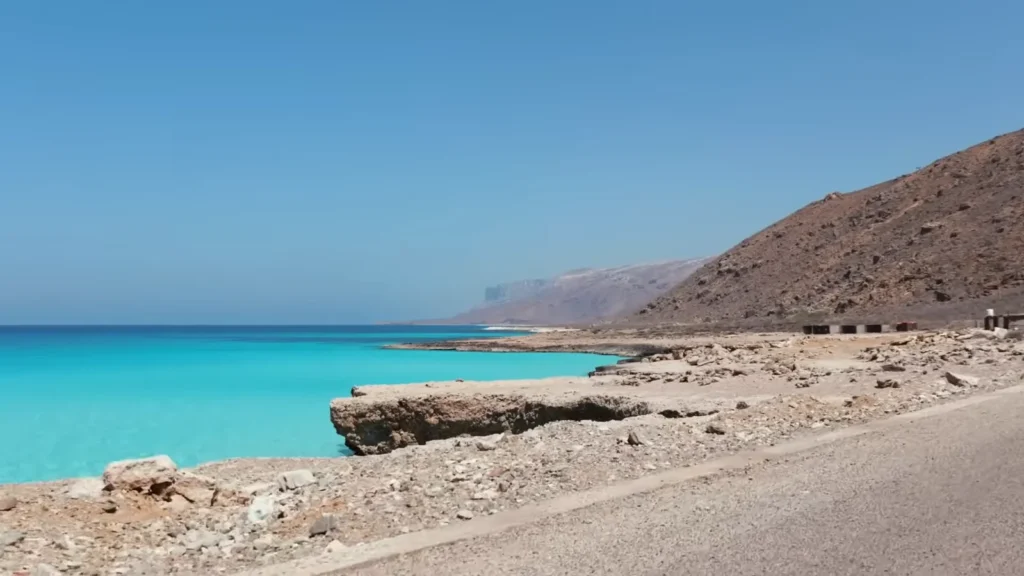
Climbing them is harder than it looks. Two steps up, slide one step back. The sand stays surprisingly cool in the morning but heats up fast once the sun’s overhead. I’d recommend getting there early. By noon, I was regretting every life choice that led me to climb in sandals.
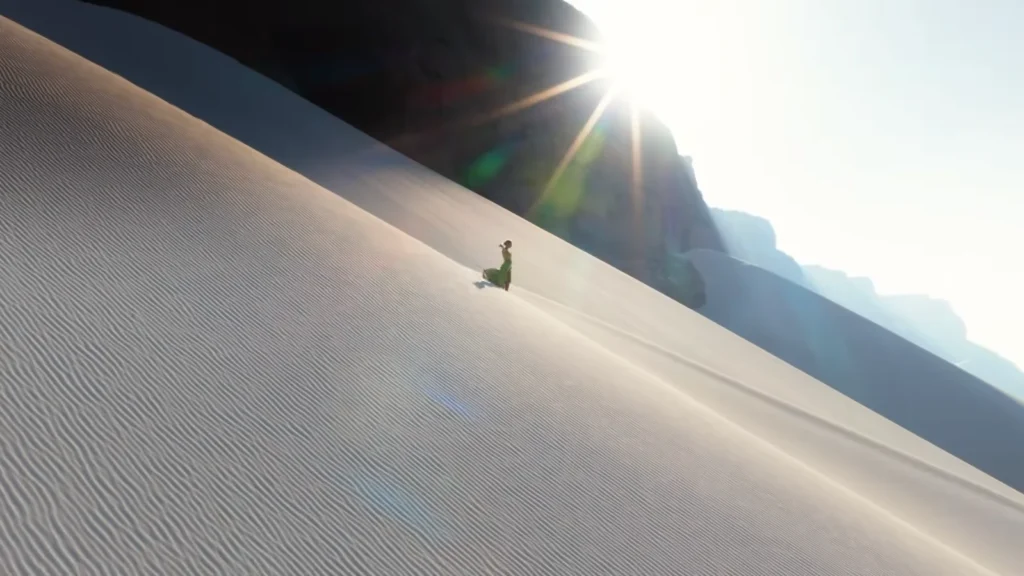
At the summit you have a view of the entire bay. Fishing boats were anchored out to sea. Some tents at the foot of the dune where the passers over stay. The deep blue and turquoise colors alternate with the depth of the water. I sat there at least an hour and just watched the color change.
Zahek Dunes: The Inland Desert
Arher gets all the attention because of that ocean backdrop. But Zahek? Zahek is where you feel truly alone.
These dunes sit inland, surrounded by flat scrubland and distant brown mountains. No sea breeze. No fishing boats. Just sand stretching toward the horizon like something out of the Empty Quarter. The difference hit me immediately — Arher feels like a postcard, Zahek feels like the middle of nowhere.
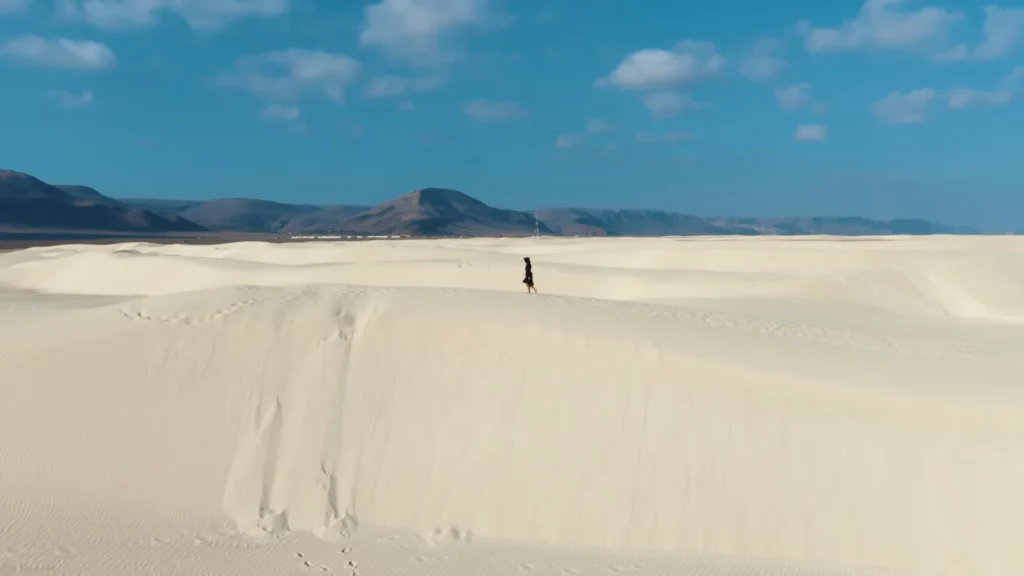
It was, perhaps, forty minutes of level, rocky country, then we began to see the white in the distance. I myself thought, I thought, that it was a kind of a light effect. Then the dunes came up as a wall, so unbelievably bright against the brown landscape of which they were part.
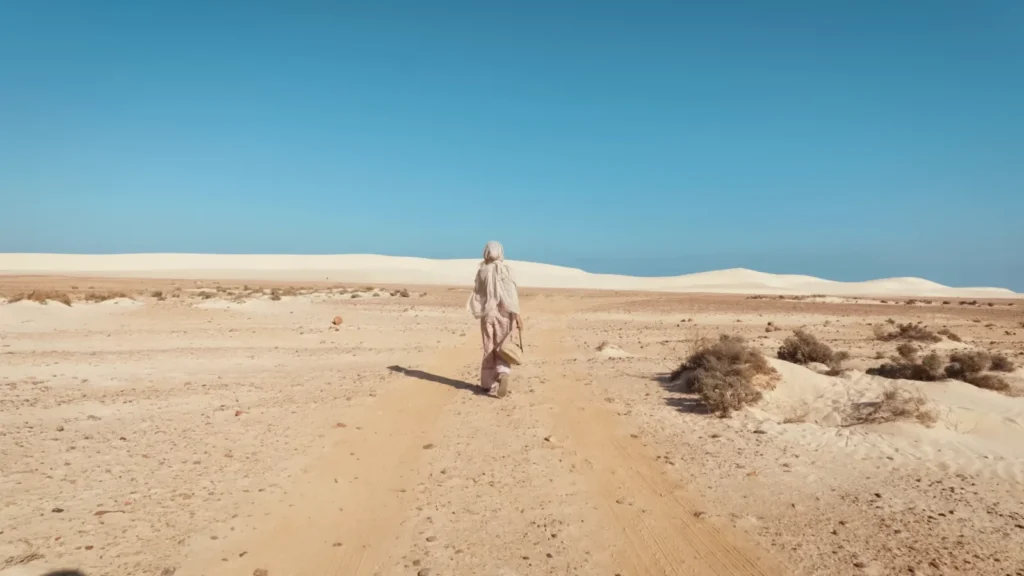
My guide took me to meet a local Socotri man who has camels close to the dunes. White-beard, calloused hands, turban tied loosely round the sun. He did not talk much English but pointed to me to be seated. We had tea, and his camel was standing there looking about him very likely vexed at the entire thing.
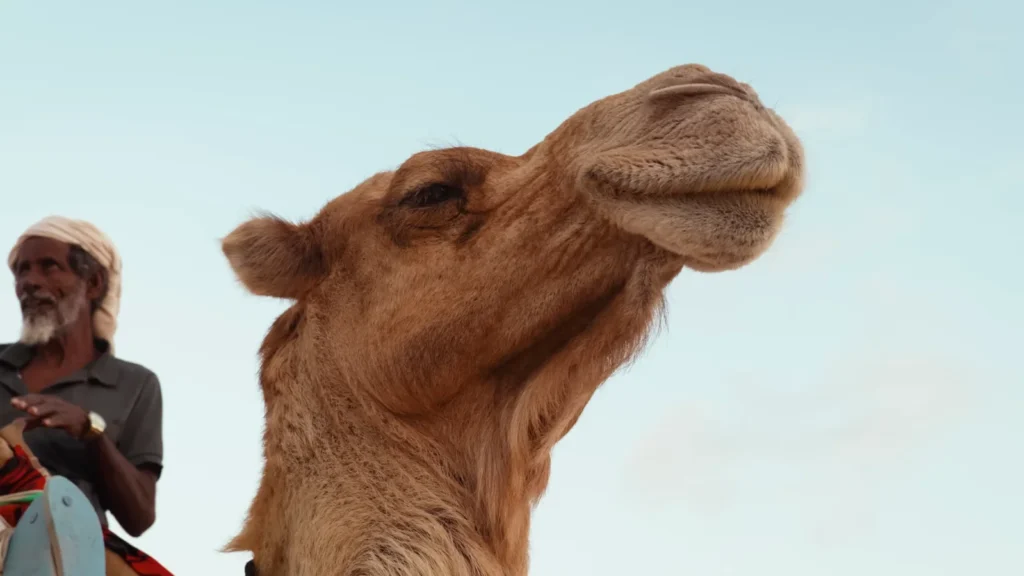
That experience remained with me than the dunes. Socotra has an approximate population of 60,000 with the majority having an identical pastoral life as their families have had over the generations. Goats, camels, fishing. The tourism phenomenon is fresh here. There is no theatrics to it, the hospitality is authentic since that is the way things operate.
Arher vs. Zahek: Which Dunes Should You Visit?
| Arher Dunes | Zahek Dunes | |
| Setting | Coastal — dunes meet ocean | Inland — surrounded by desert |
| Vibe | Dramatic, photogenic | Remote, meditative |
| Crowds | More visited (relatively) | Virtually empty |
| Activities | Swimming, camping on beach | Camel encounters, solitude |
| Best for | Photographers, beach lovers | Those seeking isolation |
Honestly? Do both. They’re completely different experiences wearing the same white-sand costume.
Detwah Lagoon: Postcard Views and Stubborn Goats
In the event that there is a greatest hits spot in Socotra, the place could be Detwah.
The lagoon is on the west end of the island–a lee shore, a curving shallow water, with a sandy beach in the rear and rocky mountains and isolated dwellings. The aerial view looks fake. that tint of pallid turquoise and deep blue, the ideal crescent of sand, the fishing boats on the water. It’s almost too much.
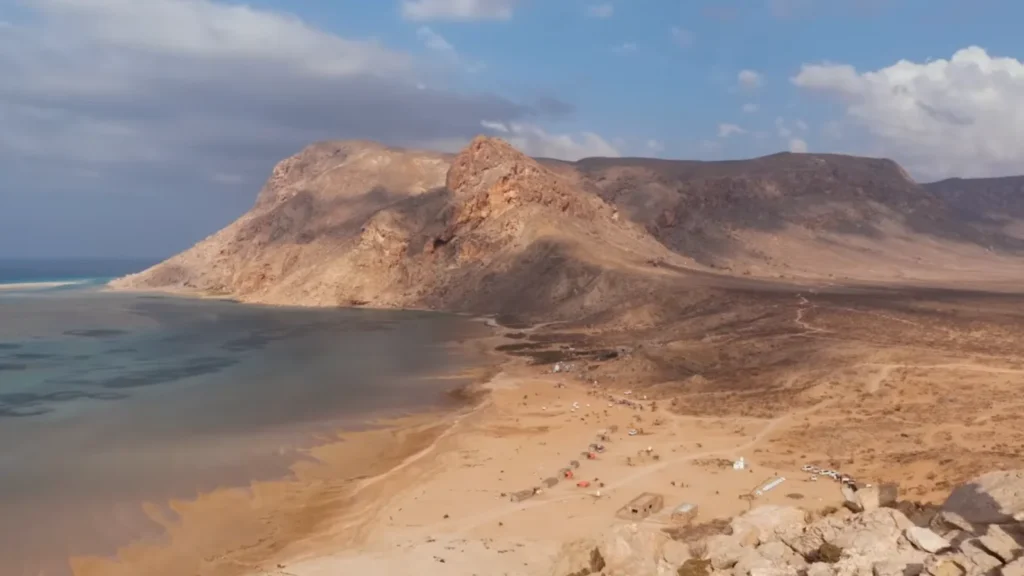
I spent a full day here. bathe in the shallow waters of the lagoon. Went on a boat trip with one of the fishermen on the coast and he showed me the best places to snorkel and grumbled about fuel costs. Saw a goat come right into my lunch set up and decline to go.
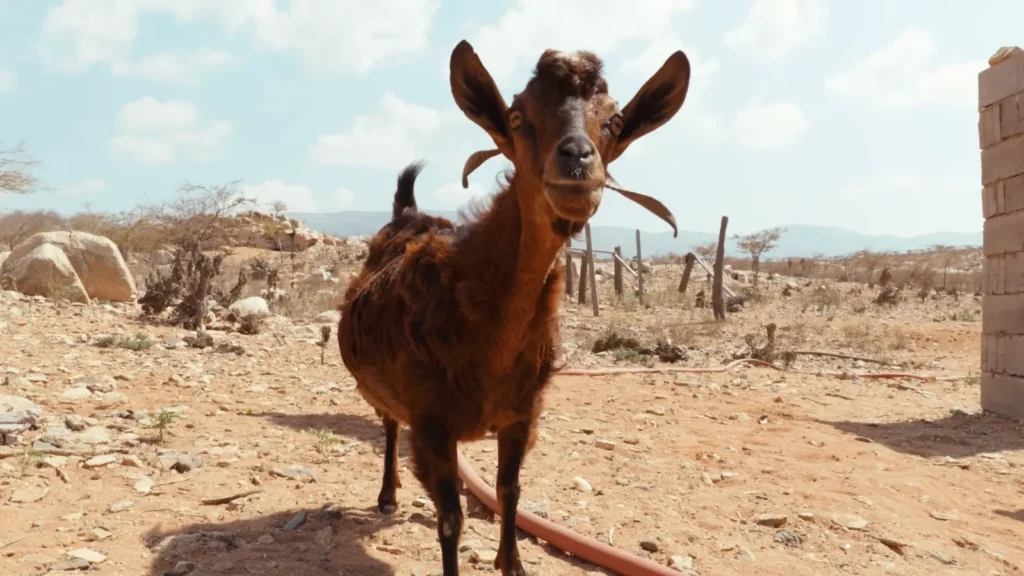
Incidentally, that goat did not fear anything. Just stood there with his mouth open chewing on something, and he looked me down like I was the outcast. Which, fair enough, I was.
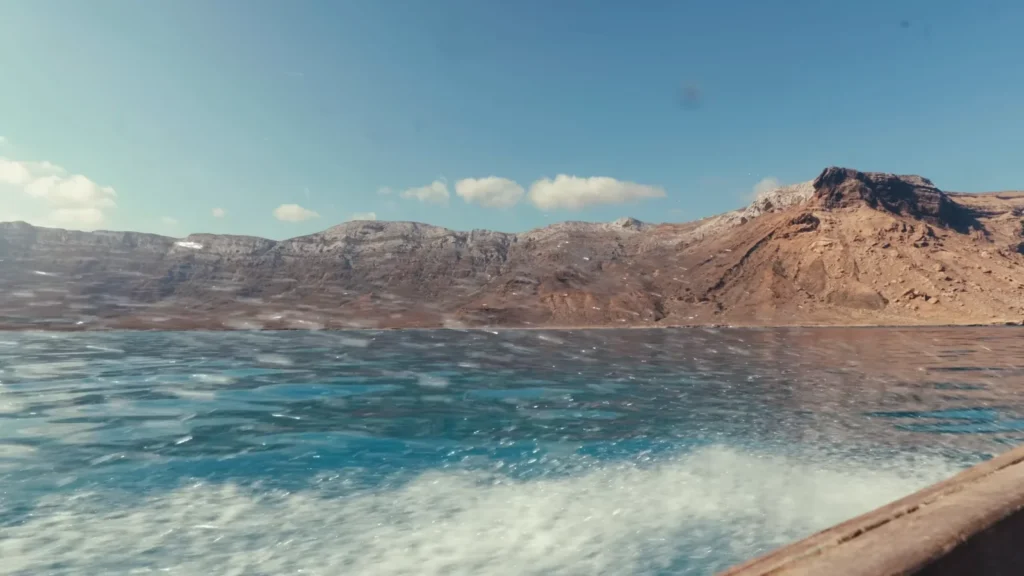
The boat tour showed me portions of the coastline that I would have not been able to view. Cliffs falling into clear water, little caves cut out of the rock, the dolphin pod now and then bursting into the water in the distance. At one moment my captain turned off the engine and we simply sailed on, without making any sound except the water bumping against the hull.
What Detwah offers:
- Calm, swimmable lagoon waters.
- Local boat tours along the coast.
- Camping spots directly on the beach.
- Fishing village atmosphere.
- Mountain hiking nearby.
- Goats with strong personalities.
Wadi Kalissan: Swimming in Prehistoric Pools
I’d seen photos of Wadi Kalissan before arriving, but the context was always cropped out. Just emerald water, white limestone, maybe a swimmer for scale. What the photos missed was everything surrounding it.
The wadi is located in a canyon made by the flow of the water in the past. Natural pools are enclosed by white rock formations, which have been shaped and chiseled through thousands of years. The temperature of the water remains low even when the air above is 35o C. However, here is the point: bottle trees are in those pools.
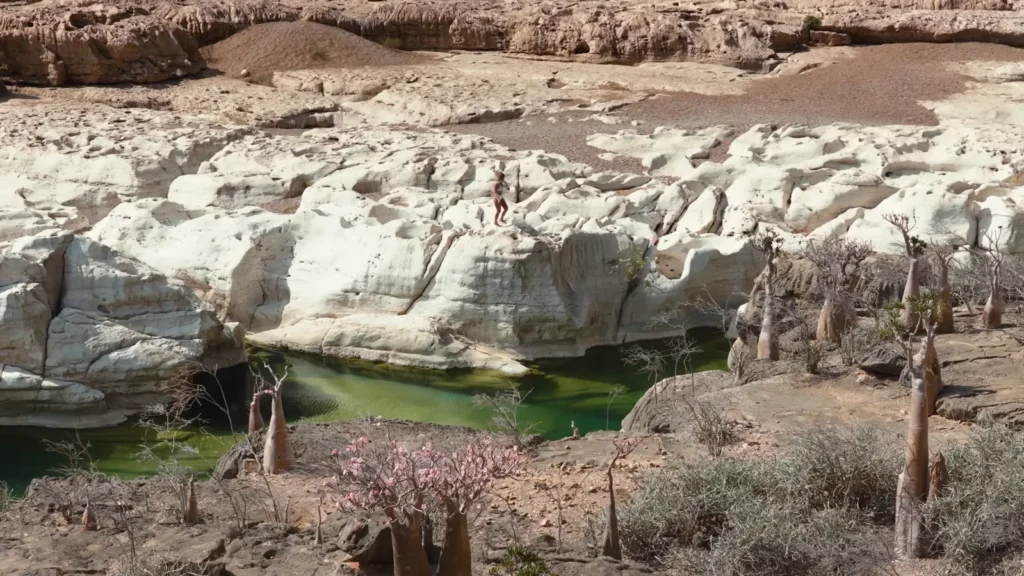
Adenium obesum socotranum. The desert rose. Fat, bulbous water storing trunks to survive the dry season, crowned by thin branches and pink flowers. They appear like the one that a child would draw when asked to come up with a tree. And they are all about this wadi, creeping out of fissures in the rock, and adhering on sides that appear too steep to have any living creature on them.
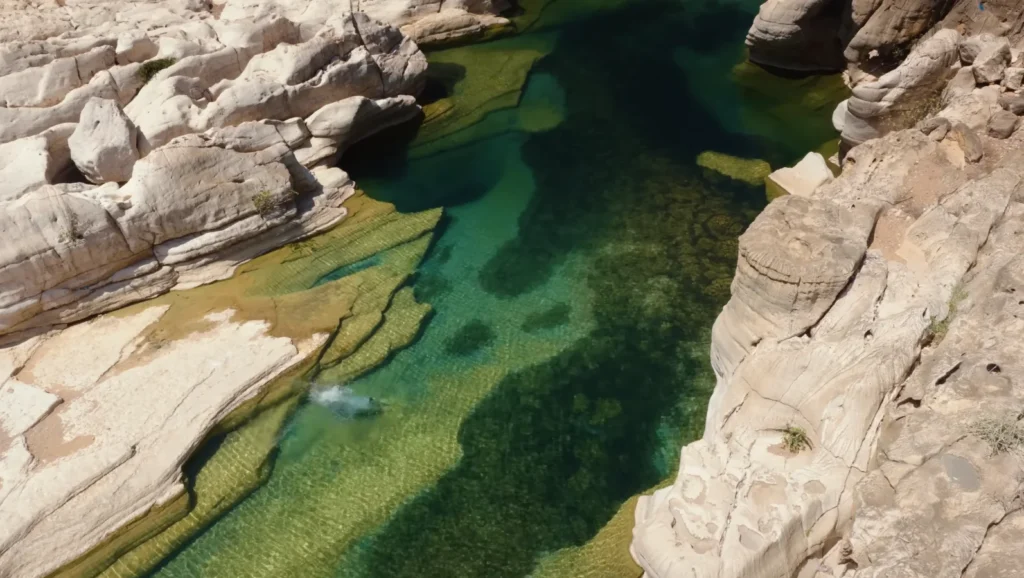
I swam for probably an hour. It was the right water temperature where one does not want to leave it. Limestone creams on my feet. Over my head, the impossible trees. Some other passengers were floating around but somehow there was intimacy in the space. Sacred, nearly, but that does not sound dramatic enough.
It takes approximately half an hour of downhill hiking through the wadi since the vehicles are parked there. Rocky, did-doss ground – good foot-wear is an issue. But the compensation is all stumbling over.
Dugub Cave: Cathedral of Stone
Nobody tells you about the scale.
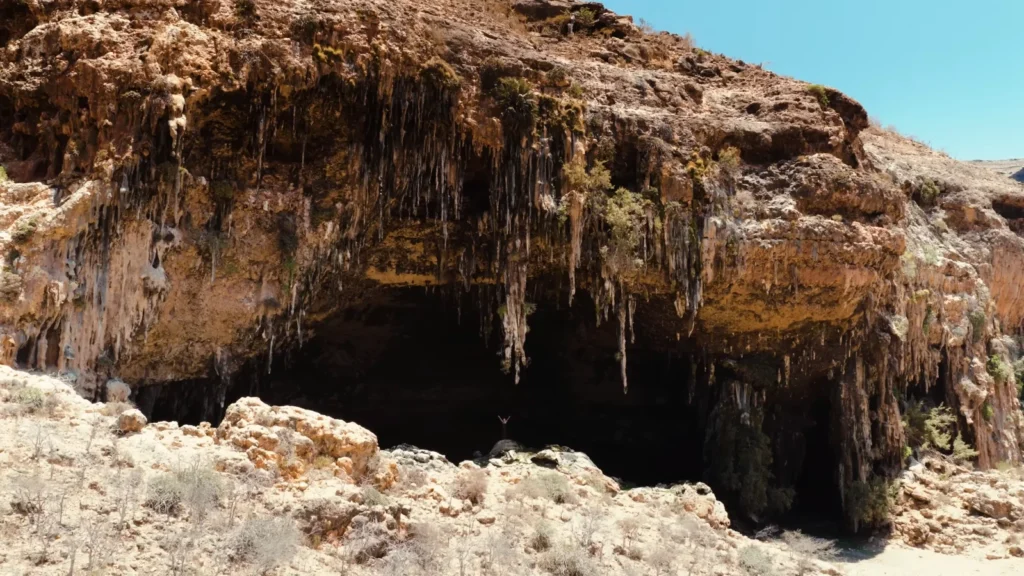
Dugub Cave is located on the eastern side of the island and it is cut into a cliff face which rises rust-red and orange against blue sky. It resembles a shadow on the rock at a distance. Then you move still nearer, and see that the aperture is enormous, the stalactites can fit a building, it hangs down as though it were frozen in the middle of a collapse.
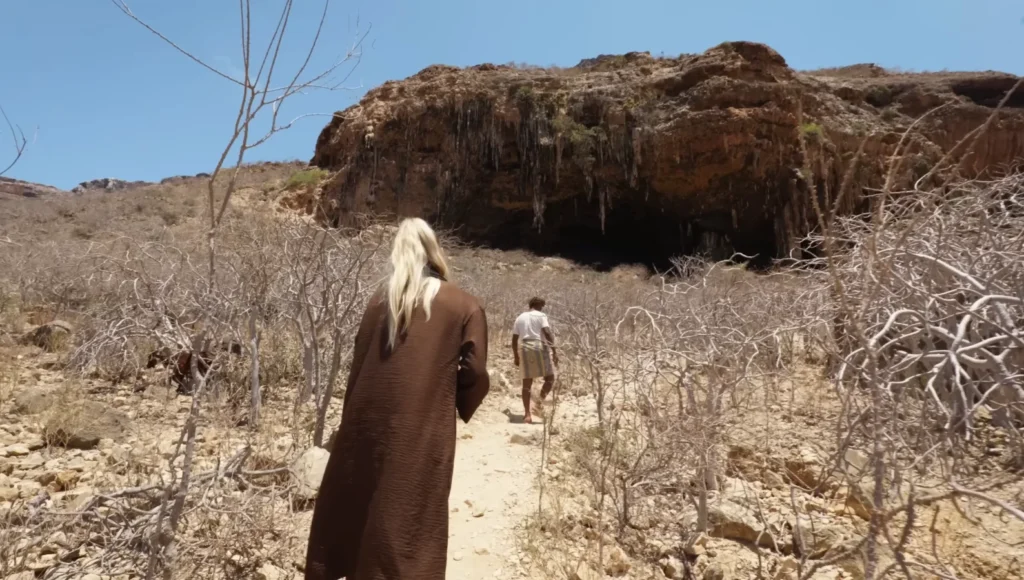
The style goes through dry scrubland scrubby with bones trees – most likely frankincense trees, which have been stripped bare during the dry season. My guide went on before, indicating tracks of animals in the dust. Goats again, apparently. They’re everywhere.
The temperature is at once lowered indoors. That cave mouth like a natural air conditioner pulls the cool air somewhere in the depth of the rock. The ground is sandy-boulder-strewn, and rays of light are streaming through holes in the roof. Goats roam about in the shadows they take shelter in the cave when it is hotest of the day.
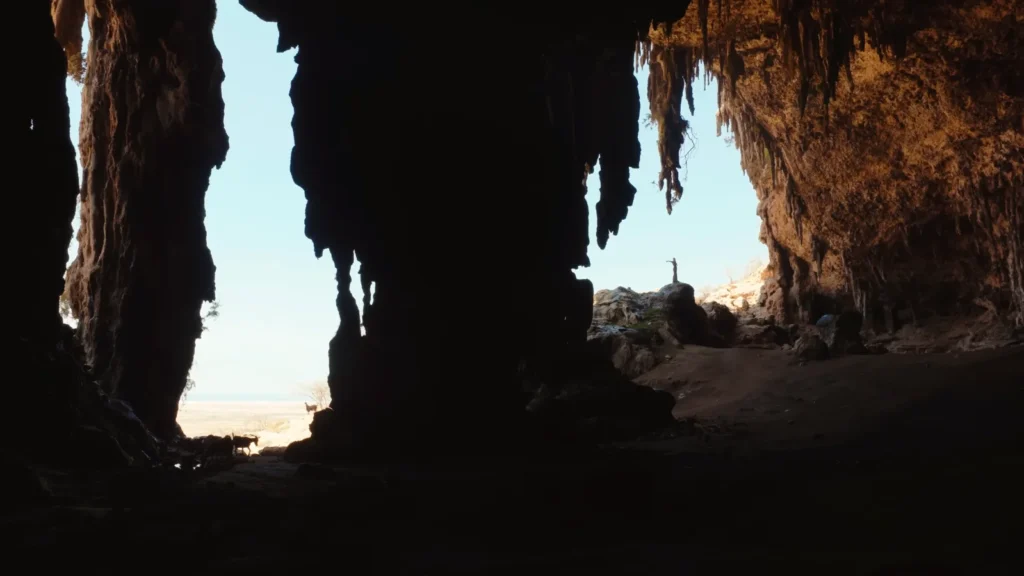
Standing in the center, I felt the kind of smallness that only geology can produce. This cave existed millions of years before humans arrived. It’ll exist millions of years after we’re gone. The goats seemed unimpressed by this observation. They kept chewing.
Shoab Coast: The Beach at the End of the World
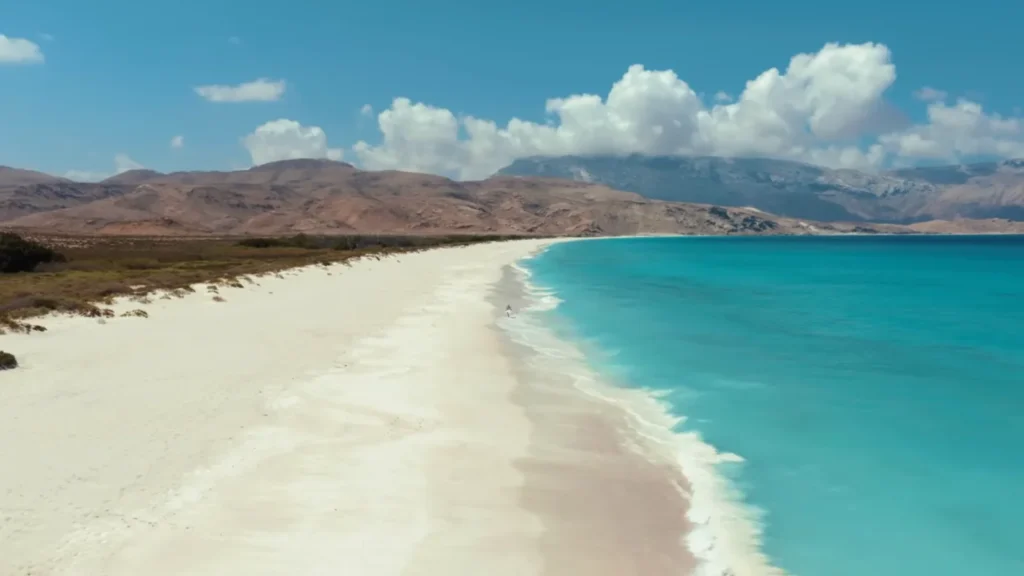
To reach the Shoab Beach it takes a boat. No road, only precipices falling in turquoise water, which can only be reached by sea. It is that very isolation which is the point.
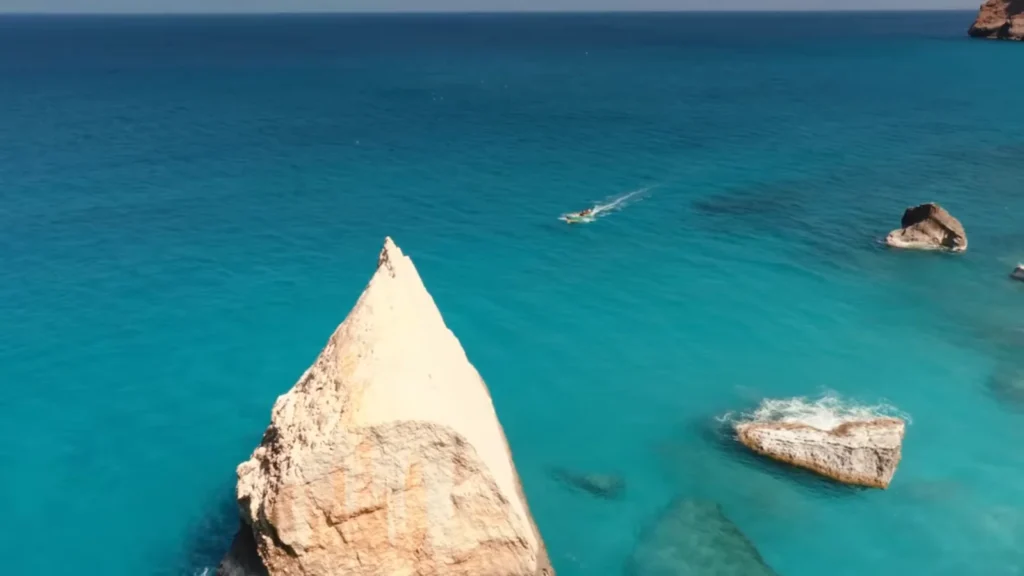
The trip there itself was included in the experience. We sailed on the North coast, by its craggy formations that stuck out of the water like the teeth of a saw. The spire shape of limestone, sharp and pointed in one of the bays, was almost artificial, too perfect, too symmetrical. Nay, only Socotra was Socotra.
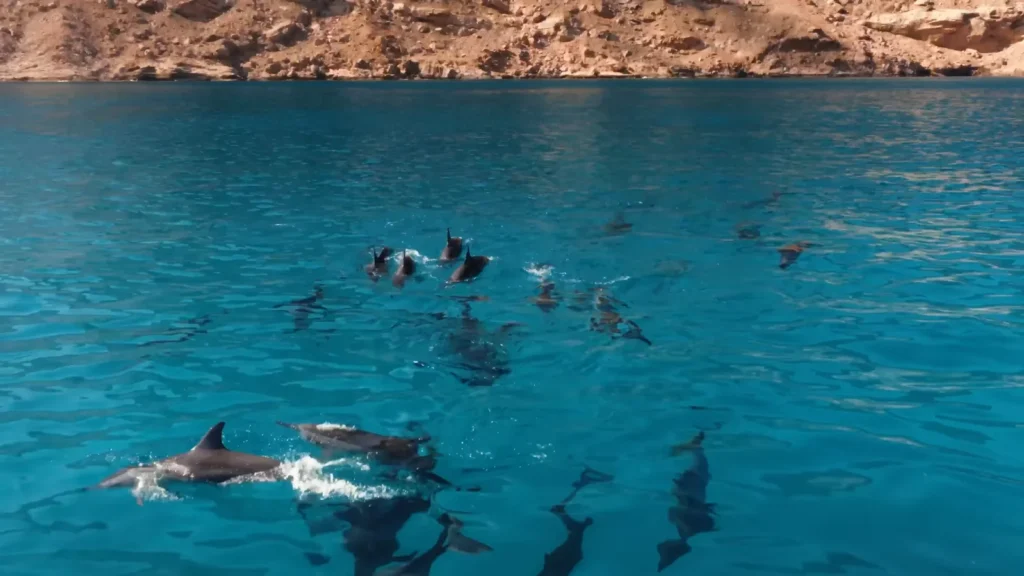
Then the dolphins showed up.
A whole pod, maybe fifteen or twenty, surfacing alongside the boat and disappearing again. My captain barely reacted — apparently this happens regularly here. But I stood at the bow grinning like an idiot, watching dorsal fins arc through water so clear I could see their whole bodies beneath the surface.
Shoab Beach itself is a long white crescent backed by mountains. Empty when we arrived. Empty when we left. I swam, ate lunch in the shade of a rock overhang, and watched the light shift across the water for hours. Nothing else to do. Nothing else needed.
Wildlife Encounters: More Than Just Trees
Socotra’s fame rests on those dragon blood trees, but the wildlife caught me off guard.
The endemic species count here is staggering. Over 700 species found nowhere else — not just plants but birds, reptiles, insects, marine life. The island’s long isolation created an evolutionary playground. Things got weird. Wonderfully weird.
Egyptian vultures patrol the dragon blood forests, white feathers stark against the rocky ground. I watched one for twenty minutes near Diksam, hopping between stones, completely indifferent to the humans nearby. These birds use tools — they’ll crack ostrich eggs with rocks. On Socotra, they’ve adapted to a different rhythm, scavenging around goat herds and fishing villages.
The aquatic life competes with the land. A snorkeling trip to Detwah showed coral systems that have not been bledged by the mass tourism to their knees. Parrotfish, angelfish, the passing turtle in the sea. The Socotra Archipelago lies in a cross-linking of the Arabian Sea, which has migratory species and also the endemic species.
And then there are the goats.
I’m joking. Mostly. But, indeed, you can find goats everywhere, in caves, on the sides of cliffs that are impossible to climb, goats looking at you over the rear of rocks. Obviously, they are not endemic. They were introduced by people many centuries ago. However, they are now an inseparable part of the scenery, and they are integrated into the fabric of the island like the pigeons are in the urban ones.
Endemic Species Worth Knowing:
| Species | Type | Where to Spot |
| Dragon Blood Tree | Plant | Diksam Plateau |
| Socotran Desert Rose | Plant | Wadis, rocky hillsides |
| Cucumber Tree | Plant | Highland areas |
| Egyptian Vulture | Bird | Throughout the island |
| Socotran Starling | Bird | Forests and villages |
| Socotran Chameleon | Reptile | Shrublands (if you’re lucky) |
When to Visit Socotra
Timing matters here more than most destinations.
Socotra is hit by the monsoon season between June and September. We are talking of consistent winds, choppy waters and flights that just are not on. The island in effect shuts down to tourism in these months. There is nothing to be smart about it, just stay out of summer.
The sweet spot: October through April.
The last of energy of the monsoon is in October and November, – land-green sides, occasional rain, rain-booms. The months of February, April are drier with a hotter climate and calmer water to go on boat cruises. I visited it during the end of February and the weather was almost perfect. Hot days, cold nights, water smooth enough to make it across the Shoab Beach.
Seasonal breakdown:
- October – November: Post-monsoon, greener vegetation, possible brief showers.
- December – February: Dry season begins, comfortable temperatures (25-30°C).
- March – April: Hottest months, very dry, ideal for swimming.
- May: Transitional, increasingly windy.
- June – September: Monsoon — island closed to tourism.
What to Pack: Lessons Learned the Hard Way
I overpacked for Socotra. Then I underpacked on essentials. Classic.
Here’s what actually mattered:
Absolute necessities:
- Cash in USD (no ATMs on the island — I cannot stress this enough).
- Reef-safe sunscreen (the water’s too beautiful to poison).
- Sturdy hiking sandals AND closed-toe shoes (different terrain demands different footwear).
- Headlamp or flashlight (camps have limited electricity).
- Lightweight long sleeves (sun protection plus evening warmth).
- Basic first aid kit (pharmacies are scarce).
- Refillable water bottle (reduce plastic, stay hydrated).
Things I brought that I didn’t need:
- Fancy camera gear (phone was fine, less stress about sand damage).
- Too many outfit changes (you’re camping, nobody cares).
- Heavy jacket (nights are cool but not cold, October–April).
Things I wished I’d brought:
- More snacks (meals are good but options are limited).
- Portable power bank (solar if possible).
- Dry bag for boat trips.
- Earplugs (goats are loud at dawn).
Final Thoughts
I’ve been to places that looked beautiful and felt empty. Overtouristed spots where the scenery competes with the crowds, where you’re always angling for the shot without strangers in it. Socotra isn’t that.
It’s not just the landscapes — though those are genuinely insane. It’s the quiet. The sense that you’ve stepped outside the normal flow of things. The fisherman who shares his tea. The guide who knows every plant by its Socotri name. The evening under dragon blood trees when you realize you haven’t looked at your phone in three days and don’t miss it.
The island won’t stay this way forever. Tourism is growing. Infrastructure is slowly developing. In ten years, Socotra might feel different — more accessible, more polished, maybe less raw. I’m glad I went now, while it still feels like a secret.
That tagline from the film I watched before going — “Not just a place, but a feeling I’ll never forget” — sounded like marketing when I first read it. Corny, even. But sitting on those dunes at Arher, watching the sun drop into the Arabian Sea, I understood exactly what it meant.
Some places you visit. Socotra you carry with you.