
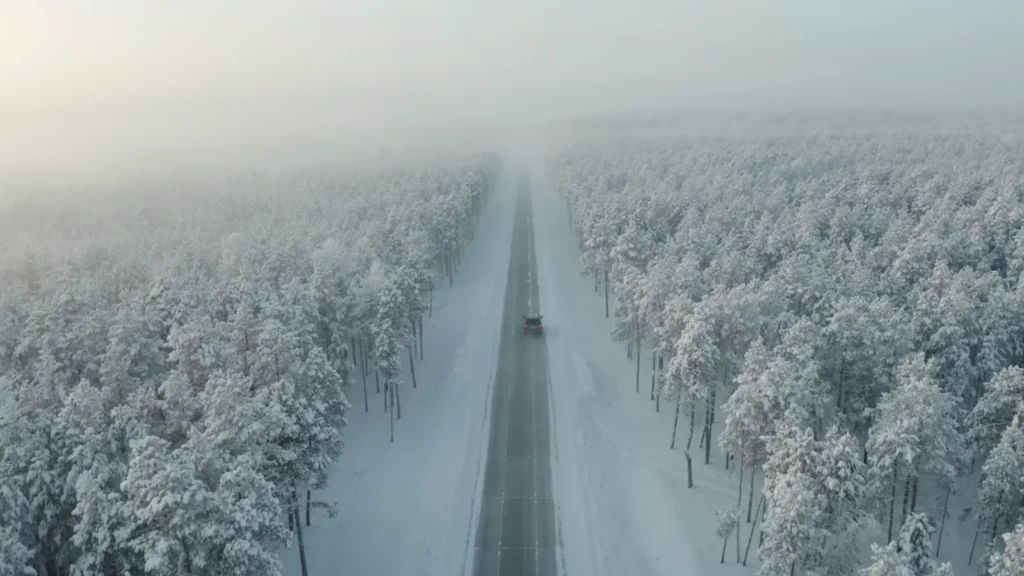
The sun does it’s best. Doesn’t matter. The forest in Yakutia looks powdered with moon dust, every branch lacquered, the air itself turning opaque. I step off the road, snow squeaks under my boots like Styrofoam. Ten breaths later, my lashes clump. Good morning from −40 °C.
Everyone told me, “You don’t visit Yakutia you enter a different physics.” They weren’t kidding. This is the Sakha Republic, the largest subnational territory on Earth, arcing from the Arctic shore down to mountain chains and taiga for days. Average January temperatures around −43.5 °C are normal across the region, which is wild when you remember people have lived here forever and built cities on it.
Quick facts I carried in my pocket
- Yakutsk in January averages about −39 °C; on good days your phone dies slower. It’s the biggest city built on continuous permafrost; buildings stand on piles to keep their heat from melting the ground. Wikipedia
- Oymyakon the cold pole once hit −67.7 °C officially. You don’t argue with that number; you just put another layer on. Wikipedia
Getting in: Moscow Handshake, Then East
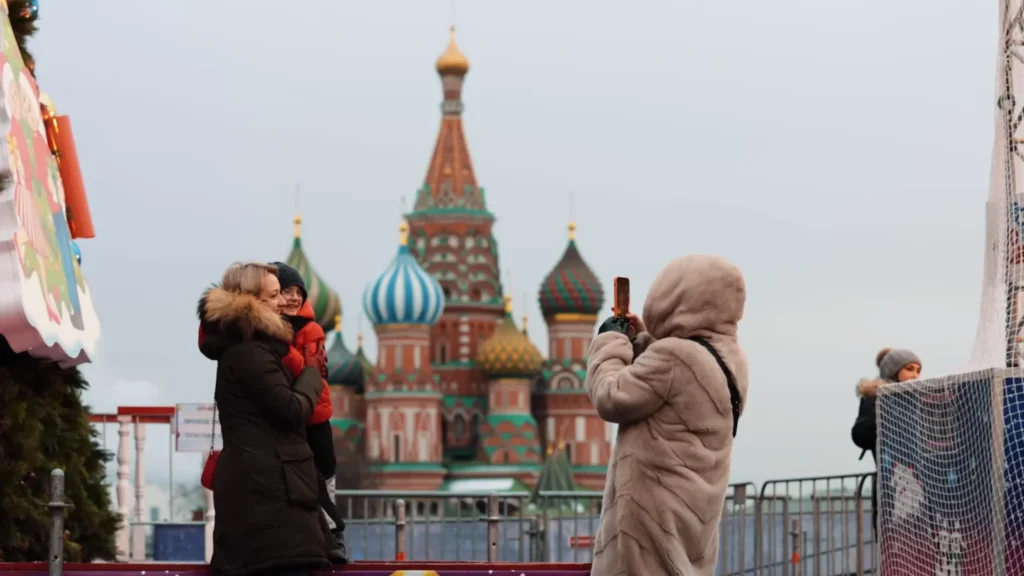
A day earlier I’m in Moscow, trading metro heat for Red Square wind. A mom steps up on a platform, hugs her kid in a bright orange coat and someone in a teddy-bear jacket snaps the picture with St. Basil’s in soft focus behind them. That’s the goodbye scene before Siberia swallows you.
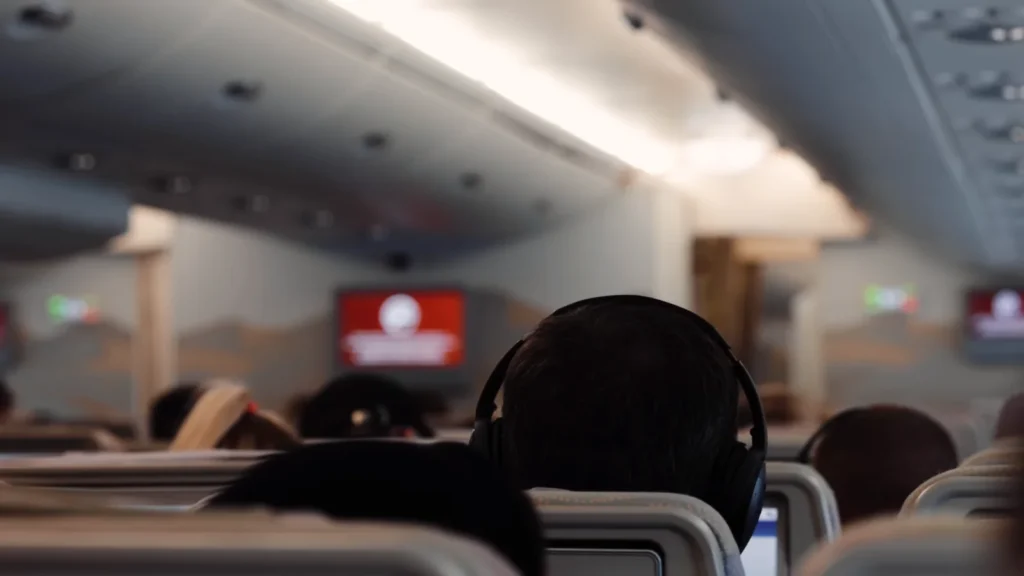
Flight-wise, think long domestic hop and a time-zone shimmy. I don’t romanticize economy class, but that limbo matters: the last place where skin feels normal. Yakutsk greets you with air that bites through jeans in one minute flat.
Packing, No Drama Just Layers That Work
| Layer / Item | Why it mattered | Notes |
| Merino base (top/bottom) | Wicks; doesn’t smell after long drives | Two sets, rotate overnight |
| Insulated mid-layer | Traps heat without bulk | Synthetic works better than damp down |
| Parka with hood | Wind cheat code | Fur-rim hoods genuinely help in spin drift |
| Windproof mitts over liners | Fingers still usable for camera | Swap batteries inside mitts |
| Felt-lined boots, big toe box | Blood flow > tight fit | Boots one size up |
| Face mask + scarf | Stops frost nip | Switch when it ices up |
What The Cold Actually Does (to roads, cameras, people)
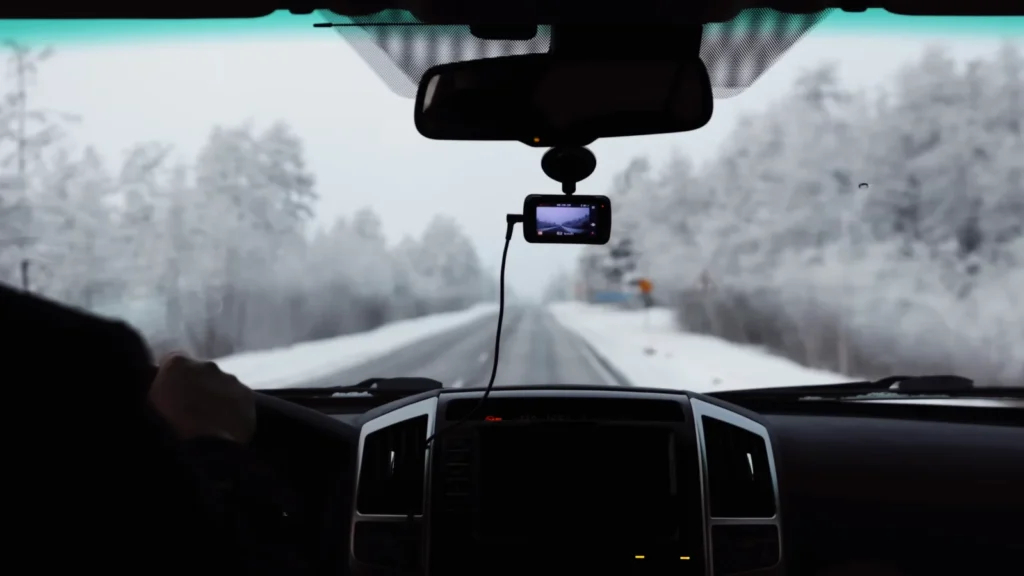
From the driver’s seat, Yakutia is a long equation: tree-line, asphalt, vapor. The dash-cam blinks red and stutters in temperatures that make plastic brittle. Both hands at nine and three, tires whispering on compact snow. The highway runs straight for kilometers and then out of nowhere fog rolls off the river like a ground-level cloud.
Those endless straights? You’re flirting with famous stretches the Lena Highway heading north or the R504 Kolyma Highway (yes, the “Road of Bones”) striking east toward Magadan. It’s more than a nickname; the road’s construction story is heavy and the route today still feels remote in a way modern maps can’t soften.
Road notes from my notebook
- Keep the cabin warm but crack the window before opening doors; instant fog kills visibility.
- Gas? Top up early. Stations can be 100+ km apart and pumps don’t love −40 °C.
- Camera tip: spare batteries live in inner pockets; rotate every 20 minutes. (Wired has a great look at gear suffering in Oymyakon; I felt that in my thumbs.)
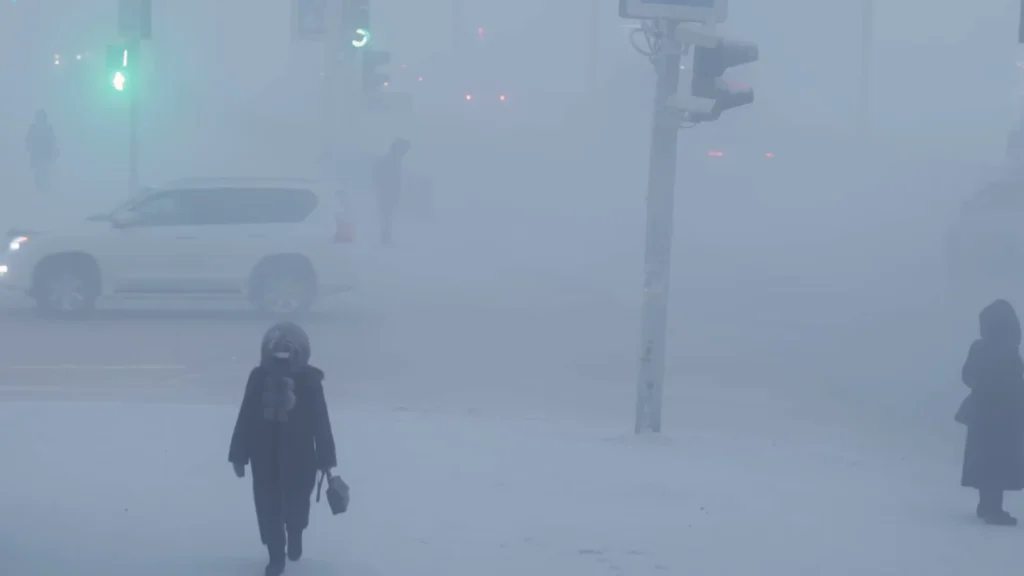
That green traffic light barely visible through the haze? That’s a real thing here ice fog and smoke mixing at street level in deep cold. It makes cities look like they’re exhaling in slow motion.
Town Edges, Warm Roofs and The White Silence Between
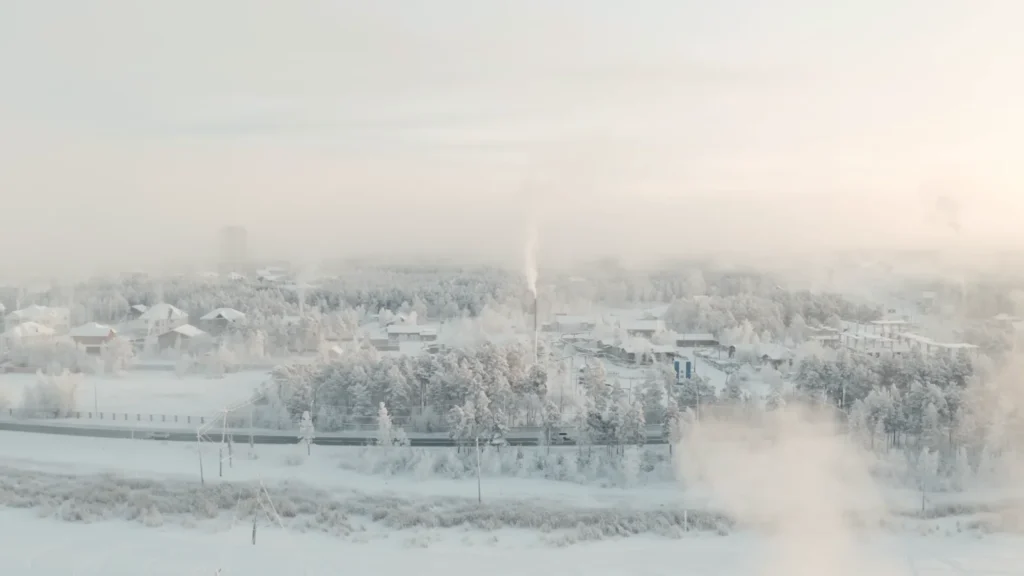
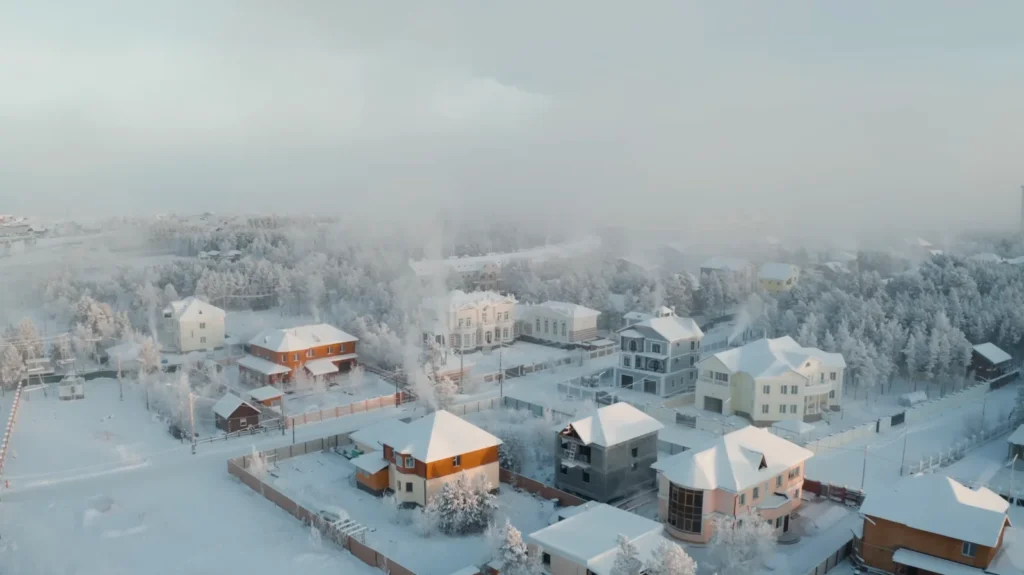
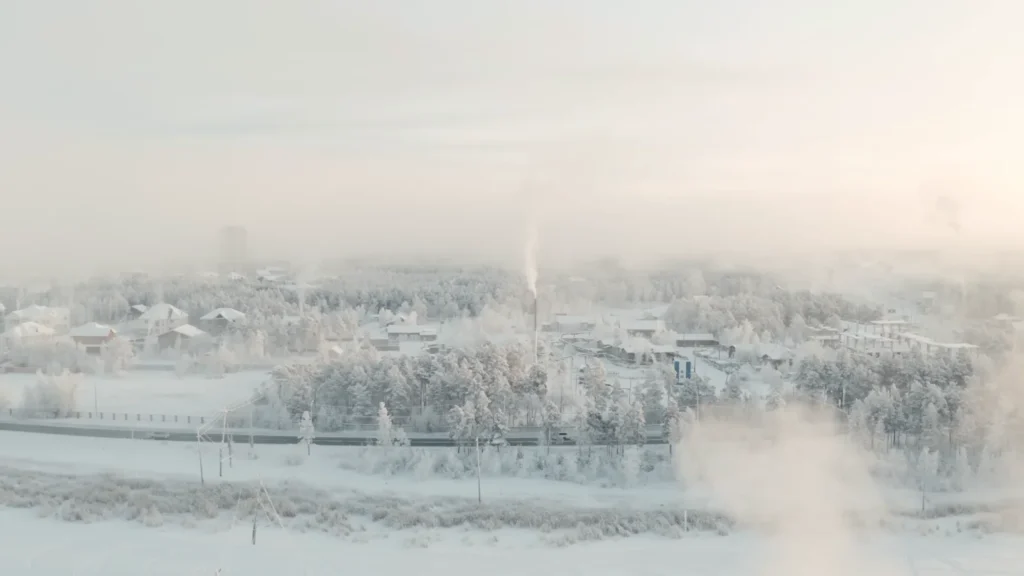
From the drone: neat houses, chimney plumes writing straight lines into a pale sky. Roads braid the neighborhoods, then stop. Beyond the last fence taiga.
Yakutsk and it’s satellites run on a simple logic: don’t warm the ground. Buildings stand on concrete piles to avoid thawing the permafrost they sit on; walk the suburbs and you’ll notice the gap under the floors and the criss-cross of above-ground utilities. It looks odd the first time. Then it clicks.
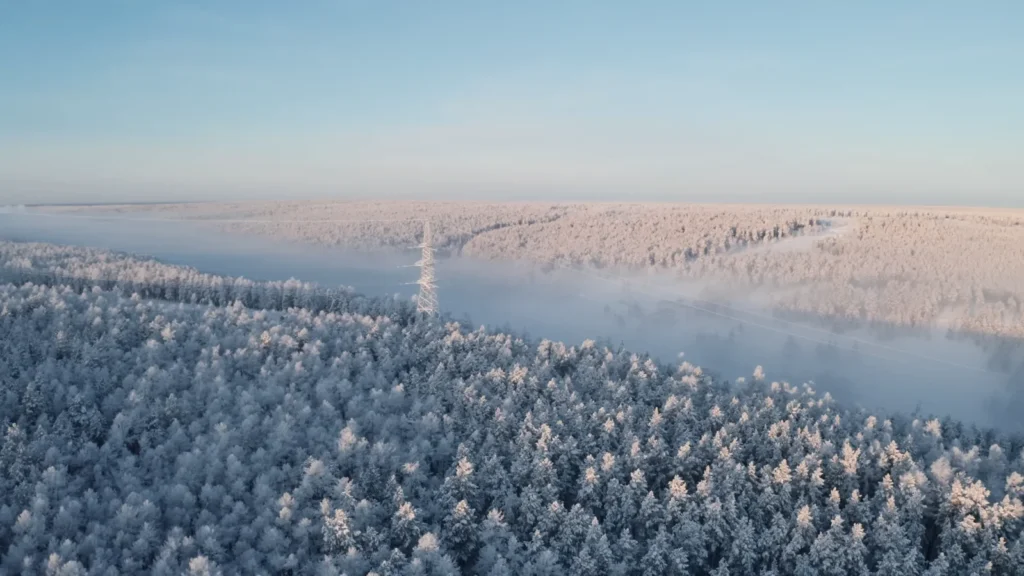
Why it works (and how it doesn’t)
- Permafrost stays solid when you keep heat away; hence the stilts.
- Pipes rise above ground so repairs don’t involve digging into ice-cement.
- Warming trends complicate everything (long-term), but that’s a bigger story than one trip report.
Snack Break: The “Freezer Aisle” Markets
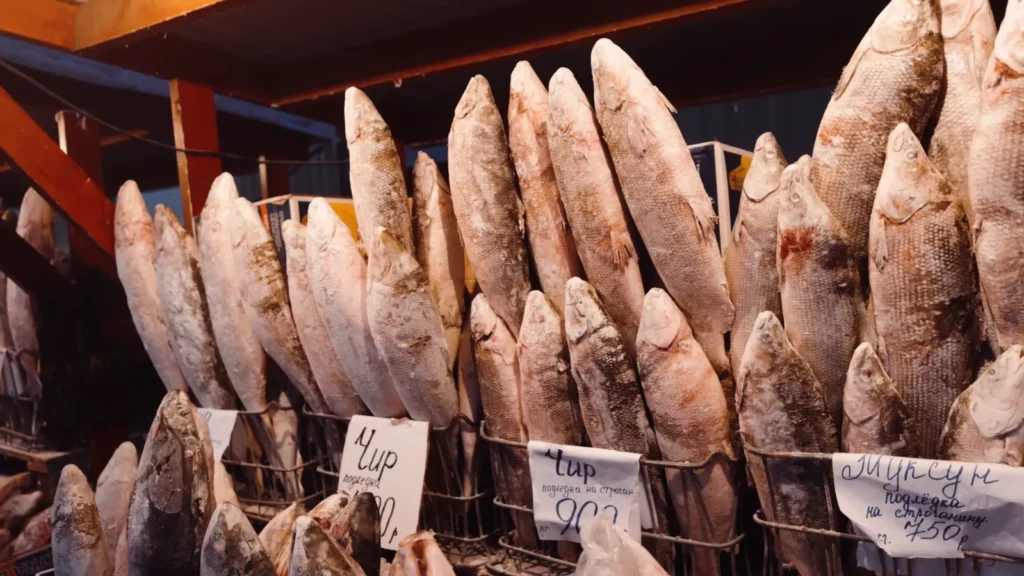
That wall of frozen whitefish muksun, chir stacked like books. Locals shave it into stroganina, paper-thin curls eaten still frozen with salt and pepper. It’s not a stunt; it’s clean, sweet and perfect after a drive.
Map Squiggle You Should Know
Even before I reached the deep freeze, Siberia had already thrown me a curveball: sand dunes—in Siberia. The Chara Sands, a pocket desert surrounded by taiga and mountain ranges, formed from an ancient glacial lake. If your image library needs contrast, that’s the place.
Playing Warm: Hockey, Saunas and Moving on Purpose
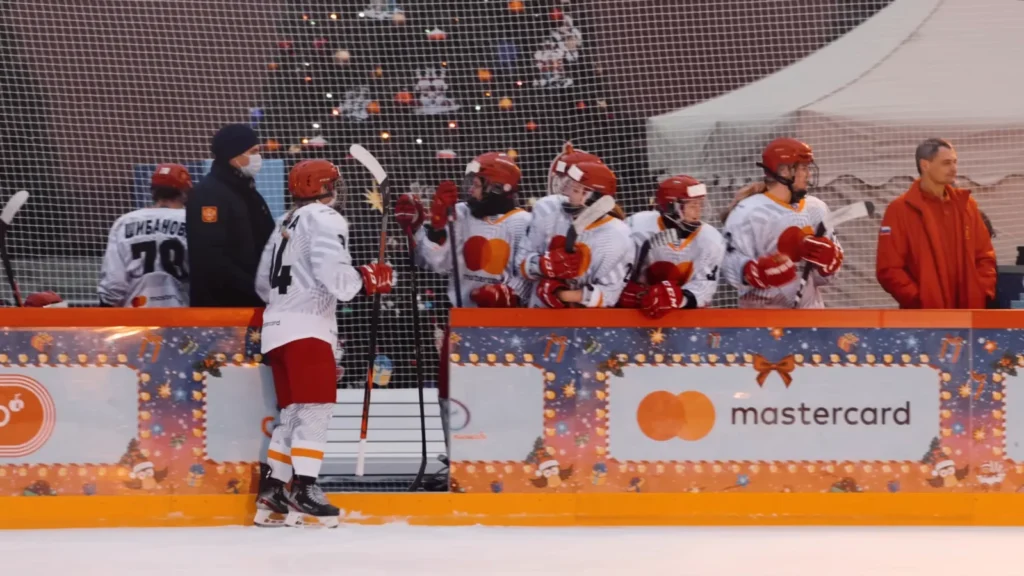
When the mercury disappears, people don’t. They skate. The outdoor rink in Yakutsk was a clatter of sticks on boards, a dad stamping his boots at the bench, kids tapping for a pass. Warmth here is kinetic hockey, quick walks between overheated rooms, the sprint from the door to the idling car. (If you’re new to Siberia, hockey’s place in the culture won’t surprise you for long; it’s the winter heartbeat of half the country.)
What I learned the quick way
- Layers before speed. If I skated without a face mask, I paid for it with numb cheeks ten minutes later.
- Batteries hide in mitts. Hand-warmer + spare GoPro cell = another twenty minutes of footage.
- Saunas matter. Even small guesthouses have one. Your core temp climbs back to normal and you stop chewing your words.
Why Saunas After Sport Works Here?
Cold constricts, heat relaxes basic, but on a -35 °C evening, that switch flips your mood. And unlike a novelty plunge, this is routine. Friends argued the breathing feels easier after a good steam because the indoor air is so dry in winter; my lungs agreed.
Holes In The Ice: Patience, Tea and Dinner If The Lake Likes You
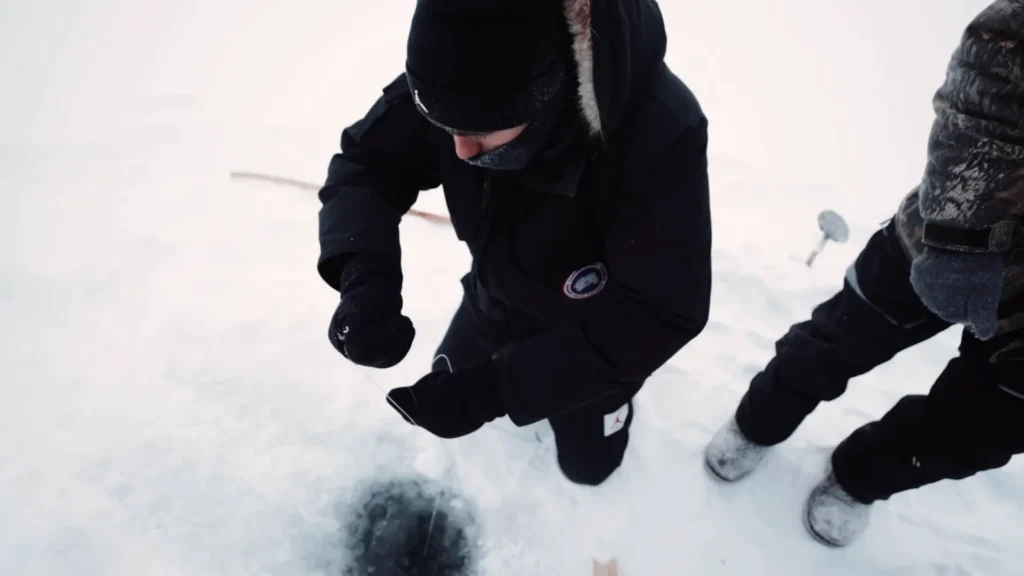
We walked onto the river at blue hour, boots thudding on a crust that felt structural. Drill. Shavings. The first hiss of dark water. A line, a shrug, a low joke about who gets skunked first.
Ice fishing here isn’t theater it’s food and a few quiet hours where the only thing moving is your breath. When the wind drops, you hear everything: the faint rub of wool, the click of ice against the line, someone’s thermos lid. If you get lucky, you take a fish to a friend’s place and shave it into stroganina thin, frozen curls of muksun or chir, dipped in salt and pepper, eaten before they soften. Classic Yakutian table move and the taste is clean and a little sweet.
Field kit that didn’t fail
- Felt boots with removable liners (liners dry near the stove at night).
- Wool fingerless gloves under mitts.
- Short rod, simple reel. Nothing to jam.
- Headlamp you can work with gloves on.
The Permafrost Kingdom: Neon, Ice gods and a Tunnel That Hums
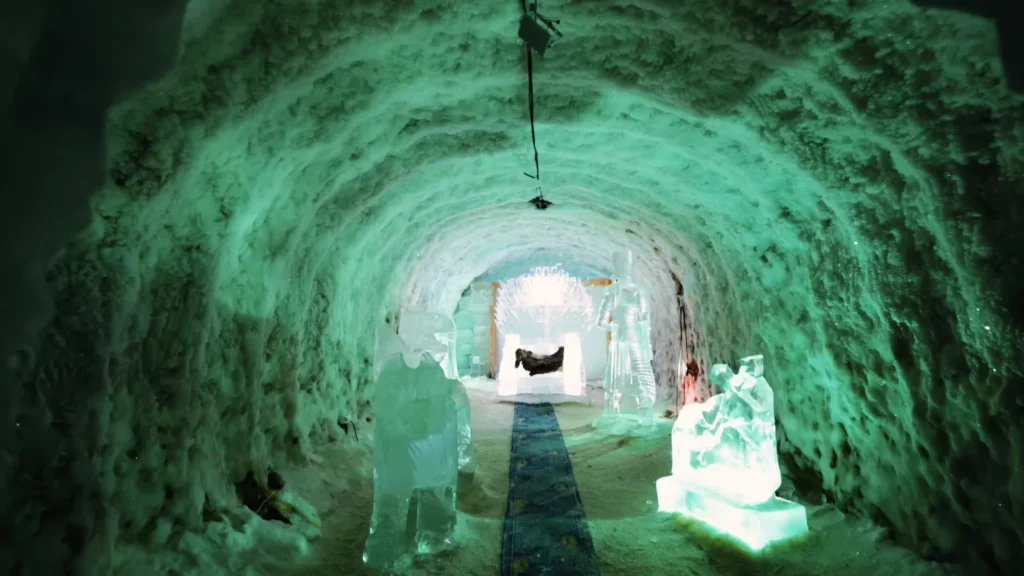
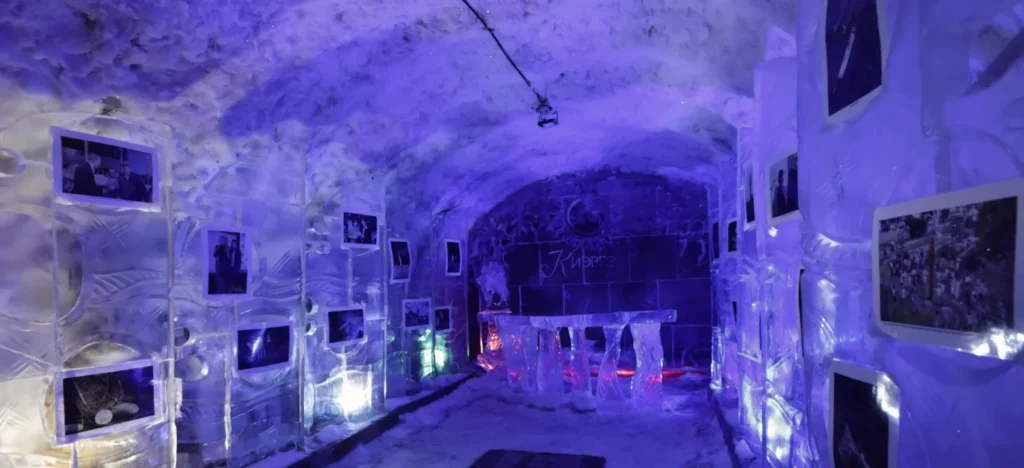
Go underground near Chochur-Muran. The Permafrost Kingdom is a tourist complex carved into a permafrost massif. Even in summer it stays subzero; in winter you’re walking through a tunnel where the temperature can sink near −20 °C while ice sculptures of local deities glow green and blue under LEDs. It’s half museum, half dream sequence and practical too, because you feel how the ground itself is a freezer that never really turns off.
What stuck with me
- The cable run over our heads electricity buzzing through ice.
- The throne room: kitsch on paper, oddly reverent in person.
- That moment when your camera fogs, then clears and the whole tunnel phases back in like a developing photo.
Routes & Seasons: Kolyma vs. Lena and How Not to Become a Cautionary Tale
Two names, different moods:
A) R504 Kolyma Highway—AKA The Road of Bones
A 2,000+ km strip linking Nizhny Bestyakh (across the Lena from Yakutsk) to Magadan. Colloquial name comes from the road’s Gulag-era history. Remote fuel, long cold, spectacular emptiness.
B) A360 Lena Highway—North–SouthSpine
Your access to Yakutsk and the river system. Bridges, ferries and depending on the season ice roads that knit it together. The Lena’s seasonal mood swings are the trip’s metronome.
Season cheat sheet
| Season | What works | What fights back | My call |
| Dec–Feb | Reliable deep freeze; ice roads active; skies often clear | Brutal temps, short daylight, gear/battery pain, ice fog in towns | Do it if you want the full Yakutia |
| Mar–Apr | More light; still cold | Surfaces can glaze over midday; melt–refreeze | Photo-friendly, fewer crowds |
| May–Jun | Rivers open; shoulder trips | Mud, breakup chaos; mosquitoes breeding up north | Travel if you’re flexible |
| Jul–Aug | Warmth, long days; trekking | Mosquitoes, heat shimmer; no ice attractions | Go inland/taiga; avoid mid-day hiking |
| Sep–Oct | Larch turns gold; dry air | Early storms; roads shoulder-seasons | Gorgeous if you time it |
| Nov | Unsettled shoulder | Rivers not fully frozen, roads forming | Wait two more weeks |
Ice fog & visibility
In deep cold, exhaust and moisture condense near the ground into a white soup “ice fog.” It’s why those green traffic lights in your photo look marooned in mist. Good plain-English explainer on the phenomenon and why it clusters in basins and cities.
Distance sanity
- Yakutsk → Oymyakon: ~900 km depending on route, services sparse.
- Nizhny Bestyakh → Magadan via R504: ~2,031 km.
Driving rules I actually followed
- Tank half full = time to refuel.
- Keep a thermos, tow strap, jumper cables and an honest shovel.
- Car sleeps plugged or idling locals know why. (The cold will turn oil into honey and batteries sluggish; multiple sources and local advice echo this from Yakutsk features and guides.)
Sleep & Food: The Warm-Rooms Tour

I like a room that feels lived-in, not staged: brick wall, soft lamp, bed that forgives your spine. After days outside, the best sound in Yakutia is a radiator purring and boots drying by the heater.
Where I’d point first-timers
- Family-run guesthouses in Yakutsk with saunas.
- A cafe that serves stroganina and salamat (semolina porridge), plus hot tea you pour endlessly.
- Bakery stops before long drives flat breads and pastries travel well.
Last Look: Smoke and a Road That Doesn’t End
The largest surprise of the trip wasn’t the cold. It was sand a desert pocket surrounded by snow forest. The Chara Sands sit near the Kodar Mountains, a leftover from an ancient glacial lake. It looks like a hallucination until you read the formation history and realize Siberia is allowed to be weird.
Back on the road, the villages exhale in white plumes. Houses breathe through chimneys, not the ground; Yakutsk builds on piles to keep the permafrost asleep. It’s an elegant hack that has kept an entire city standing on a frozen foundation for decades largest city on continuous permafrost and yes, everyday life works.
I left with a few certainties:
- The cold isn’t a villain. It’s a rule set.
- Motion is heat. Community is heat.
- If your image of Siberia is a blank slate, add texture: ice tunnels, kids in red gloves cheering on a friend, a plate of translucent fish curls, fog that reduces a city to silhouettes and a dune field that makes zero sense until the geology does.