
There’s a point, somewhere past Fujisawa, where the city noise thins out and the air takes on that faint Pacific sharpness. It’s subtle like someone cracked open a window in a crowded room but I always feel it. That’s usually when I know I’m close to Enoshima.
I boarded the Enoden line early, partly because morning light is friendlier to cameras, partly because a place like this deserves an unhurried entry. The train windows roll out a slow-motion reel of beach houses, utility poles leaning like old hikers and those sudden flashes of blue ocean that hit harder than expected after weeks in Tokyo.
There’s something cinematic about arriving this way. The train curves along the coastline as if deliberately teasing the views, dropping you into a place that feels simultaneously lived-in and mythic. You step off and the sea breeze immediately crawls under your jacket not unfriendly, just honest about the season.
Before heading toward the island, I wandered a bit around the quieter back streets near the station.
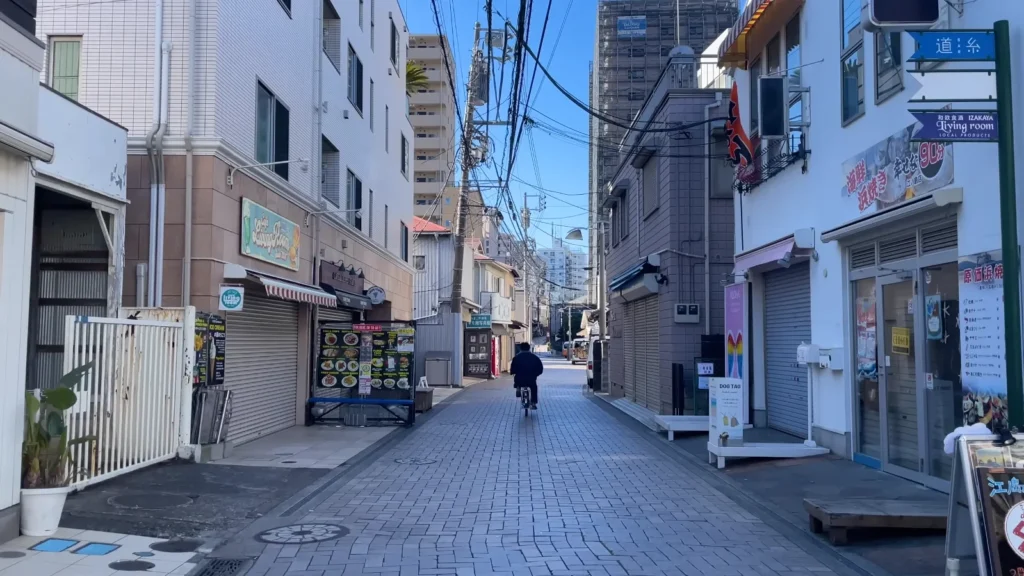
That empty street, a cyclist drifting through, shutters still rolled down it felt like the prologue of the day. Enoshima has a way of easing you in.
The Walk Toward Enoshima Island
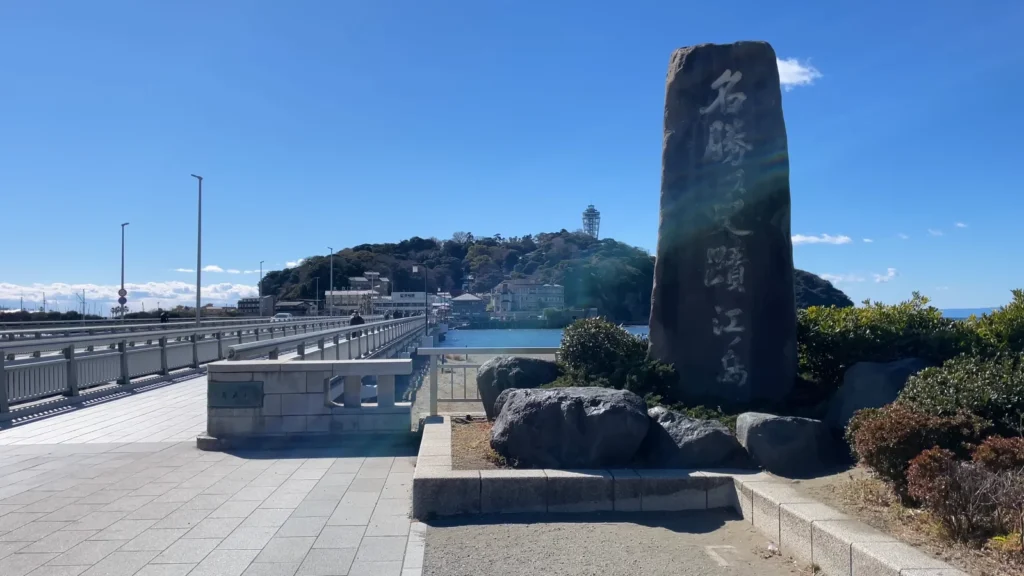
From the station, it only takes a few minutes before the approach to the bridge opens up. The stretch of water between the mainland and the island is calm, almost meditative. But the bridge itself? It’s like stepping onto a promise a narrow ribbon pulling you toward shrines, caves, dragons and observation towers waiting somewhere on the hill.
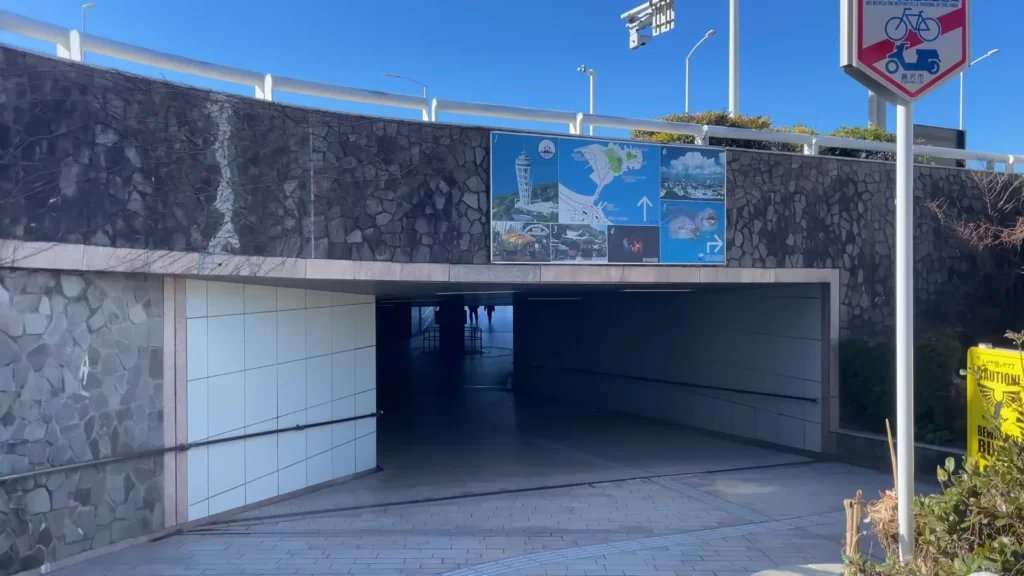
If you turn slightly right before crossing, the coastline widens into a gentle arc of gray-blue sea. A lone wave breaks, pauses, repeats the kind of rhythm that empties your head without asking permission.
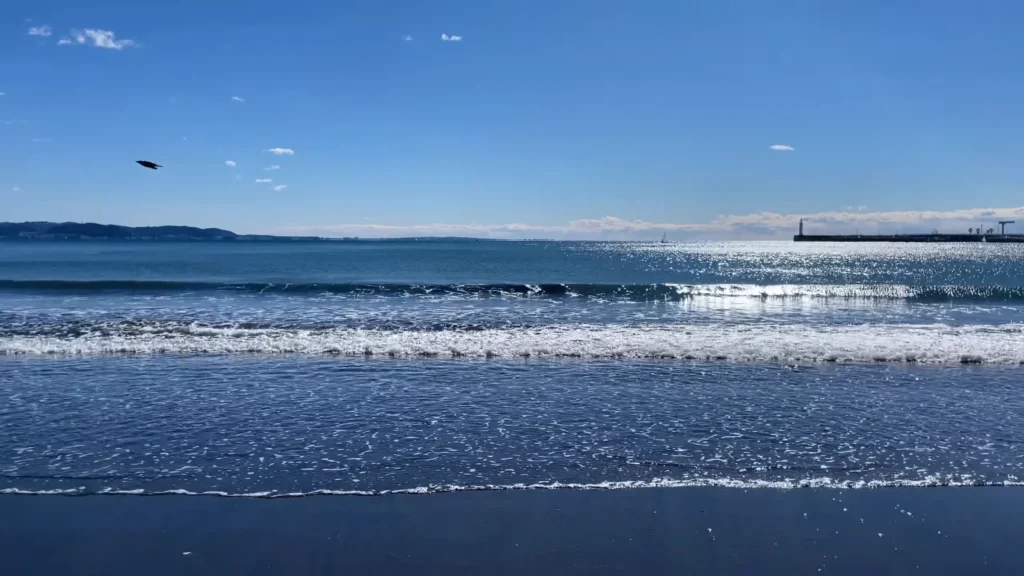
Closer to midday, the water catches every shard of sunlight and throws it back like a challenge. I must’ve stood there too long, trying to photograph the reflection without blowing the highlights, but this is exactly what Enoshima does: it slows you down even when you swear you’re just here for a quick day trip.
Crossing the bridge, you start to see the Sea Candle peeking above the treetops on the island. It’s small at first, almost shy. But it becomes a sort of anchor your landmark for the rest of the day.
Nakamise Street and the First Climb Into the Island
The very first incline on Enoshima greets you with a stretch of shops, food stalls and souvenir stands a commercial corridor that somehow avoids feeling tacky. Steam rises from sweet rice cakes. Someone grills octopus crackers. Someone else shouts “Irasshaimase!” with the energy of a warm handshake.
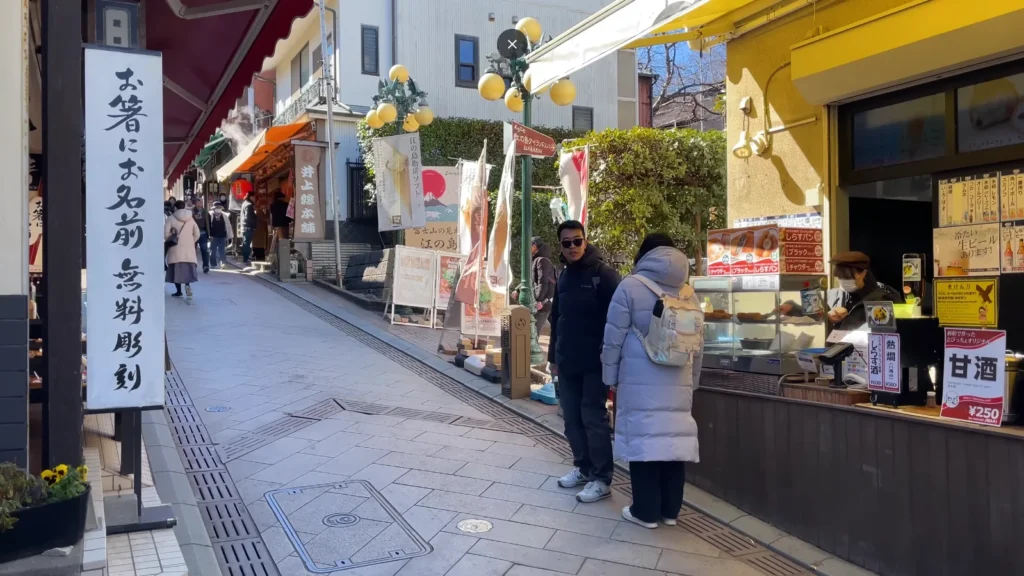
It’s busy, but not aggressively so. More like everyone is drifting uphill with the same vague intention: reach the shrines, maybe the caves, maybe the lighthouse, maybe just a view that makes the climb feel justified.
Halfway up, I made my usual stop the cleansing fountain. There’s always something ritualistic about rinsing hands with water delivered through the mouth of a stone dragon. It’s performative in a good way; it forces you to acknowledge you’re entering a place with layers older than anything in your daily life.
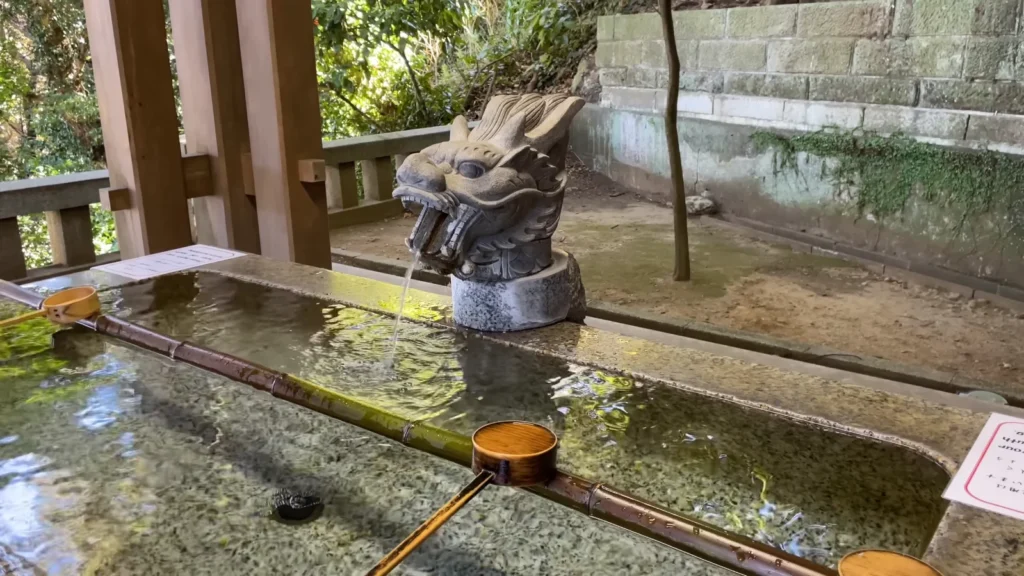
Then the stairs begin. Enoshima never pretends to be flat. Every destination sits above another destination, like the island is designed to make you earn each discovery.
The first major gate rises before you in a brilliant red a torii that frames the climb like a doorway into a myth.
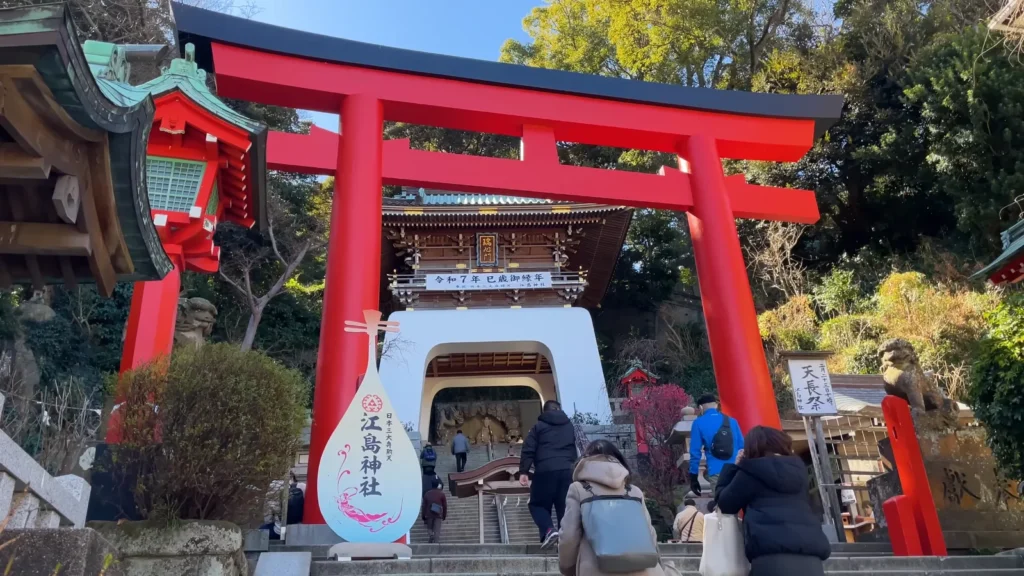
Pass under it and the air shifts again. The sound of the shops fades. The island becomes quieter, more vertical. You see the faint shadow of a Benzaiten statue nestled beneath the upper structure, almost watching over every visitor who steps through.
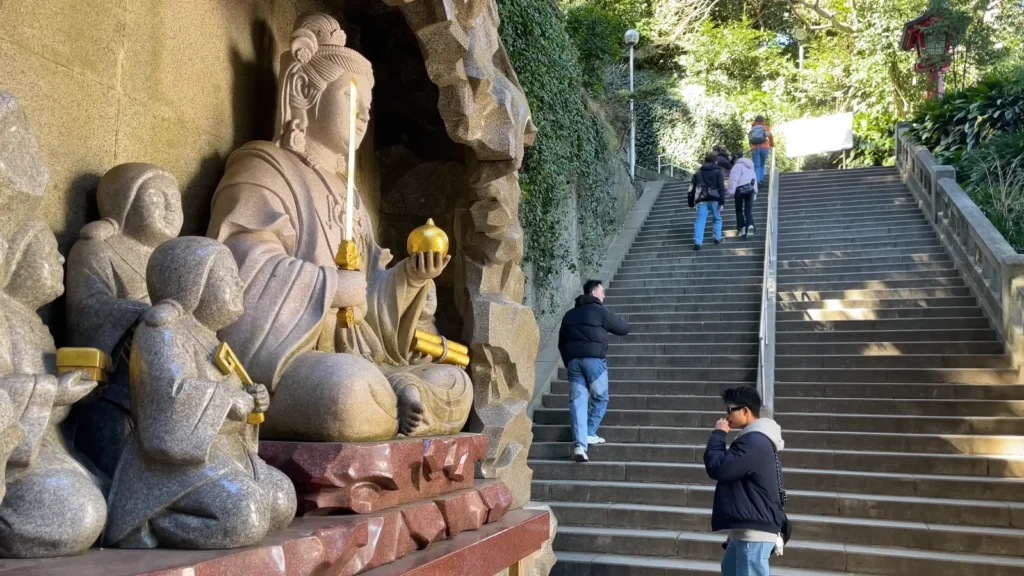
Enoshima’s shrines aren’t just historical sites; they feel geographical as if the hill itself arranges it’s paths according to what you’re meant to feel at each turn.
Enoshima Shrine Complex & the Island’s Mythic Heart
The deeper you climb into Enoshima, the more the island starts slipping away from it’s modern-day edges. The air thickens a little pine, incense, ocean salt, all moving together like they’ve struck some truce centuries ago.
The first major stop, Hetsumiya, sits upright and confident, as if it’s been watching the island evolve from fishing village to tourist magnet. There’s nothing flashy about it, which is probably why I pause there longer than necessary. The courtyard breathes slowly.
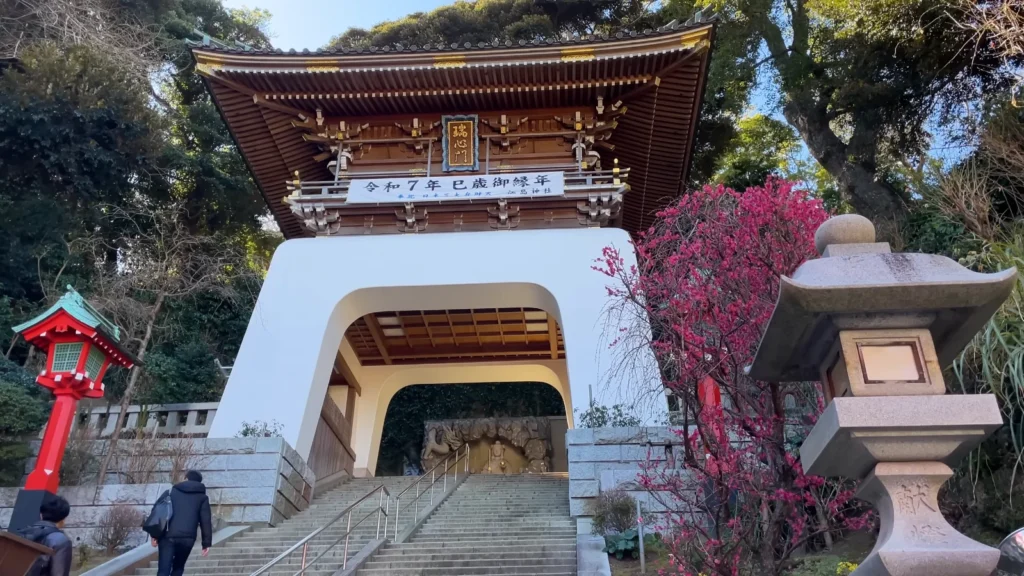
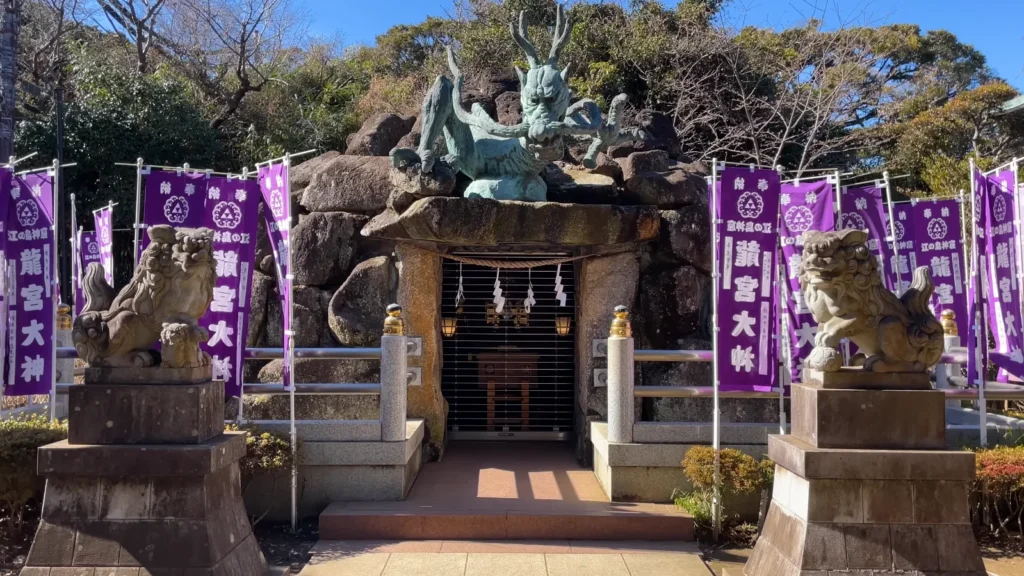
You start noticing the dragons everywhere carved into beams, wrapped around purification basins, cast in bronze. Enoshima belongs to Benzaiten, the goddess of everything from eloquence to luck and her mythology is tangled with dragons who once terrorized the region. The story ends in harmony, of course the island itself feels like the physical proof of that reconciliation.
A little further up is Nakatsumiya, the mid-level shrine. The architecture shifts sharper lines, a slightly more ornate presence, a flavor of celebration tucked into the eaves.
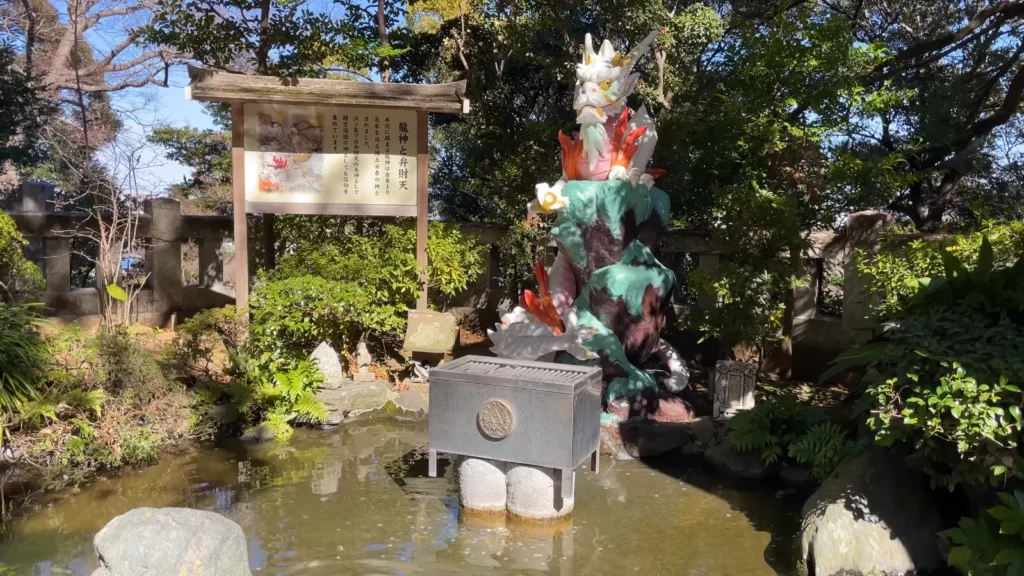
You hear bells, soft ones and the low murmur of people offering quick prayers before wandering toward food stalls, caves or viewpoints. And then there are the dragons again this time more assertive, painted, coiled, almost mischievous.
Just beyond that, a cluster of food stalls appears, almost out of nowhere. The smell of grilled squid mixes with sweet sesame snacks. A day on Enoshima is as much a climb for the stomach as for the legs.
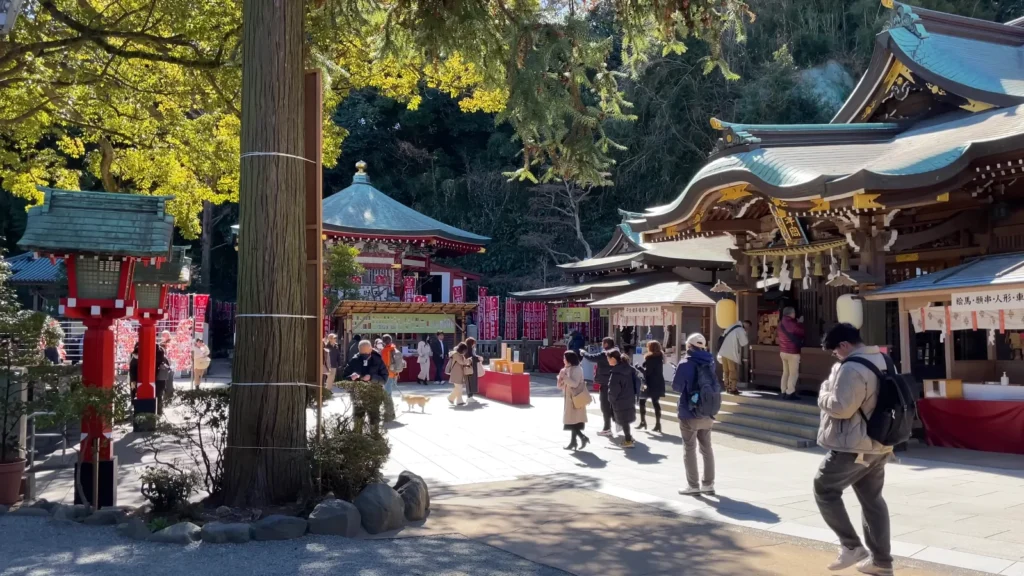
There’s always a moment usually after the second or third shrine where the island convinces you you’ve already seen the best part. Then you realize you’re only halfway up and the Sea Candle is still waiting.
The Sea Candle & Samuel Cocking Garden: Up Where the Wind Lives
The upper plateau of Enoshima feels different more open, more exposed to the sky. Even the light changes. The Sea Candle stands there like a lighthouse that grew tired of pointing ships home and decided to spend it’s days observing instead.
You reach the entrance through the Samuel Cocking Garden, a peaceful space named after a British merchant who once owned much of the island. It’s unexpectedly quiet up here, almost curated for moments of pause.
And then, the climb into the Sea Candle.
From the observation deck, the coastline sweeps out in a long, almost impossible curve. In winter the air sharpens enough that Mount Fuji appears in full clarity, hovering over Sagami Bay like an enormous watercolor left out to dry.

It’s the kind of view that rearranges your priorities for a moment. Not dramatically just enough to remind you how small and wonderfully temporary everything feels when the ocean stretches endlessly beneath your feet.
Walk a little around the outer deck and the angle shifts. Boats turn to dots. The bridge becomes a thread. People on the beach look like the idea of people rather than actual ones.

From the very top, the garden looks sculpted like someone painted an impressionist landscape and forgot to sign it.
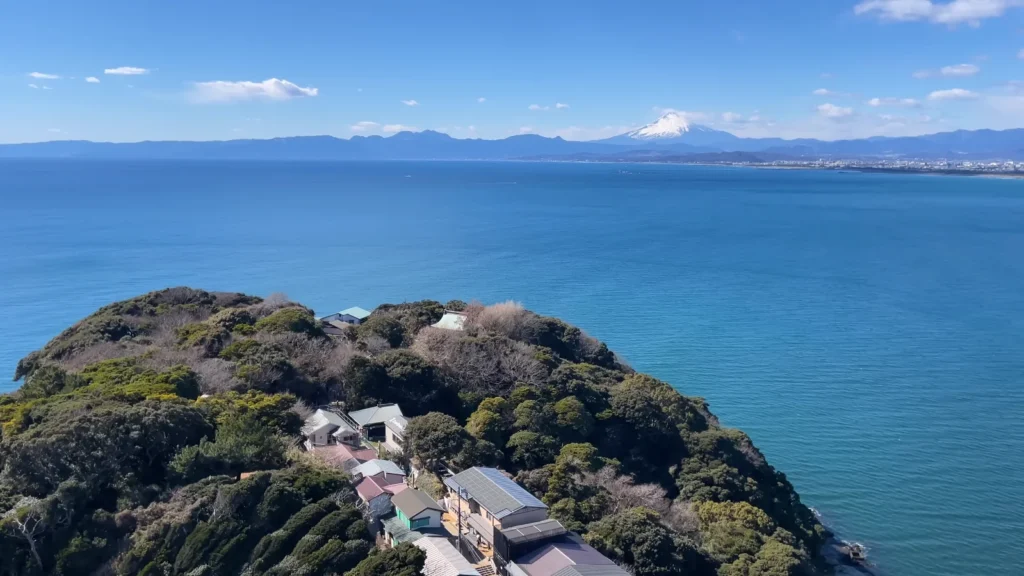
If you’re lucky, the wind is strong enough to clear the air but not strong enough to knock over your camera. I stayed up there longer than I’d planned, waiting for the clouds to decide what they were doing because they always do something interesting above Enoshima.
The Descent to Chigogafuchi & the Wild Edge of the Island
Once you begin descending the western slope of Enoshima, everything changes again. You lose the orderly shrine pathways and the curated gardens. The island becomes more rugged, almost untamed. The air cools, grows damp and the soundscape shifts from chatter to waves cracking against volcanic rock.
When the trail opens, you find the Chigogafuchi coast spread out like a naturally occurring amphitheater huge slabs of stone flattened by centuries of tides. It’s one of the rare places where you feel safe and slightly endangered at the same time.
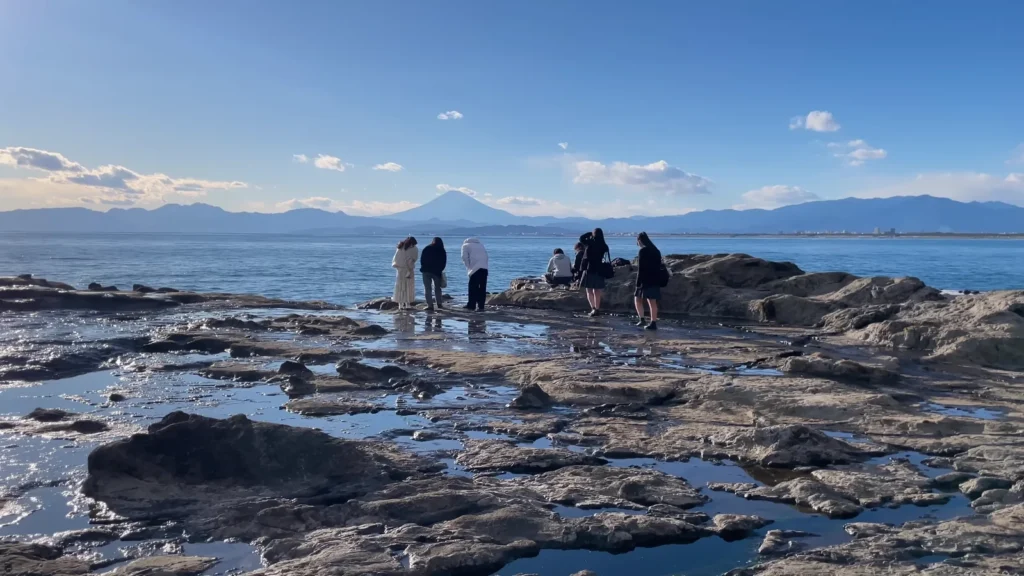
Walk a bit farther and the ocean breathes in deeper swells. Pools of water settle in depressions in the rock, catching bits of sky, fragments of clouds, sometimes even the silhouette of Fuji if the timing is right.
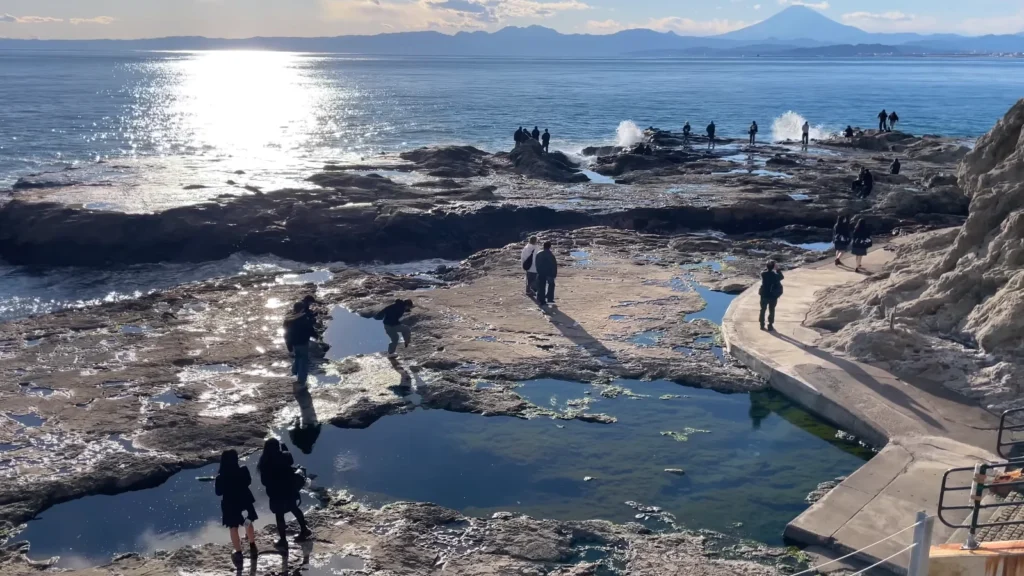
This part of Enoshima always feels like the island’s exhale the raw underside of everything you saw above. Kids poke around tide pools. Photographers crouch too close to the edge. Couples sit with bento boxes, pretending they’re not watching the waves creep closer.
Just before the caves, the path narrows into a sliver of walkway carved into the cliff. Every time I pass through, I get that slight adrenaline spike not fear, just awareness.
And then the entrance appears: Iwaya Caves.
Inside, the temperature drops instantly. Candles mark the path. The sea has carved it’s signature into these walls for thousands of years and the echo carries that story whether you want to hear it or not.
When you emerge back into daylight, the ocean feels brighter than it should. Maybe it’s the contrast. Maybe it’s the relief.
Either way, it’s one of the best moments of the day.
Wandering Back Through the Island’s Center
Climbing back from the coastline toward the island’s center always feels a bit like returning from a place you weren’t supposed to linger in. The shrines feel gentler on the way down, as if they’ve already judged you and decided you’re alright. The air grows warmer again, brighter and the crowds slowly reappear.
Somewhere near the midpoint of the climb back up, I passed a quiet little side alley almost too narrow, almost too still. It reminded me how Enoshima keeps it’s secrets tucked between tourist clusters. You just have to step slightly off the main path and the whole mood changes.
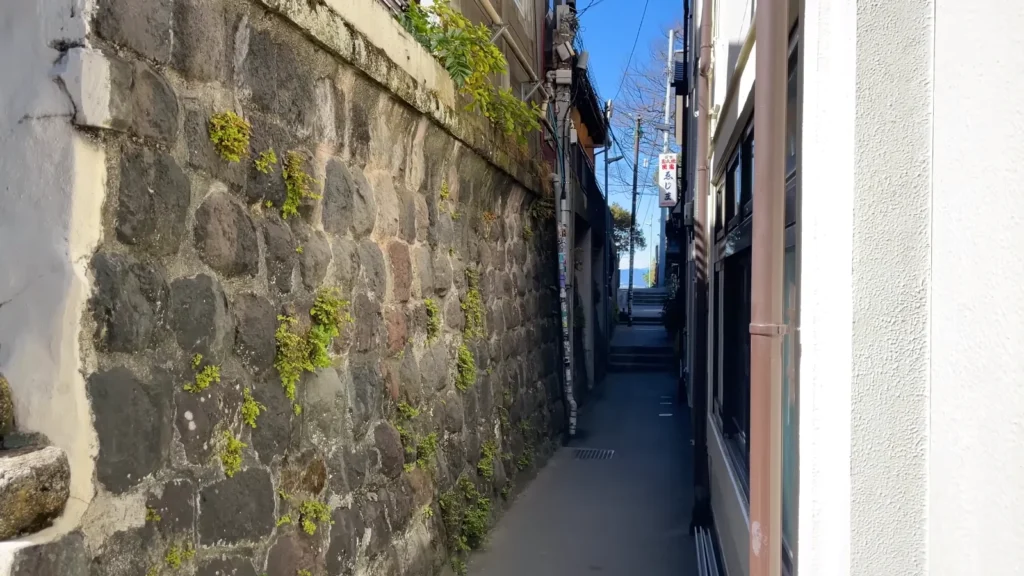
There’s an intimacy to these paths low houses, potted plants that look like they belong to someone’s grandmother and that washed-out ocean light that slides between rooftops.
A bit farther up, the Enoshima Escar comes back into view the outdoor escalator system that helps visitors avoid the steepest climbs. It feels oddly futuristic against the island’s old-world charm, but it also makes the loop accessible for people who would otherwise miss the upper sanctuaries.
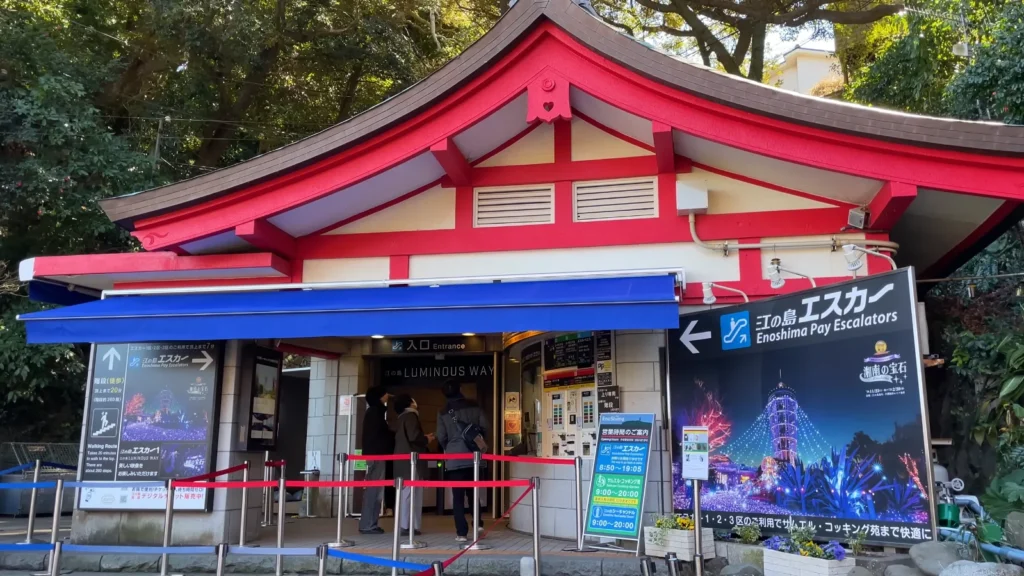
On the way toward the shopping street again, the island seems to rearrange itself. Familiar corners look different with the afternoon sun catching them from the side. Even the souvenirs seem more photogenic than they did in the morning.
That’s where I found myself pausing in front of a little shop filled with charms, shells and trinkets tied to the mythology of Benzaiten and the island’s treasures.

I don’t usually buy things when I travel you can’t carry memories in your backpack forever but I still look. Trinkets tell you what a place thinks of itself. Enoshima sees itself as protective, a little mystical and deeply tied to it’s sea-born origins.
Nearby stalls sell snacks that steam into the cool air. The crowd thickens again but never aggressively. It’s almost comforting the reminder that the island is alive, busy, human.

And then, somehow, the day begins to feel like it’s folding inward, as if the island knows you’ve seen what you needed to see and it’s guiding you toward the quieter exit.
Food, Breakfast and a Late-Day Pause
I always think I’ll wait until the end of the day to eat something “proper,” but Enoshima has a way of interrupting those plans. The food is everywhere grilled seafood, soft-serve cones, taiyaki, things fried on sticks that you promise to try “just once” and then immediately fail to resist again.
Earlier in the day, I’d stopped for breakfast at a small local spot that sits just slightly out of the main flow of traffic. The meal felt almost too delicate for a day that would eventually include caves, dragons and cliffside winds but maybe that was the charm.

Meals on Enoshima always feel tied to location. Seafood tastes like it traveled twenty meters, not kilometers. Rice tastes like someone cooked it after watching the ocean all morning. There’s no real culinary philosophy behind that just the influence of a place that’s half shrine, half coastline and entirely itself.
Later, when you start descending toward the mainland again, the smell of street food returns in layers. I always grab something small before leaving not because I’m hungry, but because I know the taste will anchor the day in my memory long after the photographs lose their color.
Kamakura’s Komachi-dori: Letting the Day Unwind
A day trip to Enoshima often pairs naturally with a soft landing in Kamakura, especially around Komachi-dori. It’s a short train ride barely enough time to sit back before the conductor is announcing the next stop but the shift in atmosphere is clear.
Kamakura has it’s own energy: a little more polished, a little more curated, but still shaped by centuries of history. By the time I arrived, late afternoon light was sliding between the shop awnings like a polite guest.
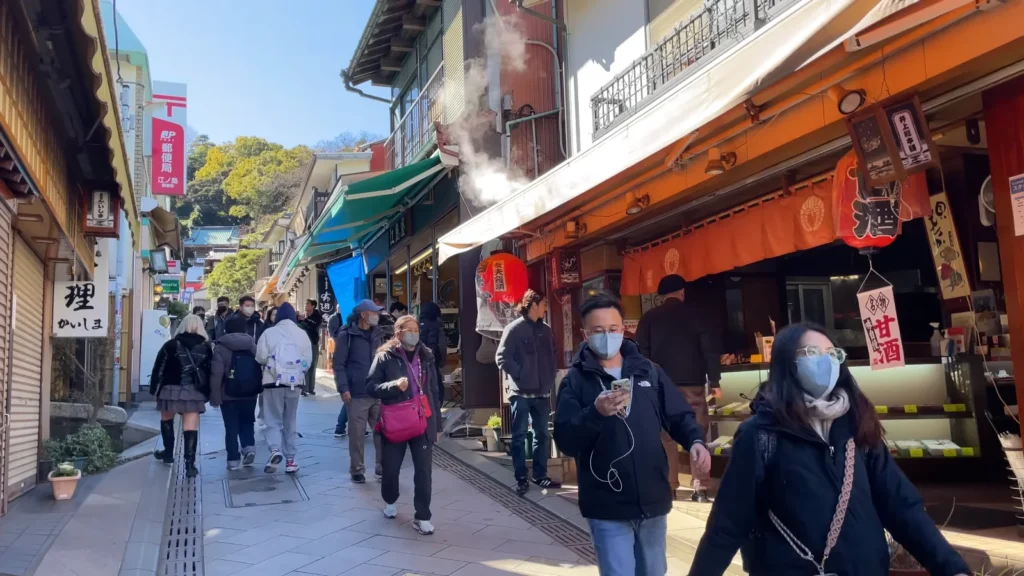
Walking down Komachi-dori after the vertical climbs of Enoshima feels like your legs finally get to exhale. Souvenir shops, artisan sweets, ceramics, tiny cafés all arranged in a corridor that invites slow wandering.
If Enoshima is the island that pulls you upward, Komachi-dori is the street that brings you back down not in a disappointing way, but in the way a daytrip should end: with warm lights, easy steps and the feeling that you’ve been gently returned to the world.
Practical Notes for Travelers
Even though I spent the day with my camera slung around my shoulder and no strict agenda, there are a few small things I’d tell anyone thinking about visiting Enoshima for a one-day trip:
Best Time to Go
- Clear winter days give the best visibility for Mount Fuji.
- Spring and fall offer more comfortable temperatures for the climb.
- Summer is beautiful, but humidity can turn the island into a slow-motion sauna.
Transportation
- The Enoden line from Fujisawa is the most scenic route, but trains can get crowded.
- If you prefer a faster route, Odakyu Line from Shinjuku to Katase-Enoshima Station is straightforward.
How Long You’ll Need
- A full day is perfect if you want shrines, cliffs, caves and the Sea Candle.
- Half a day works if you stay mostly around the shrines and central paths.
Footwear
- Comfortable shoes are non-negotiable.
- The steps are uneven in places.
- Tide pools require caution volcanic rock can be slippery.
Food
- Try seafood crackers, shirasu dishes (locally caught whitebait) and matcha soft serve.
- Breakfast options near the base are quiet in the morning; afternoons are livelier.
Photography
- Morning light favors Nakamise Street and the climb toward the shrines.
- Late afternoon is unbeatable on the western cliffs.
- The Sea Candle offers 360° views worth waiting out the crowds.
Closing Reflections
On the train ride back toward Tokyo, there’s this feeling not fatigue, exactly, but a sort of groundedness. Enoshima does that. The island is small, almost modest, but it carries a density of stories and landscapes that doesn’t fit it’s size. You climb through shrines older than your home country, walk over rocks shaped before humans existed and stand atop a lighthouse that surveys one of the most watched shorelines in Japan.
And then, just as quickly, you’re buying souvenirs on Komachi-dori or fumbling through a train card gate, wondering how you’re already back in the world of schedules and neon.
It’s funny how a place so close to Tokyo can feel like it exists slightly out of time not in a fantastical way, just in the gentle sense that it remembers things we forget.
Enoshima doesn’t demand anything dramatic from you. It simply invites you to walk, look, breathe and maybe without realizing it recalibrate something small inside yourself before heading home.