
Georgia isn’t a country you “check off.” It’s one you feel between the cliffs of Vardzia, the vineyard lines of Kakheti, the blue evenings in Tbilisi and the sound of mountain wind over Svaneti’s stone towers.
I’ve wandered this land from the Black Sea to the Caucasus and what follows is how Georgia unfolded for me: layered, generous and always a little surprising.
Tbilisi – Where Old Soul Meets New Energy
Tbilisi feels like someone turned up the contrast on culture Persian baths beside art cafés, 4th-century fortresses above glass bridges. It’s the kind of city you can walk through without a map and still find something meaningful every few blocks.
My Favorite Tbilisi Walk
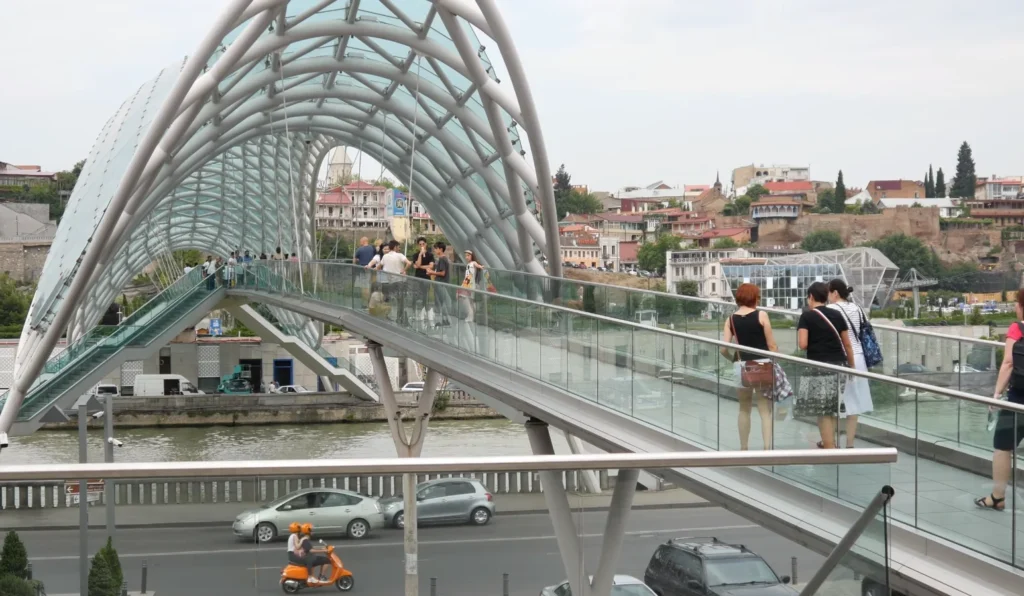
I usually start in Old Tbilisi, winding through the narrow lanes toward Abanotubani, the sulfur bath district. The air carries that faint mineral smell proof that the city’s name (“tbili” means warm) wasn’t chosen by chance. From there, I cross the Peace Bridge, which links the city’s past to it’s glass-and-steel present.
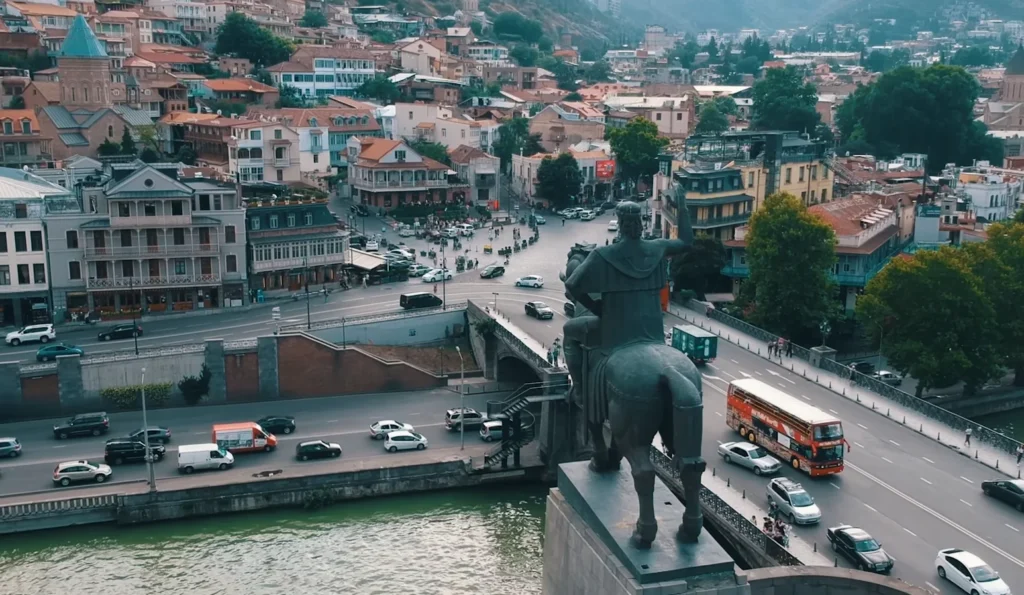
- Start: Metekhi Church and King Vakhtang Gorgasali Statue.
- Middle: Bridge of Peace to Rike Park (sunset is best).
- End: The Narikala Fortress viewpoint.
Why Tbilisi Works Year-Round?
| Season | Vibe | What I Do |
| Spring | Bright & breezy | City walks, cable car rides |
| Summer | Long evenings | Riverfront cafés |
| Autumn | Golden light | Best photography season |
| Winter | Quiet & moody | Sulfur baths, cozy bars |
Mtskheta – Georgia’s Spiritual Core
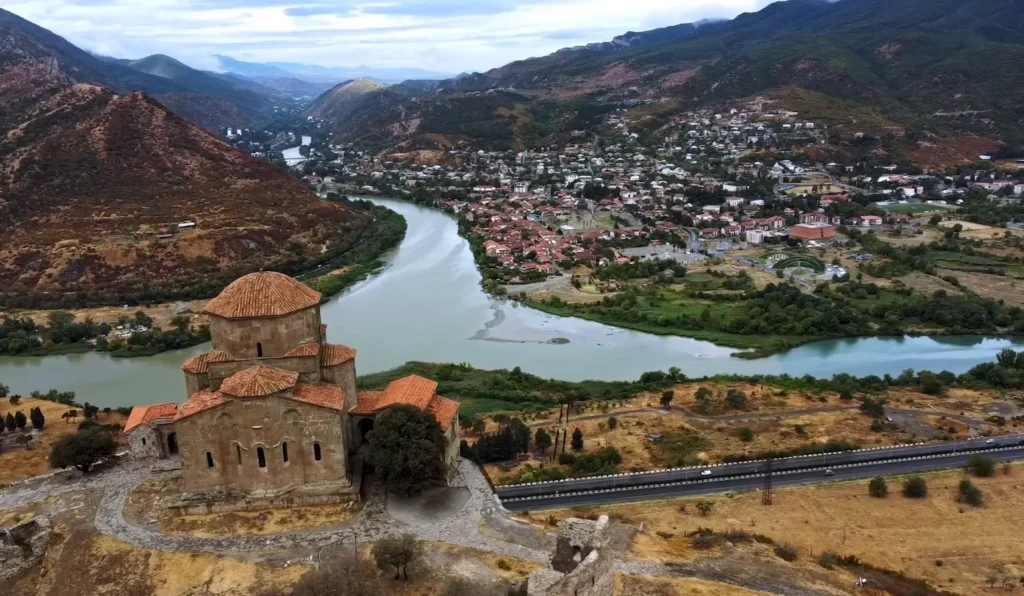
Just 20 minutes from Tbilisi, Mtskheta feels like an older heartbeat still pulsing under the modern capital. It was the ancient capital of the Iberian Kingdom and remains Georgia’s spiritual anchor.
The Half-Day Plan
I usually start early and take the high road to Jvari Monastery the view alone feels biblical. Below, you can see the confluence of two rivers: one blue-green, the other muddy brown.

Then I head down into town for Svetitskhoveli Cathedral, a 11th-century masterpiece where Georgia’s kings were crowned and buried. The town itself feels unchanged clay rooftops, quiet courtyards, a hum of bells. UNESCO World Heritage Centre – Historical Monuments of Mtskheta lists Jvari Monastery and Svetitskhoveli Cathedral for their early Christian architecture and cultural continuity.
Traveler’s Notes
- Distance: 20 km from Tbilisi.
- Best time: Early morning to avoid crowds.
- Tip: Combine with Gori or Uplistsikhe if you’re doing a heritage loop.
Gori & Uplistsikhe – Walking Through Georgia’s Rock History
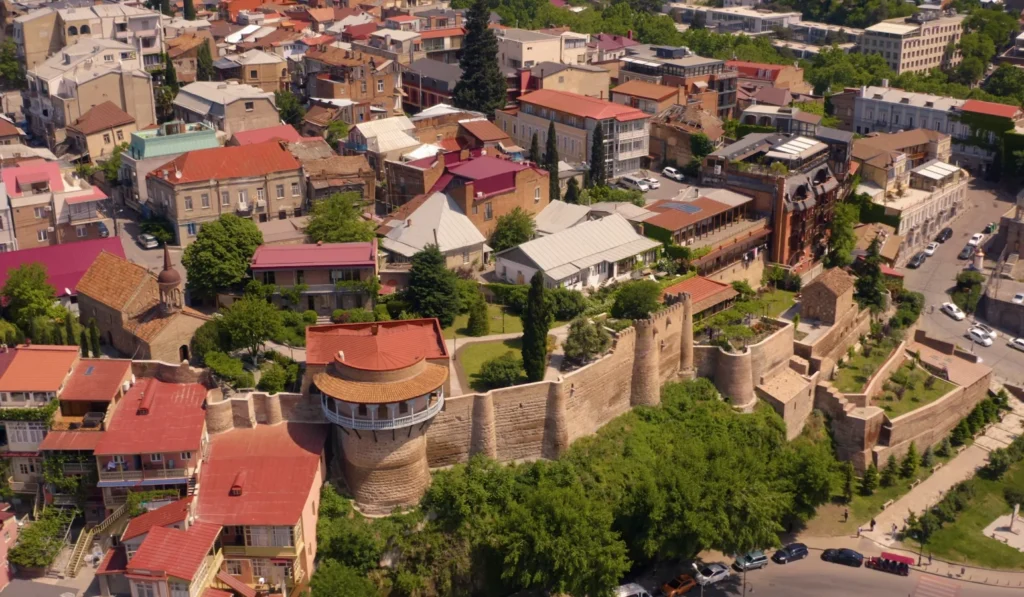
Gori sits at the crossroads of Georgia’s inner landscape. Many people pass through it, but I like stopping especially to explore Uplistsikhe, the “Lord’s Fortress,” one of the oldest urban settlements in the country.
Inside the Stone Labyrinth
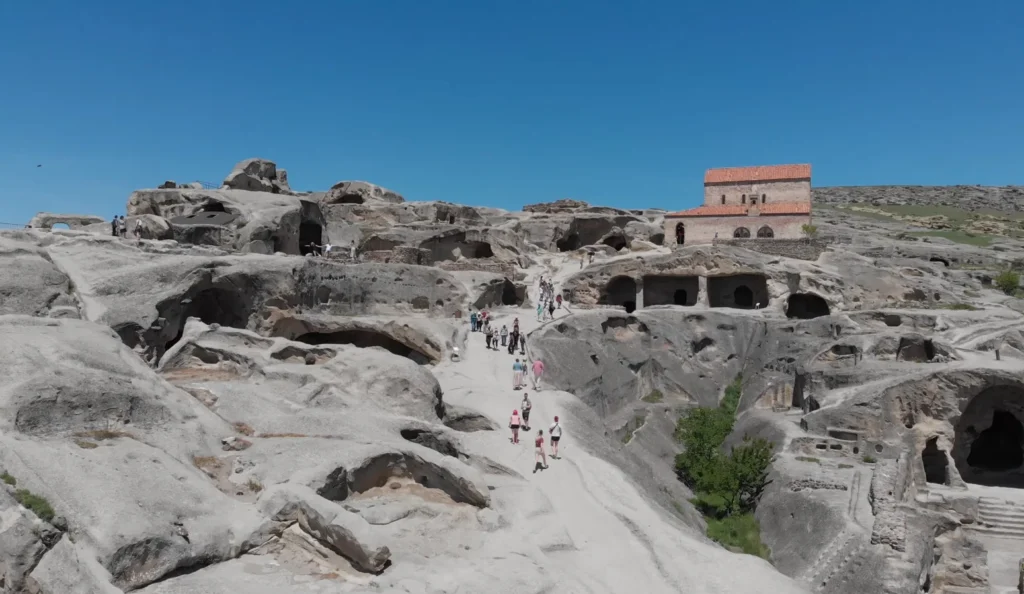
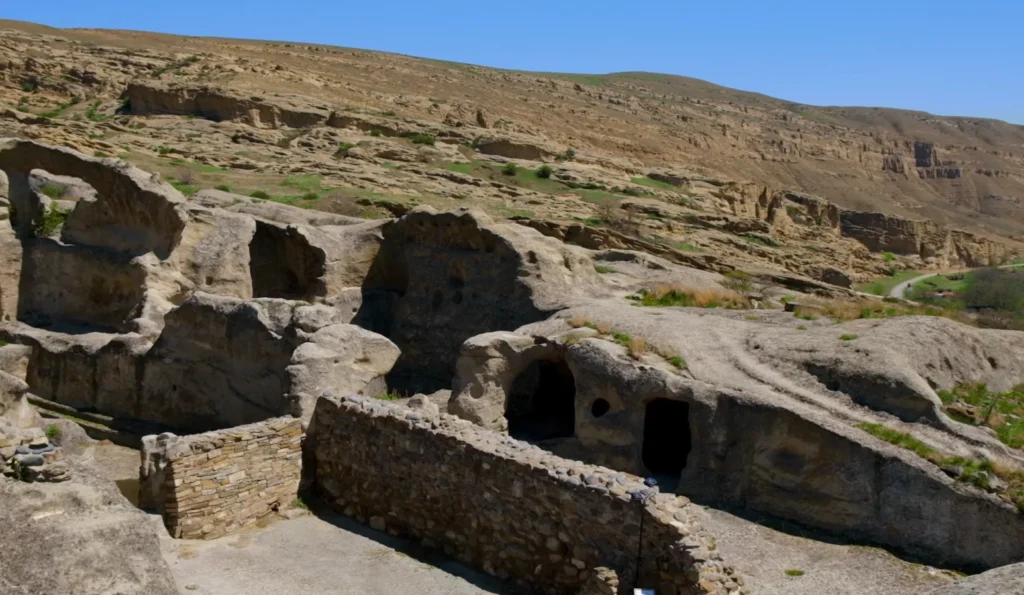
Wandering here feels like walking through an open-air archive. Caves become temples, corridors turn into small theaters and every rough wall carries a thousand years of erosion and faith.
Handy Snapshot
| Detail | Description |
| Founded | 1st millennium BC |
| Distance from Tbilisi | ~90 km west |
| Best time to visit | Morning (avoid heat) |
| Travel tip | Bring water no shade inside the complex |
Vardzia – The Cliffside Monastic Wonder
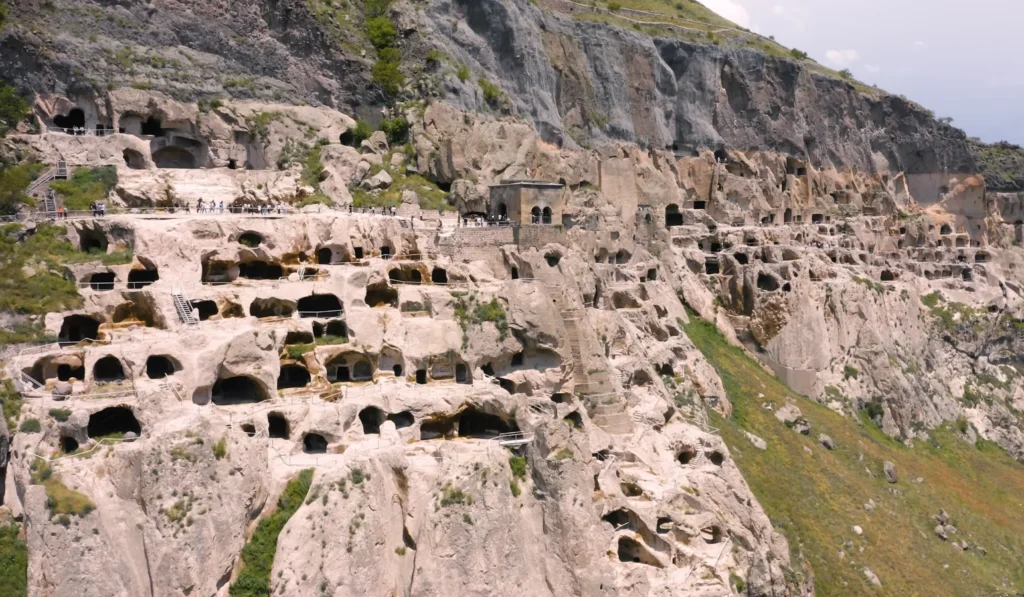
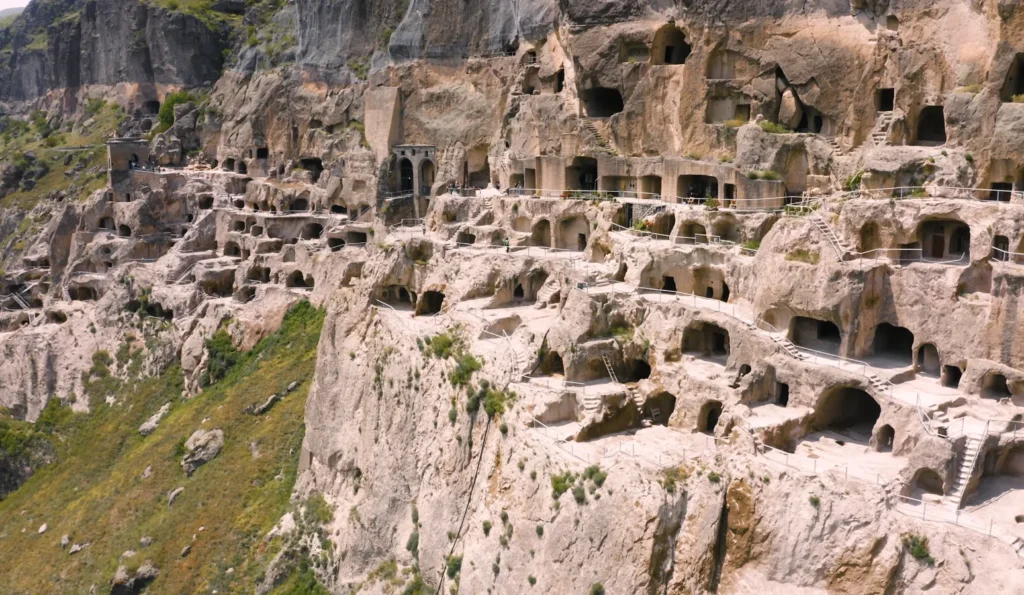
Few places in Georgia impressed me like Vardzia. It’s both monumental and fragile, human and geological at once. Imagine a full monastery carved into a cliff face overlooking the Mtkvari River valley up to 13 levels and 600 rooms connected by tunnels. Walking through Vardzia feels like time folding back. The frescoes glow faintly in candlelight and the silence deepens as you move inward.
Quick Facts
| Category | Info |
| Era | 12th century (Queen Tamar’s reign) |
| Region | Samtskhe–Javakheti |
| Unique Feature | Multi-level cave architecture carved from volcanic tuff |
| Access | ~4.5 hours drive from Tbilisi |
Traveler’s Note: The road to Vardzia is scenic rolling valleys, stone villages and the Mtkvari River twisting through the landscape. Stop often; the views change every ten minutes.
Kakheti – Where Georgia Breathes Wine and Sunlight
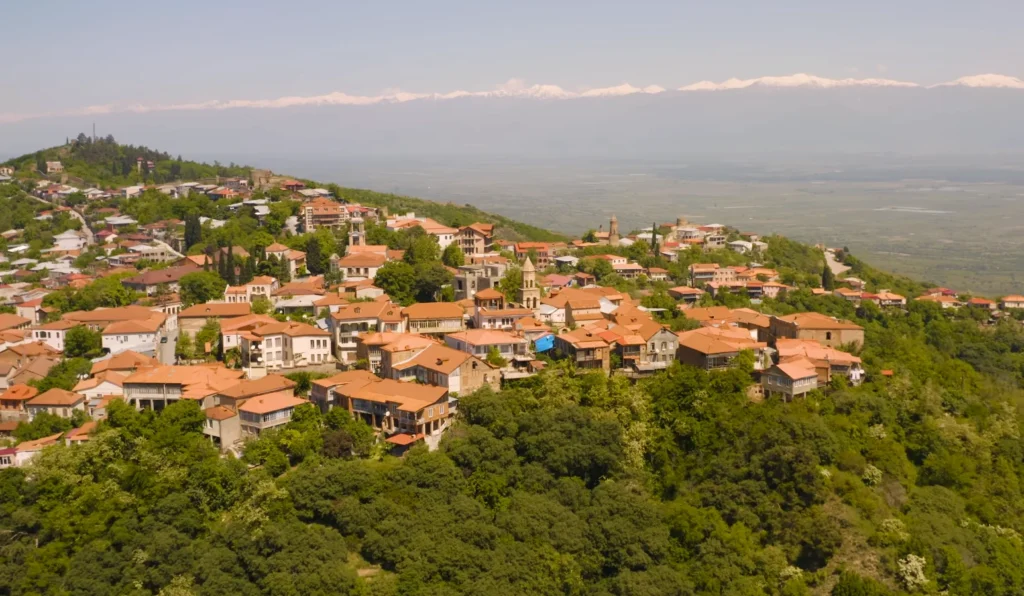
When I needed to slow down after the endless climbs and monasteries, I went east to Kakheti. If Georgia has a soul made of sunlight and wine, this is where you feel it. The air gets drier, the hills smooth out and every second house seems to have a grapevine draped over it’s gate.
Kakheti is Georgia’s wine heartland the birthplace of qvevri winemaking, an 8,000-year-old method recognized by UNESCO. Wines here aren’t just drinks; they’re part of the country’s cultural DNA.
Sighnaghi: The Balcony of Kakheti
Sighnaghi is one of those towns that make you understand why travel writers overuse the word “charming.” It perches on a hill, it’s terracotta rooftops tumbling toward the valley. You don’t need an itinerary here just a long afternoon and a place with a view.
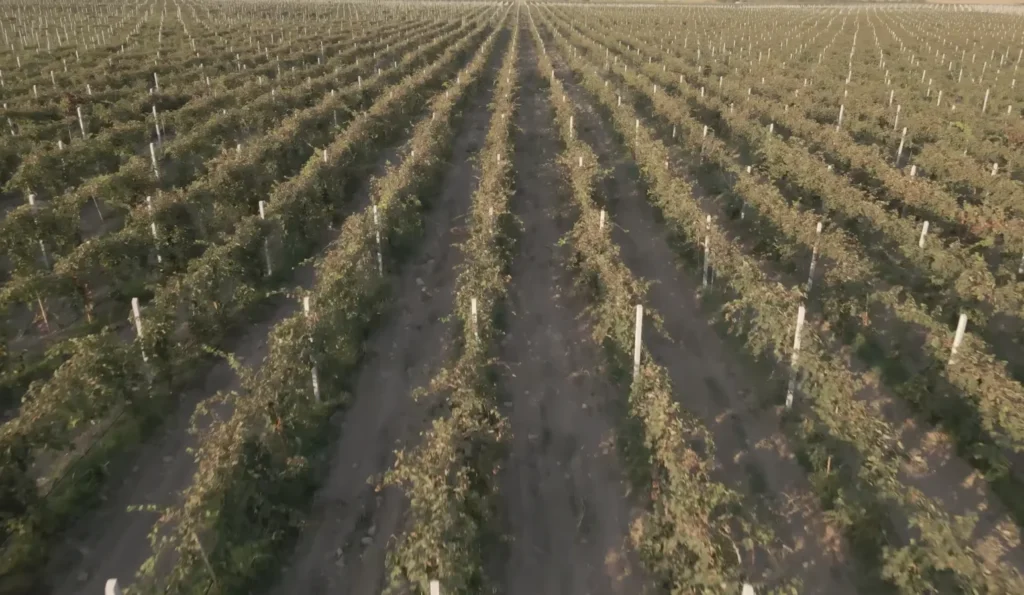
I spent an evening walking the old fortress wall, tracing the silhouettes of towers against the sunset. Locals call it “Georgia’s city of love,” but to me, it felt more like a quiet watchtower over centuries of cultivation.
Fact: The Alazani Valley, visible from Sighnaghi, is one of Georgia’s oldest wine-producing regions, responsible for nearly 70% of the country’s wine output.
What to Do in Kakheti?
I like days in Kakheti that start with a road and end with a toast. Here’s what my usual day looks like:
| Time | Plan | Notes |
| Morning | Drive from Tbilisi to Sighnaghi | Stop at the Bodbe Monastery viewpoint en route |
| Midday | Winery visit or lunch in the valley | Try qvevri wine at small, family-run cellars |
| Afternoon | Wander Sighnaghi’s fortress wall | The light hits the valley perfectly after 4 p.m. |
| Evening | Dinner and wine tasting | “Gaumarjos” means cheers you’ll hear it often |
The Caucasus Mountains – Where Georgia Touches the Sky
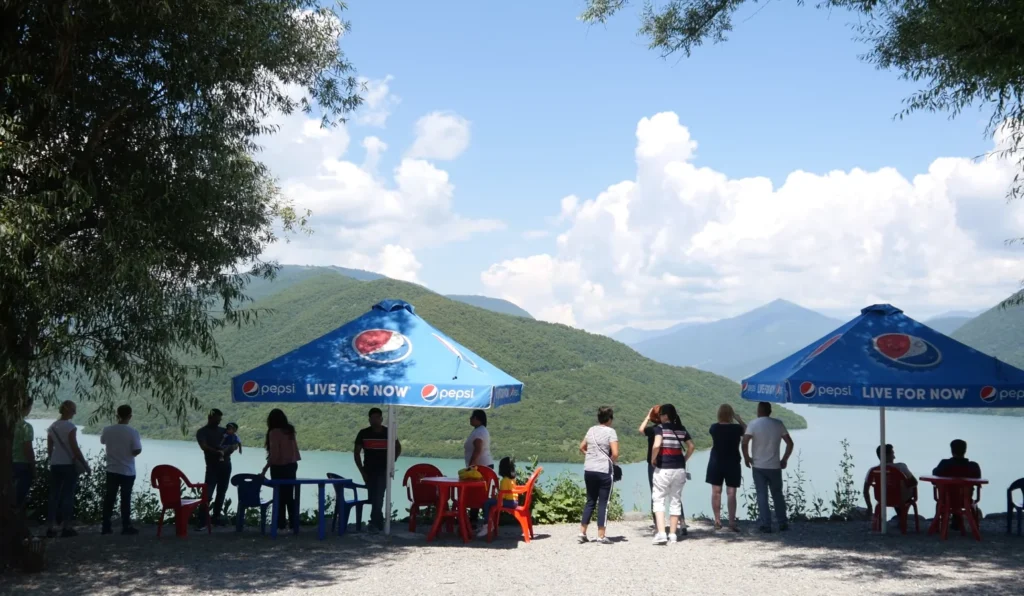
If Kakheti is Georgia’s heart, the Caucasus is it’s spine. Every road north from Tbilisi feels like it’s pulling you upward into something wild. I took this route expecting scenic views; I left with a deeper respect for how Georgians carved life into these heights.
Upper Svaneti – Living History in the Clouds

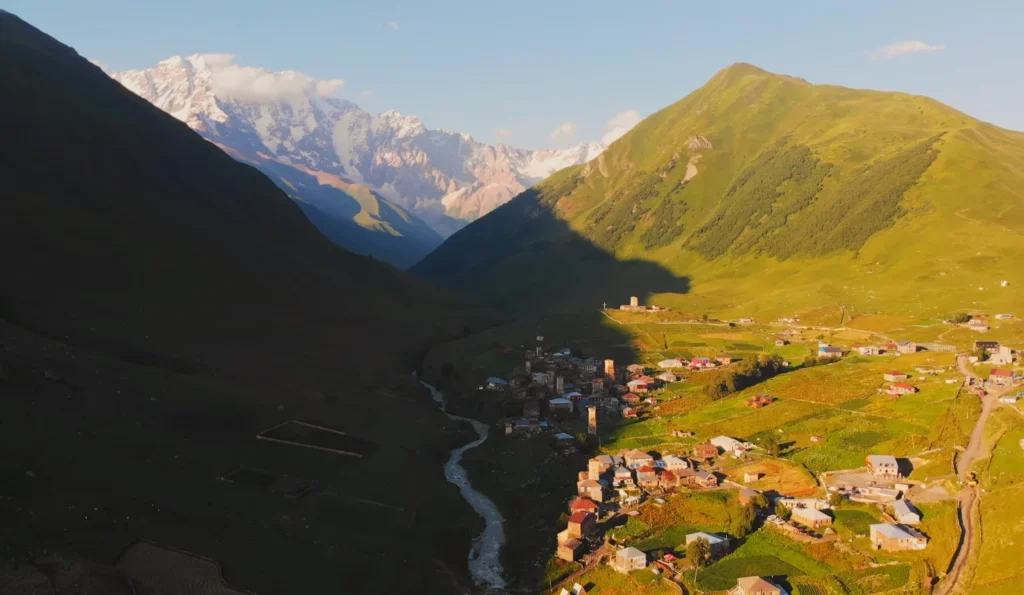
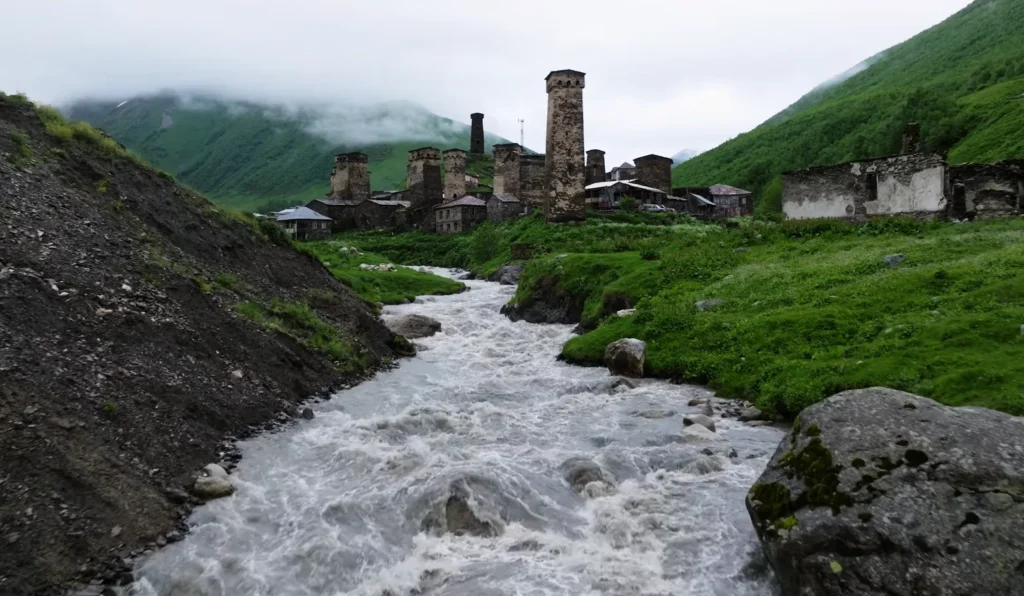
Svaneti feels ancient yet alive. The people here Svans speak their own language and their villages are fortified with centuries-old stone watchtowers built to protect families during mountain feuds. The entire Upper Svaneti region is listed as a UNESCO World Heritage Site for it’s well-preserved medieval architecture and landscape harmony.
Life at Altitude
I learned quickly that the mountains have their own rhythm. Electricity flickers, weather changes in a breath, but hospitality never wavers. Over khachapuri and mountain honey, locals talk about peaks as if they were relatives some kind, some temperamental.

Traveler’s Note: The drive from Kutaisi or Zugdidi to Mestia is long but unforgettable serpentine roads, wild rivers and every corner a new postcard.
| Road Segment | Distance | Drive Time | Highlights |
| Zugdidi → Mestia | 130 km | 4–5 hrs | Enguri River canyon, waterfalls |
| Mestia → Ushguli | 45 km | 2 hrs | Glacier views, UNESCO-protected village |
| Total Elevation Gain | – | ~2,000 m | Bring layers! |
The Black Sea Charm – Batumi and Beyond

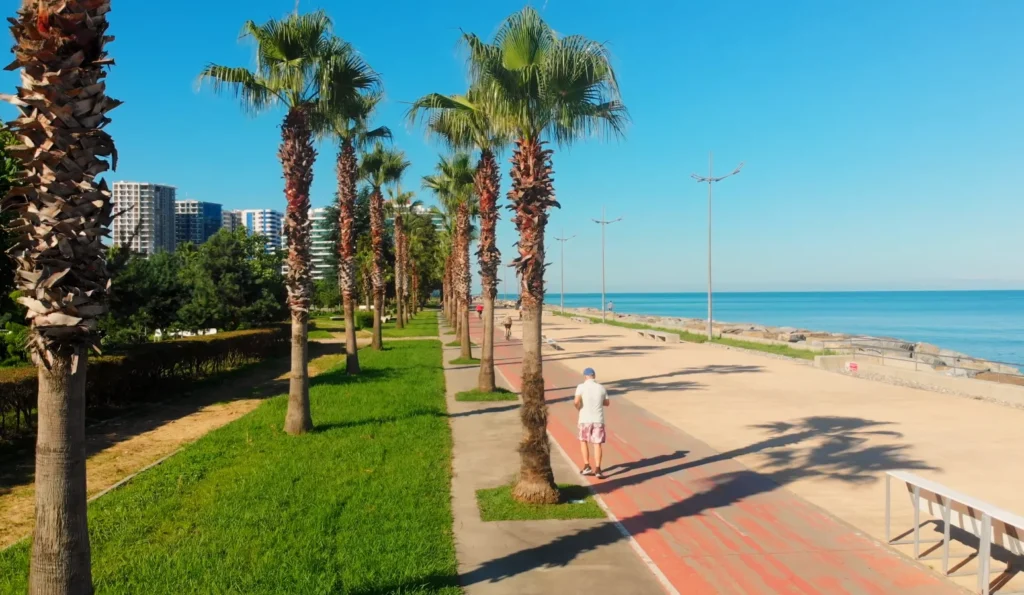
When I finally reached Batumi, it felt like Georgia had flipped genres from ancient and quiet to sleek and cinematic. Palm trees, neon Ferris wheels and the scent of sea salt replace monasteries and vineyards. Batumi is Georgia’s coastal experiment, where traditional hospitality meets modern showmanship.
The City That Never Fully Sleeps
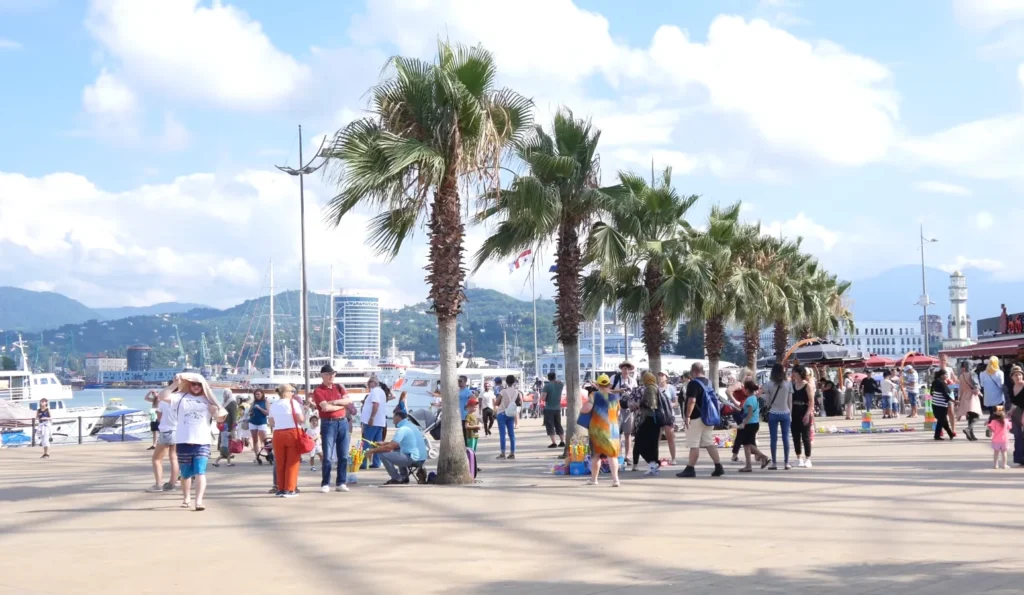
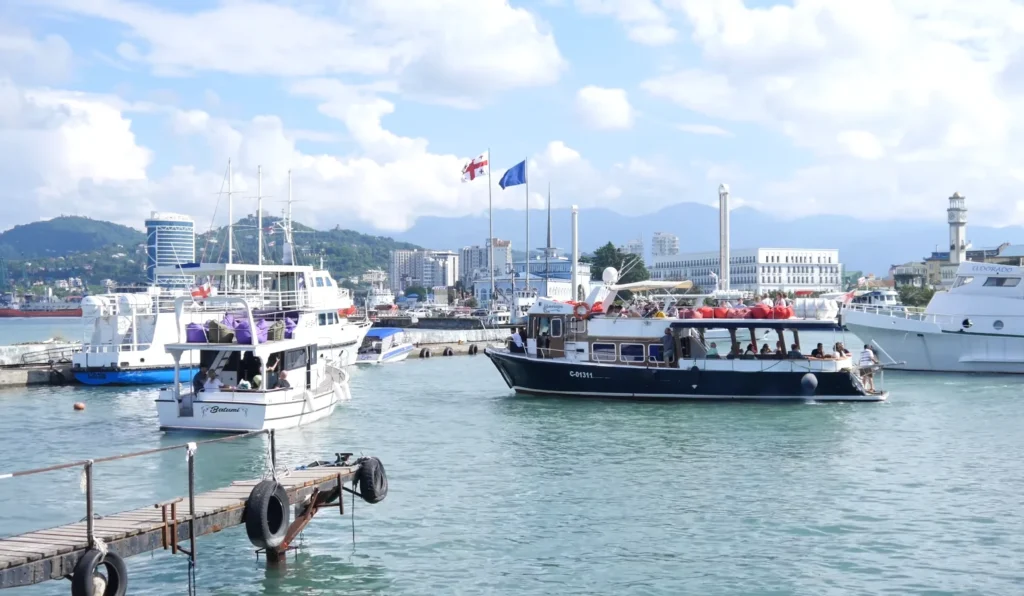
At night, the Ali & Nino statue spins slowly by the water a kinetic sculpture symbolizing an impossible love story between a Muslim boy and a Christian girl. I stood there, the city humming behind me and thought how perfectly it captures Georgia itself: layered, contradictory and deeply human.
Fact: Batumi is the capital of the Adjara region and one of the fastest-growing seaside destinations on the Black Sea, known for it’s mix of modern architecture and subtropical gardens.
What Makes Batumi Worth It?
- Modern & classic blend: A skyline of glass towers and old colonial façades.
- Walkable seafront: Batumi Boulevard runs nearly 7 km along the coast.
- Cultural twist: Mix of Georgian, Ottoman and modern European influences.
- Evenings that stretch long: Street performers, cafés and the hum of music.
Katskhi Pillar – Faith Balancing on Stone
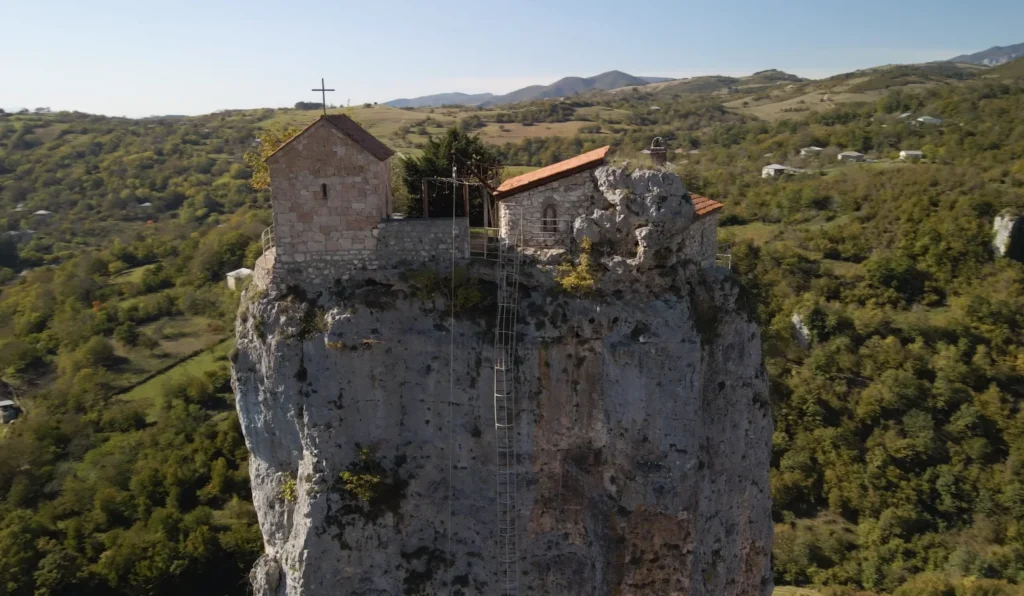
Nothing prepared me for the sight of Katskhi Pillar. Driving through Imereti, the land is all gentle green folds and villages then suddenly, there it is: a single stone spire with a church perched on top like a secret between heaven and earth.
Katskhi is both a geological marvel and a spiritual symbol. The pillar rises roughly 40 meters (130 ft) high, crowned by a small chapel reconstructed from ancient monastic remains. According to the National Agency for Cultural Heritage Preservation of Georgia, monks once lived here in isolation, accessible only by a long ladder. Walking to it’s base feels otherworldly. I remember the cicadas humming, the air still except for wind curling around the cliffs. The modern caretaker monks keep the grounds tidy, their small hermitage echoing centuries of devotion.
Quick Facts
| Detail | Description |
| Height | ~40 meters |
| Built | Original 9th–10th century, restored 1999–2009 |
| Region | Imereti, near Chiatura |
| Access | Public can visit the base only |
Traveler’s Note: If you’re photographing it, use morning light it hits the east face first and the pillar glows gold before the valley warms up.
Gori – More Than a Stop on the Map

Most people know Gori for one reason it’s the birthplace of Joseph Stalin but the town itself offers more layers once you linger. The fortress ruins on the central hill remind me how many empires fought over this place. I climbed up one late afternoon and realized Gori is both peaceful and scarred, a place that carries history without glorifying it. Below the fortress, locals stroll in the small parks and small cafés line the avenues. There’s a museum dedicated to Stalin, yes, but I prefer visiting the market it tells more truth about the city’s present. Nearby, the Ateni Sioni Church (7th century) stands quietly in a gorge, it’s carvings some of the earliest examples of Georgian Christian art.
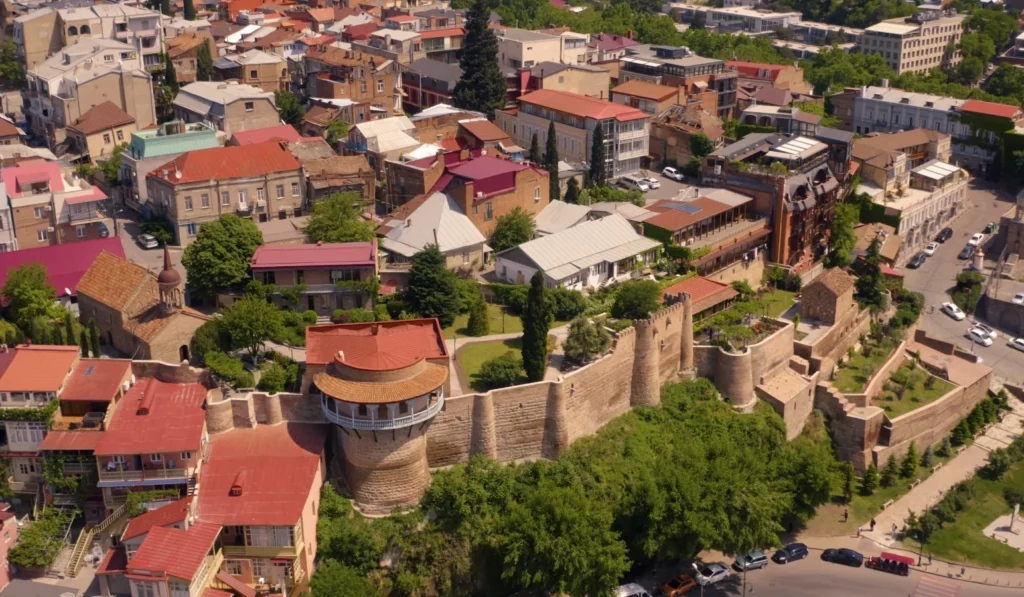
| What To See | Why It Matters |
| Gori Fortress | 13th-century structure overlooking the city |
| Ateni Sioni Church | Early Christian carvings and frescoes |
| Local Market | Everyday Georgian life, unfiltered |
| Uplistsikhe (nearby) | Prehistoric cave city (see earlier section) |
Mtskheta to the Modern Coast – Georgia’s Journey in One Line
By the time I traced my route from Mtskheta’s cathedrals to Batumi’s beach lights, Georgia had shifted under my feet more times than I could count. That’s what makes traveling here addictive it’s never just one tone.
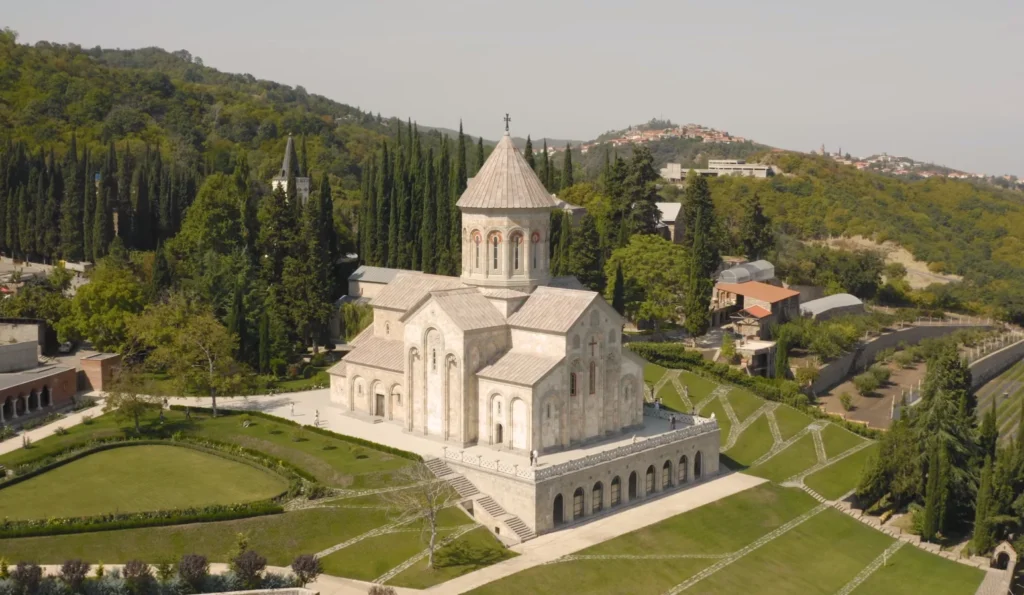
From the stone towers of Svaneti to the glass bridge in Tbilisi, you’re really watching a country telling it’s story out loud ancient faith, Soviet past, postmodern experimentation.
Fact: Georgia’s official tourism statistics show visitor numbers rising by nearly 30% annually since 2018, driven largely by cultural tourism and outdoor adventure. To me, that makes sense. Georgia isn’t a place you visit once it’s one you revisit in different moods, chasing different corners each time.
My Georgia Takeaway – Why It Stays Under Your Skin
Traveling through Georgia changed how I think about scale. It’s a country small enough to cross in a day yet layered enough to study for a lifetime. You wake up by the Black Sea, drive past wine valleys and end the evening surrounded by mountain silence.
My Ideal Georgia Itinerary
| Region | Base City | Key Highlights | Recommended Days |
| Tbilisi | Tbilisi | Old Town, Peace Bridge, Narikala | 2–3 |
| Mtskheta | — (day trip) | Jvari & Svetitskhoveli Cathedrals | 1 |
| Gori | Gori | Fortress, Uplistsikhe caves | 1 |
| Vardzia | Akhaltsikhe | Cave monastery, Samtskhe–Javakheti nature | 1–2 |
| Kakheti | Sighnaghi | Vineyards, Bodbe Monastery | 2 |
| Svaneti | Mestia | Mountain villages, towers | 3 |
| Batumi | Batumi | Seaside, modern architecture | 2 |
Final Reflection
When I left Georgia, I didn’t say goodbye I just said madloba, thank you. Because that’s what traveling here feels like: gratitude on loop. Every time I look back through my photos the mist curling over Svaneti, the glow of Batumi’s lights, the silence around, I realize Georgia never really leaves you. It just waits for your next return.