
The flight from Nairobi to the Mara is only 45 minutes. Wilson Airport, a small domestic terminal on the city’s south side, runs these bush flights constantly — mostly on Cessna Caravans, sometimes a Twin Otter if you’re unlucky with the booking. I’d read enough trip reports to know what to expect. I hadn’t read enough, turns out.
You break through low cloud somewhere over the Rift Valley escarpment and suddenly — grass. Every direction. An ocean of it, golden and flat and enormous in a way that photographs absolutely don’t capture. I pressed my face to the window like a kid and the guy next to me, a Kenyan businessman who’d done this route thirty times, laughed at me.
We landed at Olkiombo Airstrip — latitude 01°24″S if you want to be precise about it, which the sign at the gate very much is.
That sign deserves a mention on its own. Wooden frame, a dried buffalo skull mounted on top, the oval board reading Mara Intrepids / Explorer Camps. No security theater, no conveyor belts. Just red dirt, a windsock and a Land Cruiser already waiting with your name on a piece of cardboard. I’ve landed at Heathrow, JFK, Dubai — none of them hit the same way Olkiombo does. Something about the skull, maybe.
Maasai mara national reserve is about 1,510 square kilometers by Kenya wildlife service measures, but when you include the surrounding conservancies, including Maasai North, Naboisho, Olare Motorogi, then you have a total of a preserved eco system of approximately 2,500km 2. On the ground it is a matter of that context. The place is genuinely vast.
Before Sunrise — The Dawn Safari Nobody Warns You Is That Cold
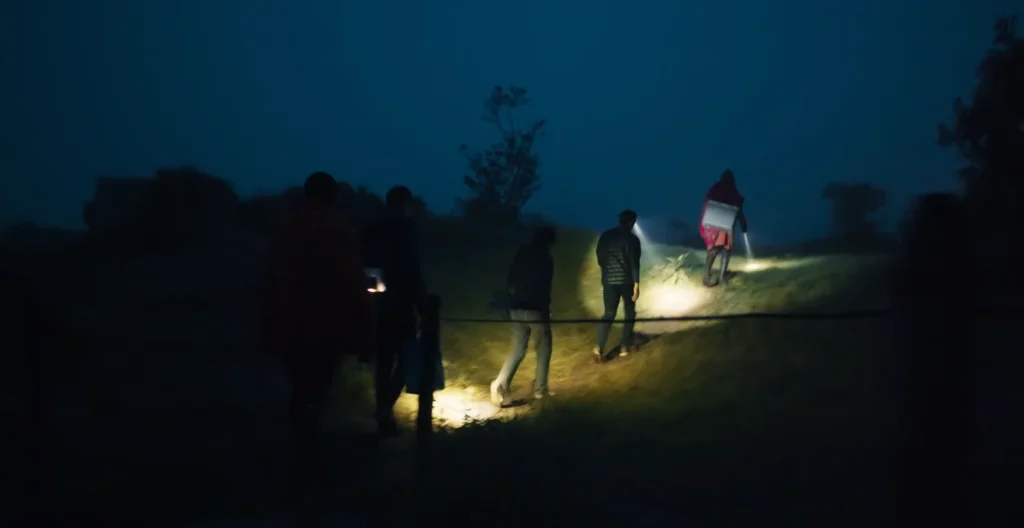
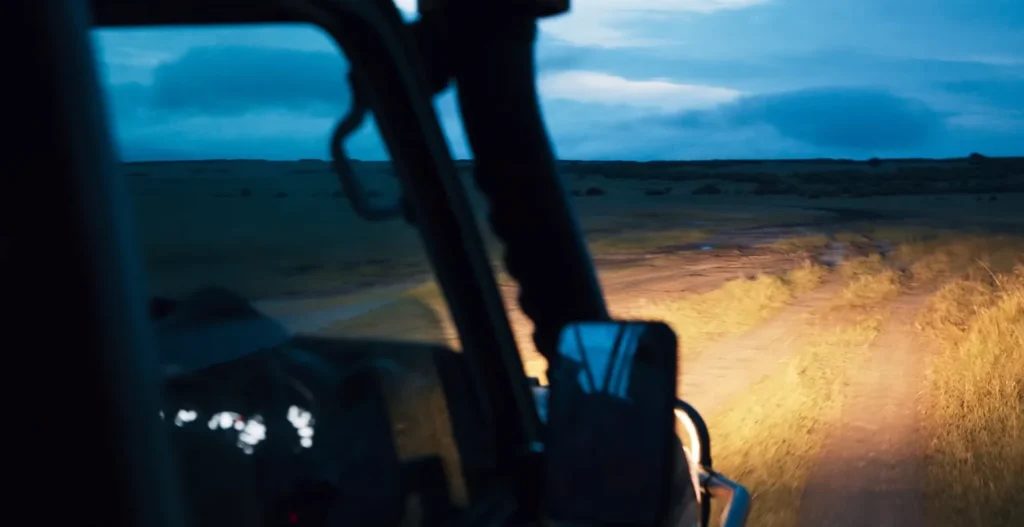
4:45 AM. Someone knocked on my tent. Not gently.
Our dhowsman, a Maasai man called Joseph, who had been reading the tracks made by animals ever since he was nine and who, like a librarian, talked about leopards, gave me a flask of chai through the tent flap and said that we should go in the next fifteen minutes. It is black and weirdly cool at the Mara that time of the day. I had three layers of clothes on me and was still feeling it.
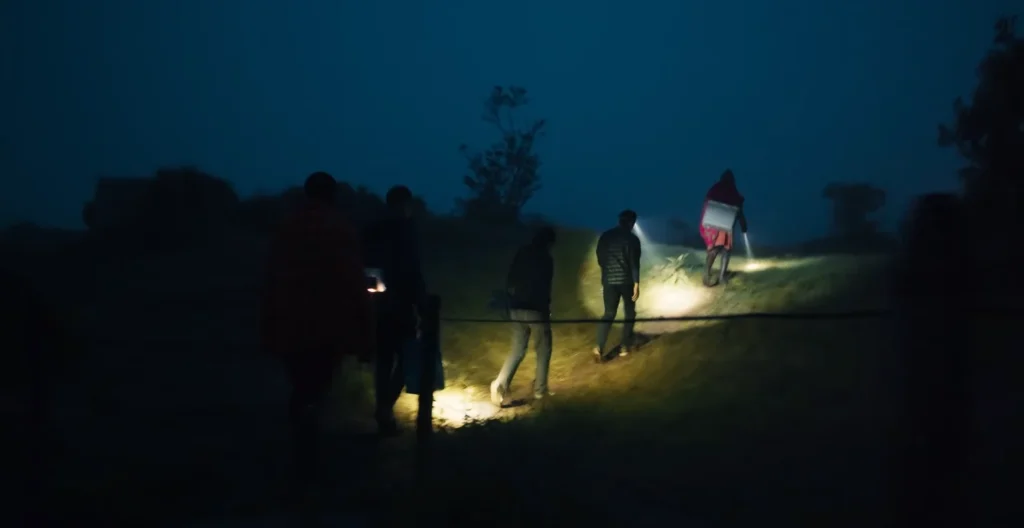
What you see in that pre-dawn walk is mostly silhouettes and breath fog. But the point isn’t what you see — it’s what you hear. The Mara at 5 AM has a sound profile that I kept trying to record on my phone and could never capture properly. Hippos groaning somewhere near the river. Something moving through grass you can’t see. A hyena, far off, doing that descending whoop that sounds deeply wrong coming out of darkness.
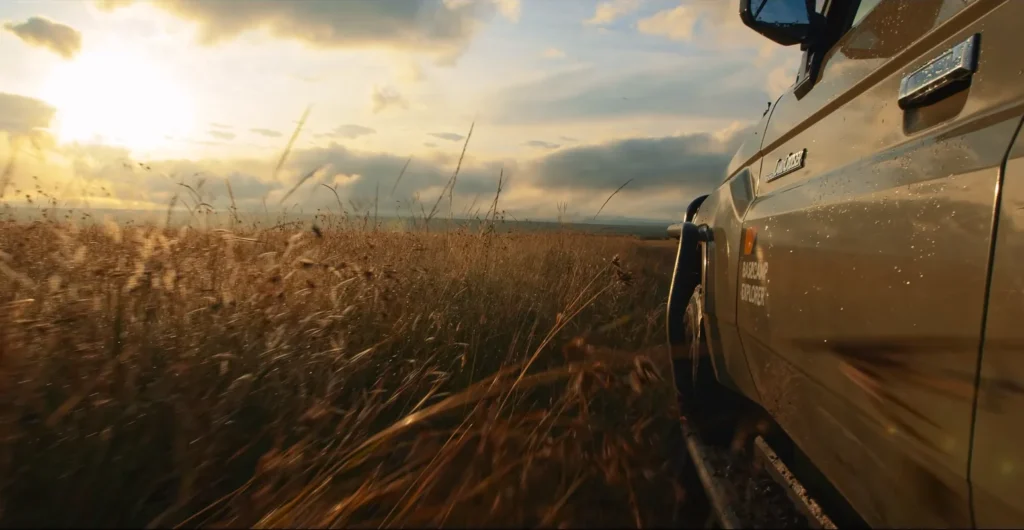
The drives themselves start the moment there’s enough light. And there’s something specific about the quality of early Mara light — the way it comes in low and amber across the grass — that makes everything look like a wildlife documentary, except you’re actually there, sitting on a roof hatch in a Land Cruiser with dust on your teeth.
Best times for game drives, by objective outcome:
| Time | Light Quality | Animal Activity | Crowd Level |
| 5:30–8:30 AM | Golden, low-angle | Very high — predators active | Low |
| 9:00–11:00 AM | Flat, bright | Medium | Medium |
| 12:00–3:00 PM | Harsh overhead | Low — animals resting | High |
| 4:00–6:30 PM | Golden hour again | High — hunting resumes | Medium |
Joseph told me most tourists take the midday game drive because it fits the lodge lunch schedule. He said this with the diplomatic neutrality of a man who has watched thousands of people miss everything.
The Big Cats — Cheetah, Leopard and an Afternoon I Keep Thinking About
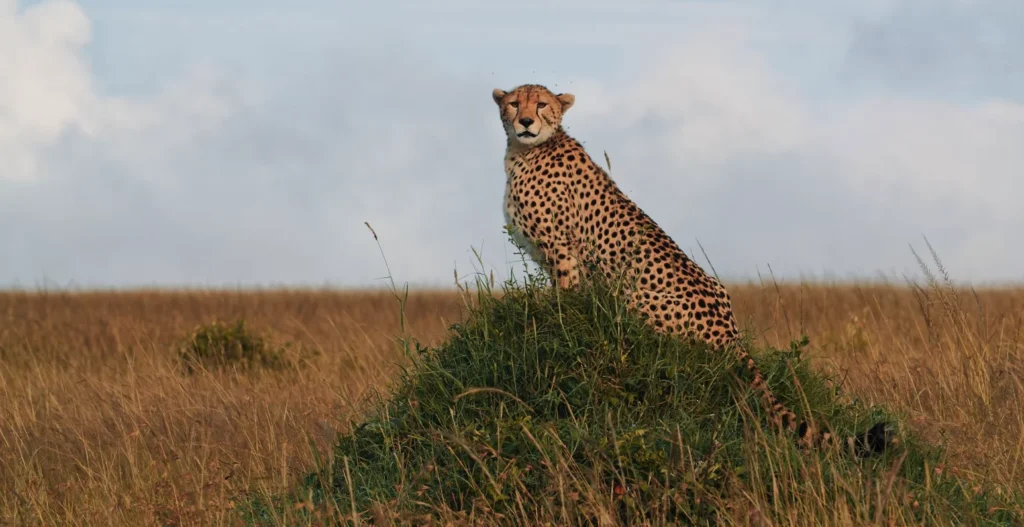
The cheetah was the first big cat I spotted — or rather, Joseph spotted her and I spotted her thirty seconds later once he’d pointed at a specific termite mound from 400 meters away. She was just sitting there. Perched on the mound’s peak, ears up, scanning. Cheetahs use elevated ground as observation points — the African Wildlife Foundation documents this hunting behaviour extensively — but knowing the biology doesn’t blunt the experience of watching it happen in real time.
She sat there for a solid twenty minutes. Unhurried. The whole Mara spread out behind her like it was hers, which, honestly, it kind of is.
Quick facts — Masai Mara’s big cat population:
- 🐆 Cheetah: Estimated 50–60 individuals across the greater Mara ecosystem.
- 🐆 Leopard: Highly territorial, lower density — roughly 100+ across conservancies.
- 🦁 Lion: Approximately 850–900 lions in the greater Mara-Serengeti ecosystem.
The leopard came later. Two of them, actually — different days, completely different moods.
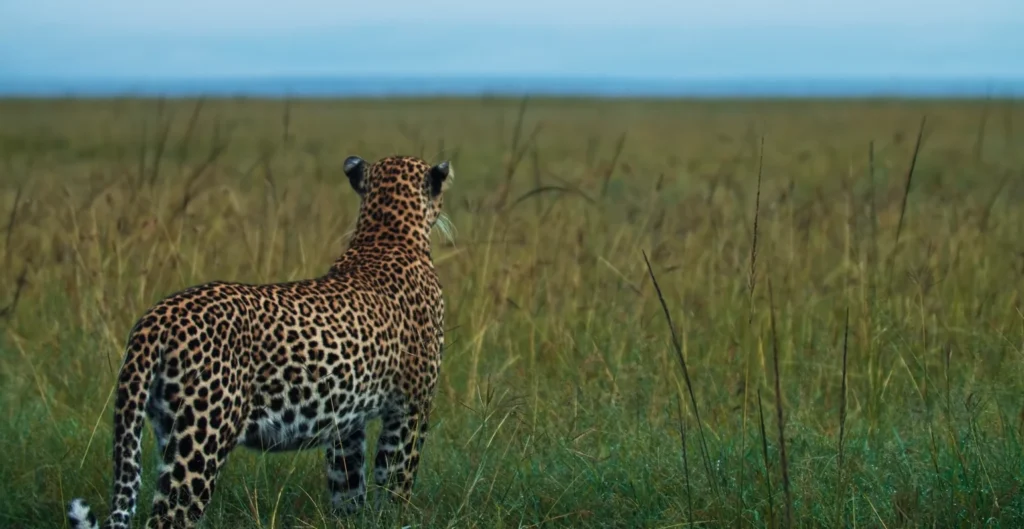
The first one was standing in green grass at dusk, back completely turned to us, staring into the plains. We sat with that leopard for maybe ten minutes and it never once acknowledged the vehicle. Joseph said female leopards do this — they’ll stand and scent-mark their range at dusk and a Land Cruiser is basically furniture to them at this point.
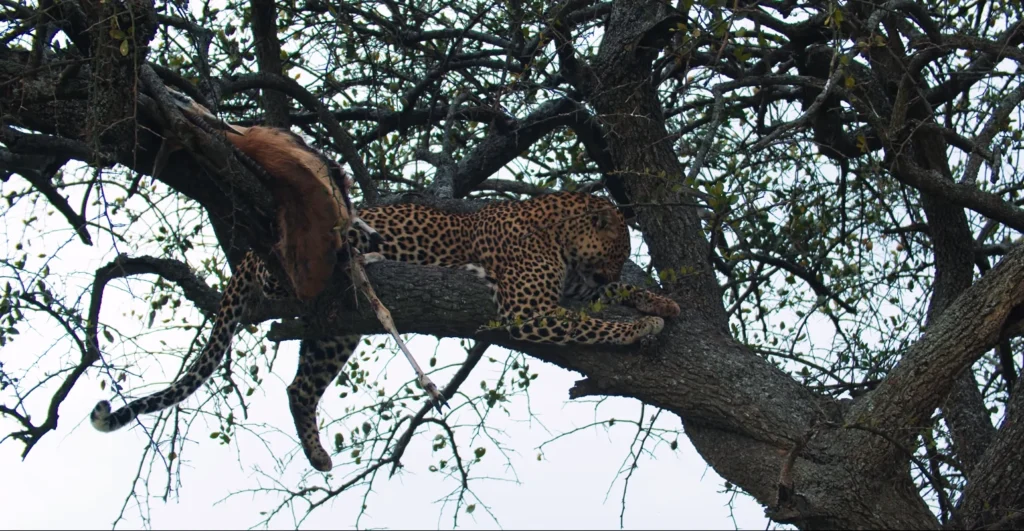
The second one… different story entirely. She’d made a kill — looked like a topi or impala, hard to tell from what was left — and hauled it up into an acacia tree. Both the carcass and the cat were draped across a thick horizontal branch, legs hanging on either side. Leopards cache kills in trees to protect them from hyenas and lions, which can’t climb effectively enough to steal from that height. The National Geographic breakdown on leopard behaviour explains the mechanics, but sitting underneath that tree listening to her feed — that’s a different education entirely.
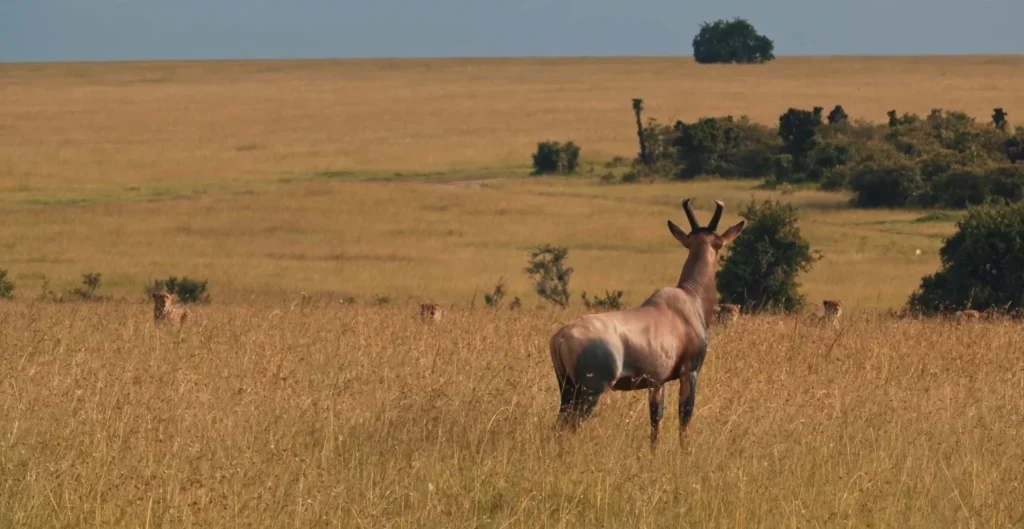
And then there was this frame — which I didn’t even fully clock until I looked at my photos that night. A topi standing square in the golden grass, horns up. And there, low in the background, three cheetahs spread wide, creeping. The topi either knew and was frozen, or had no idea. I genuinely don’t know which. We watched for fifteen minutes. The cheetahs eventually abandoned it — something spooked them, maybe us — and the topi trotted off without drama. But that image. The topi doesn’t know it’s in the photograph.
The Elephants — Nothing Prepares You for the Scale of Them
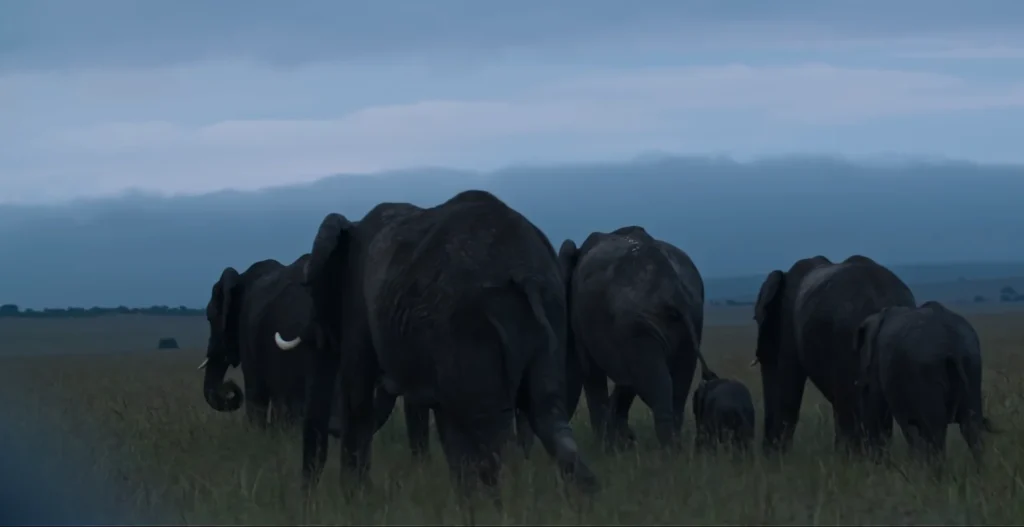
When we discovered them it was nearly dark. not one, two, but a breeding herd of them, perhaps fourteen, going through the long grass in the same slow, careful manner in which the elephants move and cause you to think nothing serious is at stake. The light had turned blue-grey, the sort of a dusk that puts all things heavier than they are.
What caught me first wasn’t the big matriarch out front. It was the calf — barely visible, tucked completely between the legs of two adults, moving in lockstep. The herd just absorbed it. Didn’t look down, didn’t slow — the calf simply existed inside this living wall of grey and kept pace without any fuss. I watched that for a while.
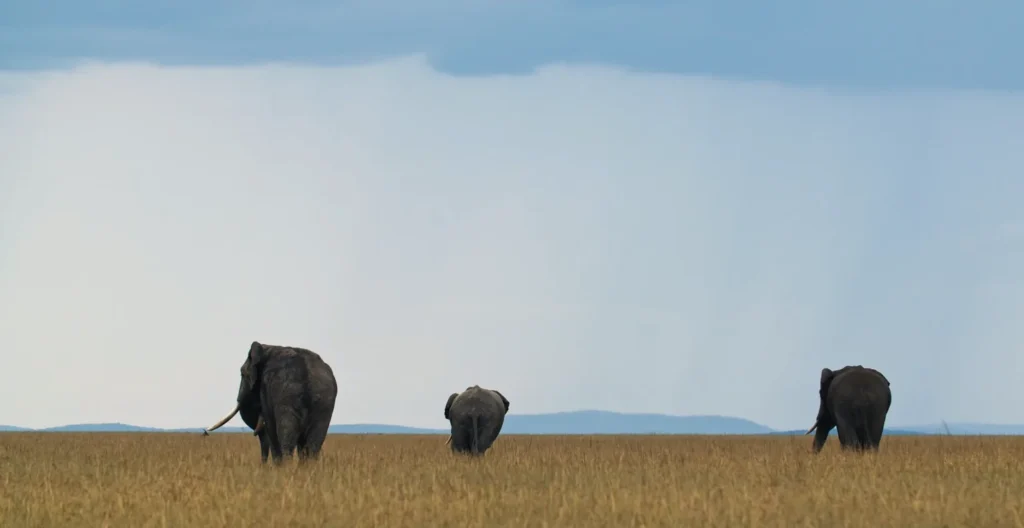
The second elephant encounter was compositionally almost the opposite — three adults walking away across completely open savannah, the sky taking up two-thirds of the frame, storm clouds building over the Tanzanian border. They were tiny against it and also enormous. Both things at once. African bush elephants are listed as Endangered on the IUCN Red List, with the East African population having declined roughly 30% between 2006 and 2016. Standing there watching three of them disappear into that sky, that number lands differently than it does on a page.
African Elephant — Key Facts:
| Detail | Data |
| Average weight (male) | 5,000 – 6,000 kg |
| Gestation period | 22 months — longest of any land mammal |
| Daily food consumption | Up to 150 kg of vegetation |
| Home range | 50–100 km² in Mara ecosystem |
| Conservation status | Endangered (IUCN, 2021) |
When we discovered them it was nearly dark. not one, two, but a breeding herd of them, perhaps fourteen, going through the long grass in the same slow, careful manner in which the elephants move and cause you to think nothing serious is at stake. The light had turned blue-grey, the sort of a dusk that puts all things heavier than they are.
Everything Else — Baboons, Zebras, Giraffes and the Mara River Bank
Not every moment in the Mara is a predator encounter. Some of it is just — everything else being extraordinary.
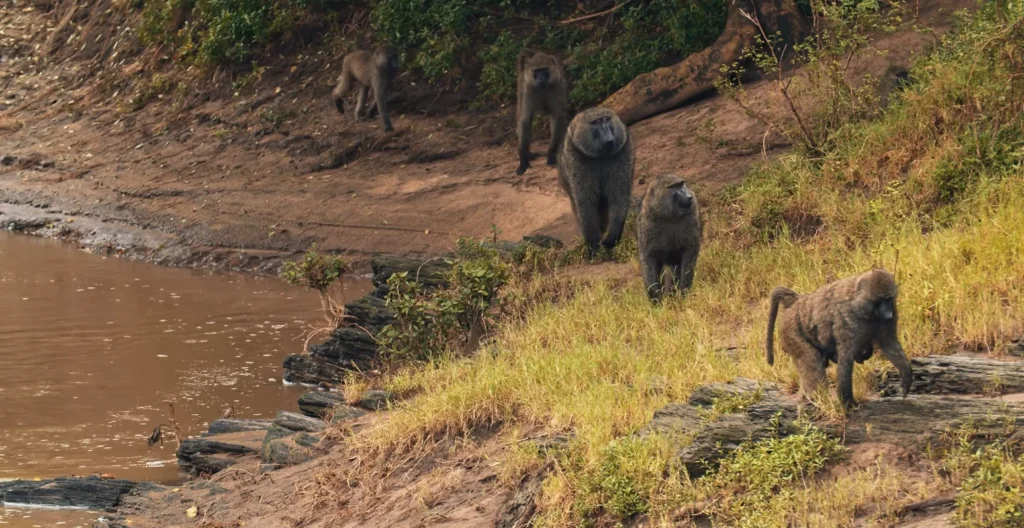
The baboons on the river bank were one of those unplanned stops. We’d been tracking a leopard that eventually vanished into thick bush and Joseph swung the vehicle toward the Mara River to check on a crossing point. Instead — baboons. A whole troop working the rocky ledge above the brown water. One large male, chest out, staring directly at us with the specific expression of someone who doesn’t want a conversation. The Mara River’s colour that morning was this deep, churned brown — the kind of water you don’t want to think too hard about, given what lives in it. Nile crocodiles in the Mara River can reach over 5 meters. The baboons seemed unbothered. Good for them.
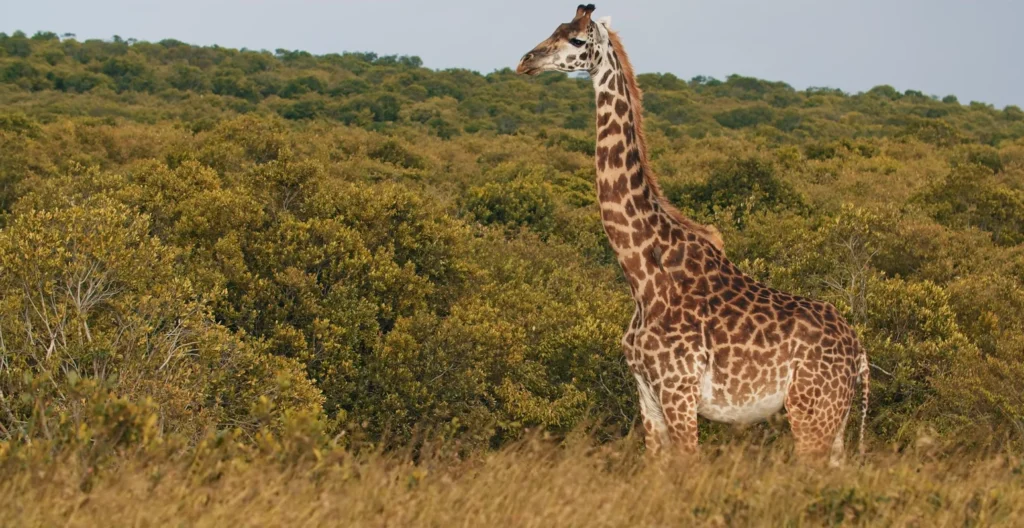
The giraffe I almost missed at all. We had gone slowly through more of a scrubbing region, not open savannah as a rule, but all at once there was a neck. Nothing more, merely a neck and out of the canopy like it was part of it, which it was. The subspecies here being the masai giraffes, they are slightly darker than other subspecies in patterning, the patches of them being more jagged along the edges. this was small, still growing and was found peering over the tops of the acacias with that long, prehensile tongue which is able to take off the thorns of a branch before it has time to change speed. It looked at us and consequently returned to eating.
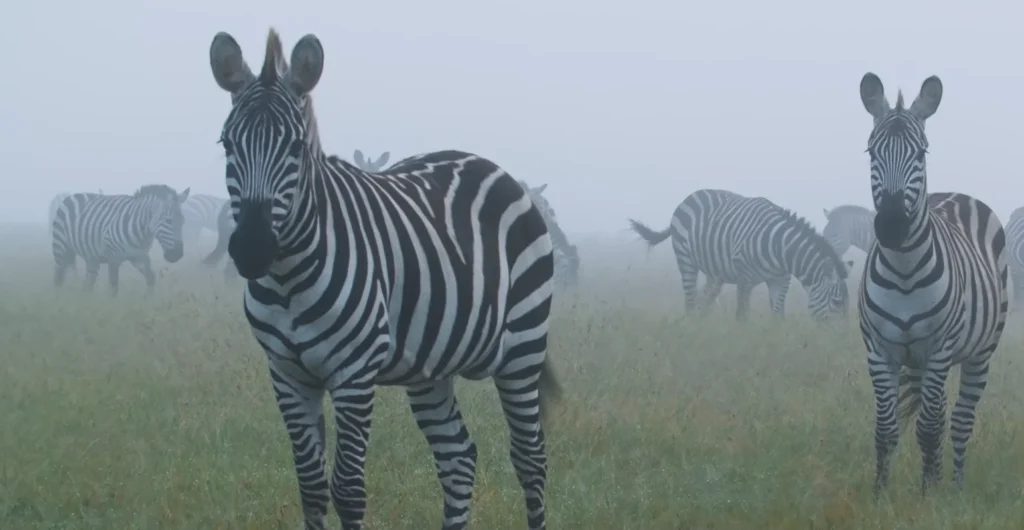
The zebras in fog – I was not quite prepared to see that frame. We had cleared off in an early morning when the mist had not risen yet and we turned round a low swell and there they were: a herd of perhaps thirty plains zebras, 2 of them looking directly out at us at a range of fifteen meters, the rest disappearing into the white. The fog made them a graphic, black and white geometry, rendered into grey. Between July and October, plain zebras cross the mara in the hundreds of thousands, with the wildebeest and this is the great migration, which most people make trips to see. I was there in April, at least in their standards, off-season and still could not move in time to be able to get between the zebras most of the mornings.
Wildlife Encounter Summary — What I Saw and When:
| Animal | Encounter | Time of Day |
| Cheetah | Solo female on termite mound | Morning |
| Leopard (×2) | Standing at dusk / feeding in tree | Evening / midday |
| Lion pride | Female with cubs in bush | Afternoon |
| Elephant herd | Full breeding herd with calf | Dusk |
| Giraffe | Solo juvenile in dense scrub | Morning |
| Baboons | Troop on Mara River bank | Morning |
| Zebra herd | Fog encounter, ~30 individuals | Early morning |
| Topi + cheetahs | Stalk sequence, abandoned | Afternoon |
The Conservation Side — A Nursery in the Middle of Everything
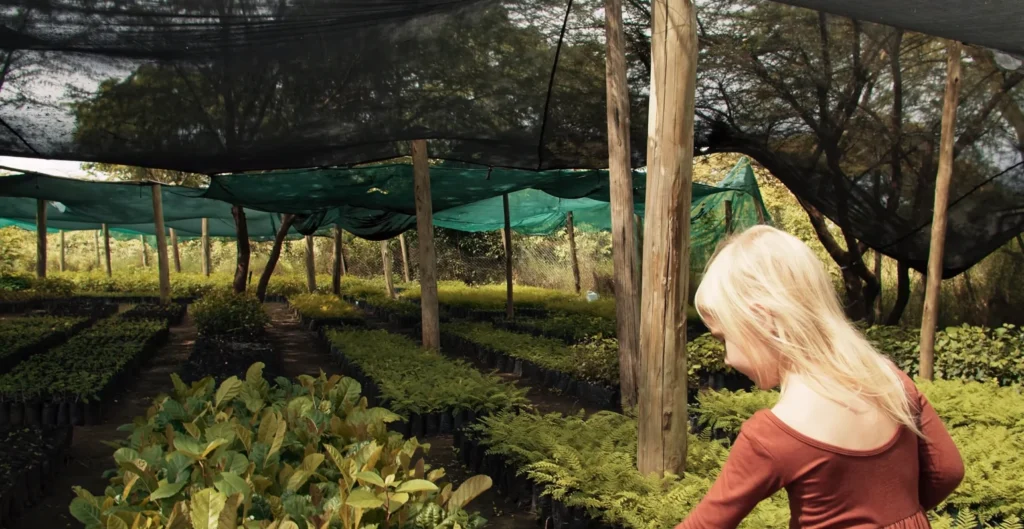
This was not a planned stop and it was one of the more interesting hours of the entire trip. On day three, Joseph took us to a reforestation nursery that is being run on the periphery of the reserve one that is shade netting on poles, black plastic bags of seedlings, growing ferns and broad-leafed saplings and then being replanted in degraded buffer zones. A blonde-haired woman was squatting between the lines looking at something on a leaf. She turns out to be a botanist, Danish and had worked on this project two seasons.
She described the issue in simple terms which is that the Mara ecosystem relies on the Mara and Talek rivers, which rely on the Mau Forest catchment in the north. According to UNEP report, the Mau has lost more than 25 percent of its cover over the past decades because of encroachment and charcoal production. Fewer forest areas mean fewer waters mean less grass in the dry season mean less prey mean less predators. The nursery was part of a far many more serious attempt at inverting that.
It’s easy to do a safari and treat it as pure spectacle. This stop was a reminder that the spectacle has plumbing and the plumbing needs maintenance.
Key conservation organisations active in the Mara ecosystem:
- Mara Conservancy — anti-poaching and land management.
- African Wildlife Foundation — community conservation programmes.
- Basecamp Explorer Foundation — carbon credits, reforestation, Maasai partnerships.
- Mara Elephant Project — elephant tracking and human-wildlife conflict mitigation.
Practical Notes — What I’d Tell Anyone Planning This
When to go:
The Great Migration river crossings peak July–October. That’s also peak crowds and peak prices. April–June is the long rains — fewer tourists, dramatically lower rates and the grass is green in a way that changes the whole mood of the photography. I’d go back in April without hesitation.
How to get there:
- Nairobi (JKIA or Wilson Airport) → domestic flight to Olkiombo, Keekorok, or Mara North airstrips — roughly 45 minutes.
- Road from Nairobi via Narok — about 5–6 hours, last 50 km on corrugated murram. Doable. Not comfortable.
What to pack — the non-obvious list:
- Buff or neck gaiter — dust on open vehicles is relentless.
- Layers, not just a light jacket — 5 AM game drives in the Mara are genuinely cold even in summer.
- Lens cloth for camera — dust again.
- Offline maps downloaded — signal in the reserve is patchy at best.
- Earplugs for the tent — hippos are loud neighbours.
Budget snapshot (approximate, 2024–2025):
| Item | Approximate Cost |
| Domestic flight Nairobi–Mara | $150–$250 return |
| Mid-range tented camp (per night, full board) | $350–$600 |
| Luxury conservancy lodge | $800–$1,500+ |
| Park fees (non-resident) | $80–$100 per day |
| Tipping guide (per day, recommended) | $20–$30 |
One last thing — and I say this without any romanticism meant — the Mara doesn’t owe you anything. You can spend four days there and miss the migration, miss the leopard, miss the crossing. Or you can spend two days and see everything. The place operates on its own schedule entirely. The best thing I did was stop treating each drive like a checklist and start just watching whatever was in front of me. A dung beetle moving a ball twice its size across red dirt. Oxpeckers working the neck folds of a buffalo. The way the grass moves when there’s nothing visible in it but something definitely is.
That’s the Mara. It gives you what it gives you. And it’s always enough.