
I will never forget that moment when I got out of that Air Greenland aircraft. It was like a wall of cold – not the cold that you have in New York in winter, but something somewhere deeper. A place that makes you instantly realize that you are in a totally different world than it is in any other part of the world.
Greenland was not even supposed to be on my list of travel list this year. Perpetration of Hell, it was not on anybody I knew. However, there is one instance when the most surreal travel occurs unpredictably.
Getting There: The Reality of Arctic Travel
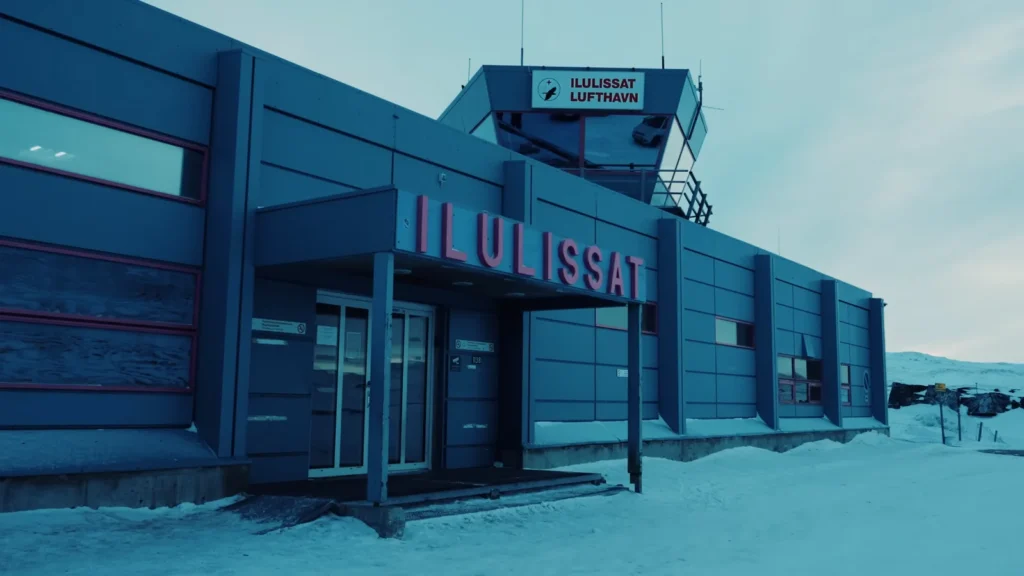
It was surreal to fly into Ilulissat. The terminal is there as some sort of Arctic post – which, as I suppose, it is. You do not simply fly to Greenland as one would fly to Paris or Tokyo. This requires planning.
Flight Connections and What Nobody Tells You
Majority of the roads pass over Copenhagen or Reykjavik, and this is what I got to know the hard way: it is not only an idea that there is a flight between them. The thing is that weather cancellations exist, and they do not occur as infrequent as you may imagine. I also had an additional day in Copenhagen since the Kangerlussuaq airport was closed down due to storms.
Essential flight tips:
- Book with at least one buffer day
- Pack essentials in carry-on (my checked bag took an extra day to catch up)
- Download offline maps before you lose cell service
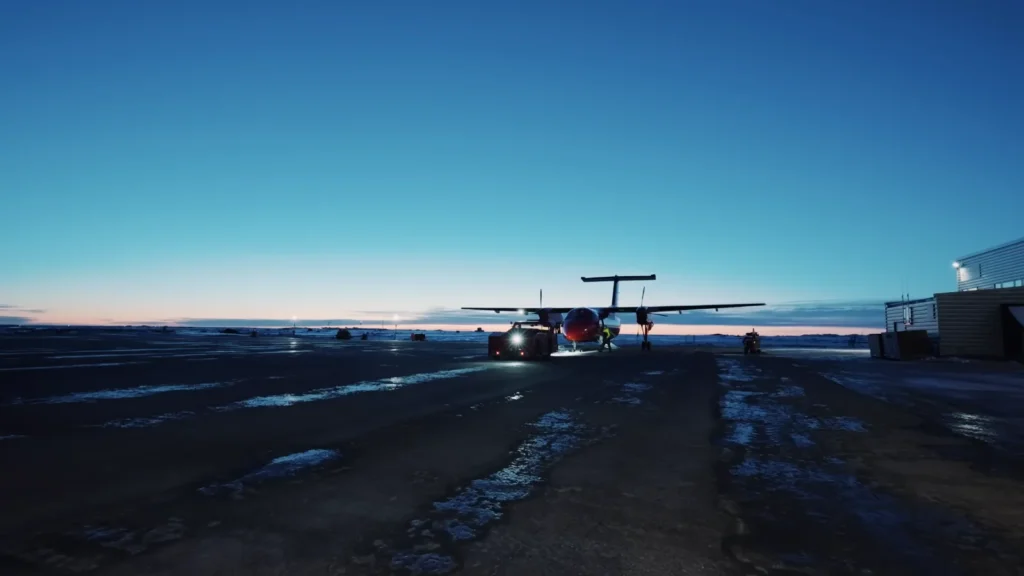
The internal flights in the cities of Greenland? Even more unpredictable. These jetliners are tossed like toys in the Arctic breezes. But the pilots are not doing something new, they have been flying these routes all their professional lives.
Visa Requirements and Documentation
Here is one of the things that amazed me: you do not require a special visa to Greenland, in case you are an American. It belongs technically to Denmark and all the Schengen rules take effect. But carry your passport – they will certainly have a glance at it.
First Impressions: Ilulissat and the Weight of Isolation
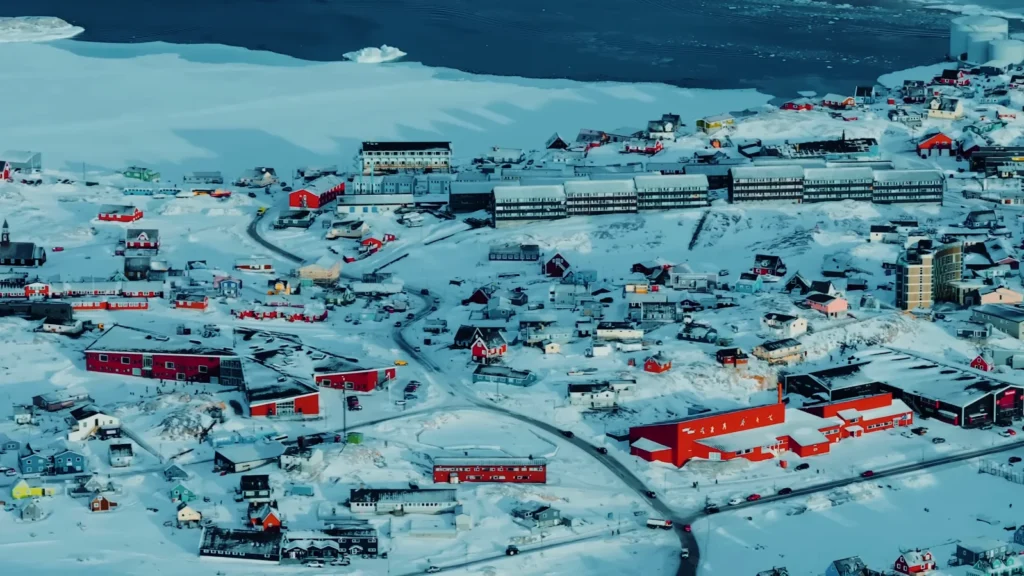
The cold or even the pointless whiteness is not the first thing that strikes you. It’s the silence. Not silent stillness – I do not mean that deep silence which turns the noises of the city into a thing of another world.
Ilulissat is like a set of Technicolored LEGO pieces that somebody has thrown over an unbelievably white terrain. Population: about 4,700. It is its third-largest city in Greenland, which ought to say something about the scale here.
The UNESCO World Heritage Icefjord
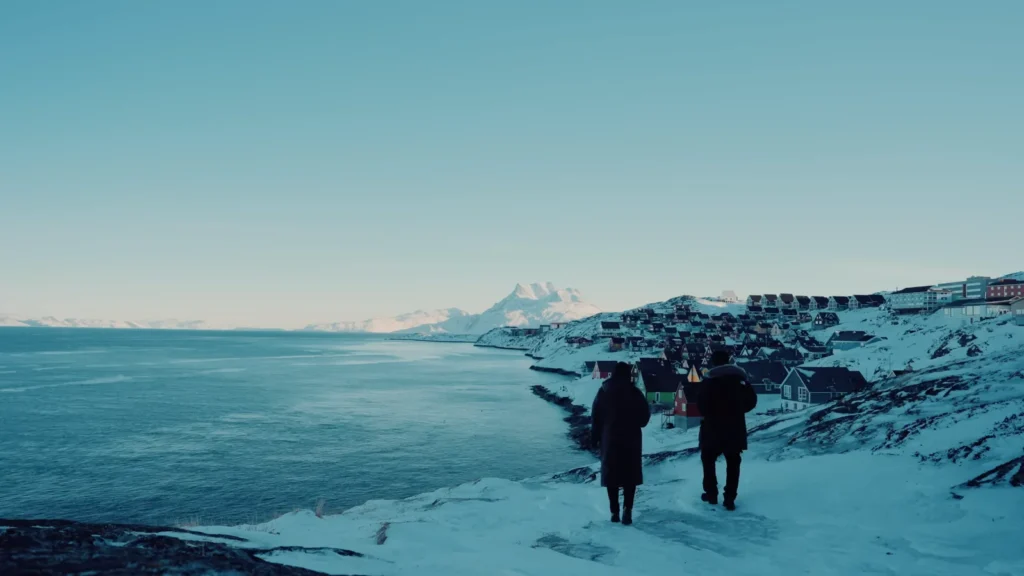
Something in me was changed by walking along the Ilulissat Icefjord. These are not mere large boulders of ice, but time-honored. Part of this ice is thousands of years old and now it is shedding off glaciers and floating to the sea.
The natives told me that icebergs of this fjord finally reach Newfoundland. Suppose that – ice, which begins here, where I stand, drifts away floating past Canadian fishing boats, some months later.
Living with the Arctic: Daily Life in Ilulissat
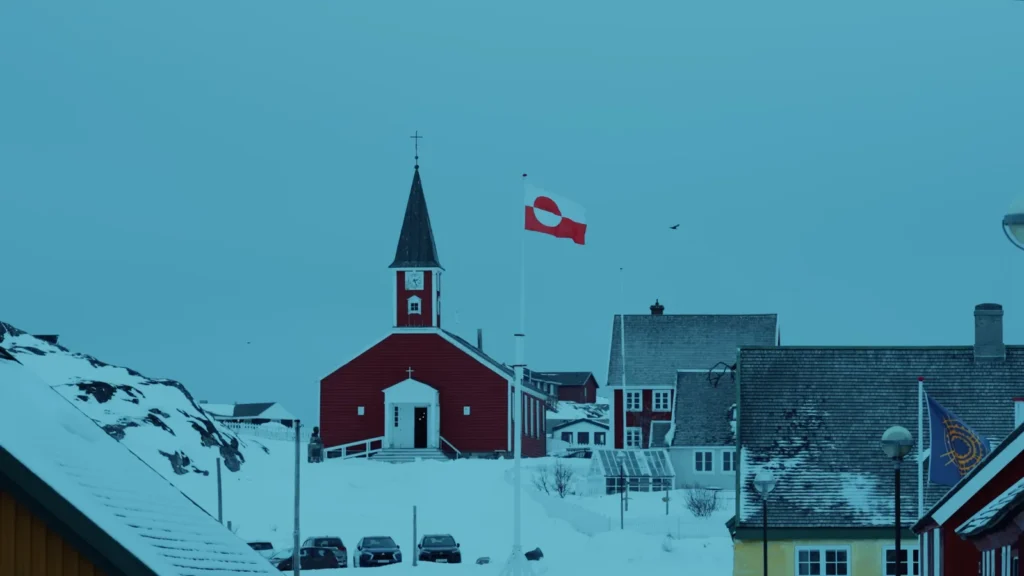
Those brightly colored houses aren’t just for show – though they’re incredibly photogenic. The colors help people navigate during the months when everything else is white. Red, blue, yellow, green – they become landmarks when GPS doesn’t always work and street signs get buried in snow.
I stayed with a local family (Airbnb exists here, surprisingly), and learned that heating costs can run over $500 a month. Everything gets shipped in during the summer months when the sea isn’t frozen. A gallon of milk? About $8. A basic meal at a restaurant? Easily $40-50.
Daily life reality check:
- Internet exists but it’s expensive and sometimes unreliable.
- Most people speak Danish and Kalaallisut (Greenlandic)..
- English is common in tourism areas.
- Cash still matters – bring Danish kroner.
The Cultural Heart: Museums and Traditional Life
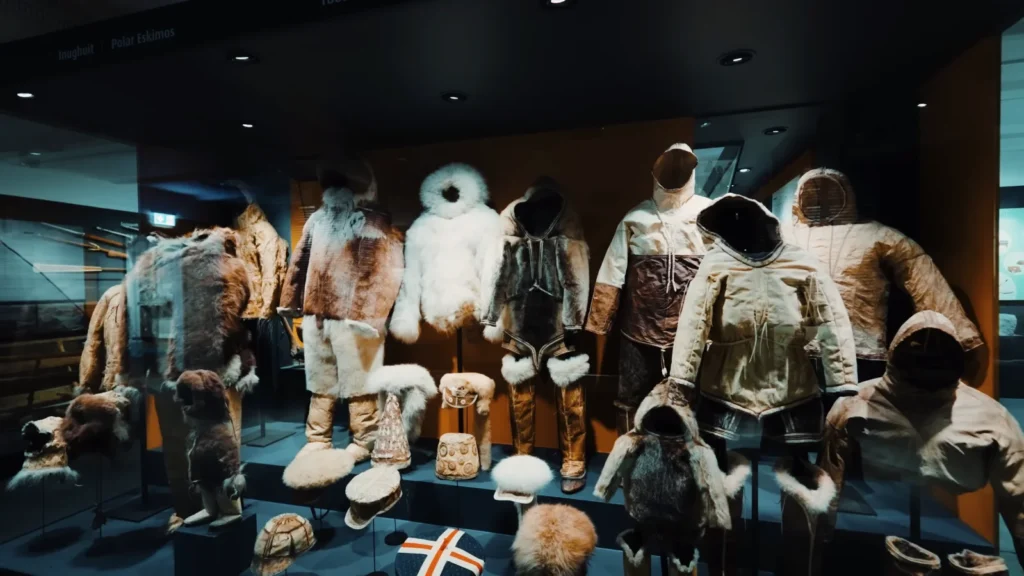
The Ilulissat Museum isn’t like museums back home. It’s raw. Real. Walking into that recreated traditional room felt like stepping into someone’s actual life from 50 years ago.
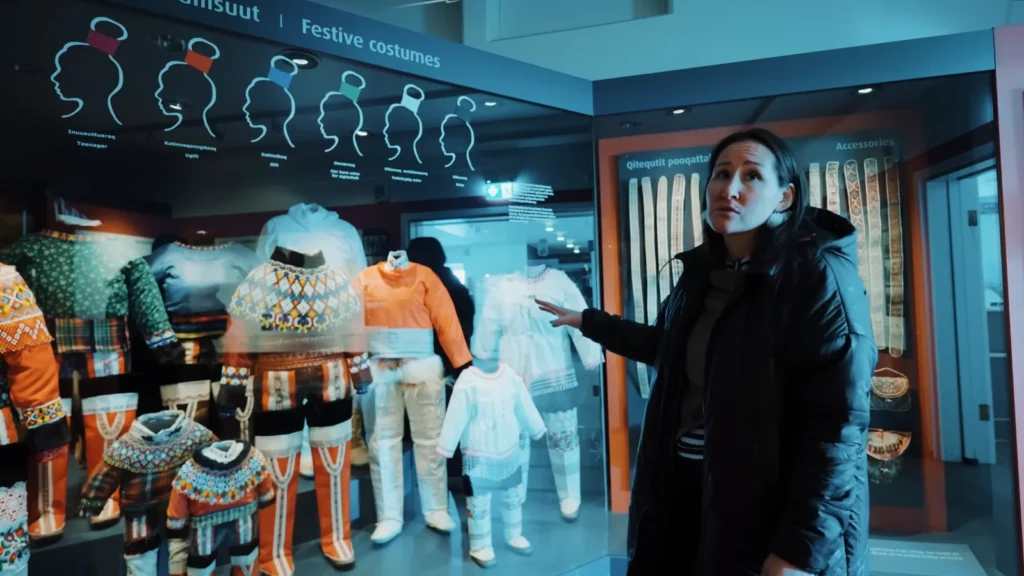
The traditional clothing display stopped me cold. These aren’t costumes – they’re survival gear designed by people who understood Arctic life better than any modern outdoor gear company. Sealskin boots that stay waterproof. Parkas designed to trap heat in ways that made perfect sense once you understood the science behind them.
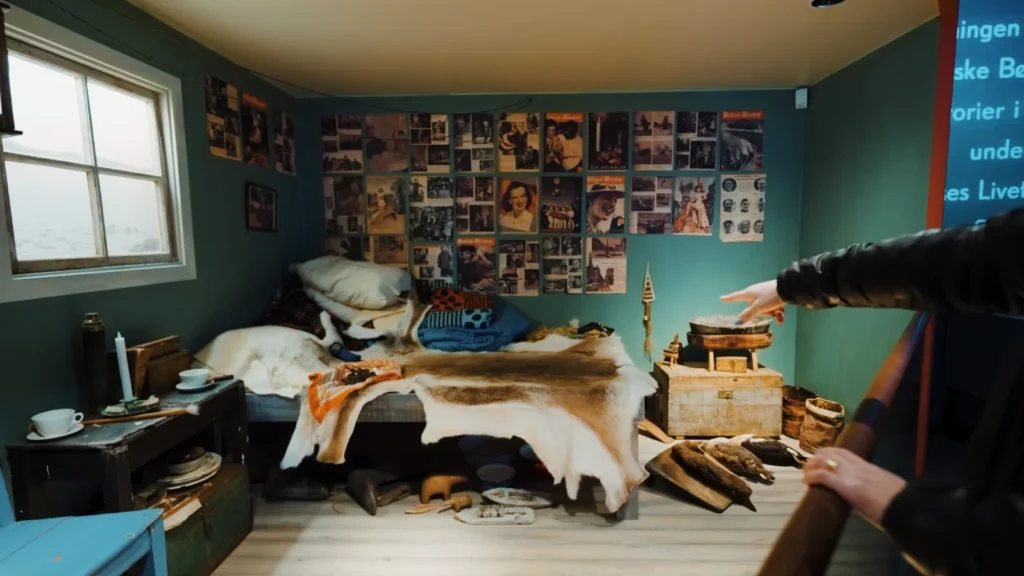
What got me most was the everyday objects. Coffee cups, old photographs stuck to walls, tools worn smooth by daily use. This wasn’t ancient history – this was how people lived until very recently. Some still do.
Learning Traditional Skills
I convinced a local guide to teach me basics of ice fishing. Big mistake thinking I knew anything about cold-weather fishing.
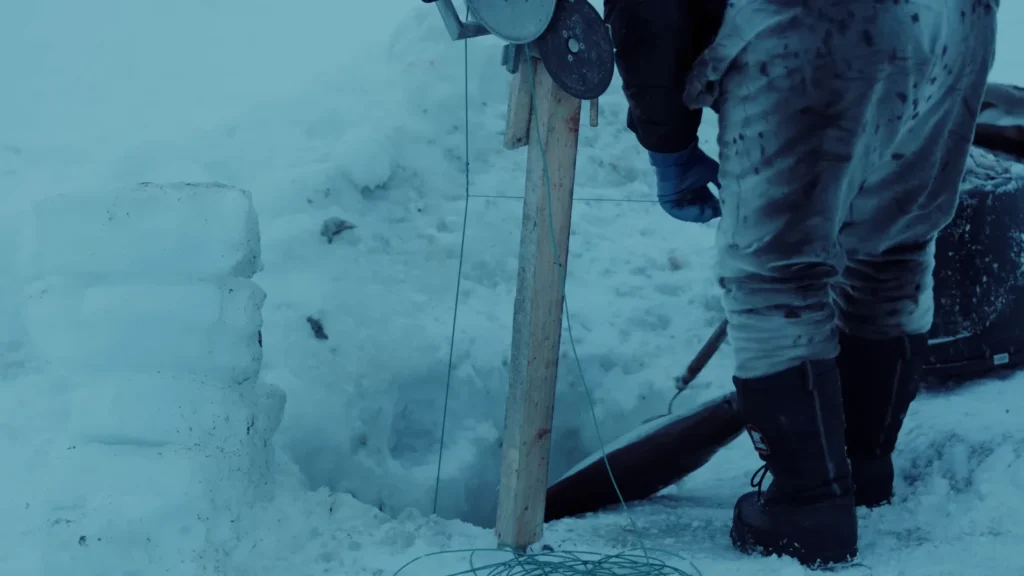
That ice? It’s over three feet thick in some spots. The locals don’t just drill holes and hope – they know exactly where fish gather, what time of day works best, how to read ice conditions. I caught nothing. They caught dinner.
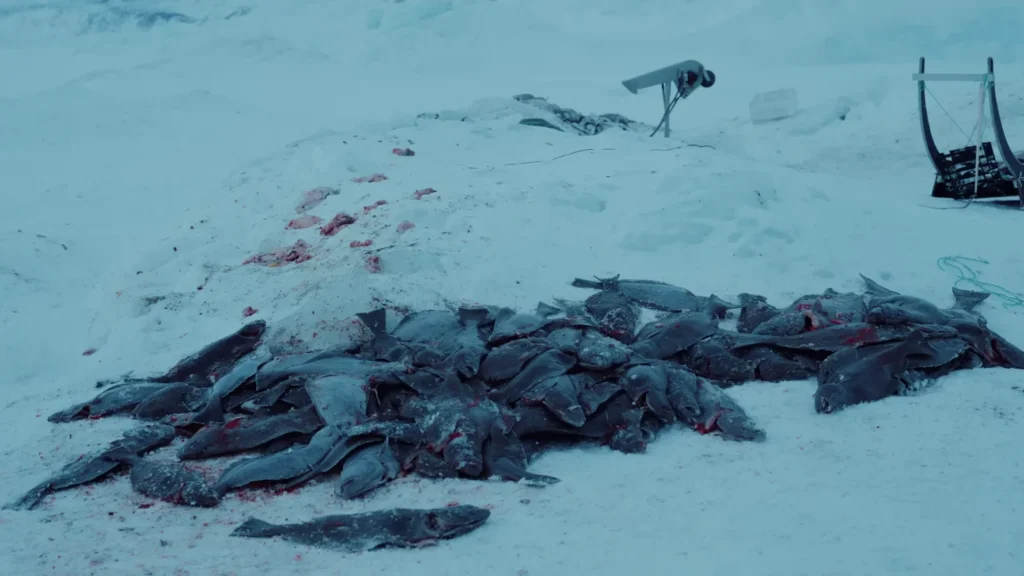
The aftermath of a successful fishing trip looks pretty intense when you’re not used to it. Fish laid out on snow, blood everywhere, immediate processing because nothing stays fresh long in this environment. It’s not Instagram-friendly, but it’s honest.
From Small Town to Capital: The Shock of Nuuk
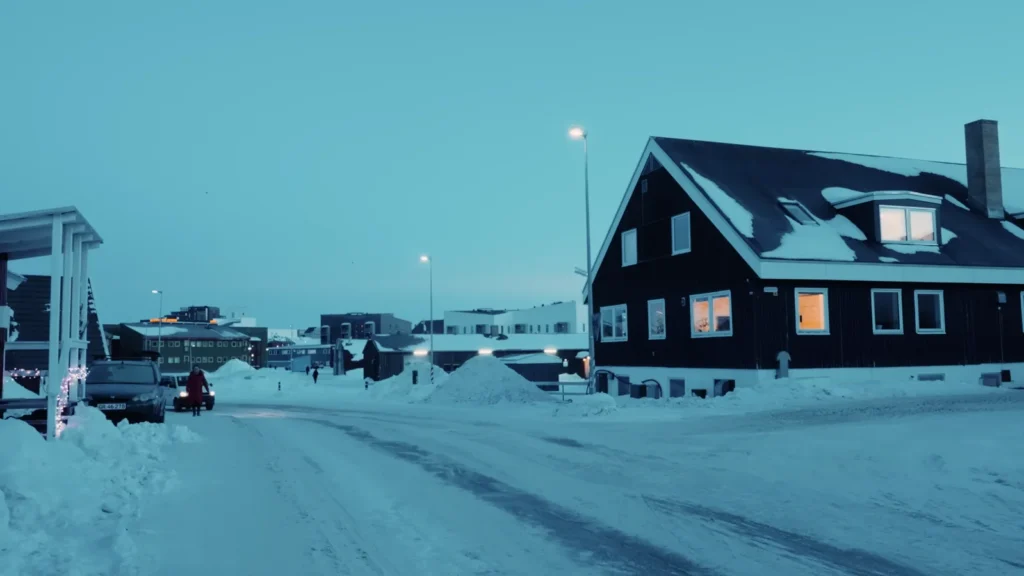
If Ilulissat felt like stepping into another world, Nuuk felt like stepping into the future of that world. The contrast hit me immediately – suddenly there were actual traffic lights, multi-story buildings, and what looked almost like… normalcy?
Almost.
Nuuk’s Urban Reality
With about 18,000 people, Nuuk is practically a metropolis by Greenlandic standards. That’s nearly a third of the entire country’s population in one city. The Arctic landscape still dominates everything – you can’t escape that – but there’s an energy here that’s completely different.
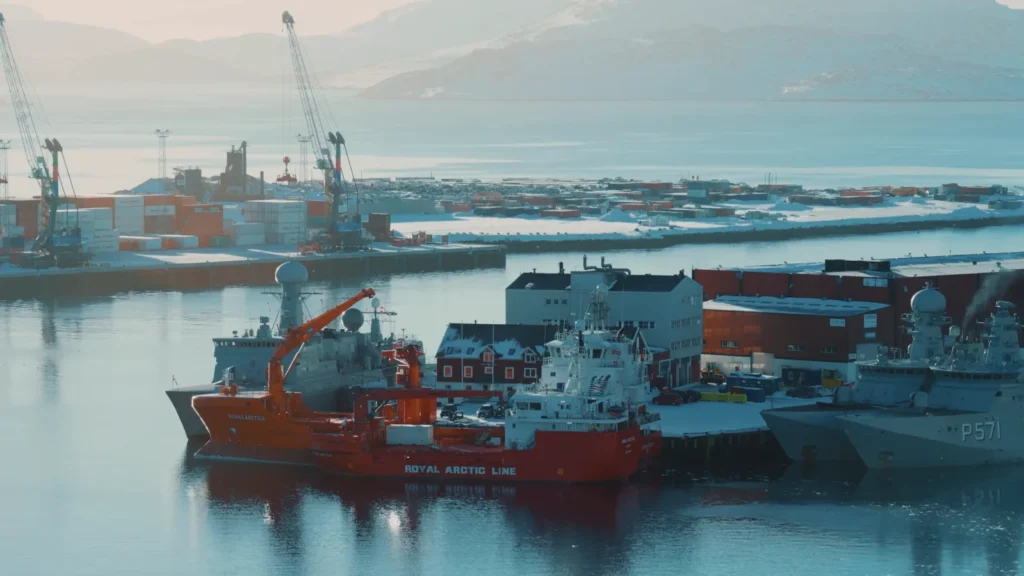
The port tells the real story. Ships bringing everything from cars to coffee, construction cranes working on new housing projects, that bright red Royal Arctic Line vessel that connects this place to Denmark and the outside world. Without those ships, nothing works here.
The Mall That Broke My Brain
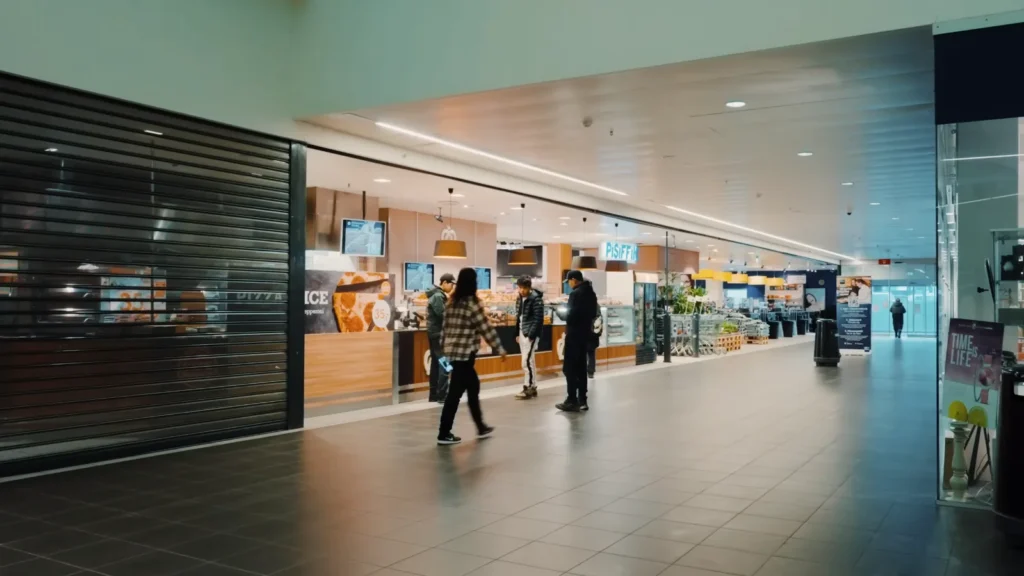
Wait for it – they have a mall. Not just any mall, but supposedly the only proper shopping mall in all of Greenland. Walking into Nuuk Center felt like some kind of Arctic fever dream.
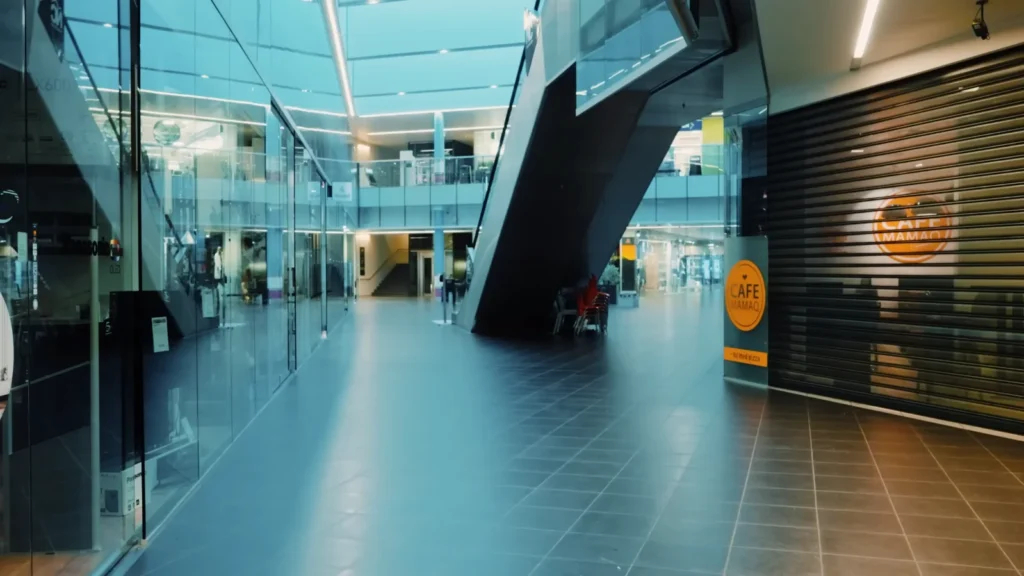
Inside, people were just… shopping. Buying groceries, grabbing coffee, meeting friends. The same things you’d do in Minneapolis or Manchester, except outside the windows there were icebergs floating by.
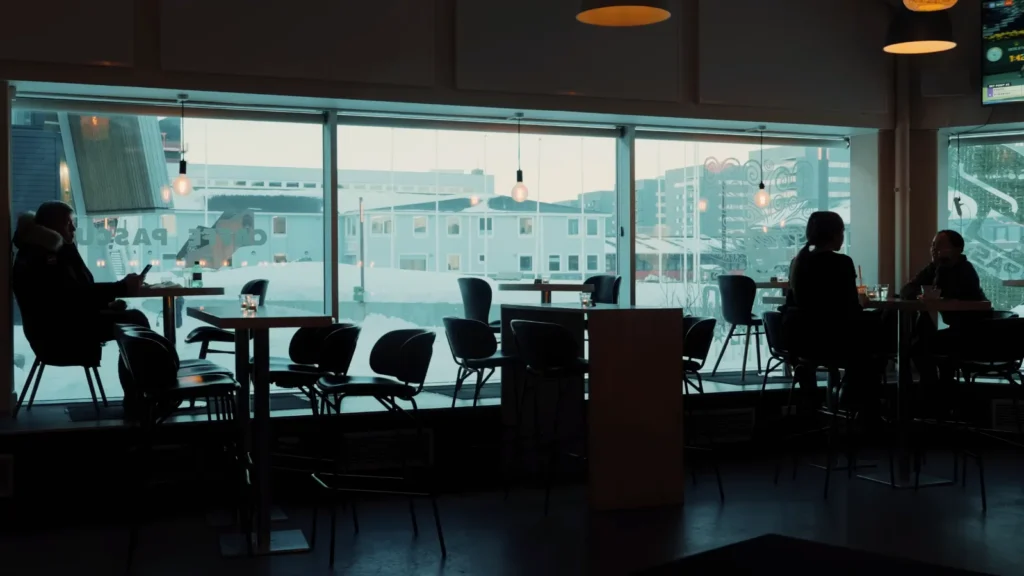
The food court overlooked the fjord. I sat there eating a surprisingly decent sandwich, watching locals treat this completely surreal landscape as their backyard. Which, I guess, it is.
Mall reality check:
- Prices are about 3x what you’d pay in Europe.
- Selection is limited but surprisingly diverse.
- Local products (like seal skin items) sit next to imported goods.
- The cafe has decent wifi – finally.
Transportation Adventures: When Taxis Float
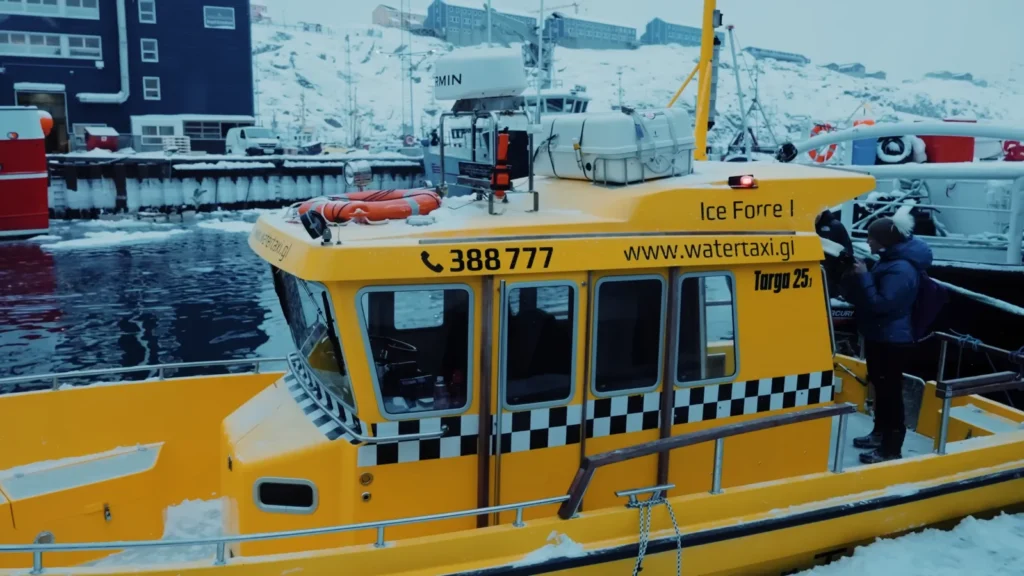
This is where things get properly weird. That yellow boat? That’s a taxi. Not metaphorically – literally a taxi that happens to operate on water. “Ice Force I” with a phone number painted on the side like every cab I’ve ever seen, except this one needed to be ice-capable.
Getting Around: Your Options Are Limited
Between cities:
- Helicopter (expensive but reliable).
- Small planes (weather dependent).
- Boat in summer.
- Forget about roads – there aren’t any connecting major towns.
Within cities:
- Walking (seriously, most places are walkable).
- Local buses in Nuuk.
- Taxis (some float, some don’t).
- Rental cars exist but where would you drive?
The water taxi experience deserves its own paragraph. Captain barely spoke English but pointed at icebergs like he was giving a tour of his neighborhood. Which he was, technically. We wove between chunks of ice that were probably bigger than my apartment building, and he treated it like dodging traffic.
The Food Reality: When Everything Is Imported
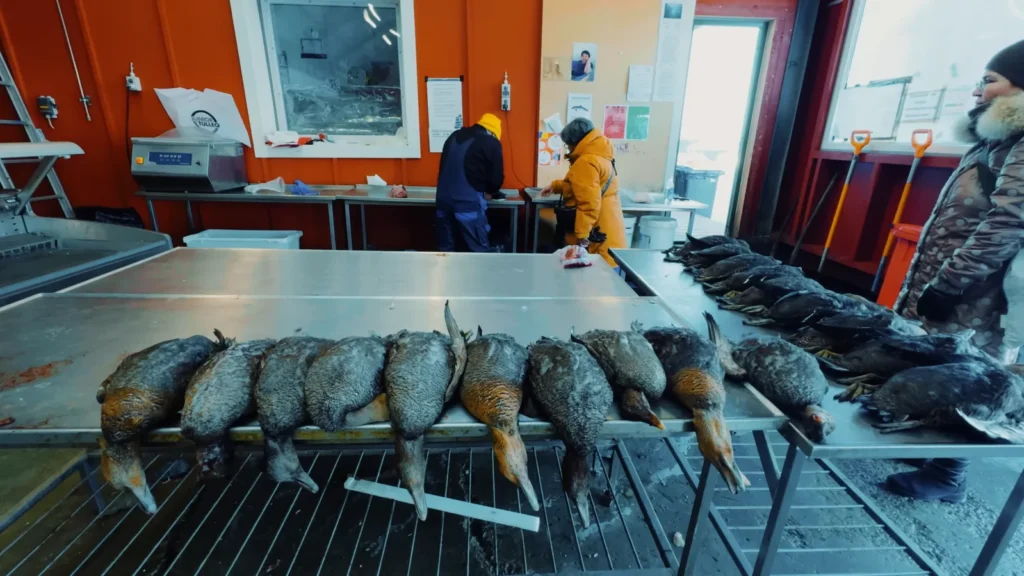
That photo shows what local food actually looks like. Not the romanticized version you see in travel blogs – the real deal. These birds were hunted locally, processed by hand, sold at what could generously be called a “market.”
What You’ll Actually Eat
Forget finding fresh vegetables. I mean, you can find them, but a single bell pepper might cost $4. Here’s what actually sustains people:
Local options:
- Seal (yes, really, and it’s not bad).
- Various Arctic fish.
- Ptarmigan and other birds.
- Reindeer (in some areas).
- Berries in summer.
Imported staples:
- Canned everything.
- Frozen meat from Denmark.
- Basic vegetables at shocking prices.
- Danish pastries (surprisingly common).
The hunting and fishing aren’t tourism activities here – they’re food security. When your nearest supermarket might be hundreds of miles away and only accessible by plane, traditional skills become survival skills.
Practical Wisdom: What I Wish I’d Known
Money Matters
- Danish kroner is the currency.
- Credit cards work in most places in bigger towns.
- Bring cash for smaller communities.
- ATMs exist but don’t count on finding one everywhere.
What to Pack (Beyond the Obvious Winter Gear)
- Sunglasses (snow blindness is real)..
- Multiple battery packs (cold drains electronics fast).
- Offline maps downloaded beforehand.
- Basic medicines – pharmacies are scarce.
- More money than you think you’ll need.
Communication
- Cell service exists in towns but disappears quickly outside them.
- Wifi in hotels is usually decent but expensive.
- Download translation apps before you go.
- Learn basic Danish phrases – more useful than English sometimes.
Health and Safety
- Travel insurance that covers Arctic evacuation (seriously).
- Inform someone of your plans – GPS doesn’t always work.
- Respect local guidance about ice conditions and weather..
- Pack extra food/water for any day trips.
The Truth About Arctic Tourism
Greenland isn’t trying to be Iceland. It’s not competing with Norway’s tourism infrastructure or trying to be the next viral destination. It’s just… itself. Beautifully, impossibly, stubbornly itself.
It has infrastructure but it is primitive. Hotels are not cheap, but clean. Food is limited but filling. Business operations are seasonal. All things are overpriced, overtimed, overweight, until they become overseen.
This is not the location to take pictures of vacation to make your friends feel bad. It is a place where it alters your thinking on how people have to survive, on what we actually need and what the world was like before you paved it all in.
Would I go back? In a heartbeat. Would I suggest it to everyone? Absolutely not. You must be patient, flexible, and have a good bank account. However, when you are ready to go to the place where no one is bothered with your comfort and no one is afraid to be hard to get, then perhaps Greenland is the destination you need.