
Morocco doesn’t announce itself gently. It arrives through texture dust on your shoes, wind in your ears, tile under your fingertips. I’ve traveled through many countries where beauty is obvious and neatly framed. Morocco isn’t like that. It reveals itself unevenly. Sometimes all at once. Sometimes only after you’ve stopped looking for it.
This journey took me from the High Atlas to the Sahara, from blue-washed silence to markets that feel like living organisms. What stayed with me wasn’t just the places, but the way Morocco constantly shifts scale making you feel small in the desert, then suddenly deeply human in a narrow alley where someone steps aside without a word.
Below are the places that still linger with me long after the dust settled.
The Atlas Mountains & Aït Benhaddou — Where Time Slows Down
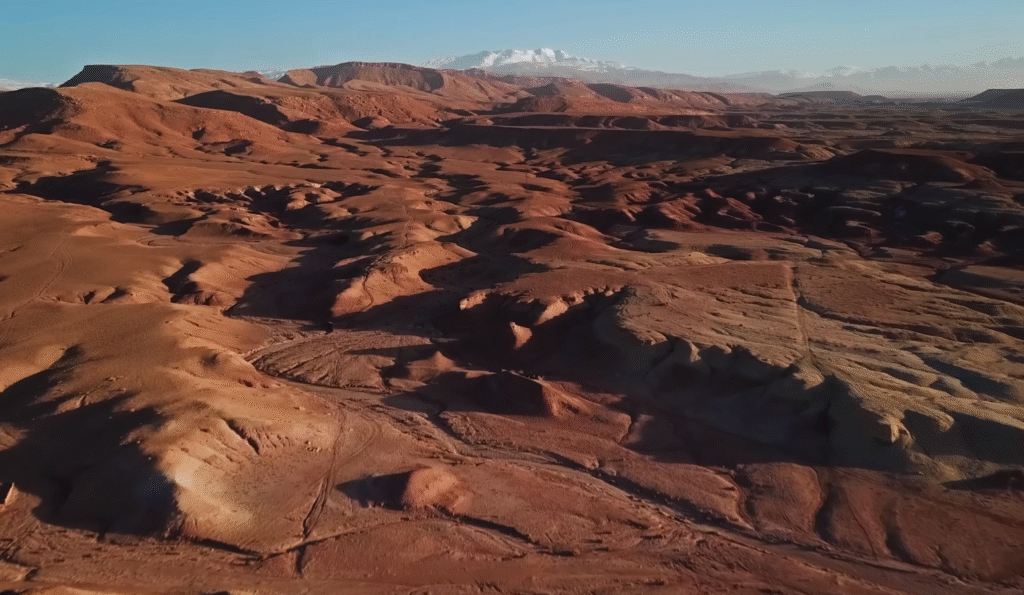
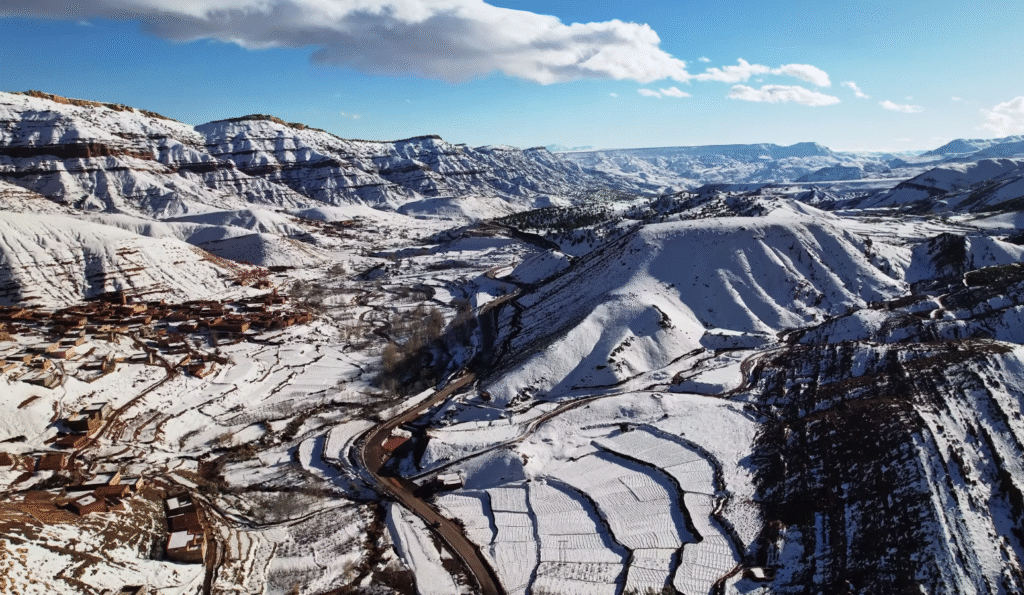
The road into the Atlas Mountains doesn’t feel like a transition it feels like a negotiation. With altitude. With weather. With your own expectations.
Snow still clung to the peaks when I passed through, even as the valleys below hinted at spring. Villages appeared almost accidentally, built from the same earth they stood on. Nothing shouted for attention here. Everything blended.
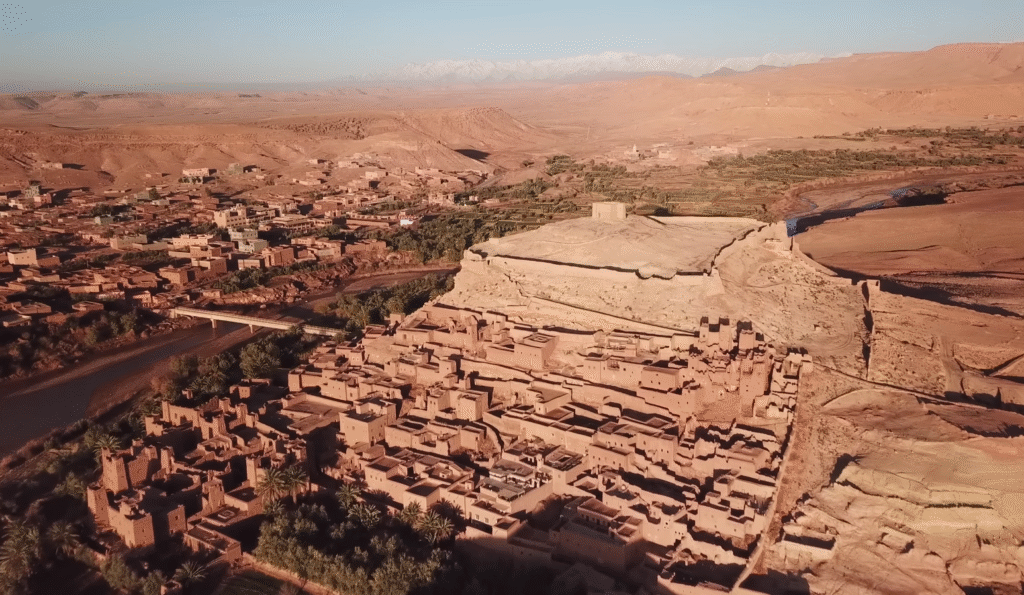
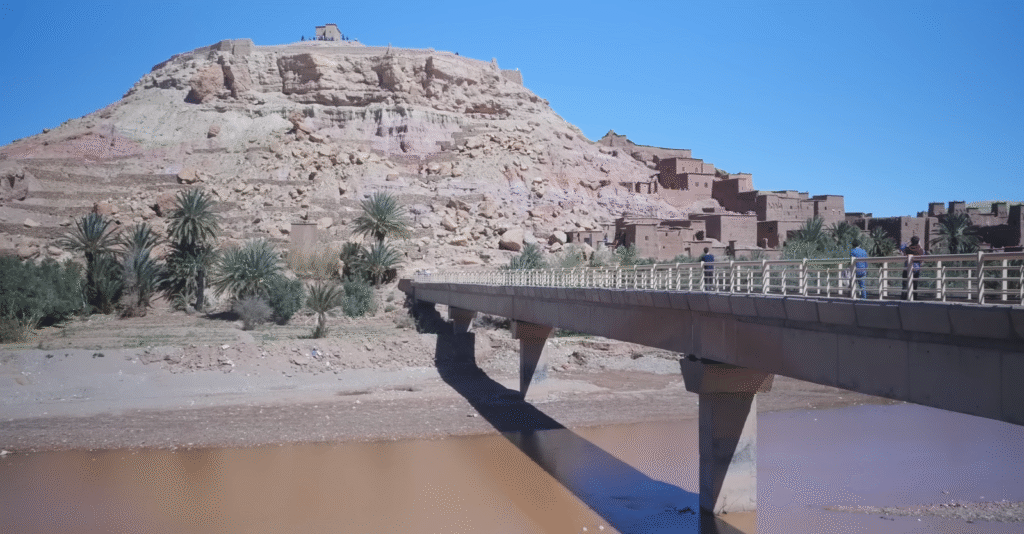
And then there’s Aït Benhaddou.
This ksar doesn’t rise so much as it emerges. The clay walls absorb light differently depending on the hour, shifting from soft amber to deep rust. Walking through it felt less like sightseeing and more like trespassing through time.
Why this place matters:
- It’s one of the most intact earthen villages in North Africa.
- Recognized as a UNESCO World Heritage Site.
- Used as a filming location for films like Gladiator and Kingdom of Heaven.
| Detail | Information |
| Location | Ounila Valley, near Ouarzazate |
| UNESCO Status | Since 1987 |
| Construction | Traditional rammed earth |
| Best time to visit | Early morning or golden hour |
Chefchaouen — The Discipline of Blue
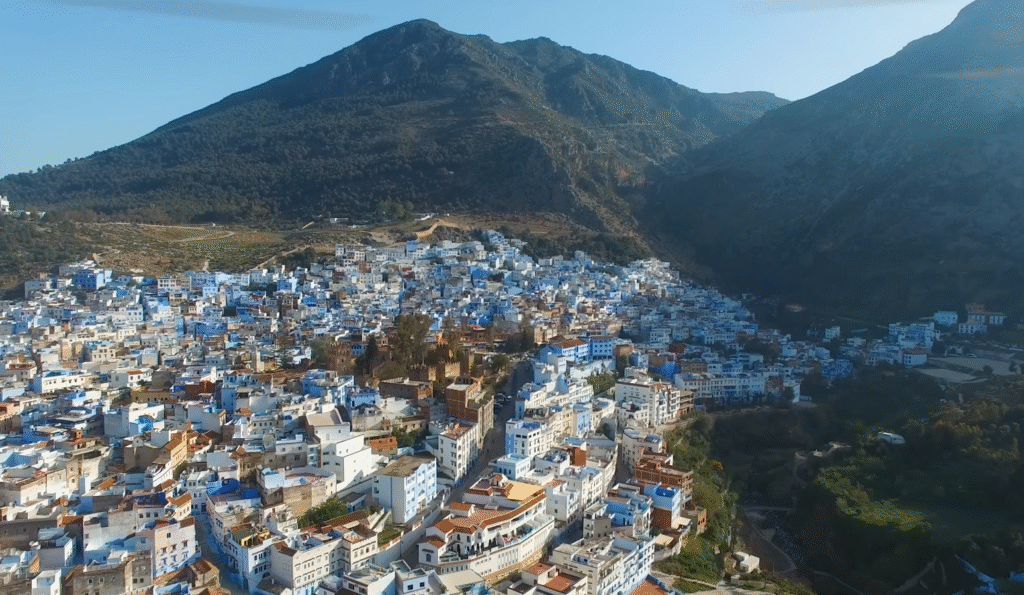
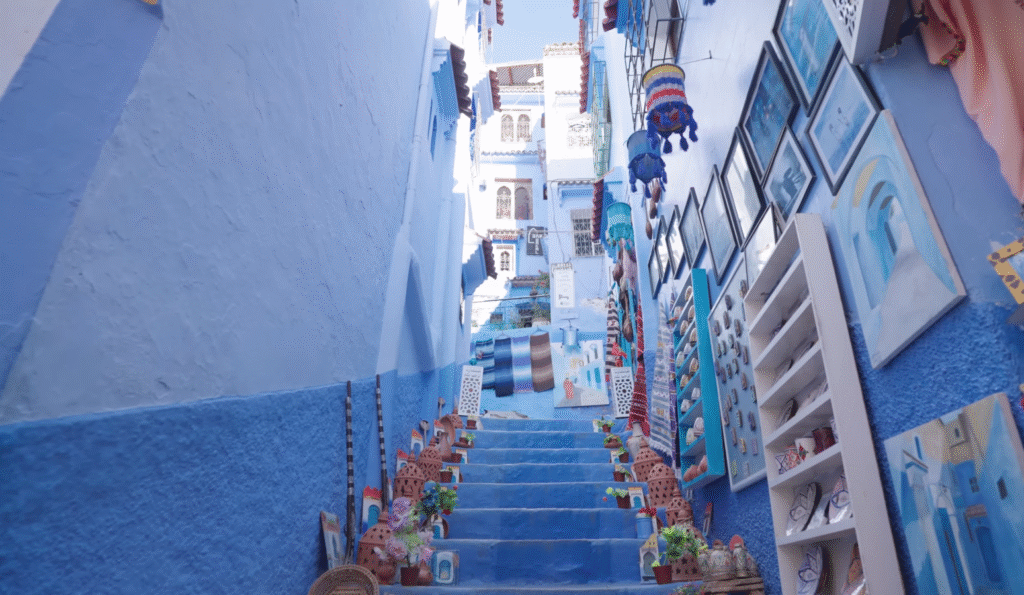
Chefchaouen isn’t loud. That’s the first thing I noticed.
The blue isn’t decorative it’s deliberate. Some say it reflects Jewish heritage, others say it repels insects or cools the city psychologically. Standing there, none of that felt important. What mattered was how the color changed behavior. People moved slower. Voices dropped.
I found myself wandering without direction, which rarely happens to me.
Every corner offered a different shade powder blue, washed denim, something closer to sky just before rain. Doors were framed carefully. Pots placed with intention. Nothing accidental, even when it appeared effortless.
What struck me most:
- How silence feels intentional here.
- The way light reflects upward, not outward.
- How tourism exists without completely overpowering daily life.
Bullet snapshot:
- Founded in 1471.
- Located in the Rif Mountains.
- Known for meditative, walkable streets.
- One of Morocco’s most photographed towns.
Fez — Entering the Labyrinth
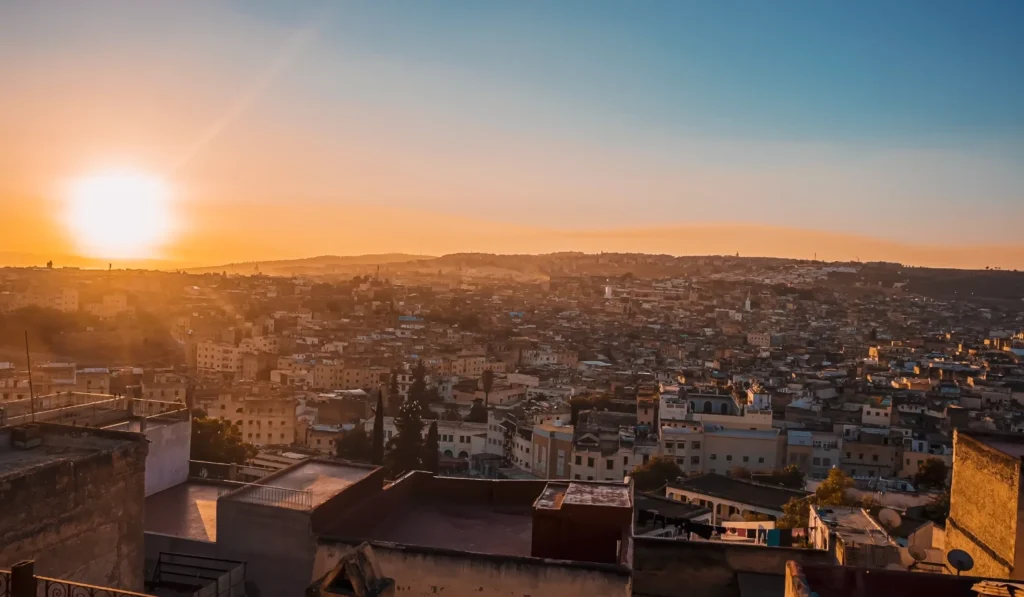
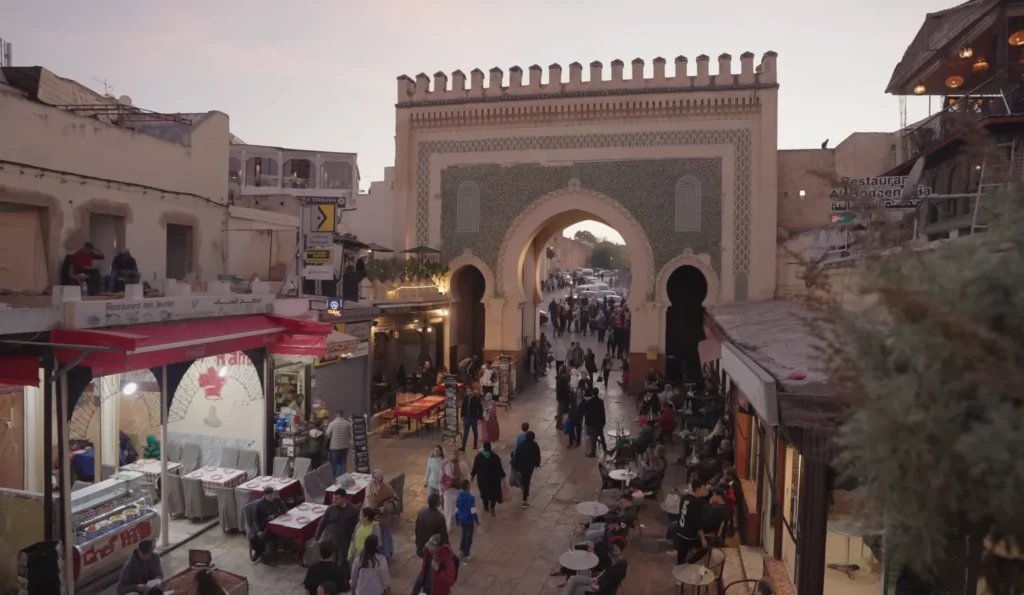
Fez doesn’t introduce itself gradually. You step through a gate and you’re inside.
The medina of Fez el-Bali is not designed to be understood quickly. It’s designed to be learned. The alleys tighten, twist, double back. Sound travels in unexpected ways. A hammer strikes metal somewhere you can’t locate. The smell of leather, spices, wood smoke all competing, none winning.
I stopped trying to map it in my head. That’s when it started making sense.
Fez feels intellectual. Serious. Less forgiving than Marrakech. But deeply rewarding if you let it unfold at it’s own pace.
Key experiences in Fez:
- Walking through Bab Bou Jeloud at dusk.
- Hearing the call to prayer echo across layered rooftops.
- Standing above the ancient tanneries, watching process repeat itself as it has for centuries.
Historical context list:
- Founded in 789 AD.
- Home to the world’s oldest continuously operating university (Al Quaraouiyine).
- UNESCO-listed medina.
Marrakech — Heat, Rhythm and the Art of Overstimulation
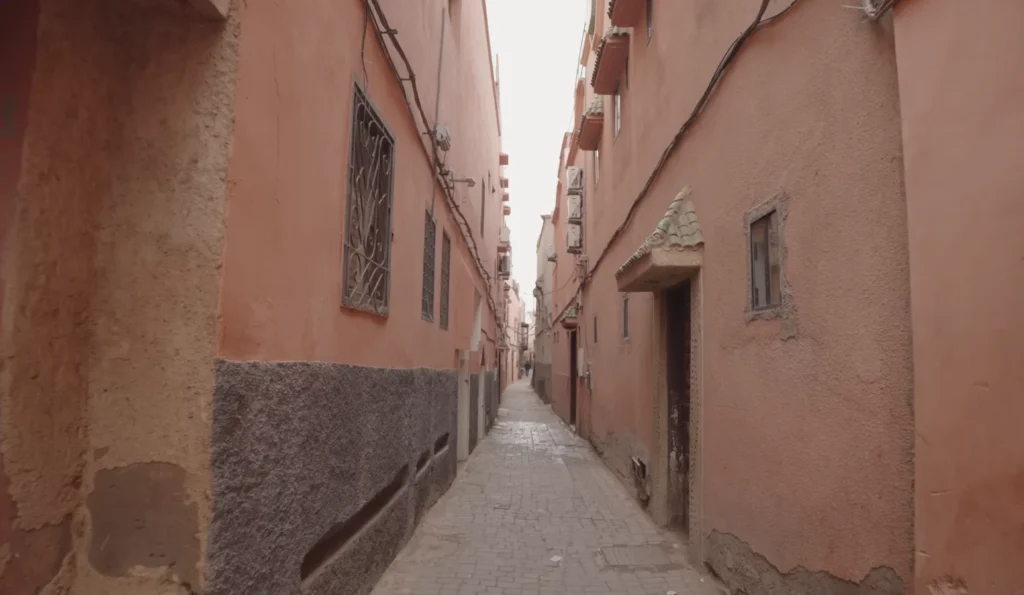

If Fez is inward-facing, Marrakech is the opposite. It performs.
The first thing Marrakech does is test your attention span. Alleys widen, then fracture into smaller veins. Scooters slide past you with inches to spare. Vendors call out in overlapping languages not aggressively, just persistently, like waves that don’t expect you to answer every time.
I spent my first afternoon doing very little actual walking. Mostly stopping. Watching. Recalibrating.
The Souks: Organized Chaos
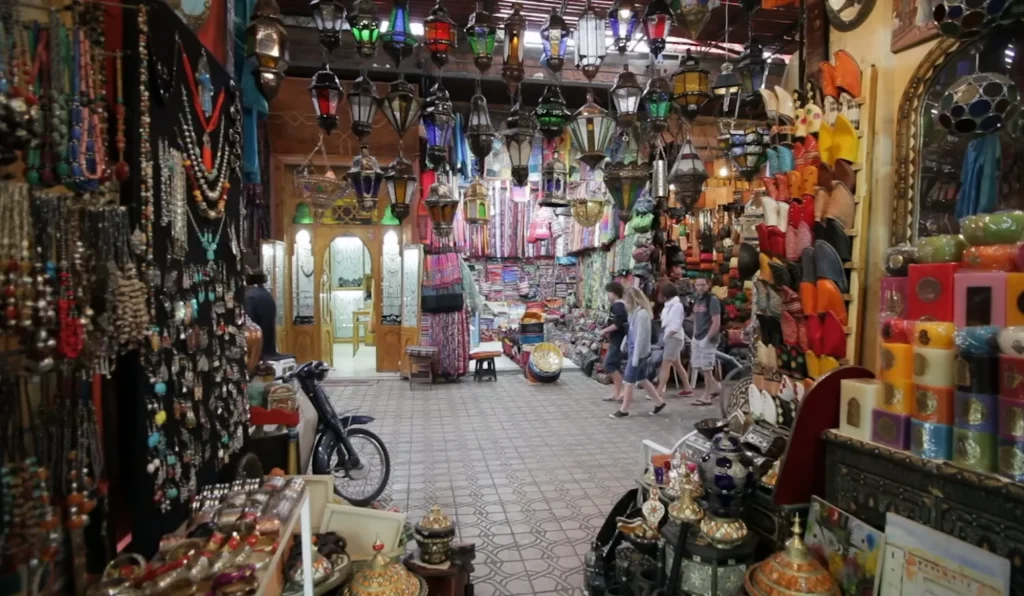
Inside the souks, everything moves at once. Color stacks vertically. Leather bags hang above spices, which sit beside lanterns that throw fractured light across the floor. You don’t browse here you navigate.
What surprised me wasn’t the noise, but the coordination. Each section specializes. Dyers, metalworkers, woodcarvers. Trades layered by centuries, not trend cycles.
What defines the Marrakech souks:
- Trades grouped by craft.
- Narrow passages designed for foot traffic, not comfort.
- A rhythm that rewards patience, not speed.
Jemaa el-Fnaa: A Square That Breathes
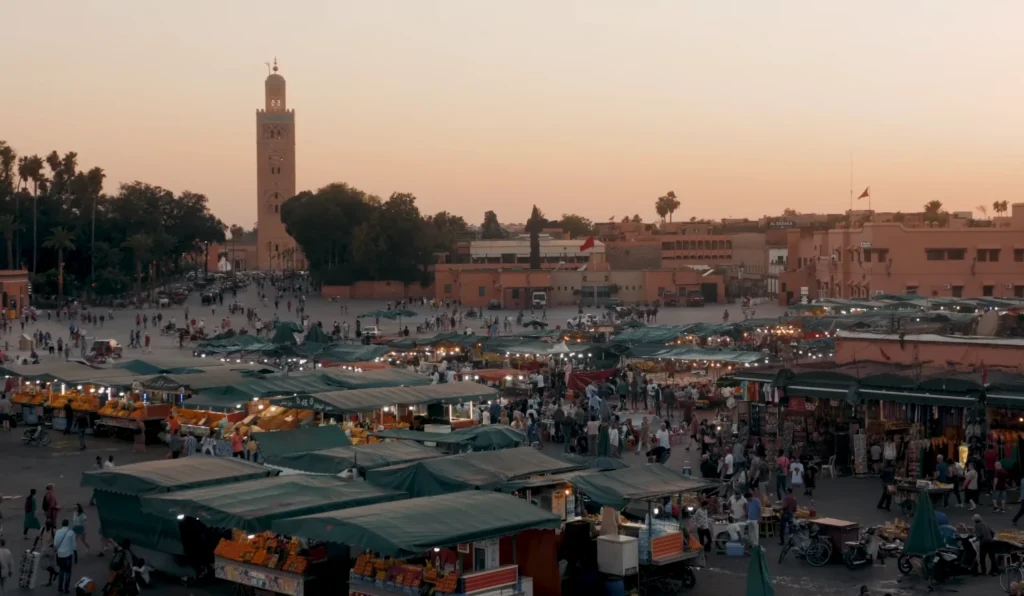
At dusk, Jemaa el-Fnaa changes temperature emotionally and physically.
Food stalls rise from nothing. Smoke lifts into the air. Drums begin somewhere near the edges. Storytellers form circles. The square doesn’t feel curated; it feels activated.
I stood still for nearly an hour, watching the same space reinvent itself minute by minute. There’s nothing else quite like it.
Why Jemaa el-Fnaa is unique:
- Recognized by UNESCO as Intangible Cultural Heritage.
- Functions as market, stage and gathering place.
- Shifts identity from day to night.
Koutoubia Mosque: The Anchor
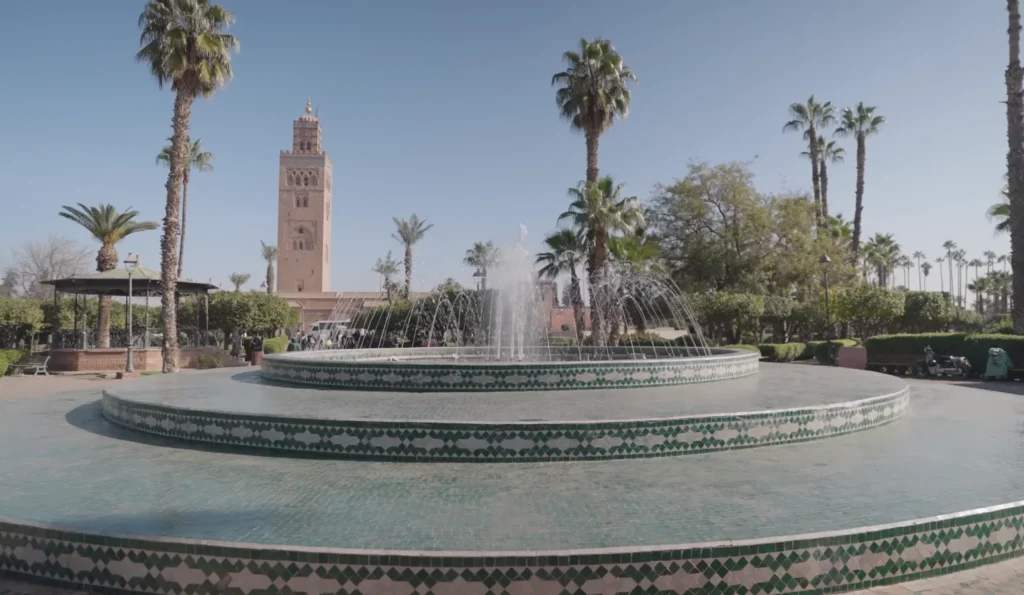
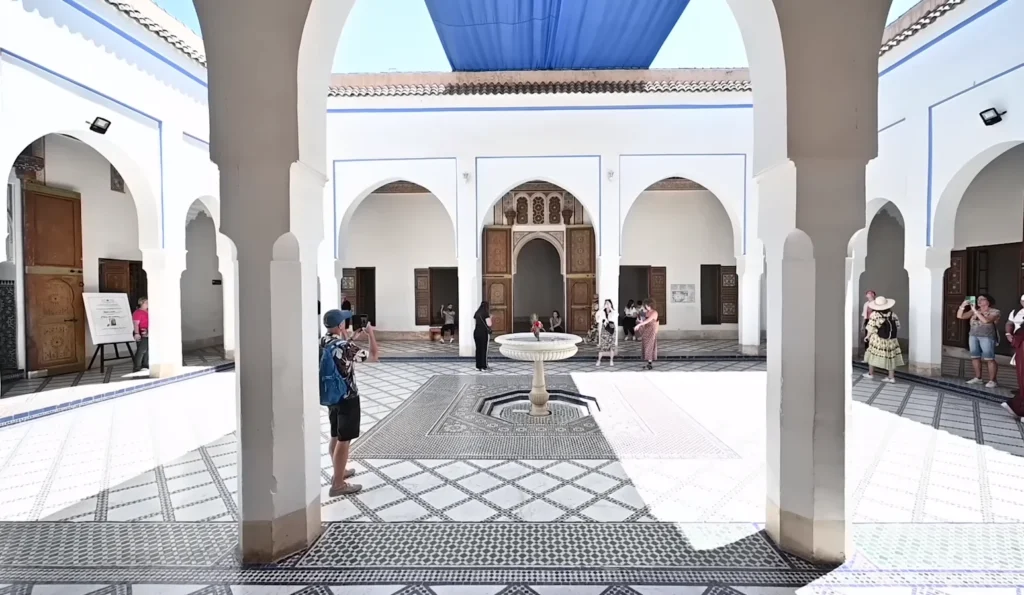
Amid all that motion, the Koutoubia Mosque stands quietly firm.
It’s minaret is visible from across the city, acting as a kind of visual compass. I found myself unconsciously orienting toward it, especially after getting lost which happened often and usefully.
| Feature | Detail |
| Built | 12th century |
| Height | ~77 meters |
| Architectural style | Almohad |
| Role | Marrakesh’s primary landmark |
Jardin Majorelle — Stillness as a Design Choice
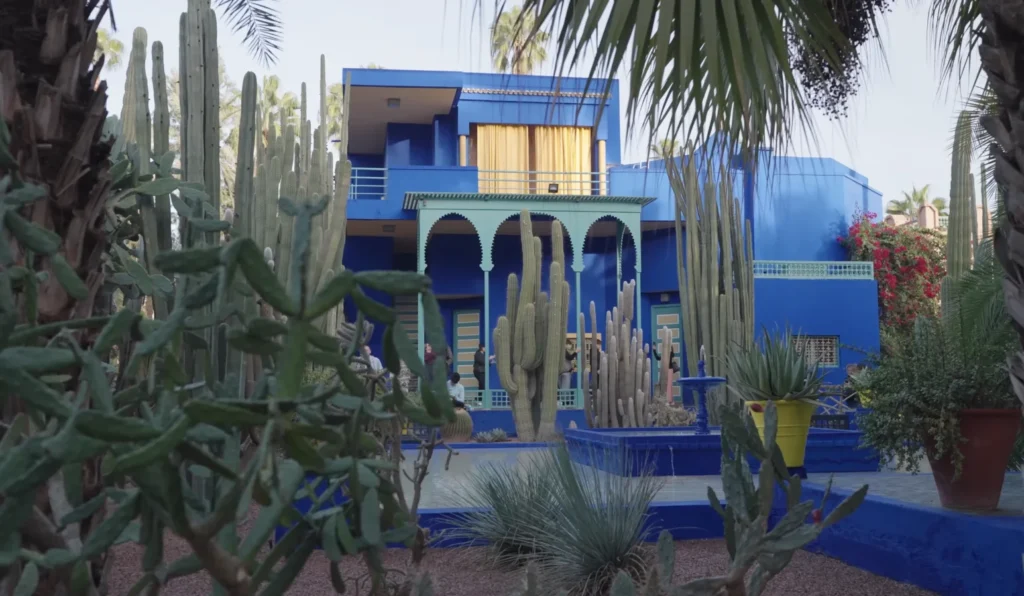
After Marrakech’s intensity, Jardin Majorelle feels almost unreal.
The blue here isn’t like Chefchaouen’s lived-in tones. It’s saturated. Intentional. Designed. Jacques Majorelle wasn’t trying to calm chaos he was framing contrast. Later, Yves Saint Laurent preserved that vision, understanding that restraint can be just as powerful as excess.
I sat longer than expected. Watched shadows move across cactus spines. Listened to water instead of voices.
What makes Jardin Majorelle distinct:
- Over 300 plant species from five continents.
- Iconic cobalt “Majorelle Blue”.
- Designed as an immersive, visual pause.
Merzouga & the Sahara — Scale Rewritten
The desert doesn’t feel empty when you’re in it. It feels precise.
Near Merzouga, dunes roll outward in every direction, repeating without copying themselves. Light redraws them constantly. What looked smooth at noon became sharply contoured by evening.
I joined a camel caravan just before sunset. Not for romance for perspective.
The Caravan
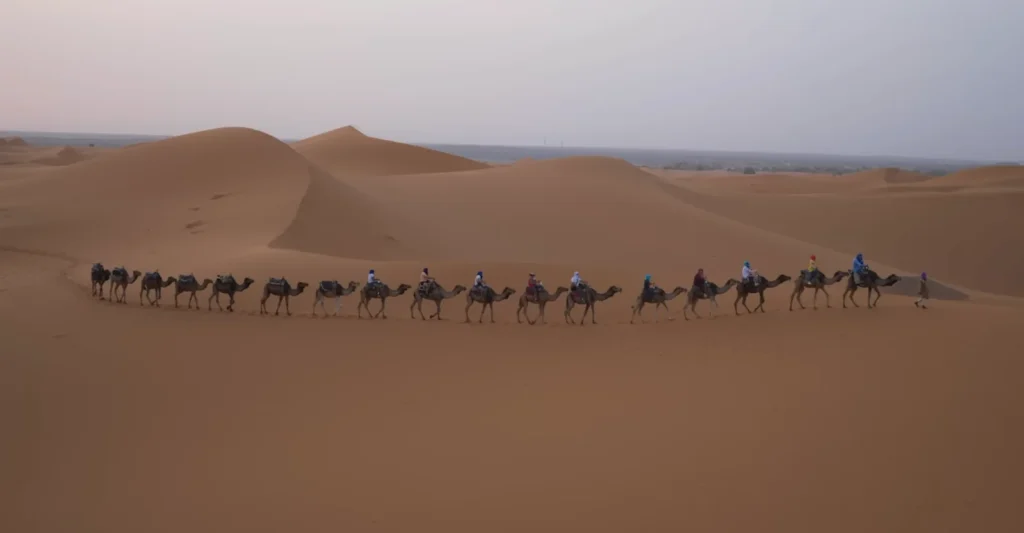
Movement is slow. Intentionally so. Each step presses into sand that erases it minutes later. Conversation fades quickly. You’re left with breath, rhythm, horizon.
Why Merzouga stands apart:
- Gateway to Erg Chebbi dunes.
- Some dunes reach over 150 meters.
- Light pollution is nearly nonexistent.
Night in the Desert
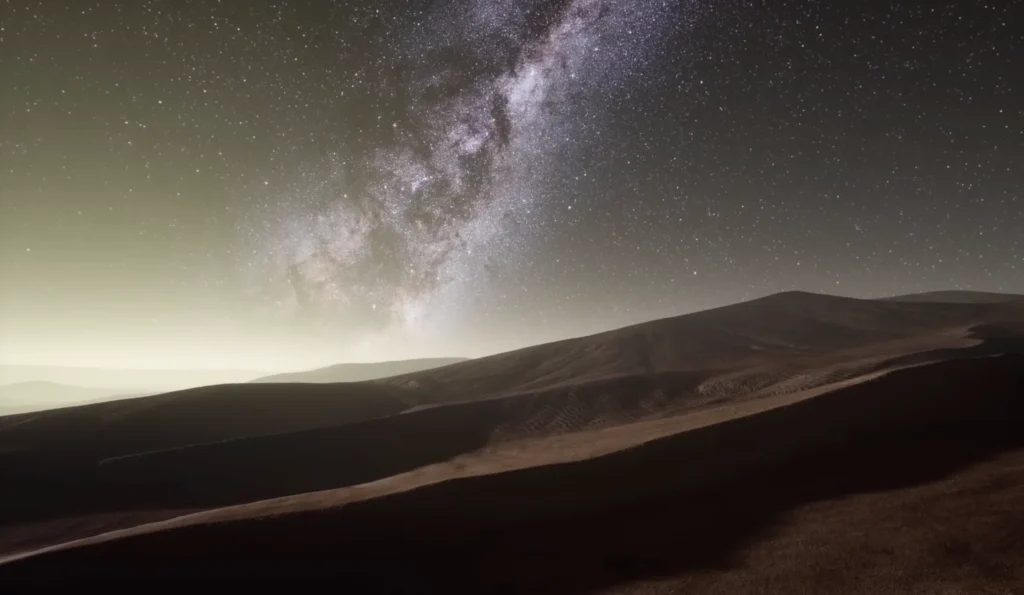
At camp, silence expands. Lanterns glow softly. The sky opens.
I’ve photographed night skies before, but the Milky Way over the Sahara doesn’t feel like something you observe it feels like something you fall into. Without buildings, without reference points, scale collapses.
You’re reminded, gently, that you’re temporary.
Morocco’s Water Stories — Where the Desert Breaks It’s Own Rules
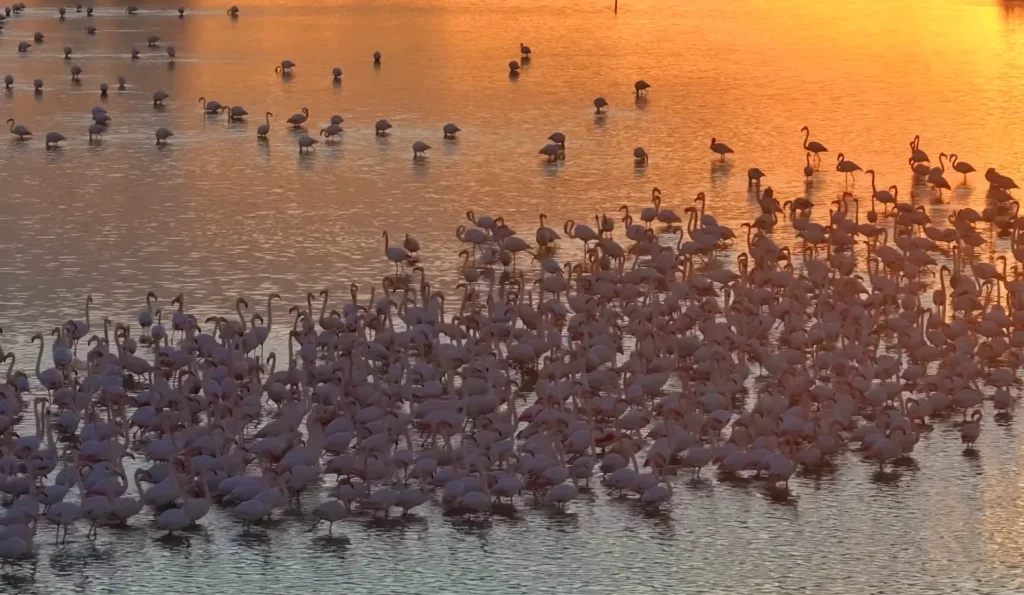
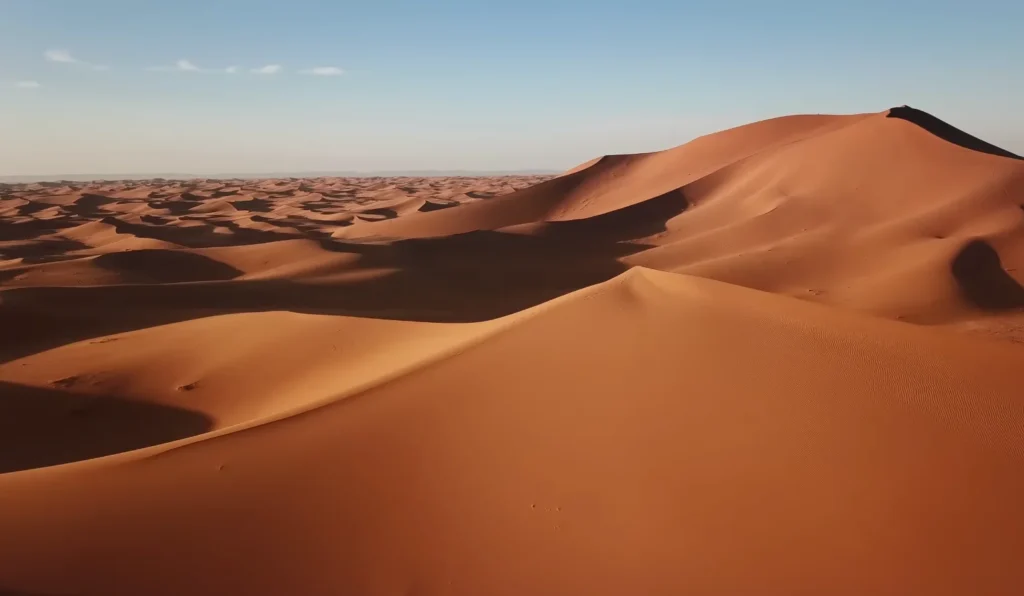
One of the quiet surprises of Morocco is how often water shows up where it shouldn’t.
After days in sand and stone, seeing flamingos gathered near Merzouga felt almost disorienting. Pink against gold. Stillness against heat. The desert, again, refusing to be singular.
I stood there longer than planned, watching them feed, half-expecting them to lift off all at once. They didn’t. They moved slowly, deliberately. As if to say: we’re allowed to be here too.
Morocco doesn’t treat water as background scenery. It’s functional. Precious. Sometimes ceremonial. Sometimes barely acknowledged.
Places Where Water Changes the Narrative
- Seasonal desert lakes near Merzouga.
- Mountain streams cutting through the Atlas.
- Courtyard fountains in riads and mosques.
- Coastal winds shaping dunes near the Atlantic.
Coastal Morocco — When Sand Meets the Atlantic
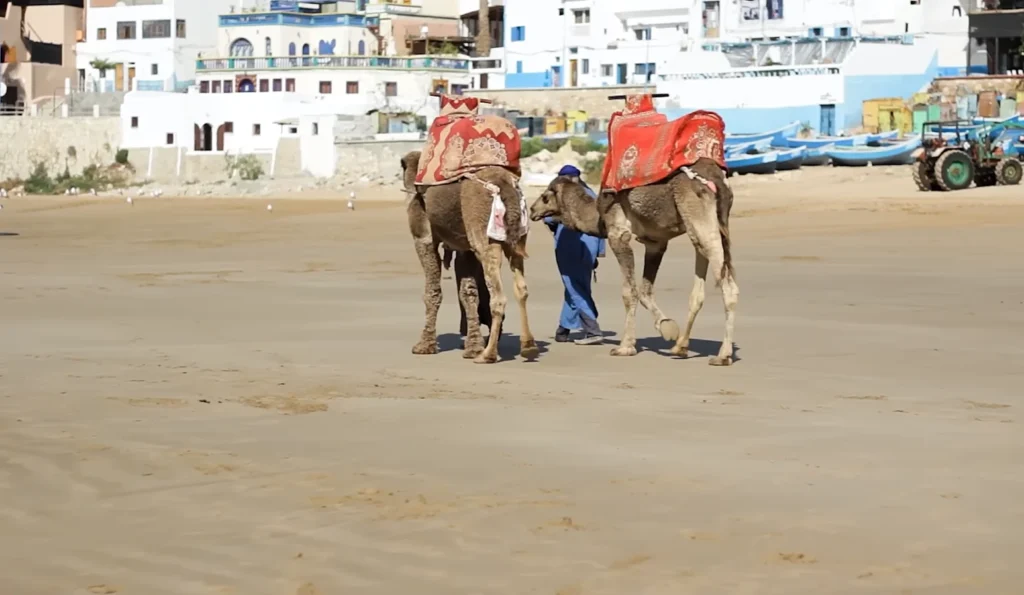
Morocco’s coastline feels like a reset button.
After the desert’s scale and the city’s density, the Atlantic introduces horizontal calm. Beaches stretch wide. Wind carries salt instead of spice. Fishing boats sit idle, painted in colors that echo Chefchaouen more than the Sahara.
What struck me most wasn’t dramatic cliffs or crashing waves it was how normal life felt here. Kids playing football on sand. Men repairing nets. Cafés facing the ocean without trying to dominate it.
This is Morocco exhaling.
Coastal Characteristics at a Glance
| Feature | Observation |
| Climate | Cooler, wind-driven |
| Culture | Fishing-first, slower pace |
| Architecture | Whitewashed, practical |
| Mood | Grounded, unhurried |
Living Spaces — Courtyards, Riads and Human Scale
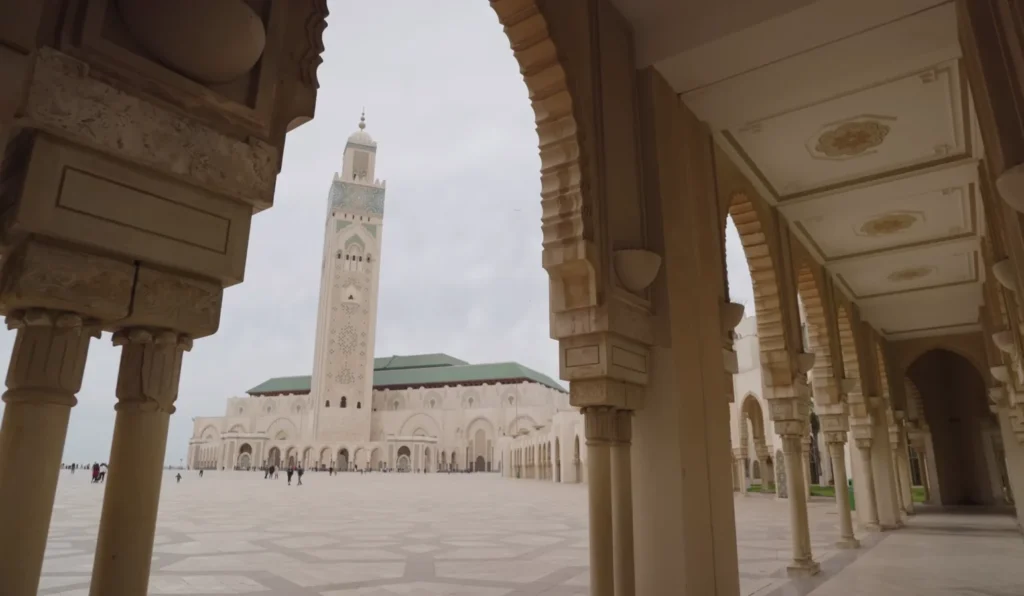
Moroccan architecture understands something modern cities often forget: humans need inward space.
Courtyards aren’t decorative they’re functional. They cool air. They quiet sound. They pull attention inward. Whether inside a humble riad or standing beneath the immensity of the Hassan II Mosque, the design language prioritizes proportion over dominance.
The mosque itself partly built over the Atlantic feels monumental without feeling aggressive. Even it’s scale respects the horizon.
Architectural Patterns I Noticed Repeating
- Geometry over imagery.
- Shade as structure.
- Water as centerpiece.
- Exterior simplicity, interior complexity.
What Morocco Taught Me About Movement
This isn’t a country you consume efficiently.
Morocco asks you to slow down not through instruction, but through friction. Getting lost. Waiting. Sitting longer than planned. Accepting tea even when you didn’t ask for it.
Each place recalibrated something different:
- The Atlas reset my sense of time.
- Chefchaouen softened my pace.
- Fez challenged my attention.
- Marrakech overwhelmed it.
- The Sahara stripped it back to nothing.
And somewhere between dunes and alleys, I stopped trying to capture Morocco and started letting it happen.
Final Thoughts — Why These Places Stay With Me
Morocco isn’t defined by a single image. It’s defined by contrast held in tension.
Silence beside noise. Blue beside dust. Stillness beside movement. Ancient systems operating comfortably within modern chaos.
That’s what makes these places remarkable not individually, but collectively.
They don’t ask to be ranked. They ask to be experienced.
And once you’ve moved through them not rushed, not curated you carry a slightly altered sense of scale with you. Of space. Of patience. Of how much a place can hold without needing to explain itself.