
I didn’t cry at the pyramids.
Everyone said I would. “You’ll cry,” my friend told me before I left. “It’s overwhelming.” I’d read travel blogs where people described getting emotional, feeling the weight of history, all that.
Didn’t happen. What did happen was stranger.
I stood there in Giza, staring at these massive geometric shapes that shouldn’t exist and my brain just… stopped working. Like it couldn’t process what it was seeing. They’re too big. Too precise. Too there. And then a guy tried to sell me a camel ride for the third time in five minutes and the spell broke.
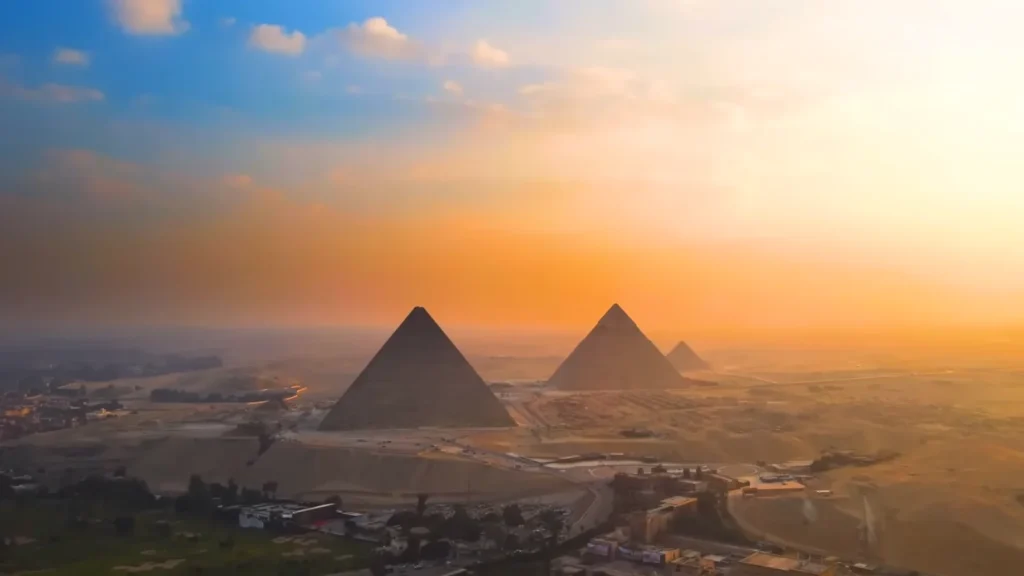
That’s Egypt. Ancient wonder and modern chaos, right on top of each other, no separation.
Landing in Cairo: When History Smacks You in the Face
The flight into Cairo was overnight. I pressed my face against the window as we descended, looking for… I don’t know what. Pyramids lit up? Sphinx visible from the air?
Got suburbs instead. Endless sprawl of buildings, lights, the Nile snaking through like a dark ribbon. Cairo has 22 million people crammed into a space that feels like it was designed for maybe 5 million. The Greater Cairo metropolitan area is one of the world’s most densely populated urban zones and you feel it the second you step outside the airport.
Traffic. Immediate, aggressive, rule-optional traffic.
My driver Ahmed, everyone’s named Ahmed or Mohammed, I stopped asking drove like he was playing a video game. No lanes. Horns constantly. At one point we were four cars wide on a two-lane road and nobody seemed bothered.
“First time Egypt?” he asked.
“Yeah.”
“You will love it. Crazy, but you will love it.”
He wasn’t wrong.
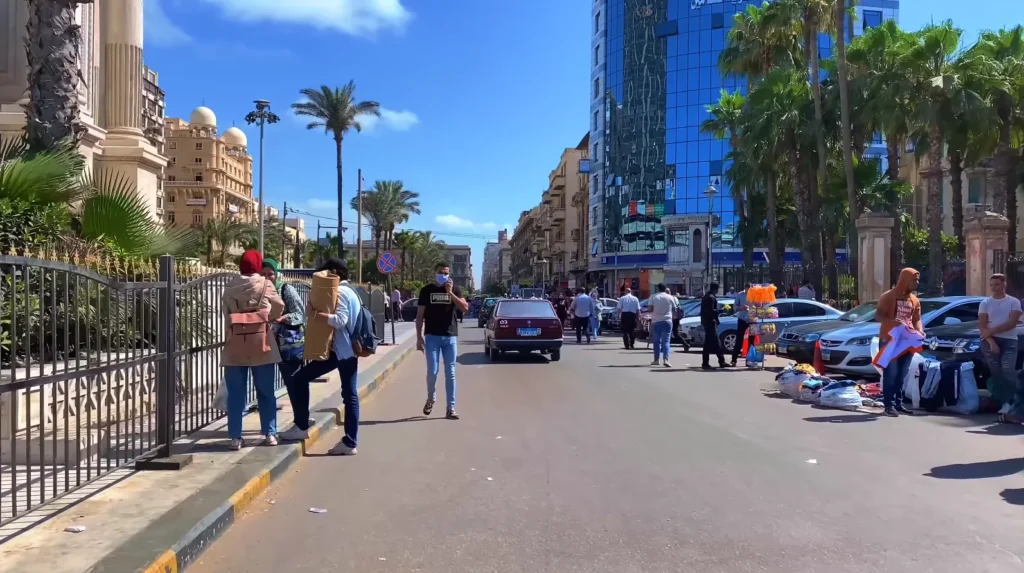
The Hotel Situation: Modern Meets… Not Modern
I stayed in Giza. Close to the pyramids, which seemed smart. The hotel was fine AC worked, water was hot, bed didn’t have bugs. But the view from my window was this weird collision of eras.
One side: the pyramids. Literally visible from my balcony, just sitting there 4,500 years old and not caring about anything.
Other side: a Pizza Hut. And a KFC. And buildings that looked half-finished, with rebar sticking out the top like they’d given up mid-construction.
Egypt’s urban development has this particular aesthetic buildings left incomplete because of tax laws. You don’t pay property tax until a building’s “finished,” so people just… don’t finish them. Rebar everywhere. It’s oddly universal across Egyptian cities.
I dropped my bags. Showered. Crashed for four hours because my body had no idea what time zone it was in.
Woke up at 3 AM. Couldn’t go back to sleep. Went up to the roof.
The pyramids were lit. Floodlit, artificial, kind of garish honestly. But there they were. Khufu, Khafre, Menkaure the big three. I’d seen them in photos a thousand times. Everyone has. But seeing them in person does something different to your brain.
They’re geometry. Perfect, massive geometry sitting in the desert for longer than most civilizations have existed.
I watched until sunrise. The floodlights turned off. Natural light hit the limestone. That’s when they looked real.
The Pyramids: Bigger Than Your Brain Can Handle
I went at 6 AM. Beat the crowds, beat the heat. Smart move.
The entrance area is chaos. Ticket booths, tourist police, guys selling scarves and postcards and “ancient” artifacts that were definitely made last week. I bought my ticket 400 Egyptian pounds (about $13 USD at the time) and walked through.
And then you see them.
The Great Pyramid (Khufu): Math Made Physical
The Great Pyramid of Khufu is 146.6 meters tall. Was 146.7 but the top’s gone. It’s made of approximately 2.3 million limestone blocks, each weighing 2.5 to 15 tons. Egyptologists estimate it took 20 years to build, during the 4th Dynasty around 2580-2560 BCE.
Those are the facts. Here’s the reality:
It’s incomprehensible. You stand at the base and look up and your brain goes “nope.” Can’t process it. The scale is wrong for something humans built with copper tools and wooden sledges.
I touched one of the blocks. Warm from the sun already, even at 6 AM. The stone had these chisel marks not smooth, not perfect. Individual workers left their marks here. 4,500 years ago someone shaped this specific block and hauled it into position and here I was putting my hand exactly where theirs had been.
That’s when I almost cried. Not at the pyramid itself at that connection.
| Pyramid | Pharaoh | Height (Original) | Base Length | Construction Period | Blocks Used (Est.) |
| Khufu (Great Pyramid) | Khufu (Cheops) | 146.7m (481ft) | 230.4m | 2580-2560 BCE | 2.3 million |
| Khafre | Khafre (Chephren) | 143.5m (471ft) | 215.5m | 2570 BCE | 2.5 million |
| Menkaure | Menkaure | 65.5m (215ft) | 103.4m | 2510 BCE | ~252,000 |
Going Inside: Claustrophobia as a Feature
You can go inside. I did. Immediate regret, then fascination, then regret again.
The entrance is small. Like, you have to crouch and shuffle. The passage is narrow, hot and goes up at this steep angle that makes your thighs burn. No photos allowed inside (people do it anyway, guards yell).
The Grand Gallery is… grand. That’s the word. High ceiling, precise angles, corbelled walls that have held their shape for millennia. The engineering is so exact that modern architects still debate the construction techniques.
Then you reach the King’s Chamber.
Empty. Just a granite sarcophagus, no lid, no mummy (that’s long gone). The room is hot, stuffy, smells like tourist sweat. But the acoustics are weird. Sound behaves strangely. I hummed and it resonated in this way that felt unnatural.
I stayed maybe 10 minutes. Came back down. Needed air.
The Sphinx: Older Than We Think?
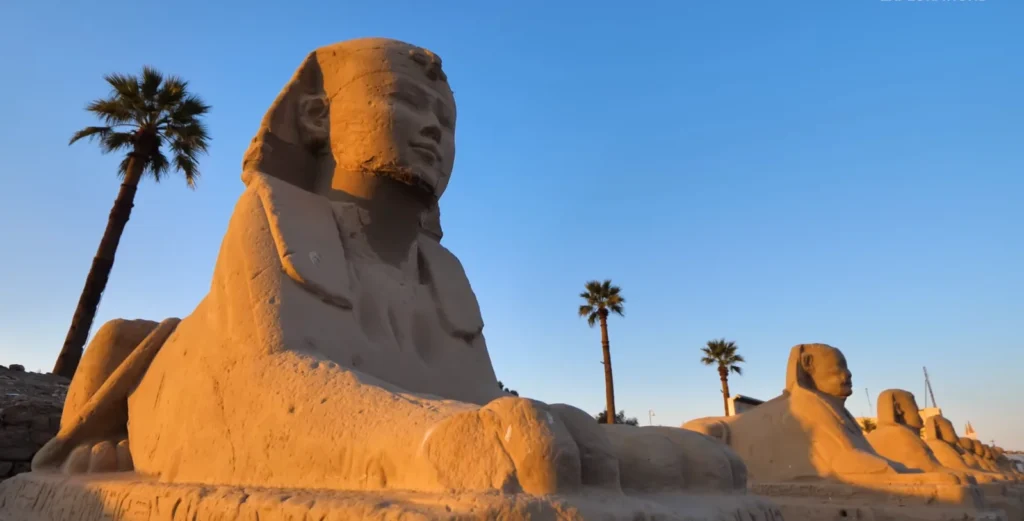
The Great Sphinx sits about 500 meters from Khufu’s pyramid. Lion’s body, human head (probably Khafre’s face), carved from a single limestone outcrop.
It’s smaller than you expect. Not small still massive but after the pyramids, your sense of scale is broken.
Official history: built around 2500 BCE during Khafre’s reign. But there’s this ongoing debate among some geologists about water erosion patterns on the Sphinx enclosure. Robert Schoch proposed in the 1990s that erosion suggests the Sphinx is much older, possibly 7,000-9,000 years old.
Mainstream Egyptology disagrees. Strongly. I’m not a geologist, so I’m not picking sides. But standing there, looking at the weathered limestone, you can see why the question exists.
The Sphinx has been buried in sand multiple times throughout history. Romans saw it. Napoleon saw it. It’s been dug out, restored, messed with for centuries. The nose is gone (no, Napoleon didn’t shoot it off that’s a myth). Between the paws is the Dream Stele, put there by Thutmose IV around 1400 BCE, claiming he cleared away the sand after the Sphinx appeared to him in a dream.
Layers of history. Literally.
Luxor: Where Ancient Egypt Shows Off
Cairo’s got the pyramids. Luxor’s got everything else.
I took a flight. One hour, way better than the 10-hour bus ride some backpackers do. Landed in Luxor and immediately felt the difference. Smaller city only about 500,000 people. Way more tourist-oriented. The Nile runs right through it.
Luxor sits on the site of ancient Thebes, capital of Egypt during the New Kingdom (1550-1070 BCE). East Bank: temples for the living. West Bank: tombs for the dead. That’s the basic division.
Luxor Temple: Gods in the City
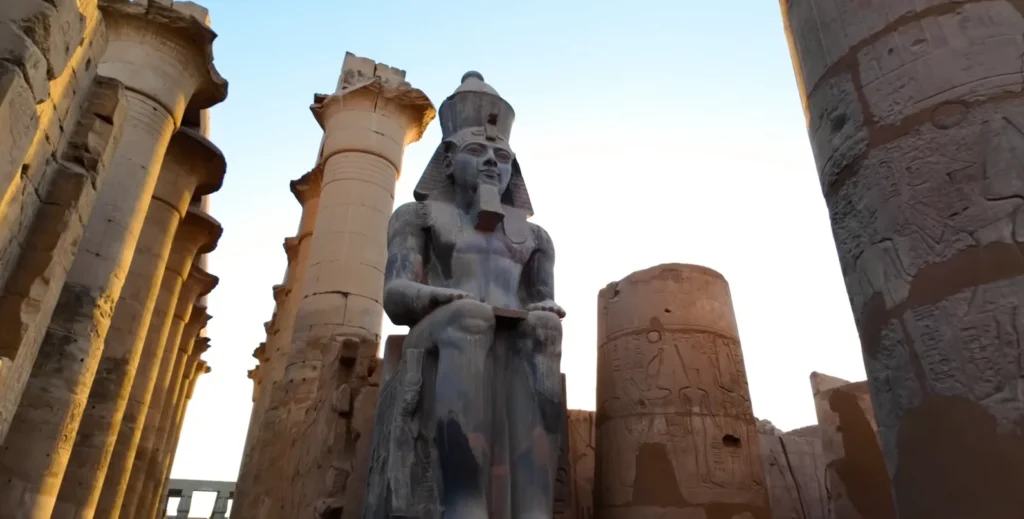
Luxor Temple is in the city. Not outside it, not in some archaeological zone right there, surrounded by modern buildings, cafes, souvenir shops.
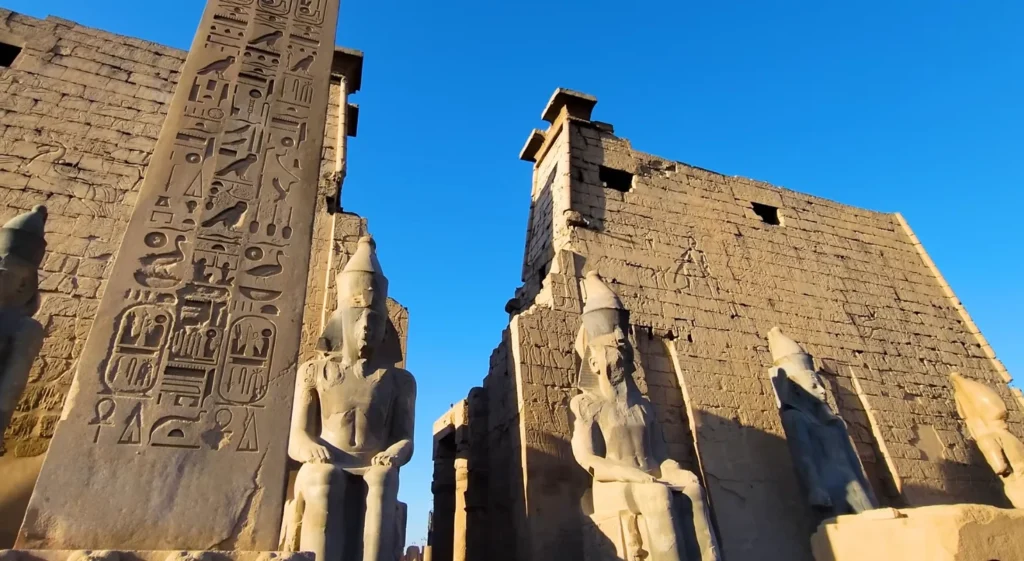
The temple was built primarily by Amenhotep III and Ramesses II, around 1400-1200 BCE. It was dedicated to the Theban Triad Amun, Mut and Khonsu but it’s really about kingship. The annual Opet Festival happened here, where the pharaoh would be symbolically reborn.
I went at sunset. Golden hour does work on ancient Egyptian architecture.
The first pylon massive gateway has these colossal statues of Ramesses II sitting on either side. One obelisk still stands in front (the other’s in Paris, at Place de la Concorde long story involving colonial-era “gifts”).
Inside, the courtyard is surrounded by papyrus columns. And here’s the thing nobody tells you: the columns still have paint on them. Traces of red, blue, yellow. Ancient Egypt wasn’t all beige stone it was wildly colorful. We just see it 3,000+ years faded.
The Avenue of Sphinxes: Recently Reopened
Between Luxor Temple and Karnak Temple, about 2.7 km north, there’s this avenue lined with sphinx statues. Egypt reopened the full Avenue of Sphinxes in 2021 after decades of excavation and restoration.
I walked part of it. Hundreds of sphinxes ram-headed and human-headed lining both sides. Some restored, some still weathered. It’s bizarre walking a processional route that’s been used for 3,000 years.
Tourists were taking photos. Kids were running around. Vendors were selling cold drinks. And these ancient statues just sat there, watching it all like they’d seen this exact scene a thousand times before.
Karnak Temple Complex: Organized Chaos in Stone
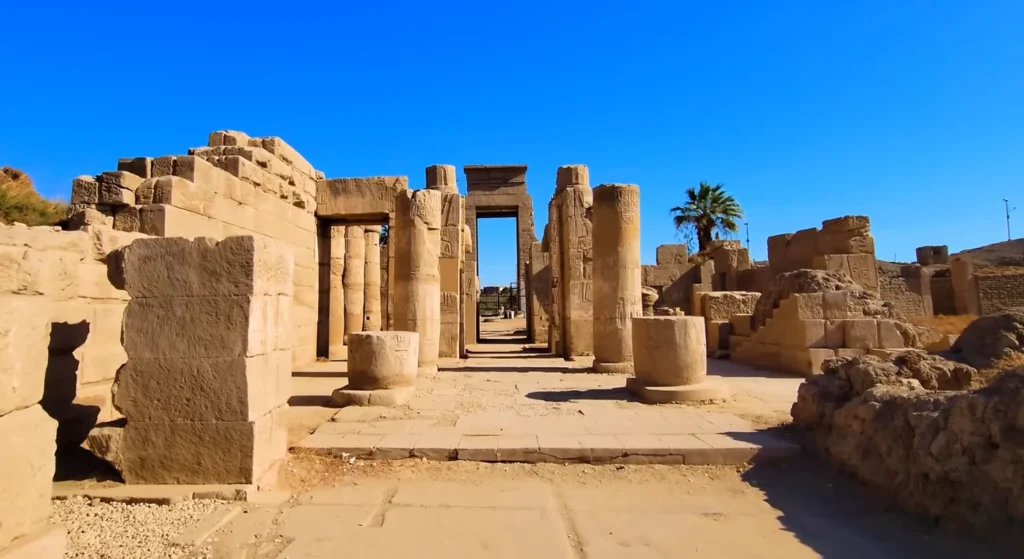
Karnak is huge. Like, genuinely massive. It’s not one temple it’s a complex of temples, pylons, chapels, obelisks, built and added to over 2,000 years by different pharaohs who all wanted to leave their mark.
The site covers about 100 hectares, making it one of the largest religious complexes ever built.
What you can’t miss at Karnak:
- Great Hypostyle Hall: 134 columns arranged in 16 rows, some 21 meters tall. Walking through feels like being in a stone forest. Ramesses II and his father Sety I built this section.
- Sacred Lake: Used for ritual purification by priests. Still there. Water’s green and dubious now but it’s the same pool.
- Obelisks of Hatshepsut: Two massive red granite obelisks erected by Egypt’s famous female pharaoh. One’s still standing at 29 meters tall tallest surviving ancient Egyptian obelisk.
- Sound and Light Show: I skipped this because it looked cheesy, but apparently it’s actually good at night.
I spent four hours here. Could’ve spent eight. Every wall has hieroglyphics. Every surface tells a story battles, coronations, offerings to gods. It’s overwhelming in the best way.
Valley of the Kings: Where Pharaohs Went to Rest
The West Bank of Luxor is the necropolis. City of the dead. That’s where they buried everyone important during the New Kingdom pharaohs, queens, nobles, priests. The Valley of the Kings is the headliner.
I hired a guide. Normally I don’t I like wandering solo but for the Valley of the Kings, you need someone who knows which tombs are worth your time. Not all 63 discovered tombs are open. Some are closed for restoration. Others are just… empty holes in rock.
My guide was named Mustafa. Older guy, been doing this for 30 years, knew his stuff.
“How many tombs you want to see?” he asked.
“All of them?”
He laughed. “Your ticket gets you three. Choose carefully.”
Getting There: Hatshepsut’s Temple on the Way
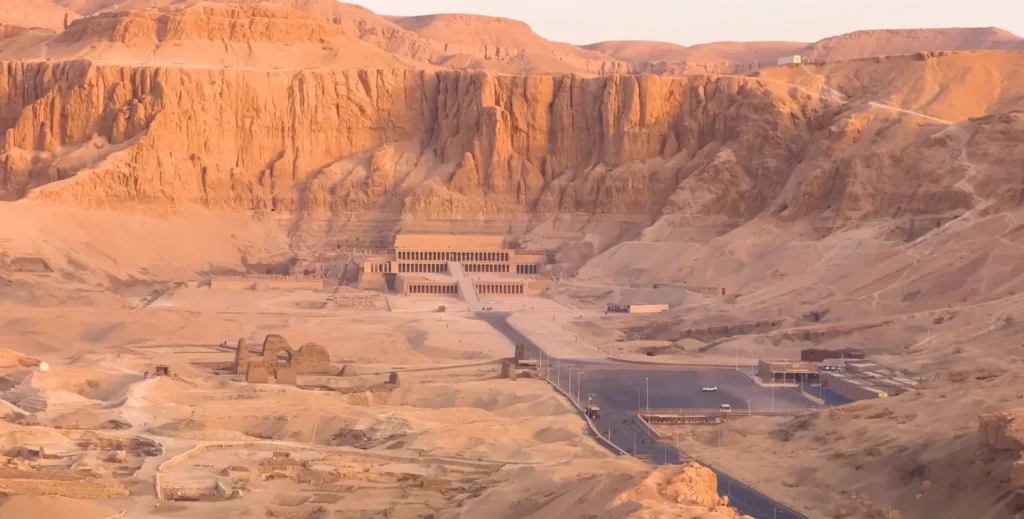
Before you reach the Valley of the Kings, you pass Hatshepsut’s Mortuary Temple Deir el-Bahari. It’s built into the cliffs, three terraced levels that look almost modern in their clean lines.
Hatshepsut ruled Egypt for about 22 years, around 1479-1458 BCE. She was one of the most successful pharaohs expanded trade, commissioned massive building projects, kept Egypt stable and prosperous. But she was a woman in a role that was supposed to be exclusively male, so her stepson Thutmose III tried to erase her from history after she died. Defaced her statues, chiseled out her name from inscriptions.
Didn’t work. We know exactly who she was.
The temple’s impressive but it was hot like, 38°C hot and the tourists were thick. I took photos, bought water from a vendor charging triple the normal price, moved on.
Tomb of Ramesses VI: My First Choice
Standard ticket gets you three tombs. Some cost extra (Tutankhamun, Seti I). I went with Mustafa’s recommendations.
First: Ramesses VI (KV9).
You walk down a long, sloped corridor. Cool air hits you the temperature drops maybe 10 degrees once you’re inside. And then you see the walls.
Completely covered. Floor to ceiling, hieroglyphics and painted scenes from the Book of Gates, Book of Caverns, all these funerary texts meant to guide the pharaoh through the underworld. The colors blues, yellows, reds still vibrant after 3,000+ years because they’ve been protected from sunlight and weather.
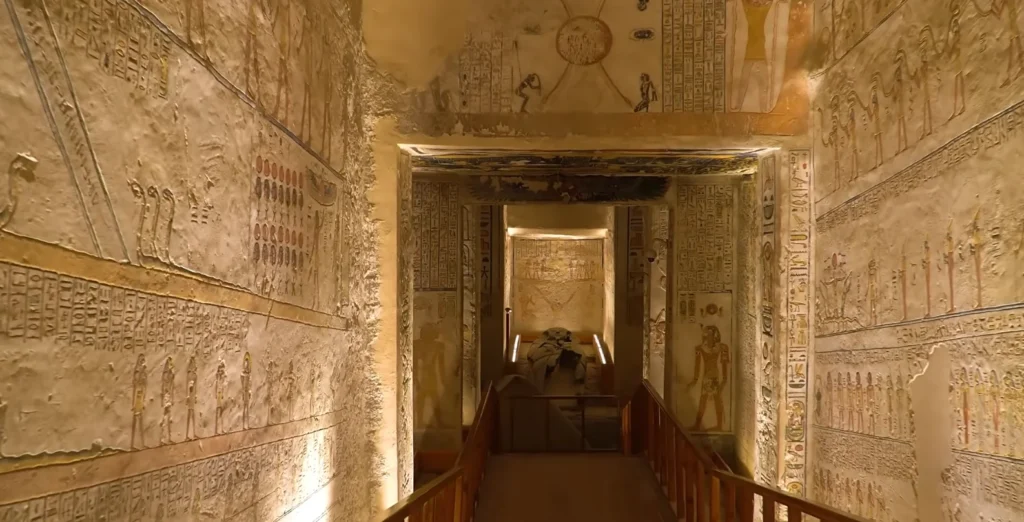
The ceiling has this astronomical diagram showing the journey of the sun through the night. Gods devouring and rebirthing the sun. Constellations. These weren’t just decorations they were literal instructions for navigating the afterlife.
“No photos,” the guard said. Then, quieter, “But if you want to take one, be fast.”
I was fast. Got two before he shooed me along. Everyone does this. It’s a weird dance where the rules exist but aren’t really enforced if you’re quick and discreet.
The sarcophagus chamber at the end is enormous. Ramesses VI’s sarcophagus is there empty, of course. The mummy’s in the Cairo Museum. But the room itself, the paintings, the sense of purpose in every carved symbol… you feel the weight of belief. These people genuinely thought this would work. That if they did everything correctly, the pharaoh would successfully reach the afterlife.
Tomb of Tutankhamun: Overhyped but Still Cool
Second tomb: Tutankhamun (KV62).
This one costs extra. 300 Egyptian pounds on top of the general admission. Mustafa warned me: “It’s small. Very small. You will be disappointed.”
He was half right.
Tut’s tomb is tiny compared to others. It was basically a storage tomb, repurposed quickly when he died young around age 18-19. Most of his treasure is in the Egyptian Museum in Cairo, including the famous gold mask. What’s left in the tomb is his mummy (still there, in a climate-controlled case) and painted walls.
The room’s crowded maximum 10 people at a time but everyone’s crammed in taking photos. I stood in front of Tut’s mummy. His actual body. Blackened from the preservation process, kinda leathery looking. Strange to think this was a teenager who ruled Egypt 3,300 years ago and now he’s a tourist attraction.
Why Tutankhamun Became Famous Despite Being a Minor Pharaoh:
- His tomb was discovered nearly intact by Howard Carter in 1922 first major tomb found largely unrobbed
- Contained over 5,000 artifacts, including the iconic golden death mask weighing 10.23 kg
- The “curse of the pharaohs” media frenzy when several people connected to the excavation died (mostly coincidence, but great headlines)
- Perfect timing discovered during the Art Deco period, Egyptian aesthetics became instantly fashionable worldwide
- Contrast with other tombs: most royal tombs were looted in antiquity; Tut’s was sealed and forgotten
Tomb of Seti I: The Best One Nobody Talks About
Third tomb: Seti I (KV17).
This one also costs extra. Worth it.
Seti I was Ramesses II’s father, ruled around 1290-1279 BCE. His tomb is the longest in the Valley over 137 meters of corridors, chambers and shafts going deep into the mountain.
The decoration is pristine. Better preserved than most because it was sealed and forgotten for centuries. The colors, the detail work, the sheer artistry this is what Egyptian tomb painting looked like when it was fresh.
There are rooms I couldn’t access still being studied, still off-limits. But what you can see is enough. The burial chamber has this vaulted ceiling painted with astronomical scenes. The walls show Seti I meeting various gods, being welcomed into the afterlife.
His sarcophagus was removed in the 1800s and is now in a museum in London (controversial, but that’s a whole different article). The mummy’s in Cairo. So the tomb’s empty of it’s original occupant, but full of his story.
I spent 45 minutes in there. Mustafa had to pull me out because other tourists were waiting.
“You understand now?” he said.
“Understand what?”
“Why we call this the Valley of the Kings. This is not just tombs. This is forever.”
The Museums: Where Ancient Egypt Lives in Air Conditioning
Egypt’s got museum problems. Not quality problems quantity problems. They have so much ancient stuff that they literally don’t have room to display it all.
The Egyptian Museum in Cairo: Organized Chaos
The Egyptian Museum in Tahrir Square, Cairo, is iconic. Also kind of a mess.
Built in 1902, it holds over 120,000 artifacts, though only a fraction are on display because there’s just not enough space. The building itself is this beautiful old neo-classical structure that feels more like a very crowded antique shop than a modern museum.
No climate control in most rooms. Labels are hit-or-miss some in English, some in Arabic, some in both, some missing entirely. The layout is confusing. You’ll be looking at Middle Kingdom pottery and then suddenly there’s a New Kingdom sarcophagus and you’re not sure how you got there.
But the stuff. Oh man, the stuff.
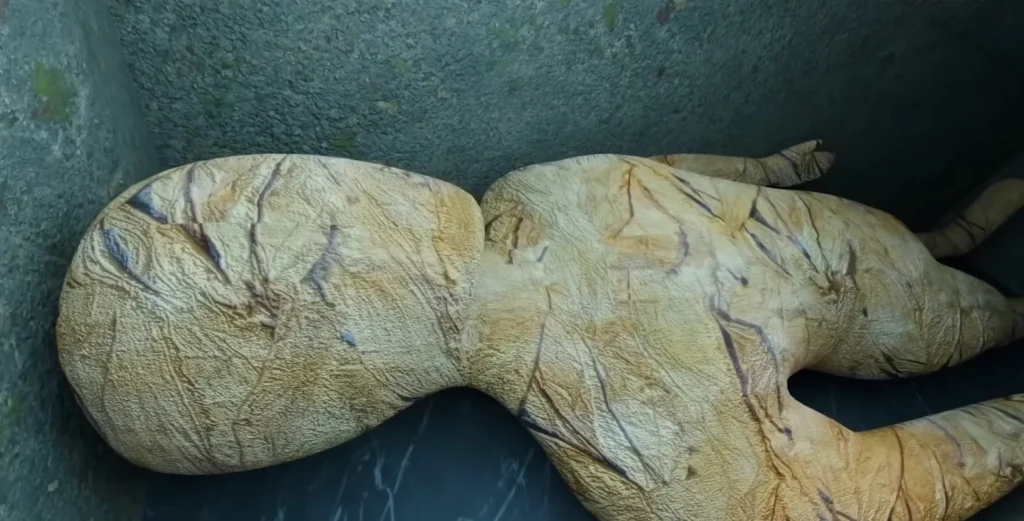
The Mummy Rooms: Worth the Extra Fee
The Royal Mummies Room costs extra 200 Egyptian pounds. No photos allowed (they’re serious about this one guards actually watch).
You walk through and there they are. The actual bodies of some of Egypt’s most powerful pharaohs:
- Ramesses II (ruled 1279-1213 BCE): Possibly the pharaoh from the Exodus story, though that’s debated. He lived into his 90s, had over 100 children, built more monuments than anyone else. His body shows red hair and arthritis.
- Hatshepsut: The female pharaoh. Her mummy was only positively identified in 2007 using DNA and a tooth.
- Thutmose III: The warrior pharaoh who tried to erase Hatshepsut from history. Ironic they’re in the same room now.
- Seti I: Best-preserved mummy in the collection. His face is still recognizable, peaceful-looking.
It’s unsettling. These aren’t anonymous ancient Egyptians these are specific, named, historically documented people. And they’re just there, behind glass, while tourists shuffle past.
The debate about whether mummies should be displayed is ongoing. Some argue it’s disrespectful. Others say it’s educational and preserves memory. I don’t have an answer. I just know standing in front of Ramesses II’s actual face was one of the strangest moments of my life.
Tutankhamun’s Treasures: The Main Event
The Tutankhamun exhibit takes up a whole section. The golden death mask is the centerpiece you’ve seen photos, but photos don’t capture the presence of it.
The mask weighs about 10 kilograms, solid gold inlaid with lapis lazuli and other semi-precious stones. It was made to fit over Tut’s mummified head. The face is idealized, serene, with inlaid eyes that seem to track you as you move.
Surrounding it: golden chariots, jewelry, furniture, ritual objects, shabti figures (magical servants for the afterlife Tut had 413 of them) and this golden throne with intricate inlay showing Tut and his wife Ankhesenamun.
Everything in that tomb was supposed to help a teenage king navigate eternity. Instead it’s in a museum helping fund Egypt’s tourism economy. I’m not sure what Tut would think about that.
National Museum of Egyptian Civilization: The New Kid
Egypt opened the National Museum of Egyptian Civilization (NMEC) in Fustat, Cairo, in 2021. I went because it’s newer, air-conditioned, properly organized and has better labels than the old museum.
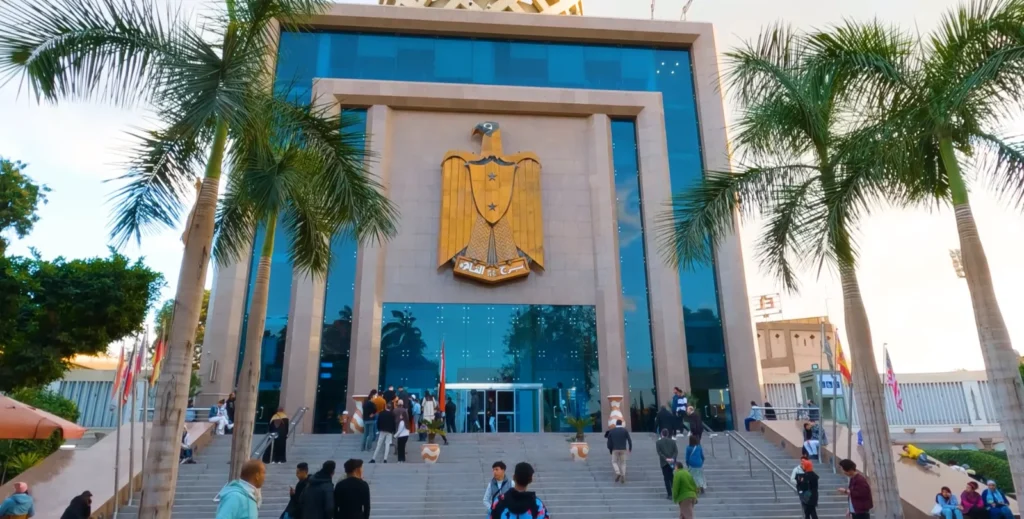
The building’s modern big glass entrance, palm trees, actual logical floor plan. The Royal Mummies Hall here is newer and better designed than the one in the old museum. Same mummies (they did this whole Pharaohs’ Golden Parade in 2021 moving 22 royal mummies from the old museum to NMEC in a massive ceremonial procession).
But honestly? The old Egyptian Museum has more soul. It’s chaotic, cramped, sometimes frustrating but it feels authentic. NMEC feels like a museum. The old one feels like a treasure hoard you’re sneaking through.
Both are worth visiting if you have time.
The Rosetta Stone: Why It Matters
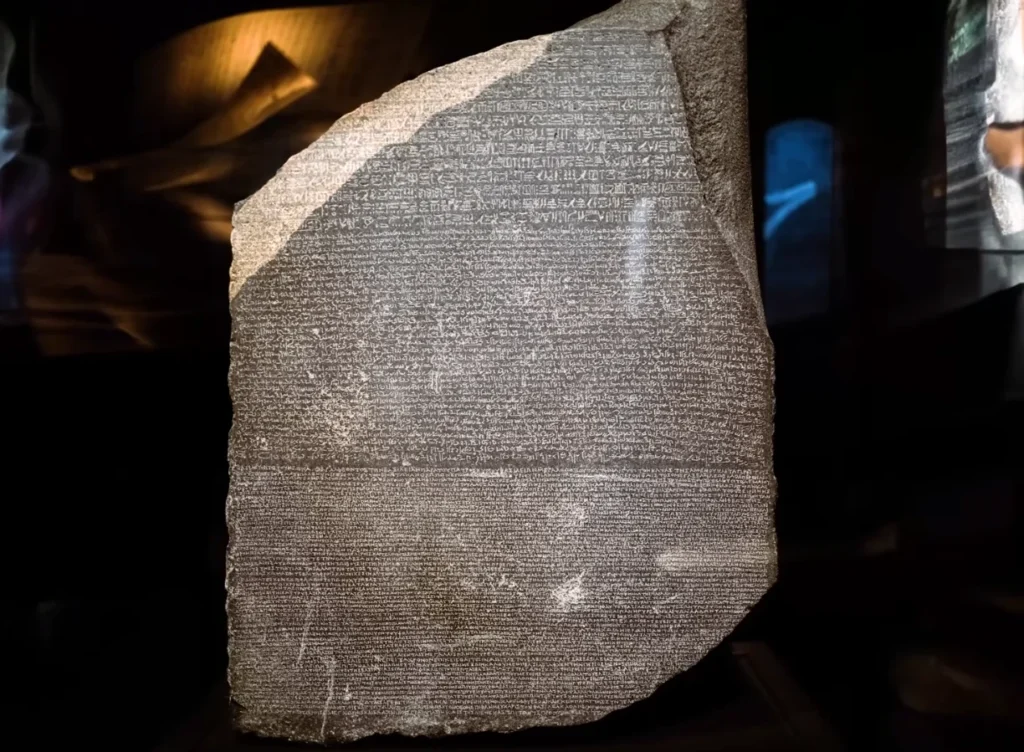
The actual Rosetta Stone is in the British Museum in London (another controversial colonial acquisition). But Egypt has replicas everywhere and NMEC has a good one with explanation panels.
Here’s why it’s important: Discovered in 1799 by French soldiers, the Rosetta Stone has the same text written in three scripts hieroglyphic, Demotic (everyday Egyptian script) and ancient Greek.
Before this, nobody could read hieroglyphics. We knew they were writing, but the language was dead, the knowledge lost. The Rosetta Stone gave scholars a key because they could read ancient Greek and by comparing the three texts, they could start decoding hieroglyphics.
Jean-François Champollion cracked it in 1822. Suddenly, thousands of years of Egyptian writing became readable again. Every temple wall, every tomb inscription, every papyrus scroll all of it unlocked because of one decree about tax exemptions for priests, written three different ways.
Life Along the Nile: The River That Made Everything Possible
Egypt is the Nile. Without the river, it’s just desert. About 95% of Egypt’s 100+ million people live along the Nile Valley and Delta, which is only about 4% of Egypt’s total land area.
I took a felucca ride in Aswan. Feluccas are traditional wooden sailboats no motor, just wind and a guy who knows how to work the sail.
Aswan: Where the Nile Gets Dramatic
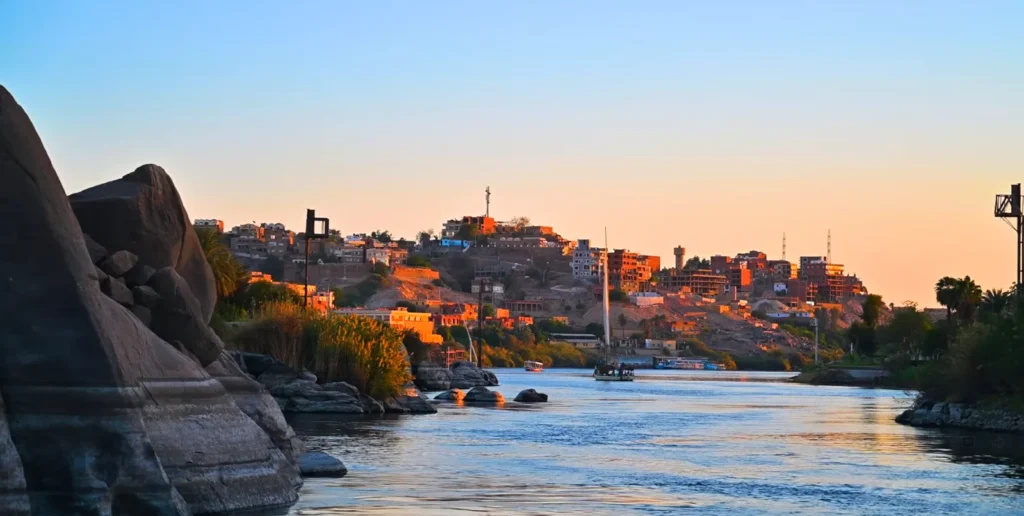
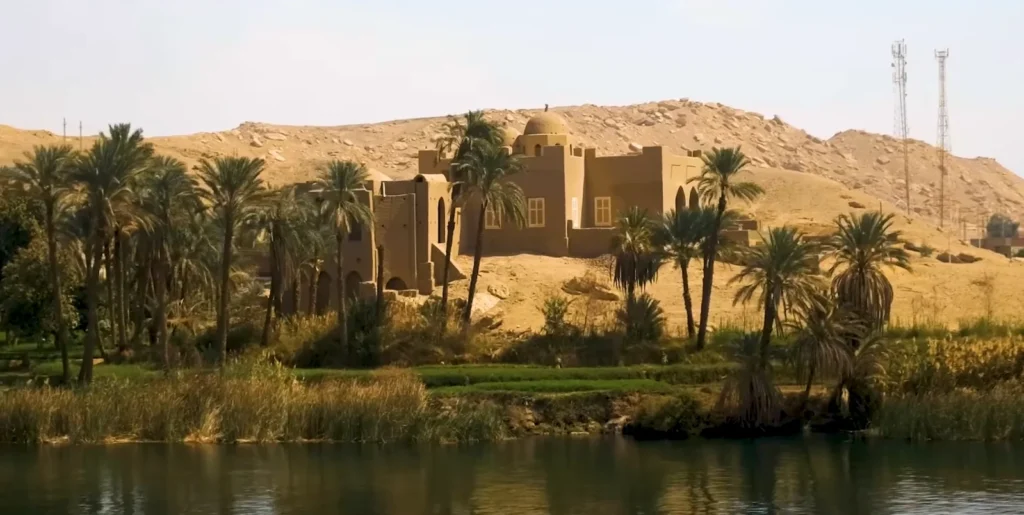
Aswan’s in the south, near the border with Sudan. The Nile here is dotted with granite islands and massive black boulders that look like they were dropped by giants. The water’s a deep blue-green, totally different from the muddy brown near Cairo.
My felucca captain’s name was Salah. Mid-40s, family’s been sailing feluccas for generations.
“You want to see Elephantine Island?” he asked.
“Sure.”
We sailed past. Elephantine was ancient Egypt’s southern border fortress, where they collected taxes on trade goods coming upriver from Nubia. Archaeological remains date back to 3000 BCE. Now it’s got a small village and some ruins. Locals still live there, doing normal life while surrounded by 5,000-year-old stones.
The wind was perfect. We didn’t talk much just drifted, watching the shore, watching other feluccas, watching the sun drop toward the horizon.
“You know why Egypt exists?” Salah said eventually.
“The Nile.”
“Yes. But you understand? Every year, the flood. The river would rise, cover the land, leave behind silt. Rich, black soil. Perfect for farming. That’s why we call Egypt ‘the black land.’ The desert the red land nothing grows. But here…” He gestured at the green strips along the riverbanks. “Here, life.”
The annual Nile flood was so central to Egyptian civilization that their calendar was based on it. Three seasons: Akhet (flood), Peret (growing), Shemu (harvest). Every year, predictable, reliable. Until the Aswan High Dam was completed in 1970 and stopped the floods entirely.
The Aswan Dam: Modern Egypt’s Biggest Decision
The Aswan High Dam controls the Nile’s flow, generates electricity, created Lake Nasser (one of the world’s largest artificial lakes). It also ended the flood cycle that had sustained Egypt for 5,000 years.
Pros: reliable water supply, hydroelectric power, protection from droughts and catastrophic floods.
Cons: no more nutrient-rich silt deposits, increased need for chemical fertilizers, erosion issues, displacement of over 100,000 Nubians whose villages were submerged.
UNESCO had to relocate entire ancient temples Abu Simbel, Philae cutting them apart and moving them to higher ground before Lake Nasser flooded their original locations. Massive international effort in the 1960s. Some smaller sites are still underwater.
Salah wasn’t a fan. “The dam gave us electricity,” he said. “But it killed the river’s soul.”
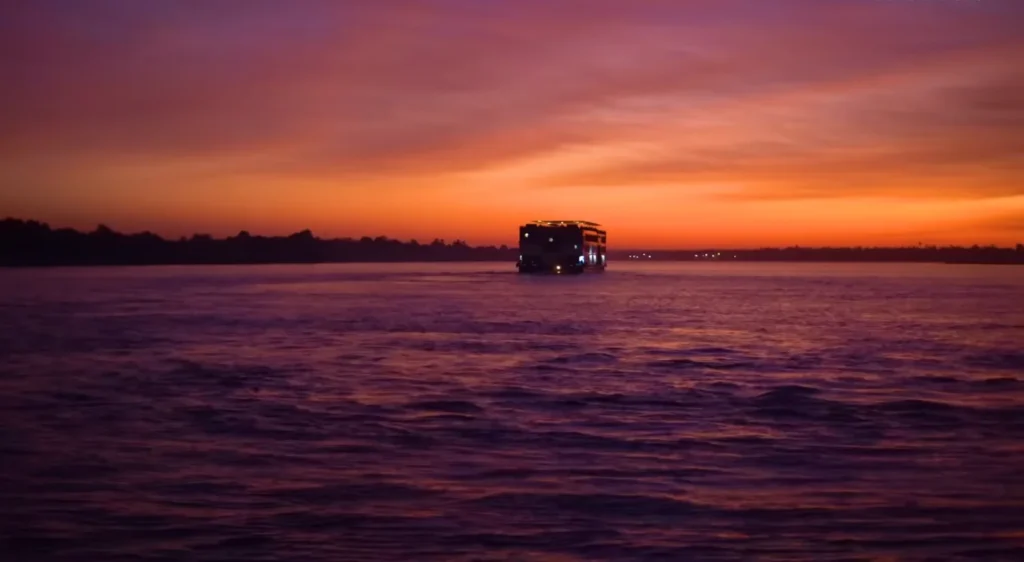
We sailed back as the sun set. The cliffs glowed orange. Aswan’s buildings climbed up the hillside, lights starting to come on. Tourism boats bigger cruise ships were docked along the corniche.
It was beautiful. Also completely artificial. The Nile I was looking at was managed, controlled, engineered. Not the wild, flooding river that built ancient Egypt.
The Red Sea: When You Need a Break From Dead Things
After two weeks of tombs, temples and mummies, I needed to see something alive.
The Red Sea saved me.
I took a bus from Luxor to Hurghada about 4 hours through desert that looked like Mars with occasional gas stations. Hurghada’s Egypt’s beach resort capital. Purpose-built for tourism, which means it’s kind of soulless but the diving’s world-class.
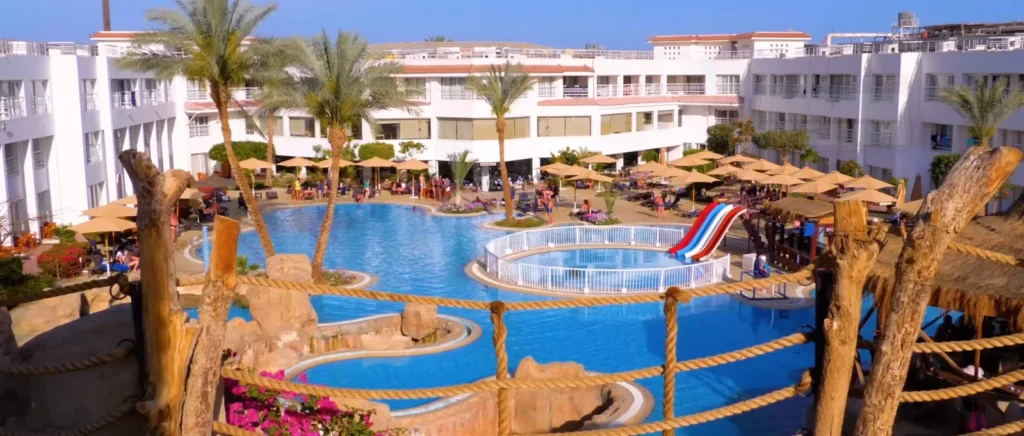
My hotel was one of those massive all-inclusive complexes that could be anywhere Egypt, Turkey, Dominican Republic, doesn’t matter. They all have the same architecture, same pool layouts, same buffet setups.
But the water. God, the water.
Diving the Red Sea: Why It’s One of the Best
I’m not a serious diver got my certification in Thailand years ago, done maybe 20 dives total but even I could tell the Red Sea’s something special.
Booked a two-dive day trip. Boat left at 8 AM with about 15 other divers, mix of Europeans and a few Egyptians. Our dive master was named Karim, late 20s, grew up diving these reefs.
“First dive is Giftun Island,” he said. “Easy site, 12-18 meters, good for warm-up.”
We anchored. Geared up. Rolled backward off the boat.

And holy shit.
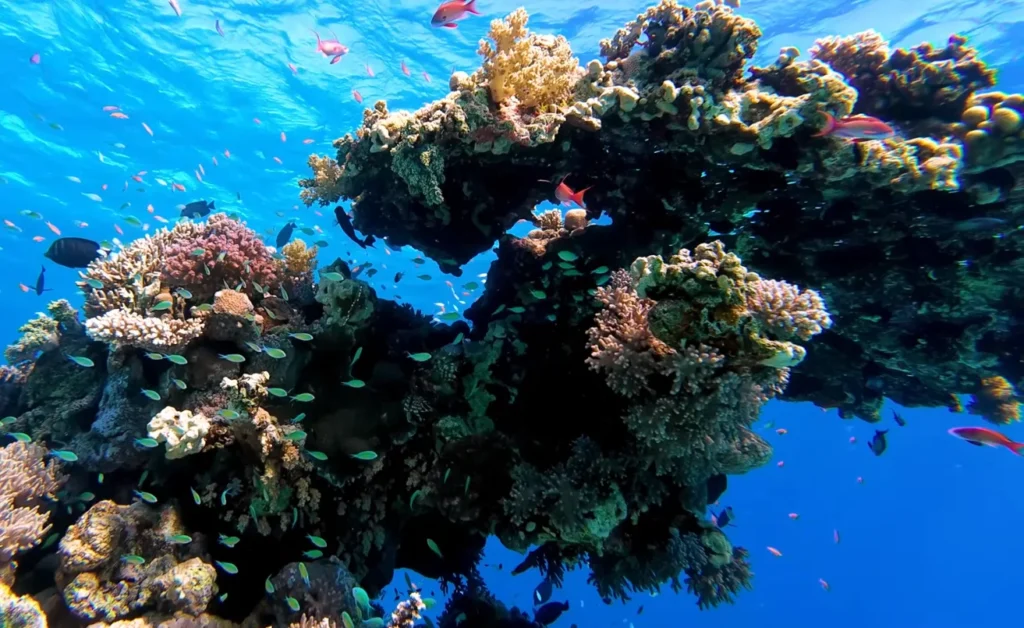
Visibility was 30+ meters crystal clear, bright blue. The reef wall dropped straight down, covered in hard and soft corals. Colors I didn’t know existed in nature: electric blue, neon yellow, deep purple, orange that hurt to look at.
Fish everywhere. Not just a few everywhere. Schools of anthias creating these orange clouds, parrotfish munching on coral, humphead wrasse the size of dogs, a moray eel sticking it’s head out from a crevice giving me serious side-eye.
The Red Sea has over 1,200 species of fish, roughly 10% found nowhere else on Earth. The coral diversity is insane around 200 hard coral species and 120 soft coral species. It’s warm, salty (saltier than most oceans) and the lack of river input means no sediment clouding the water.
I just floated there. Neutrally buoyant, hanging in the water column, watching this underwater city operate. A Napoleon wrasse massive fish with a bulbous forehead swam right past me, completely unbothered.
Forty minutes went by like five.
Second Dive: Abu Ramada (The Aquarium)
The second site’s nickname is “The Aquarium.” You’ll understand why in a second.
Descended to about 15 meters onto a sloping reef. And the fish density was ridiculous. Butterfly fish, angelfish, triggerfish, clownfish hiding in anemones, lionfish hovering with their venomous spines spread, tiny damselfish aggressively defending their territory (they’ll bite you if you get too close, hilarious watching a 5cm fish try to intimidate a human).
Karim pointed out a blue-spotted stingray buried in the sand. Then a scorpionfish camouflaged on a rock. I would’ve never seen it without him pointing. These things look exactly like coral-covered stones until they move.
Halfway through the dive, we found a turtle. Hawksbill, probably, based on the beak-like mouth. It was munching on sponges, totally ignored us. I hung there watching it eat for maybe ten minutes until my air started running low.
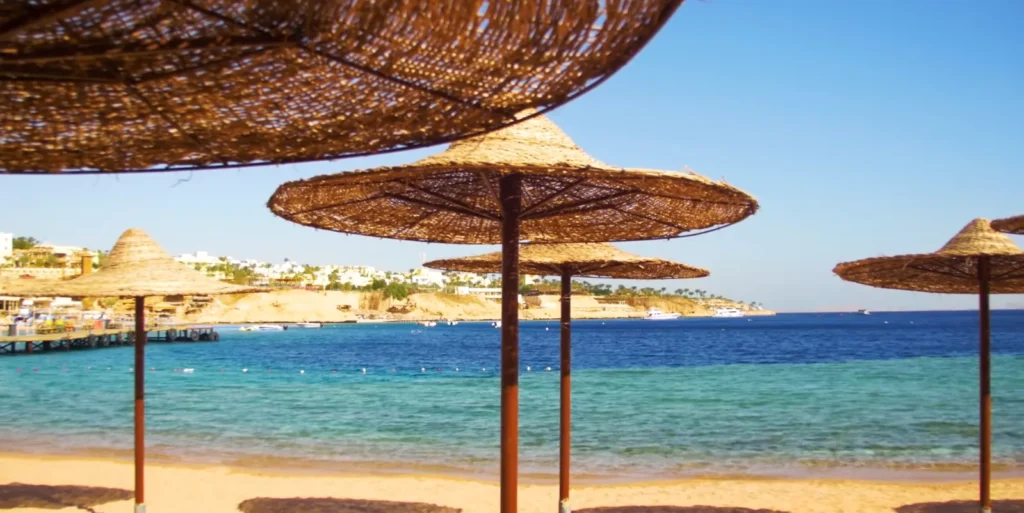
The Beach Reality: It’s Not All Perfect
Back on the boat, everyone was buzzing. Best dives they’d done. I agreed.
But here’s the thing nobody shows you in photos: the Red Sea has plastic problems. Serious plastic problems.
Some areas of the beach were pristine. Others had trash bottles, bags, random debris washed up along the tide line. Egypt generates about 95,000 tons of waste per day and a lot of it ends up in waterways and eventually the sea.
The dive sites were clean because they’re protected and regularly maintained. But between sites? We passed floating plastic. Not mountains of it not as bad as some places I’ve seen in Southeast Asia but enough to be depressing.
Karim was blunt about it. “Tourism brings money. Money helps protect the reefs. But tourism also brings people who don’t care. And Egypt doesn’t have great waste management. So…” He shrugged.
Sharm el-Sheikh: The Fancier Option
I didn’t go to Sharm el-Sheikh ran out of time but it’s worth mentioning. It’s at the southern tip of the Sinai Peninsula, more upscale than Hurghada, better diving (sites like Ras Mohammed National Park, Thistlegorm wreck).
Also more expensive and more isolated. Hurghada’s a 4-hour bus from Luxor. Sharm requires a flight or a very long drive around the Gulf of Suez.
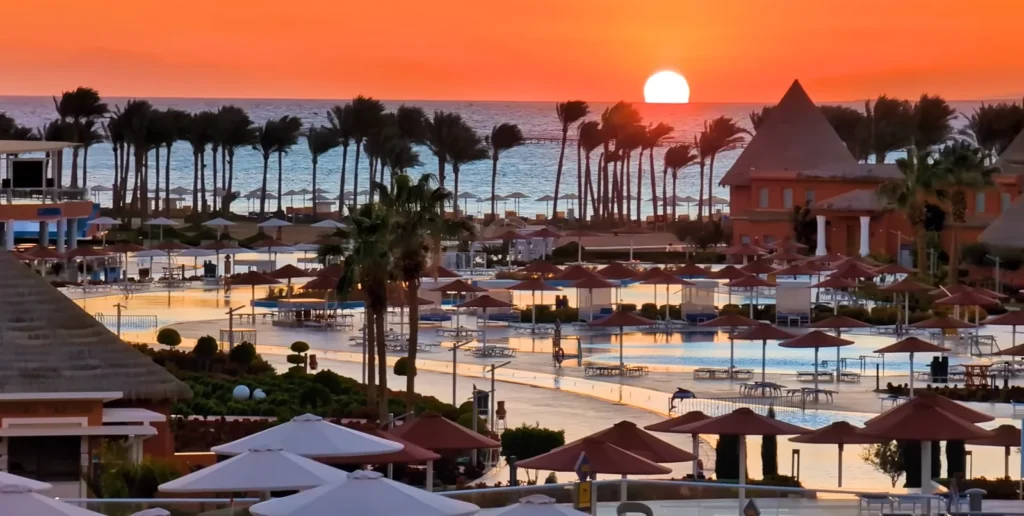
Quick Red Sea Comparison Table:
| Location | Best For | Accessibility | Top Dive Sites |
| Hurghada | Budget travelers, families | Easy bus from Luxor/Cairo | Giftun Island, Abu Ramada, Sha’ab el Erg |
| Sharm el-Sheikh | Luxury resorts, serious divers | Requires flight | Ras Mohammed, Thistlegorm wreck, Straits of Tiran |
| Marsa Alam | Uncrowded diving, dolphins | Remote, long transfer | Elphinstone Reef, Dolphin House, St. John’s Reef |
| Dahab | Backpackers, shore diving | Bus from Sharm | Blue Hole, Canyon, Eel Garden |
Dahab’s got this cult following among divers super chill vibe, Bedouin camps on the beach, cheaper than everywhere else. The Blue Hole’s famous (and dangerous it’s killed over 150 divers who went too deep).
If I go back, I’m doing Dahab. Hurghada was fine but felt sterile. I want the weird, rough-around-the-edges version.
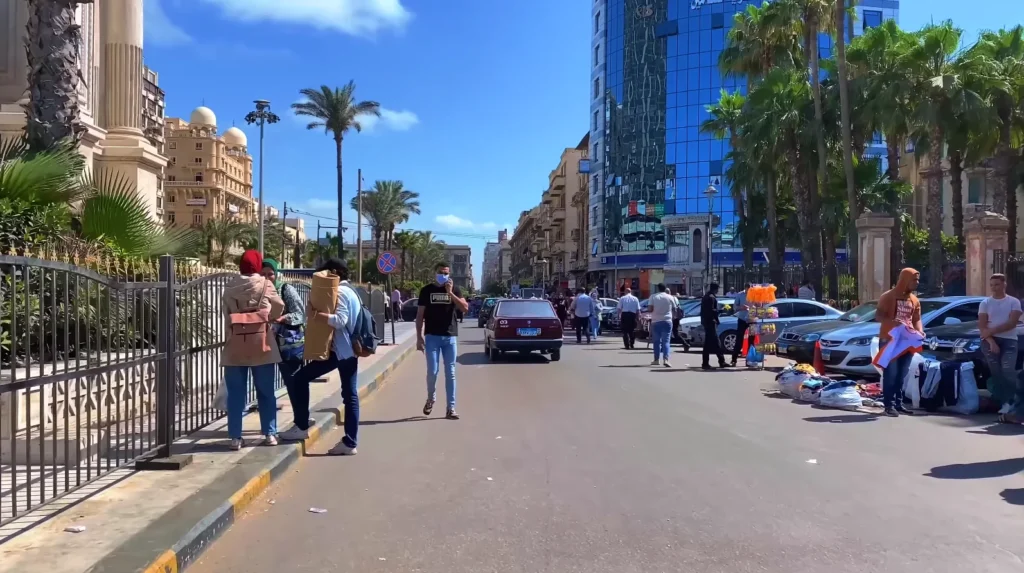
Cairo’s Streets: Where Modern Egypt Actually Lives
Most tourists do Cairo in a day. See the pyramids, hit the museum, maybe drive past the Citadel. Done.
I stayed five days. Wandered. Got lost. Ate street food that probably should’ve made me sick but didn’t.
Khan el-Khalili: Tourist Trap That’s Still Worth It
Khan el-Khalili is Cairo’s famous bazaar. Been around since the 14th century. Now it’s where tour groups get taken to buy papyrus paintings and alabaster pyramids made in Chinese factories.
But if you go deeper, past the main tourist alleys, it’s still a real market.
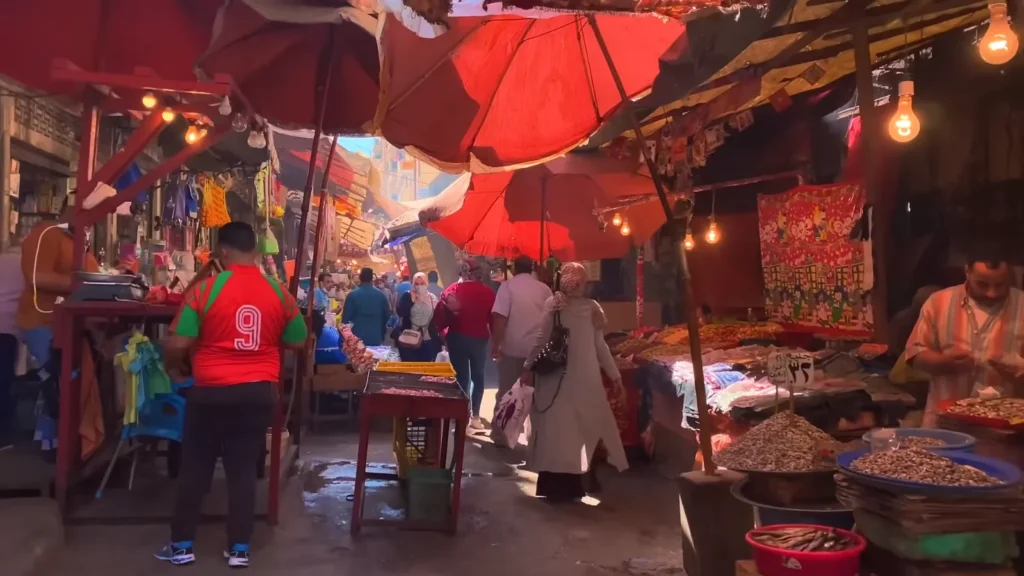
I walked through around 4 PM when it was packed. Narrow lanes covered with fabric canopies to block sun. Vendors selling spices in massive piles cumin, coriander, saffron, za’atar. The smell was overwhelming in the best way.
Gold shops everywhere. Cairo’s gold is 18-21 karat, sold by weight. Women were trying on bracelets while vendors calculated prices on old-fashioned scales.
A guy tried to sell me a “genuine ancient scarab amulet.”
“How much?”
“For you, special price. 500 pounds.”
“How old?”
“Very old. Maybe 3,000 years.”
“If it’s 3,000 years old, wouldn’t it be in a museum?”
He grinned. “Okay, okay. Is not 3,000 years. Is maybe… 30 years. But very nice quality.”
At least he was honest eventually.
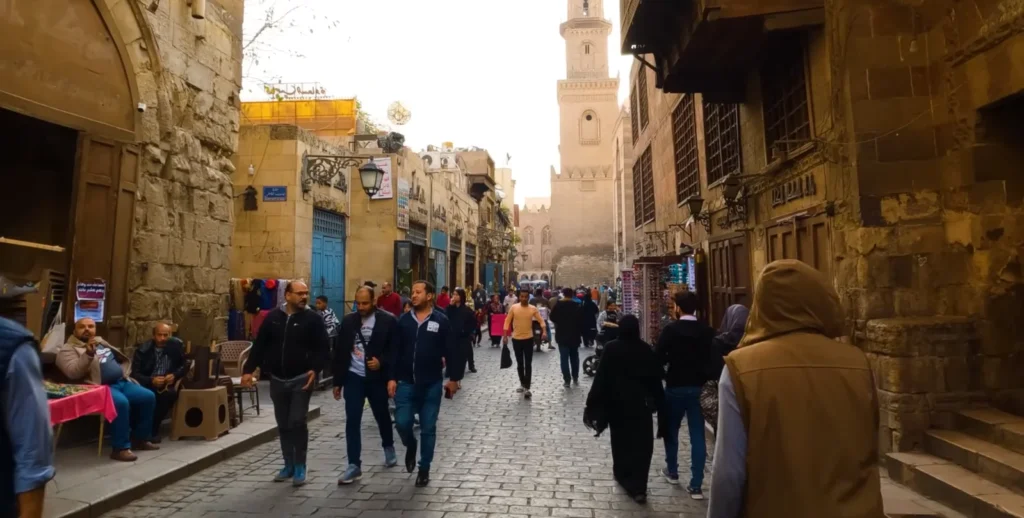
Islamic Cairo: The Part Nobody Talks About
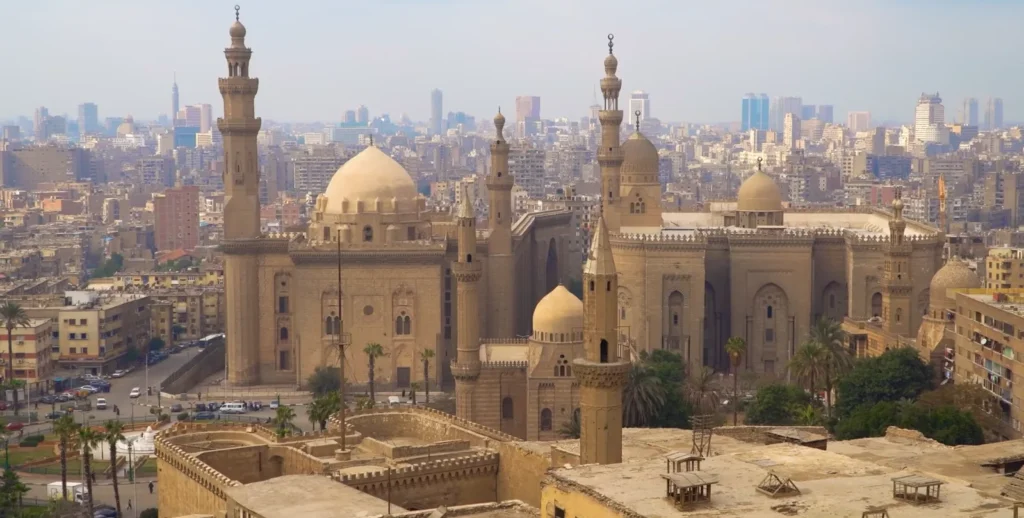
Everyone does Pharaonic Egypt. Fewer people explore Islamic Cairo, which is a shame because the historic Islamic district is a UNESCO World Heritage Site with some of the most impressive medieval Islamic architecture outside of Istanbul.
I walked through on my own. No guide, just wandering.
The mosques here date from the 7th to 19th centuries. The Mosque of Ibn Tulun (879 CE) is one of Cairo’s oldest. Massive courtyard, spiral minaret you can climb, barely any tourists. I was one of maybe five people there.
The Mosque of Sultan Hassan (1356 CE) is even more impressive huge, imposing, with this incredible madrasa (Islamic school) attached. The acoustics inside make every sound echo. I sat in the courtyard for 30 minutes just listening to the call to prayer bounce off the walls.
The Al-Muizz Street area is medieval Cairo at it’s best. Narrow cobblestone street lined with preserved mosques, madrasas and caravanserais. At night it’s lit up, almost magical. During the day it’s crowded with locals going about normal life buying bread, sitting in cafes, ignoring the handful of tourists taking photos.
This is the Cairo I actually liked. Not the tourist version the lived-in, functioning, still-religious, still-historical version where ancient buildings aren’t museums, they’re just part of the city.
Egyptian Food: Beyond Hotel Buffets
Hotel food in Egypt is fine. Generic international buffet stuff. But the street food that’s where it gets interesting.
What I ate that was amazing:
- Koshari: Egypt’s national dish. Rice, lentils, pasta, chickpeas, fried onions, tomato sauce. Carbs on carbs on carbs. Costs like 20 pounds (less than $1 USD). Filling, delicious, accidentally vegan.
- Ful medames: Mashed fava beans with olive oil, lemon, garlic. Breakfast staple. Eaten with baladi bread (flatbread).
- Ta’ameya: Egyptian falafel made from fava beans instead of chickpeas. Better texture than Levantine falafel, fight me.
- Mahshi: Stuffed vegetables peppers, zucchini, grape leaves filled with rice and herbs. Every family makes it slightly differently.
- Feteer: Flaky layered pastry, served savory or sweet. I had one filled with cheese and honey. Life-changing.
What I ate that was questionable:
- Grilled liver sandwiches from a cart in downtown Cairo. They were… fine. Extremely intense flavor. Would I eat them again? Maybe not.
Coffee culture’s big. Ahwas (traditional coffeehouses) are everywhere, full of men smoking shisha and playing backgammon. I’d sit with a cup of strong Turkish coffee and just watch. Nobody bothered me. It’s a social space, not a commercial one.
The Reality Check: What Egypt’s Actually Like to Travel
Time for honesty. Egypt’s incredible. Also exhausting, occasionally frustrating, sometimes overwhelming. Here’s what nobody tells you in the glossy travel blogs.
The Scams: They’re Constant
Everyone’s trying to make money off tourists. Can’t blame them tourism’s a huge part of Egypt’s economy but it gets tiring.
Common scams I encountered:
- Taxi drivers quoting 5x the normal rate. Always negotiate before getting in. Or use Uber it works in Cairo and Alexandria.
- “Free” guides at archaeological sites who then demand payment. If you didn’t hire them, you don’t owe them anything.
- Papyrus shops claiming “government-approved” prices. There’s no such thing. Haggle aggressively or walk away.
- Restaurant/shop owners adding items you didn’t order to the bill. Check every receipt carefully.
- Photography fees inside temples that are already included in the ticket. Guards will tell you it’s extra. Sometimes it is, sometimes it isn’t, check your ticket first.
I’m not easily scammed I’ve traveled enough to spot most tricks but Egypt still got me twice. Once with a taxi (paid 200 pounds for a ride that should’ve been 50), once at a papyrus shop (bought a painting at a “special discount” that was probably still 3x overpriced).
The Hassle Factor: Prepare Yourself
Egypt is intense. Vendors are aggressive. Crowds are thick. Traffic is chaotic. Noise is constant.
If you’re used to Southeast Asian travel, you’ll be fine. If your main experience is Europe, Egypt might feel like a lot.
Things that will test your patience:
- Being approached every 30 seconds in tourist areas by people trying to sell you things
- Lack of personal space crowds press close, people push, nobody queues properly
- Aggressive driving pedestrians have no right of way, crossing streets is an act of faith
- Gender-specific harassment if you’re a woman traveling solo (I’m a guy so I didn’t experience this directly, but multiple female travelers told me it was constant and exhausting)
- Bureaucracy everything takes longer than it should, forms in triplicate, random fees appearing
The Safety Question: Is Egypt Safe?
Yeah. Mostly.
Egypt’s tourism industry took a huge hit after the Arab Spring (2011) and some terrorist attacks in the 2010s. Security’s tight now metal detectors at every museum and site, tourist police everywhere, visible military presence.
I never felt unsafe. Annoyed sometimes, sure. But unsafe? No.
Petty theft happens pickpockets, bag snatching, that kind of thing. Standard city precautions apply. Don’t flash expensive stuff, watch your belongings, don’t wander dark alleys alone at 2 AM.
As a solo male traveler, my experience was straightforward. Women report significantly more harassment catcalling, unwanted touching, aggressive advances. Egypt’s conservative and foreign women are often seen differently. Not saying it’s right, just saying it’s real.
The Money Situation: Cash is King
Egypt’s theoretically on the Egyptian pound (EGP). In reality, it runs on:
- Egyptian pounds for daily stuff.
- US dollars for tips, unofficial payments, some tourist services.
- Credit cards work in hotels and nicer restaurants, nowhere else.
ATMs are common in cities but bring backup cash. Cards get skimmed occasionally. Notify your bank before traveling.
Tipping culture’s huge. Tip everyone guides, drivers, bathroom attendants, people who “help” you whether you asked or not. Small bills (5-20 pound notes) are essential.
Rough daily budget (2024 prices):
- Budget traveler: $30-50/day (hostel, street food, public transport, limited site visits).
- Mid-range: $80-120/day (decent hotel, mix of restaurants, private transport, most sites).
- Comfort: $150+/day (nice hotels, guides, all sites including extras, organized tours).
Egypt’s still cheap compared to Europe or North America. But less cheap than it used to be inflation’s been rough the past few years and tourism prices have climbed.
What Ancient Egypt Actually Teaches You
I thought Egypt would be about history. Learning dates, understanding pharaohs, seeing famous monuments.
It was. But it was also something else.
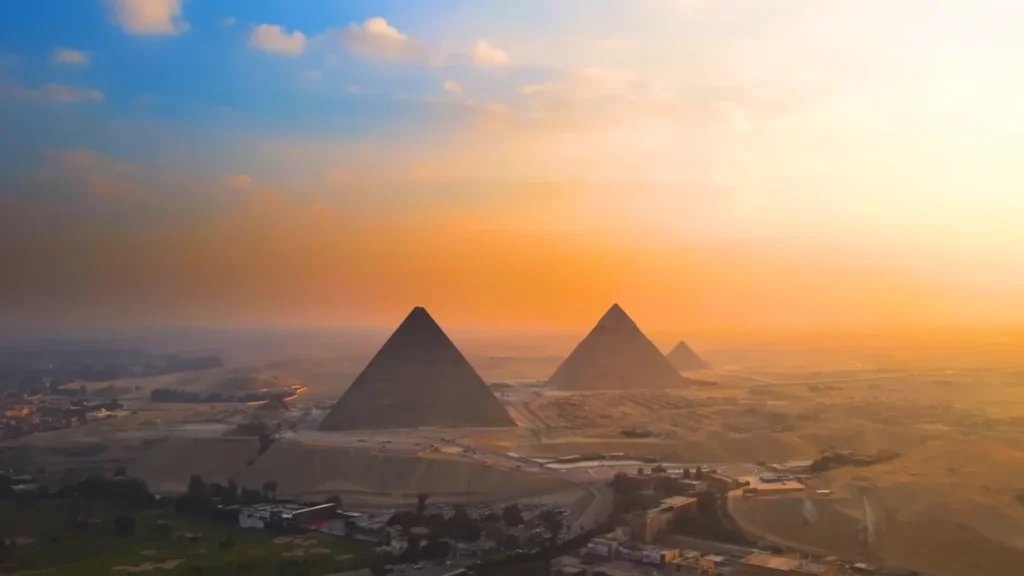
Standing in front of the pyramids, you realize: humans 4,500 years ago were exactly as smart as we are. Same brains, same capabilities. They just had different tools.
They figured out geometry, astronomy, engineering, medicine, art, literature, complex religious systems, bureaucratic administration all of it without computers, without modern math, without most of the knowledge base we take for granted.
And then all of it the entire civilization ended. The language died. The religion died. The knowledge was lost for 2,000 years until we rediscovered it and painstakingly decoded it.
Nothing lasts. That’s what Egypt teaches you.
The pyramids last because they’re too big to destroy easily. But the culture that built them? Gone. The people who knew how to read hieroglyphics? Dead for millennia. The priests who performed the rituals in those temples? Forgotten.
We remember Ramesses II not because he achieved immortality the way he wanted through the afterlife but because archaeologists dug up his mummy and tourists pay to look at it.
Is that what he imagined? Probably not.
But here’s the weird part: it worked differently. These pharaohs wanted to be remembered forever. They built massive monuments, carved their names everywhere, created elaborate tombs.
And it worked. We do remember them. Just not the way they planned.
Hatshepsut’s still famous 3,500 years later. Tutankhamun’s probably the most famous Egyptian who ever lived. Ramesses II’s name is in textbooks worldwide.
They achieved immortality. Just through museums and tourism, not through successfully reaching the Field of Reeds.
Would I Go Back?
Yes. Tomorrow if someone paid for the flight.
But I’d do it differently.
I’d skip Cairo’s main tourist circuit entirely. Spend time in Islamic Cairo, eat more street food, sit in ahwas longer.
I’d do a Nile cruise the proper multi-day kind between Luxor and Aswan, stopping at all the temples I missed.
I’d go to Alexandria on the Mediterranean coast ancient library, Greco-Roman ruins, different vibe from the rest of Egypt.
I’d spend way more time diving. Maybe do a liveaboard trip to the southern Red Sea sites.
And I’d learn at least basic Arabic. I got by with English tourism’s so big that you can manage but knowing the language would’ve opened up different experiences.
Egypt’s not easy. It’ll test you. You’ll get hassled, overcharged, tired, hot, frustrated.
But you’ll also stand inside tombs painted 3,000 years ago and still vibrant. You’ll float in the Red Sea surrounded by fish that look like they were designed by someone on psychedelics. You’ll eat food that’s been made the same way for centuries. You’ll watch the sun set over the Nile from a felucca and understand really understand why this river built a civilization.
Worth it? Completely.
Just bring patience. And cash for tips. And maybe antacid because Egyptian street food’s delicious but your stomach might disagree.
Practical Information: Actually Useful Tips
Best Time to Visit:
- October-April: Cooler weather, peak season, higher prices.
- May-September: Extremely hot (40°C+ in summer), fewer tourists, cheaper.
- I went in March perfect temperature-wise, crowded but manageable.
Visa:
- Most nationalities can get visa on arrival at Cairo airport $25 USD, cash only.
- E-visa available online, slightly more expensive but skips the arrival line.
- Valid for 30 days.
Getting Around:
- Between cities: Flights (Egypt Air, Air Cairo), buses (Go Bus is reliable), trains (avoid overnight trains, they’re slow and uncomfortable).
- Within cities: Uber in Cairo/Alexandria, taxis elsewhere (negotiate first), local guides for archaeological sites.
- DO NOT attempt to drive yourself in Egypt unless you have a death wish.
What to Pack:
- Modest clothing shoulders and knees covered for religious sites and respect in conservative areas.
- Sunscreen (SPF 50+), hat, sunglasses.
- Comfortable walking shoes that can handle sand and uneven ancient stones.
- Small bills for tips (bring crisp $1 bills from home, exchange for Egyptian pounds when you arrive).
- Toilet paper (most bathrooms don’t have it).
- Hand sanitizer (lots of it).
- Flashlight for dim tomb interiors.
- Water bottle stay hydrated constantly.
Health:
- Drink only bottled water (even for brushing teeth).
- Avoid raw vegetables and unpeeled fruit.
- Take anti-diarrhea meds (you’ll probably need them).
- Malaria isn’t an issue, but pack mosquito repellent for the Nile.
Money:
- Budget: $30-50/day
- Mid-range: $80-120/day
- Comfort: $150+/day